Category: Fit and Strong (Page 48 of 57)

Celebrating Milestones

Shout out to all the Fit, Strong Women Over 50
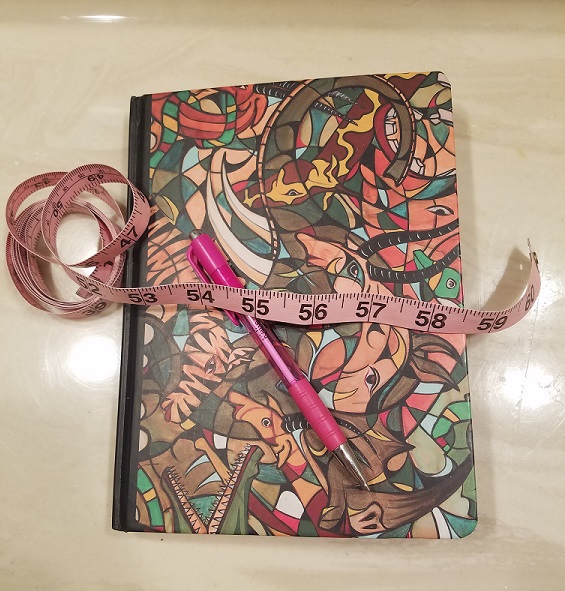
Today I’m celebrating milestones. Have you ever heard the saying “You are what you eat”? Or the saying “You are the average of the 5 people you surround yourself with.”? Perhaps you’ve seen this saying about “watching your thoughts” shown on the cover of this notebook?

* photo courtesy Amazon from the Motivational Journal Lover

I know that for me, whatever I put my attention and intention on, will pop up all around me. It is on my radar and I begin to really embrace it.

As we prepare to celebrate the first anniversary of Becoming Elli, I am reminded of this concept.

Celebrating Milestones
Depending on when and how you measure our official beginning, we’ve almost reached the first yearly milestone since our Becoming Elli website went live to the full internet.  It’s always fun to be celebrating milestones and going live is a big one!

It was about a year ago, when Jill McCauslin and I began forming the ideas for creating the Becoming Elli community as a website, podcast and private Facebook Group. Although we weren’t sure exactly what form it would take, we both knew we wanted it to focus on being fit and staying strong as we get older.

Jill and I both agreed that fit and strong are key qualities that we want to embrace in this endeavor and as we continue in the second half of our lives.

Creating Becoming Elli

Naming “it” was a bit of a challenge.

We also wanted to identify and combine the concepts of healthy living, being fit, and becoming strong with our “cohort.” While we wanted to identify our age group, we both felt that “Baby Boomers” wasn’t the right phrase. In the process of coming up with a name, we learned how many derogatory terms there are for “older” women.

Elli, the Norse Goddess of Old Age, seemed like the right fit for what we’re hoping to achieve because she was fit and strong.

The Becoming Elli website was developed during the fall of 2017. The first time I think we discussed it out loud with each other while we trained for the Akron half marathon, probably in late August. To start we began to write some blog posts and brainstorm about what to call it. We bought some podcasting gear and learned what it takes to put together plans for a podcast.

We wrote and published a few articles on the server before the website actually went public. Most of our early stories were about our 2017 races like the Cleveland Firecracker 10K, the Akron Half marathon and what we learned by training for it and running it.)

Our first podcast for “Fit Strong Women Over 50” took a while for us to figure out, record, find music, edit and launch. We switched hosting platforms shortly after the first one. It took a while to get it up and running. I think we’ll have an official milestone celebration of the podcast launch separately from the website launch.

Over all, what I think surprised and delighted me the very most, was the reaction, response and reception to the podcast by other women over 50! We found out we are on the right track!

Response from a listener of Becoming Elli Fit Strong Women over 50 - celebrating milestones

Some of the recent reviews on iTunes from our Becoming Elli Fit Strong Women Over 50 podcast.

During the past year of starting our podcast, I have learned so much through the podcasting process. It has been so interesting to interview personal trainers, exercise enthusiasts, nutrition experts, and so many women who are working to become and stay fit and strong as they navigate life’s ups and downs, and zigs and zags!

Building Community
During the past year we’ve also begun to build the community with our Facebook page and the private Facebook Group. This too has been a learning process with the ups and downs of using Facebook as a platform. We also started other social media platforms with Twitter, Instagram, YouTube and Pinterest. We’re still learning!

To me, “Becoming Elli” has been a great addition in my life.

It’s become more than a project, it’s a passion! I love the community and hearing from other women around the country and around the world. Through the Becoming Elli community, I find that I am learning more everyday about how to stay healthy, fit in exercise during busy times, eat right even when it’s difficult and develop mental resilience.

Today I am feeling full of gratitude. Celebrating milestones along the way is important. I especially want to make a point to say thanks to my friend Jill who is the co publisher of Becoming Elli. Believe me, without Jill this whole thing would still be a pipe dream.

And to all of our guests who have shared their stories on our website, in our podcasts and to the entire Becoming Elli Community: a very special THANK YOU to you too!!

(*affiliate link disclaimer: some links are to Amazon where a small portion of your purchase will help to offset costs associated with this website and podcast.)

Ten Tips for Fall Fitness

Here in Ohio, it’s finally becoming fall-like and so it’s time to think about fall fitness. The temperature has dropped and the leaves are finally starting to turn color. Autumn is a gorgeous time of year. Pumpkins are out on display, candy is on sale in the grocery store (yikes!), and there’s a sense of change in the air.

Fall Fitness

Fall is a favorite season for many people. It’s a good time to shake things up and rethink what we’re doing for our fitness.

Don’t eat the Halloween candy

I realize that Halloween is more of an American holiday but for many of us it’s the start of the holiday binge eating season. I enjoy participating in the holiday even though I have no children out trick-or-treating anymore. And yes, I give out candy. I’ve not turned into the crabby old woman who gives out toothpaste samples. However, I wait until almost the last minute to buy the candy because I hate having it in my house for too long a time. Candy is one of those things that if I start to sample it, I won’t stop.

Some people suggest buying candy that you dislike so you won’t be tempted to eat it. I guess that works but I‘m not fond of this idea. Probably because there’s little candy that I dislike.

Fall Fitness

Enjoy the Weather

Fall is often cooler temperatures, which makes outdoor activities more enjoyable. Running, hiking, and biking are all great things to enjoy when the temperatures are lower than the heat of the summer. The local park system by me holds an annual fall hiking spree. It’s great to see families out walking the different park trails.

Those of you who live in places with super-hot summers can begin to venture out of the air conditioning and begin to enjoy the outdoors again. If you live in a place where you move right into winter, start your snow activities now. Cross country skiing or snow shoeing are great activities.

Fall Fitness

Run a Race

There are a lot of races in the fall so consider signing up for a fun 5K. I’ve noticed that Halloween is a favorite race theme and many areas have a turkey trot race. Last year, Chris and I ran a local 5-mile turkey trot and then I ran another one while out of town.

Look around for something that appeals to you and sign up. You can of course walk a race too.

Fall Fitness

Dress in Layers

The temperature dropped enough here that when I went running last weekend, I had to break out the hat and gloves. I was glad to have them too. You don’t have to dress as warmly as you do if you decide to run in the winter but you still want to have layers on. It’s often chilly and then you begin to exercise and warm up and you may want to remove a layer.

It’s still important to wear clothes that wick next to your skin. You don’t want to trap moisture next to your body.

Rake Leaves

OK, my yard has about 60 trees on it so raking leaves at my house is not really a good time. But doing some of the leaf removal is great exercise. I look at yard work as a great chance to put on my headphones and listen to some podcasts. (Don’t forget to check out the latest episode of the Becoming Elli podcast!) Leaf raking is strenuous so be careful not to overdo it.

This is also the time to attack weeds for the last time and take down dead flower stems. I end up chopping down the peonies this time of year. Check with a gardening expert for advice on pruning shrubs and trees. Pruning in the fall can destroy next spring’s blooms.

Don’t become a couch potato

The fall is still the time when many TV series start the next season. We tend to begin to watch more TV as the days get shorter and the new episodes appear on the DVR. Don’t let this be the time that you just become a couch potato. Maybe do exercises during commercials or walk around your house while watching.

Light up the night

Because the days are shorter, you may end up doing things outside in the dark. I  know I walk in my neightborhood in the evenings and sometimes go for a run even when it’s dark. Be careful, however. Make sure drivers can see you. Wear reflective clothing and maybe take a flashlight with you. I often have my phone with me and will turn on the flashlight option so that I’m visible in the dark.

If you’ve gone out bicycling, be sure that your bike has a light on it and reflectors. If you’re caught out after dark, you really want to be visible to others.

Play a Sport

Many sports start up in the fall for children. Soccer and football are two sports that often have a fall season. If you’re spectating, consider walking around while the kids play.

If you have family around, suggest a friendly game of soccer or tag football. You’ll be surprised how fun playing a sport can be.

I saw an ad recently for an indoor tennis court. If you’re a tennis player, that might be a great addition to the fall activities. It would probably be fun to take some tennis lessons too.

Return to the Gym

Many of us abandon the gym when the weather gets nice in the spring. Now that it’s cooling off, perhaps it’s time to return to the gym. Sign up for a class or maybe have a couple of personal training sessions.

Many rec departments start exercise classes in the fall. Check them out and sign up for something that sounds fun.

Begin to plan for winter and the next year

As you participate in these autumn fitness activities, I know your mind is going to turn to winter and then what you want to do next spring and summer. Someone said to me recently, “I can’t wait to get this last race over with so I can get back to the gym and lift. As Chris pointed out, winter becomes our strength season. Also, if you do races, many of the next year races have lower registration rates as we head into the last few months of the year.

Begin to think about what you hope to accomplish this winter and next year. This is a good time to reflect on what you achieved this year fitness-wise and to plan on the next set of goals.  Don’t wait for the last minute to make resolutions. Have a plan.


Strengthening the Mind

Becoming Elli is about women who are working on being fit and strong. On this website and on the podcasts for Becoming Elli, we spend a lot time talking about strengthening the body, but today I wanted to focus on strengthening the mind.

I thought I share some of the tools I use to get mentally stronger.

This year my personal New Year’s resolution was to build resilience and remember consistency over intensity. I feel both of these concepts apply to strengthening the mind.

Athletes know that mental preparation is as important as the physical preparation. It may even be more important. Perhaps you’ve heard fo the concept that “fatigue as an emotion“, identified by the world-famous South African sports and exercise scientist Tim Noakes. I try to tell myself that when I’m tired, but I still have trouble wrapping my brain around that one!

Last month, I was particularly delighted when Olympic Medalist and USA long-distance runner record holder Deena Kastor was the invited to be the elite ambassador for the Akron Marathon. She really focuses on strengthening her mind.

strengthening the mind with Deena Kastor at the Akron Marathon

Deena Kastor offers mental strengthening words of advice to me at the Akron Marathon Expo on the day before I ran the half marathon. “Chris – Dream Large! Deena Kastor”.

“My competitive days had a short window, but I could push my mind and strengthen my positivity for a lifetime.” – one of the many wonderful quotes from Deena Kastor.

Her book, Let Your Mind Run: A Memoir of Thinking My Way to Victory*, is filled with incredible thoughts and is very powerful.

“My competitive days had a short window, but I could push my mind and strengthen my positivity for a lifetime.”

It has many great examples of positive affirming thoughts.

Part of the way I try to strengthen the mind in my training plan is to do yoga. I say “try” because I’m not as consistent as I want to be. I find it interesting that it is easier to push myself to exercise my physical body more than it is to strengthen my mind with exercises that I know will provide more calmness and focus. I’m talking about the breathing exercises, meditation, yoga and being still to just listen.

Here are some of the ways and tools I use to strengthen my mind and improve my resilience:

  • Slow down and collect calm
  • Notice and feel my breathing
  • Develop a focus
  • Count my blessings
  • Celebrate success
  • Slow my heart rate
  • Relax my mind and let my thoughts come and go
  • Focus on what is good
  • Write a mental list for my gratitude journal
  • Remember which ever one I feed – (the story about the two wolves)
  • Recognize the strength of optimism
  • Spend time with nature
  • Do hard things, so I remember that I can overcome obstacles
  • Let go of the D words. Avoid the D-words that have the tendency to pull me DOWN. Words like: discouraged, disable, dysfunction, depressed, disease, and distraction
  • Focus on uplifting words: inspire, encourage, enable, empower, enlighten, invigorate, at ease
  • Re-read the Optimist creed, the Serenity Prayer about courage, acceptance and wisdom and go through the basic action plan of Just For Today.

Do you work on strengthening your mind as well as being strong in your body? How do you do it? What tools do you use? Do you use any of the tools that I do? What am I missing? Leave a comment below or use your phone to record a voice message and email it to me at Chris@becomingelli.com.

(*affiliate link disclaimer: some links are to Amazon where a small portion of your purchase will help to offset costs associated with this website and podcast.)

Pilates Reformer: Checking Out an Old Favorite

I spun the wheel at the Club Pilates booth at a local festival and won a free one-on-one lesson. After some back and forth, we got this session on the calendar and I went to check the new Pilates studio in town.

So, a quick review of the studio. Club Pilates is a chain that appears to be growing quickly. There are a number of new studios in my area and the one in my hometown just had its grand opening.

The new Club Pilates studio seems to be well equipped. There are lots of reformers in the class area. Each reformer also has a Bosu ball, TRX straps, and other equipment. The area is set up to handle multiple students in a class.

Because my session was an individual one, I had my session in the private area with a fancier reformer. I enjoyed the session a lot and it made me remember why I liked doing Pilates years ago. The staff was friendly and the instructor I had was very encouraging and great at explaining. I would definitely consider going again.

Pilates Reformer

The only negatives that I could see was the pricing. It’s rather expensive and what stopped me from signing up was that the membership was by the month. So, you could buy four sessions a month on a recurring schedule but you couldn’t carry over any sessions. Since I tend to have to go out of town periodically, I don’t want to worry about not using Pilates sessions that I’ve paid for. I decided that if I want to return, I’ll just pay the drop-in fee.

Pilates is a workout that focuses on core strength. It is a whole body workout but the emphasis is on the core. I remember originally being told that Pilates is similar to yoga. Perhaps mat Pilates is similar in that you do some of the same poses. Pilates does have an emphasis on breath but it does not have the meditative side of yoga. In my individual session, we did do some balance work which is always a challenge to me. We did some planking on the Bosu ball too. According to the Club Pilates website,

Pilates creates a strong foundation of balance, strength, mobility and flexibility. The full-body, low-impact workouts offered at Club Pilates provide a high-impact challenge to the stabilizing muscles of the core.

I struggle with getting in core work so I think I might try to attend some Pilates Reformer classes again. I did leave there and call my gym to confirm that they still offer Pilates Reformer classes. They do and their price was lower so that’s probably my option.

If you’re wondering, a Pilates Reformer is a contraption that looks a bit like a bed frame with a sliding board and springs and pulleys. It’s intimidating to look at. Most Pilates instructors will help you figure out how to use a Reformer and once you get the hang of it, it’s not so scary.

Another option for Pilates is mat Pilates. This is more of a typical gym class where you do a great workout that really focuses on your core. This is obviously a less expensive way to do Pilates.

Let me know if you’re a Pilates pro or even a novice. This is an exercise that seems to go in and out of fashion but never completely goes away.

It Started with a Treadmill Desk

Last Saturday Jill and I ran just over 13 miles to complete the Akron half marathon. On Tuesday our podcast will reveal how we did it (before, during and after!)

This past week different people have made comments to me like “Wow, I can’t even run a mile.” or “I can’t imagine doing something like that.”

It really got me thinking about how I used to be one of “those” people. My BMI number was well over 30 and I couldn’t even walk without a lot of pain. I never would have imagined running at all, let alone a half marathon.

The experts say that it takes 4 to 6 months to prepare to run a half marathon.

It took me a lot longer.

In a few days, our Becoming Elli podcast will reveal what we did to prepare for the half marathon in the months leading up to it. Today, I thought I would write a little bit about how I gradually I worked up to even wanting to do something like this.

For me, it started years ago when I turned 50 years old. I realized I needed to do something drastic to regain my fitness and confidence in doing physical things. I knew I couldn’t rush into getting fit without giving up. It took me a long time to get out of shape, so I decided to take my time getting back into shape.

Believe me, my mindset didn’t go from “gotta lose weight” to “gotta run a half marathon” without many, many steps in between.

Even after losing a lot of weight, it took a long while before I was even thinking of running.

It started with a treadmill desk

One of the first things I did was set up an old treadmill in the computer room and begin walking while I worked on something. As a marketing consultant, I have a lot of work to complete on the computer.

Some people would rather watch videos or read a book. Either way, you don’t get a lot of cardio with a walking desk, but it is a great way to begin.

As you can see, this is a home made treadmill desk. These photos are from early 2009 when my walking desk was put together with an old computer, monitor and keyboard. I really didn’t know where this was going to take me, so I didn’t want to invest a whole lot of money into it.

Jill has also found that a walking desk on treadmill works during the times you have a lot of work and still need to move. If you are thinking of getting or creating a treadmill desk, maybe this will inspire you too.

My treadmill desk in 2009.


I found I could walk at 2 miles an hour on the treadmill, without losing balance. It is very very slow! I could write blog posts, edit videos, outline marketing plans and put in the hours needed to set up a social media program – and still burn a few calories by staying on my feet. But after three hours of working on the computer, I’d done six miles and found that I could get exercise without getting hurt.

Random thought… Does anyone else blame the obesity epidemic on the internet and computers? I don’t think it is just what you eat but how stationery the technology has made us as a society.

My first few races

The next stage of getting fit was walking 5k’s. I did four of them in the fall of 2009 and then my first turkey trot. I hadn’t realized that the turkey trot was actually 4 miles long. I was jogging by that point and was very happy to finish it in just under an hour.

Yes, by walking the 5ks and that turkey trot, I was often last in the race. But, I was doing it. I still think that by getting out there and doing it, I am beating everyone who is still sleeping or sitting on their couch.

Most of my efforts in 2010 revolved around losing weight, not exercise. And starting to just move, either walks outside – often with the dog – or on the treadmill when the weather didn’t cooperate.

Increasing exercise too fast can be a real problem for me. Too much and it really hurts. But bit by bit I gained confidence and by 2011 was doing some spinning classes at the gym. That led to riding my bike. It took quite a while before I was really comfortable on the bike.

Two half marathons in 2018
I never dreamed that I would have run two half marathons in 2018, Cleveland in May and Akron in September. While I am not at all fast, I am determined not to be discouraged! I don’t keep up with most of the other runners, but I am doing it. And to me, that is one of the keys to becoming fit and strong. I look at it as encouragement. It’s a fine line.

One important thing I have learned over these years is NOT to compare myself to other people. If they are stronger, faster and more fit, I will either be too motivated (and end up straining or hurting myself) or I will be too discouraged (and want to give up, thinking why bother!) Either way, it’s a nasty outcome.

On the other hand, having a plan and working it everyday makes sense to me. Having a rest day. Alternating strength training, running, cycling, yoga keeps me fit without working too much of a good thing. A combination of progressive, but challenging goals, together with recovery methods, is the right exercise recipe for me.

How about you? How did you get back in shape? Are you in recovery mode or challenge mode? What is your current challenge? What do you do for recovery? Leave a comment below or send me an email at Chris@becomingElli.com.

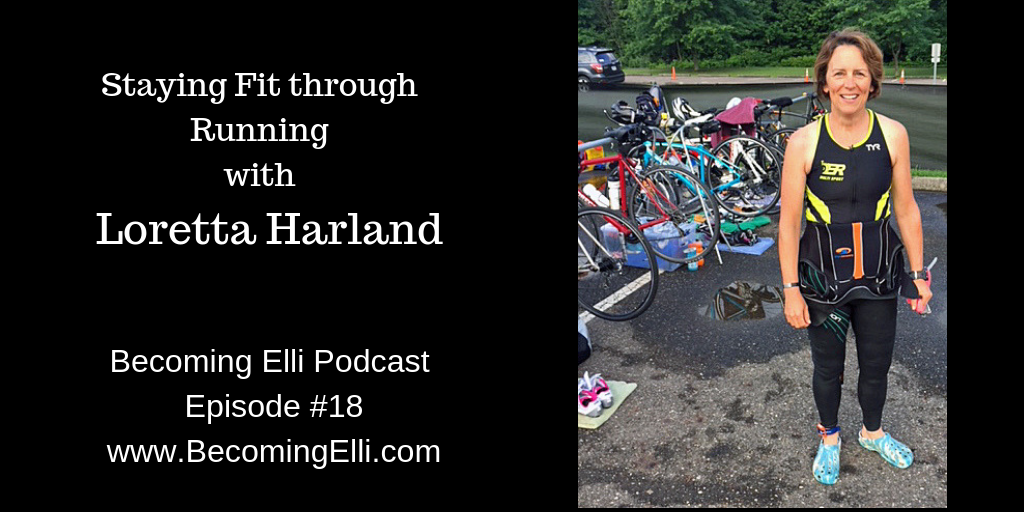
Staying Fit through Running with Loretta Harland

Podcast #18 of Becoming Elli where fit and strong women over 50 inspire and encourage each other.

Podcast: Download | Play in New Window
Subscribe: Apple Podcasts  (iTunes) | Google Podcasts | Android-Google Play | Stitcher | Player FM | Castbox | Tunein | Spotify | RSS

Loretta Harland has completed 21 marathons, qualified twice for Boston and was on a winning 8-person relay team (all women) for the Burning River 100.

“Being fit and feeling healthy means everything as far as our happiness everyday and hopefully adding some longevity to our lives.”

Staying Fit through Running

She started running in high school, but it was in her 20’s that she started challenging herself to run longer distances.
Loretta ran her first marathon when she was in her 30’s. Now that she is in her 50’s, she is competing in triathlons (swim, bike, run.)

In June, she won her age division, in her first Olympic distance triathlon (swim 1500 meters, bike 24.9 miles, run 6.2 miles.) In August, she completed the Ironman 70.3 in Delaware, Ohio, (more than twice as far.)

“I learned this the hard way… you might think that after a half marathon or even greater distance like an ultra marathon, you should just rest, prop your feet up on the couch, but the best thing you can do is keep moving.”

In podcast #18 she shares:

  • How she trains
  • Why she keeps running
  • What motivates her
  • What steps she takes to keep her from getting stiff and sore
  • How she keeps things fun

About Loretta Harland:

Loretta plans to run long distances, play tennis and compete in triathlons into her mid to late 50’s and beyond. Her plan for aging gracefully is to keep active, eat as healthy as possible, challenge her brain by learning new things, and let go of stress.
In her professional life, Loretta Harland, PMP is the founder of PM Trailblazer. It is a company that specializes in training and coaching professionals, managers, and executives in project management, product development, and more. Throughout her career she’s worked with, coached and trained professionals in North and South America, Asia and Europe. Wherever she travels, she finds time to run outdoors.

Loretta can be reached at Harland@PMTrailblazer.com. Visit her company’s website at PMTrailblazer.com.

In the Quick Tips section of the podcast, Jill shares benefits of fermented food, why they are so important to incorporate into your diet and discusses various fermented foods like sauerkraut, miso paste, kambuchi and yogurt.

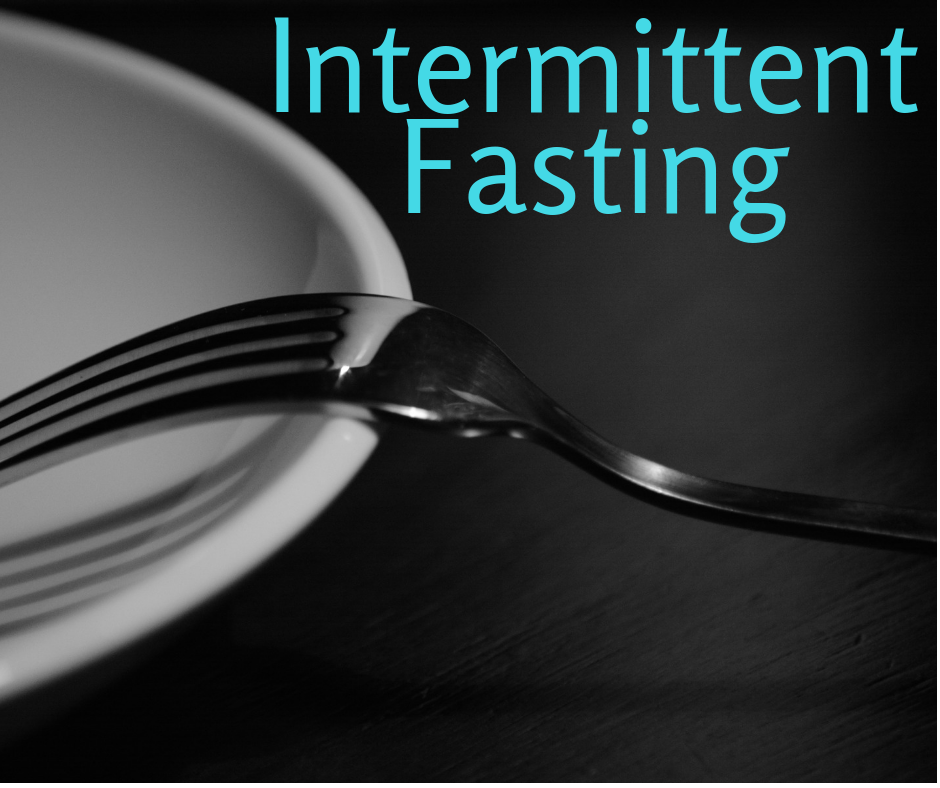
Intermittent Fasting for Weight Loss and Health

Everywhere I turn, I run into someone saying that intermittent fasting is the thing to be doing. I’d say it’s just a trend but a number of doctors and medical experts seem to be recommending some version of intermittent fasting.

Intermittent Fasting is not a diet. It does not involve what you choose to eat but when you eat it. Most doctor’s and nutrition experts will recommend that if you’re going to try intermittent fasting, you should still eat in a healthy fashion. Don’t let the fasting make you think that stuffing yourself with cheese curls is a great way to break a fast.

In The End of Alzheimer’s, Dr. Bredesen recommends an intermittent fasting plan. He suggests that you at least have a 12 hour window of fasting, which means you should have a 12 hour period of time each day of not eating. So, if your last meal or snack is at 7 PM, you can have breakfast at 7AM.  If you’re snacking at 11 PM, guess what? You’re supposed to wait until 11 AM to eat. To be honest, Dr. Bredesen says you should avoid eating in the 3 hours before going to bed, so you wouldn’t be snacking at 11. He says it might be even better to aim for 14 to 16 hours of fasting. Basically, if your last meal at the end of the day ends at 8 PM, you don’t eat until 10 AM. You can check out my review of this book.

So, all those people who said over the years, I don’t want to eat breakfast were perhaps on to something.

I’ve seen similar recommendations from Dr. Steven Masley, Dr. Mary Hyman, Dr. Perlmutter, and others.

Benefits of Intermittent Fasting

Why should we practice intermittent fasting? What’s the benefit to us? Well, a number of medical studies have shown that fasting helps us:

  • improve our mental health
  • lose weight
  • lower our risk of developing a chronic disease.

It helps with weight loss. There is the basic fact that if you’re omitting a meal each day, you’ll probably eat less. But there’s some evidence that this actually increases your metabolism. Also, intermittent fasting helps your body burn fat as energy which of course leads to weight loss.

Besides weight loss, intermittent fasting reduces the insulin resistance in our bodies which lowers our risk of type 2 diabetes.

Intermittent fasting also helps improve our mood and our memory. It’s supposed to be good for cognitive health.

Types of Intermittent Fasting

The method of intermittent fasting that I described above can also be called a time restricted fast. You eat every day but just limit the hours when you eat.

Intermittent Fasting

Related to the time restricted fast is the One Meal a Day plan. You can guess what this is…you eat once a day. Obviously if you’re eating one meal a day, you’d better make sure it’s a good one. I’ve met a number of people who eat this way and they claim to have lost a lot of weight and to like eating this way.

There’s also a 5:2 plan. Two days a week, you eat a restricted diet of about 500 calories and a normal number of calories the remaining 5 days.

There’s also a monthly fasting plan where once a month you reduce calories for 5 consecutive days to about 35 to 50 percent of your normal caloric intake. So, you normally eat 2,000 calories a day, you would reduce that to 700 to 1,000 calories for 5 days in a row.

Finally, some people fast for 24 hours at a time, a couple days a week.

Best Practices with Intermittent Fasting

Before you start fasting, make sure you don’t have health issues to prevent this. Women who are breast feeding should be careful with fasting. Also, if you suffer at all from any eating disorders, you might want to avoid fasting of any kind. If you are under a lot of stress, it’s probably not the time to add a major change in your eating patterns. Why introduce more stress?

If you’re not sure if you’re a candidate for trying intermittent fasting, check with your doctor.

Once you decide that you want to try intermittent fasting, keep a few things in mind.

  1. Remember to drink your fluids. Water, calorie-free drinks, black coffee, and green or herbal tea are probably all fine for you. Be sure you stay hydrated while fasting. Also, sometimes we feel hungry when we’re really thirsty.
  2. Get plenty of sleep. Your body needs sleep to repair itself. Sleep helps with cognitive health as well as physical health. Plus, while you’re sleeping, that fasting time goes by a lot faster.
  3. Be careful with working out when you first start. While your body is adjusting to fasting, you probably don’t want to also decide to take up some heavy duty workout regime. Be patient and let your body adjust. Then you’ll be able to tell how much working out you can handle in a fasted state. If you’re doing the 2:5 method, consider those two days of restricted calories as your rest days.
  4. Make sure you’re eating nutrient-dense foods when it’s time to eat. If you’re not eating for an extended time, you really want to make sure you’re getting your vitamins, minerals, fiber, fat, protein, and so on in your food.


Transitions between Seasons

The weather is going through a transition this week. From super hot to rainy and recently muggy. I’ve also noticed the leaves are falling. Here in Ohio, it’s nothing like what folks are dealing with in the Carolinas. We may get some rain in a few days, but it may just feel like the season changing as well. The forecast has it going back into the 80’s again later in the week.

Exercise Transitions

Transitions of the seasons call for a transition from biking to hip strengthening to running for me as well.

It seems weird to me to think that I haven’t ridden my bike for an entire week. Bike riding has been such a big part of my summer. Last weekend I was a course marshal at NEOcycle in Cleveland. They closed the shore way expressway so that hundreds of bike riders could decorate their bikes with lights and ride along to see some of the best sites of Cleveland at night.

This week I’ve been concentrating on cross training and strengthening for the Akron marathon.

After going to get some physical therapy for my Achilles tendonitis (cupping, dry needling and the massage boot), I’ve been faithfully doing the exercises the doc gave me to strengthen my hips. The thing I love about it is that she worked on my tight calf, but also gave me physical therapy information so that I can resolve the core problem.

My problem is weak hips in the side to side direction. I’d been doing squats, dead lifts and lunges, but those work the forward motion. Now I’m focusing more on doing sideways walks. I’ve heard them called duck walks or monster walks and I demonstrate in this video.

Using the Theraband and doing this type of walking sideways helps to strengthen the hips. I find that I am strong in the forward plane. So much of the biking and running is a forward motion that uses the quads. But on the other hand, when I’m not working out, so much of my day as a marketing consultant involves sitting at a desk, in a meeting or driving to an appointment. I find that sitting and forward motion are my two levels of activity. No wonder the side-to-side strength is compromised.  I’ve only been doing these for a week and feel better.

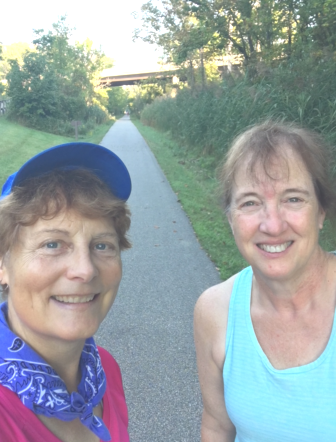
Today Jill and I did a training run which will be my last long run before the Akron half marathon in two weeks. She and I did a lot of run-walk-runs (90 secs run with 30 sec walk break.) I also made sure to walk up the hills in an effort not to stretch my Achilles. I was hoping that it would really help to have my muscles recover with a break ever minute and a half, so ultimately I run 3/4 of the time, walk 1/4 of the time and end up not cramped or injured.

transitions between summer and fall

At the start of our almost 10 mile run-walk training run.

We are lucky enough to have some beautiful trails to use for our training run.

There is a lot of wildlife too. In fact, I saw a tiny snake at about mile 8.5 and jumped “a mile”, re-injuring my Achilles that I’m trying to baby. Even thought was a tiny little snake, but I am terrified of snakes so when jumped all my muscles tightened up. Not good.

The rest of today will be dedicated to R-I-C-E (Rest, Ice, Compression and Elevation.)

I did manage to spend 10 whole minutes in an ice bath when I got home and I think it helped. Being in a very cold tub definitely distracted me and at least had my mind focused on how incredibly cold I was feeling!!

Transitions in Food

When the change in the weather comes, my eating habits change too. Last night I made vegetable soup for dinner and added some already cooked brown rice at the last minute. Delicious! Next I’ll be making some pumpkins spice smoothies and pumpkin spice butternut squash soup in the Vita-mix.

How do you deal with the onset of fall? Does the change in weather change your exercise habits? What you eat? Leave a comment in the section below.

Recording Your Body Measurements

Today I want to talk about the value of recording your body measurements. We’ve talked about weighing ourselves in this blog (To Weigh or Not to Weigh) and I think that’s a useful measurement to track. It’s certainly useful to know that your weight jumped five pounds in the past month.

I gained some weight on my super-duper exciting summer of travel and now I’m trying to take it off. I went to the beach twice and on a ten-day visit to Italy and had a great time. There always comes that moment when you come home and jump on the scale. Sigh. Putting weight on is so much easier than taking it off. It doesn’t seem fair, but I guess it’s also a lot more fun to put the weight on than to take it off.

I’m back to working out and I’m training to run the half marathon at the end of September. That actually made me start thinking about the weight because I figured the running will be a bit harder if I weight more. It’s hard enough running 13 miles without adding extra weight.

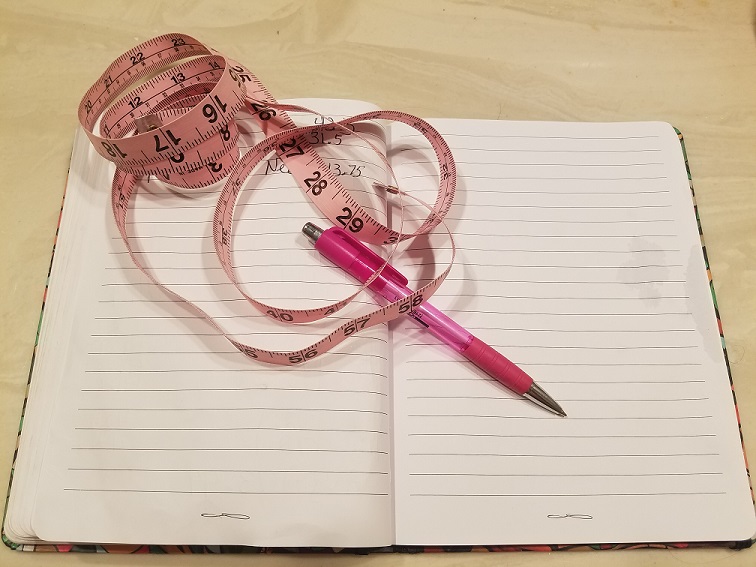
I keep a log of my weight. It’s just a paper journal that I use to write the date, my weight and the body fat number that my scale gives me. I flipped back to last year and found that last year in September I weighed 5 pounds less. OK, so I felt a bit better because it feels like I gained more than that. It made me feel a bit more confident about running the half marathon.

Body Measurements Journal

Tracking Body Measurements

Besides recording my weight and body fat percentage, I also measure myself about once a month. I weigh my waist, at my navel, the widest part of my hips, and around my right thigh. Once in a great while I measure my neck but it’s difficult and I don’t think that number is very accurate.  I don’t measure anything else because it’s hard to do on myself. These numbers work well for me. These body measurements allow me to see my progress or lack of progress.

I write these numbers down in my log too, which allows me to refer back to them when I want.

When I returned from all of my vacationing, not only had I gained weight, my measurements had all gone up by an inch or more. That was alarming to me. So this is what I checked today. I’ve only lost a couple of pounds since I gained the weight over the summer but my measurements have improved. I’m not quite where I was at the beginning of the summer but it’s going in the right direction.

Here’s the interesting thing. I went back to September 2014 in my log. (Yes, I’ve been keeping this log for a while.) My weight is about the same number as it was then BUT my measurements are still consistently less than then. So, I weigh the same but I am thinner. That’s because I obviously have more muscle now and less fat than I did then.

This is why just fixating on what the scale says can be so misleading. Weight only tells you so much. It’s a great indicator of how you’re doing but don’t count on it as the ultimate fitness number.

You can do a similar thing by using a pair of jeans or some other item of clothing and try it on periodically. I like having the actual numbers but you may not like data as much as I do.

Body Measurements at the Gym

Besides the measurements that I do monthly, I get assessments done at my gym where they weigh me, calculate my body fat, and take body measurements.  They do more measurements than I can do so that’s also nice. Besides waist, hip, and thigh, they include chest, arm, and calf.  I do this approximately every six months or so. It’s also a great way to keep my eye on my progress.  Sometimes I’m delighted by the results. Sometimes I’m not so happy and I work on a plan to improve what I’m doing.

Body Fat

I’ll do a separate post about body fat some time because I’ve had this measured in different ways. It’s interesting how those results can vary.

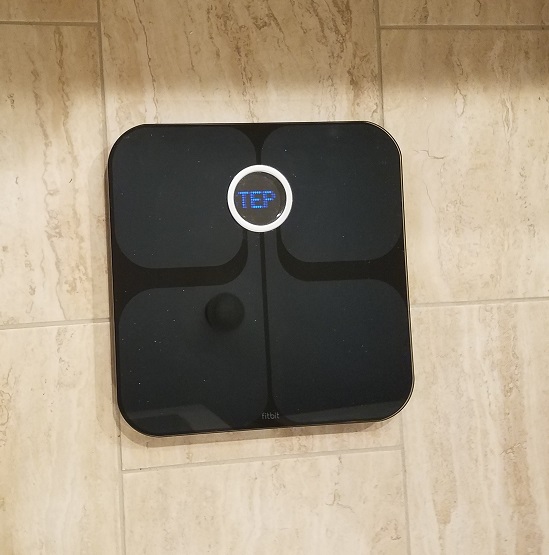
For my own personal log, I just use the number on my Fitbit Aria scale. I know it’s not the most accurate body fat measurement but it’s consistent. I can see how I’m doing on a daily basis. So right now my scale tells me that I have more body fat than I did six months ago.  It goes along with tracking my weight.

I don’t know that it’s the most important data in all of this but I track it just because the number is there in front of me.

Recording Body Measurements

Here’s my advice on tracking weight and such. Include measuring some parts of your body. Just grab a measuring tape and weigh what you can. Record it somewhere. If you use a food tracking app, you can usually add it there. I just write it down in my trusty journal because it’s quick and easy. Plus, I use food tracking apps inconsistently so I hesitate to rely on one for this.

I use a Fitbit Aria scale. That means it uses the WiFi in my house to access my Fitbit account and logs my weight and bodyfat percentage whenever I use the scale. Therefore, that data is also available online. I don’t log my body measurements there so that’s not included. I bet I could find a way to include that information if I wanted.

Body Measurements and Body Fat

Fitbit probably knows more about my body than my doctor but that’s a discussion for a different day.

I find it helpful in my journey to be fit and strong to keep track of how I’m doing. When I start to feel negative about myself, I go back and see how far I’ve come. If I see that my numbers are backsliding, I can begin to focus a bit more on how I’m eating and making sure that I’m getting in my exercise.

Pros and Cons of the Elliptical

Podcast Episode 17 – Pros and Cons of the Elliptical

Podcast: Download | Play in New Window
Subscribe: Apple Podcasts  (iTunes) | Google Podcasts | Android-Google Play | Stitcher | Player FM | Castbox | Tunein | Spotify | RSS

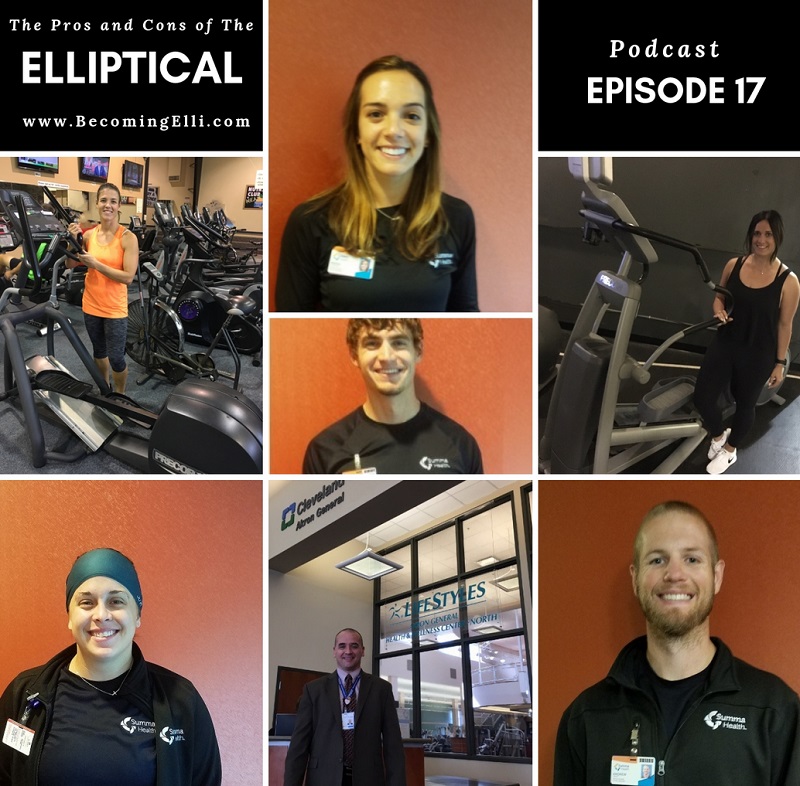
Controversy surrounding the Elliptical was started inadvertently in Episode #5 when Brian Kennel mentioned his thoughts on the Elliptical.  In Episode #17 of the Becoming Elli Podcast, Chris and Jill look for answers when they interview a series of experts on their opinions about the use of the elliptical for women over 50.

In this episode you will hear:

  • The pros and cons of the Elliptical Machine
  • What to use instead of the elliptical
  • Mistakes people sometimes make
  • How to get a great workout on the elliptical
  • Why some people do not recommend the elliptical for women over 50

Experts interviewed include:

  • Sara Renard has her Group Fitness Instructor Certification from AFAA (the Aerobics and Fitness Association of America), Personal Trainer certification from NETA (National Exercise Trainers Association.) She is responsible for all of the group fitness instructors at LifeCenter Plus.
  • Andrew Oravec is a personal trainer, exercise specialist, and group fitness instructor at Summa Wellness Center and has a Master’s Degree in Exercise Physiology from University of Akron. He is a Certified Exercise Physiologist by the American College of Sports Medicine.
  • Jennifer Stefanik is President of Central Wellness and has her Bachelor’s and Master’s Degree in Exercise Physiology from Kent State University. She is a Certified Group Exercise Instructor and Certified Health Coach through American Council on Exercise.
  • Maria Stadelman is a personal trainer at Summa Wellness Center and has a bachelor degree from Ohio University in Exercise Physiology. She has been an athlete her whole life. Maria was interviewed on Episode #1 of Becoming Elli and many women are still downloading and enjoying listening to this episode.
  • Suzanne LaChance is a fitness specialist, personal trainer and group exercise instructor. She is also a certified Zumba instructor and is Certified by the American College of Sports Medicine as a Exercise Physiologist. He holds a Master’s Degree in Exercise Physiology from the University of Akron. She works at Summa Wellness Center.
  • Jacob Weatherbee is a fitness specialist who has a Bachelor’s Degree in Exercise Science from the University of Akron and has a certification in Exercise Physiology through American College of Sports Medicine. He also works at Summa Wellness Center.
  • Mark Feakes is the Director at LifeStyles North at Cleveland Clinic Akron General. He has a Bachelor of Science in Athletic Training from the University of Akron and has many years of experience as a certified personal trainer as well.


Prices for various Elliptical Machines vary. Here are some elliptical machines that may be workable for home use.
Disclosure: these photos link to the Amazon affiliate program, where a portion of a purchase might help offset the expenses associated with the podcast and website.

« Older posts Newer posts »

© 2026

Theme by Anders Noren — Up ↑