Getting sleep for health and fitness is crucial for me. From time to time I ask myself, “What’s the MOST important thing I can do for my health and fitness?”
My first thought usually revolves around food. Something that I shouldn’t eat. Or something that I should eat more of.
Then I think about exercise. Am I getting enough? Of the right kind – not too much cardio and not enough strength right?
But what I have found is the very most important thing for me is getting enough sleep. Followed up by drinking enough water. Those are two really simple things actually, but also some of the first to go when I get busy and stressed.
While the right foods and the right exercise is so important, I find that skimping on sleep is the most critical factor. If I don’t sleep enough, it is almost impossible to get good exercise the next day. And I find I crave carbohydrates, maybe because I am low on energy.
I’ve been focused on good health for many years now. Jill and I started working on our Becoming Elli website in the fall of 2017 and our podcast at the beginning of 2018. It’s amazing all the information I’ve learned during this time and all the incremental steps I’ve taken.
While scientists have learned a lot about sleep and it’s effect on the brain and body, there is still so much more to learn. I know that I can fall asleep quickly and easily, but staying asleep can be harder for me. I also tend to wake up around the same time every morning, regardless of when I go to bed. So setting an early bedtime is important for me.
Besides an early bedtime, I try to have an evening routine that lasts about 15 minutes before getting into bed. It helps me wind down and signal my mind and body that it’s time to sleep. Dark curtains, a slightly cool bedroom, a comfortable pillow, and quiet surroundings with a bit of white noise also really helps.
How important is regular consistent sleep to your health and fitness? Do you consider it the number one thing for your well being? Leave a comment below and let me know what you think.
Gwendolyn Bounds is an award-winning journalist and author of NOT TOO LATE: The Power of Pushing Limits at Any Age.
A few months shy of her 47th birthday, author and journalist Gwendolyn Bounds asked herself, “How is it possible to become good at something when you are already far behind and time isn’t on your side?”
Her intimate story takes us from playgrounds and gyms, where Wendy trains among children and athletes half her age, to far-flung Spartan Race courses – including the vast desert of the Middle East.
As she moves from the back of the pack to eventually become a podium finisher in her age group, Wendy captures the humility, challenge and elation of pursuing something bold and new amid the realities of midlife: caring for elderly parents, a demanding job, and a body no longer in its prime.
Gwendolyn Bounds c. Jennifer Barrett of New Light Creative Services
We discuss:
The secret weapon of harnessing “crystallized intelligence”
Dynamic warm ups, stretching cool downs, hydration, good sleep and avoiding aches/pains
Studying videos of the best racers to learn their edge
The difference between “atelic and telic” activities – wake up to enjoy those activities that never completely end
How conquering obstacle racing has affected other areas of her life
Wisdom of being older with patience and perspective and using it to get an edge over the competition
Using a cooling chilly pad (www.eightsleep.com) for getting better sleep
The power of pairing yourself with people in your life that will make you better
Eating a Mediterranean diet, hydration, ice, massage, coaches, physical therapy and recovery exercise
While this past year has not been one with a lot of big activity for me, some of the routines and habits I have put in place are really helping me to stay fit.
I noticed that I automatically do some things, mostly out of habit, but they are helpful, healthy routines that I thought I’d share.
The things that I learned – especially about habits – have really helped me to stay more fit and active than I would have.
Over the past year+ (during the Covid pandemic), I haven’t had the type of big goals like I did set a few years back. However I’ve still been able to keep up some exercise. While I’m not running any races right now, I still try to continue a healthy eating, an exercise routine and get good sleep.
Here is a look at the 3 key areas of fitness and how my routines and habits are helping me.
1) Food -I’m in the habit of roasting veggies in the morning when I’m preparing my breakfast. I don’t seem to want to overeat or emotionally eat at breakfast time so it’s an easy way to prep for dinners or late afternoons when I feel more like indulging. If I have healthy foods prepared, I’m so much less likely to eat something that I regret. Cooking up some quinoa, or roasting veggies, or popping something into the slow cooker always is a good thing. I weigh myself every morning and make sure to drink enough water.
Eating a meal outside at an area restaurant with a friend is a huge indulgence for me these days. I’m pleased that I ordered a spinach salad and that steak on top was delicious too. Dressing on the side means I cut a lot of nasty fats/sugars that I really didn’t want. One beer felt extremely indulgent for me. This photo was taken back in September and I’m still reveling in the time together.
Eating outside in the open air made the restaurant meal feel less worrisome to me.
I know that 80% is food and 20% is exercise when it comes to maintaining a healthy weight.
2) Working Out – I’ve barely been to the gym in the past 20 months, but I am doing a lot more gardening and lawn work. It’s not the same kind of exercise but it’s still getting me out of the house and off the couch. This past week I actually made it to the gym three times and got a spinning class in as well. It took a lot of mental discipline for me to walk through the door as I deeply concerned about spreading germs. But I know I need more cardio and strength training than I can do for myself at home.
Some of the exercises involve walks with Peanut, others are lawn work. This past week three of my exercise sessions are from going to the gym. My mantra is “progress not perfection” at this point. Some of the exercise is raking leaves, pulling out overgrown vines and cutting back my perennials. I continue to do strength work at home with some heavy (for me) weights, but I could really do with increasing it to keep my muscles strong.
3) Sleep – I’ve written about sleep issues before and some of the routines I do to improve my sleep. A lot of times people don’t consider sleep as key ingredient, but I know if I don’t get enough good sleep, eating right is a huge challenge. It’s like my energy levels are much lower the next day and I crave sugar and caffiene to feel peppy. If I get a good night’s sleep, I can eat right and feel like doing more activity.
I have downloaded many books on the library Libby app to learn more methods of meditation, Yoga Nidra, deep breathing exercises and other ways to stimulate the parasympathetic nervous system. All these have definitely benefited my sleep.
Some nights my sleep is still is plenty elusive, so having these tools has been a great help.
Another useful app I’ve really enjoyed is called insight timer which has many sleep recordings from bedtime tales (who doesn’t like a book read to them), naturescape recordings of things like rain, ocean and crickets/toads, as well as sleep meditations. I have not yet subscribed but when an audio book can’t lull me to sleep, the insight timer app usually comes to the rescue.
My favorite “go to” is the hour long Deep Sleep Guided Meditation by Kenneth Soares. Second favorite is the 20+ minute Yoga Nidra for Sleep by Jennifer Piercy.
Do you listen to sleep meditations?If so, what are your favorites?
What habits for healthy eating, fitness and sleep do you have as part of your routine? Please leave an email (chris@becomingelli.com), or a comment below, or even a voicemail at 330-970-6662.
I’m just not sure about the CBD products that are on the market. I have to say, when it comes to this, I am not an early adopter. As a baby boomer who grew up super straight in the Midwest, I remember being severely cautioned on the effects of marijuana by my parents and watching the scare movie called Reefer Madness.
So now that 33 states have approved the legal status of cannabis (marijuana) for medical purposes and the remaining 17 allow cannabidiol (CBD), maybe I need to rethink my outdated opinions on it. In Ohio you can buy it in many places, right off the shelf, over the counter.
Even my local grocery store is touting the benefits – not only for humans but for dogs.
I understand it’s used for arthritis pain, for anxiety, for sleep, even epilepsy and schizophrenia.
Some people report side effects, but others say it really works well for them. In a 2019 survey by Consumer Reports, 15% of people over 60 have tried it and in the general population, 3/4 said it worked at least moderately well with 48% reporting it was very or extremely effective.
Some of the women over 50 who blog about their workouts have talked about it, like Wendy when she reviewed the book, “The Athletes Guide to CBD“.
Have you tried it? Why did you use it? Does it work? How do you use it, by rubbing the oil into your joints? (I’m referring to aching joints and ligaments.)
Typically we don’t think about sleep, or the quality of sleep when we talk about being fit and strong, but obviously sleep is critical for health and fitness.
Not having good quality sleep at night will just about guarantee a cranky day for me. Everything seems like a chore when I’m tired.
I am the type of person who falls asleep quickly but sometimes can’t stay asleep. It seemed to start for me in my 30’s, after children were born, but became more difficult to manage after I turned 50.
Since then, I’ve read several books about it and have gathered lots of helpful ideas on how to improve the quality of sleep. I imagine there are other fit, strong women over 50 who also struggle with this, so I thought I’d share some of the ideas here on Becoming Elli.
My personal goal is to get seven and a half hours of sleep each night. Sometimes I may have to spend up to 9 hours in bed to accumulate that much sleep. I tend wake up often, sometimes just for a minute, sometimes for 10 minutes or longer.
Sleep Stages
You probably know that there are different stages of sleep each night, and that each stage serves a different purpose.
Deep sleep usually happens earlier in the sleep cycle and helps the brain to be cleared of toxins. With deep sleep you typically don’t remember sleeping and time seems to go by very quickly.
Light sleep is the stage of the majority of sleep and you may awaken several times in this stage. A lot of tossing and turning during the night might be considered light sleep. Light sleep is still important for your body to refresh and rest. Light sleep is often the majority of the sleep time and usually in between going to sleep, deep sleep, REM sleep and waking up.
The third stage is REM sleep – Rapid Eye Movement. This is more typically considered the dreaming sleep. It is usually toward the end of the sleep cycle. Waking up with an early alarm may interrupt your REM sleep and that’s why you might remember a dream so vividly. REM sleep helps you make sense of the world, organize memories and deal with emotions. The brain is very active during REM sleep but your body has temporary muscle paralysis so you don’t act out your dreams physically.
I crave at least 60 minutes of deep sleep. I have found the only way to ensure that is an “early” bedtime. If I go to bed after 11, I can’t make up the sleep on the other end, even with sleeping in, so I strive for 9:45 at the latest.
According to the chart on my FitBit, it’s not unusual for women in their 60’s to spend more than 16% to 27% of the night awake. That seems like a lot of waking up to me. I have an average of 14% awake and a 7 and a half hours asleep average going for the past 30 days.
Overall, I find it’s easier to get my sleep in the winter because its a little colder and a little darker than the summer. Being more active in the summer helps me to counteract the shorter and warmer nights.
My FitBit also counts the time I lay in bed awake before falling asleep and after waking up but not getting up. I try to get up at least 3 minutes after waking up if possible. While I like checking the stats on this monitor, it’s really about how I feel both mentally and physically that makes a difference to me.
There are lots of reasons people have a difficult time with sleep. If you have trouble sleep ask yourself these quick questions to see if you have room for improvement in your sleep hygiene behaviors.
Take this Sleep Hygiene Quiz
Do You:
Avoid naps in the afternoon or early evening?
Follow a 15 or 20 minute pre-bedtime ritual?
Limit screens 1 hour before bed?
Stop drinking caffeine? (or eating chocolate) early in the day
Only use the bedroom for sleeping? (not eating or watching TV)
Get your exercise earlier in the day? (not right before bedtime)
Keep your bedroom dark and quiet?
Practice meditation, deep breathing or a warm bath before bed?
Go to bed at the same time each night?
Some people who have trouble falling asleep may also have trouble staying asleep.
Here are two ways that I find helpful to get back to sleep if I wake up and don’t fall right back again.
Relaxation Breathing:
The first one is Yoga inspired. It’s a deep breathing exercise, described by Dr. Andrew Weil. It’s called 4-7-8 breath where you breath in your nose for a count of 4, hold for a count 7, and breath out your mouth for a count of 8. He explains it at length in an audio book called Breathing: The Master Key to Self Healing. (Yes, it’s a 2 hour listen with lots of background information and a guided workshop.)
Dr. Weil teaches this technique to all his patients, other doctors and just about anyone who will listen. He considers this breathing technique to be the one thing that everyone should do for optimum health.
Body Scan:
The other technique I use to improve sleep quality and get back to sleep quickly is a body scan from toes up. There are many apps that offer a guided meditation way of doing it. If you listen to one of them a few times, you’ll get the idea, but it’s best to do it just in your own mind.
This website shows a script that you could record for yourself. The advantage of listening to a calm voice that prompts you what to do helps keep your brain from having to think and relax at the same time. I like to start from the toes up.
When we talked about this in our recent podcast (#34 Improving Health with Training, Sleep and Omega 3), Jill said she also would do a modification of the body scan technique for her young son when he had trouble sleeping. She suggests tightening each section and then relax it for a better effect. I bet that would work well, too!
I really focus on improving sleep quality to get a good night sleep after weight training and working out because I know that it is an important part of recovery. This is when the little muscle tears during exercise during the day gets repaired. The new muscle growth happens with blood flow to muscles helping for muscle coordination, improve reaction time and rebuild the muscle. Sometimes this takes two days after a really hard workout. Not getting enough sleep at this time can lead to problems like hormone imbalance, bad mood, additional stress, difficulty concentrating and slow muscle repair.
Sleep is very important for memory, concentration and focus, learning and overall health.
Do you have trouble with sleep? What have you tried to improve sleep quality? What works? What DOES NOT work!? You can leave a voice message at 330-970-6662 or send me an email at Chris@BecomingElli.com. I’d love to hear your thoughts.
In episode 34 of the Fit, Strong Women Over 50 podcast for the Becoming Elli community, Jill and Chris discuss a variety of ways for improving health.
Improving Health
There’s more to becoming like Elli than we like to think. It’s not just eat vegetables and get 10,000 steps a day. Jill and Chris cover some of the other aspects of being fit and strong. They discuss:
their training this spring
problems that arise with sleep and how to avoid them
the importance of including Omega 3 fats in the diet
Chris and Jill discuss how they’re training for progress into summer and how they’re dealing with or avoiding injuries. Biking, running, yoga, and strength training are the major forms of activities.
Chris is also giving back to the running community by volunteering at aid stations for a variety of races.
Sleep
Chris explains:
why sleep is so important
why it can be difficult to fall asleep
how to improve sleeping habits
She also discusses some new research about how our body “cleans” our brains while we sleep.
Jill discusses why it’s important to have Omega 3 fatty acids in your diet and ways to increase your consumption of Omega 3s. This includes using supplements such as fish oil or krill and foods that are rich in Omega 3s like salmon, sardines, and walnuts.
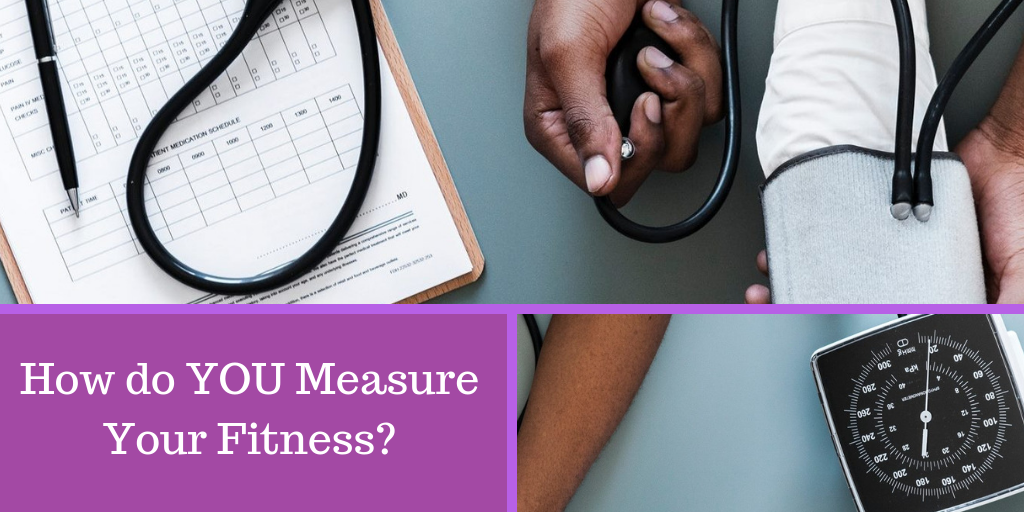
I am guessing that the first answer would be weight. Maybe stamina vs fatigue?
As women in 2018, we have the opportunity to access so much information, it can be overwhelming and obsessive. Those who know their numbers may point to BMI or A1c or VO2Max. Or waist size or blood pressure.
As I go deeper into focusing on fitness, strength and getting healthy, I’ve discovered that there are always new numbers and measurements to fine tune things.
When I first started running/walking/jogging in 2009, I wanted to know how long it took me to go one lap around the track, one mile and a 5K. Those became numbers I worked toward improving. I hadn’t even heard of VO2 Max and even now, that number is something that I associate with athletes who would be knowing and tracking their numbers.
During my years of going to Weight Watchers from 2007 to 2013, there were weekly weigh ins. During the week, I would be counting points that WW had assigned to various foods. After I reached my goal weight, I stopped counting the points and started focusing more instead on fiber grams, protein and looking at healthy omega fats. I became much more focused on counting the number of minutes I exercised each day.
I began to follow my resting heart rate numbers and maximum heart rate. I learned there are lots of ways to measure fit.
As my health improved, then I was looking into complex carbs vs simple carbs vs processed food. Is white wine really better than red wine (or just NO wine??) Fish vs chicken vs red meat vs beans and other legumes? I joined the nutrition club at my gym.
And the numbers started to become more refined as well. Blood draws to get much more accurate numbers than jumping on a scale in the morning.
For lipids, I’d used to just track only my total cholesterol number. Then it was tracking my HDL and LDL along with triglycerides. Next I was focusing on the particle sizes. For glucose, most of my tests included just one number. Now I’m more interested in A1c.
During this past year I began tracking my sleep — not just the number of hours that I sleep. (I used to count the hours I went to bed and got out of bed.) Now I have information about how long I have had deep sleep, REM, light sleep and awake hours.
Maybe I’m too obsessive about measuring my fitness, but at the same time, I find that tracking is a powerful tool for measuring improvement. It helps me to find out that what I am doing isn’t working or is working.
I’m curious about the other members of the Becoming Elli community. Do you follow your numbers? And if so, which ones and why?
We all know that getting healthy isn’t just about eating right and exercising. Getting enough good quality sleep is important.
Personally, I feel like sleep deprivation is torture for me. I don’t know about you, but I’m always researching articles about how to improve your sleep. Some people can handle 4 -5 hours of sleep once in a while, but I can’t. I really need a solid 7 or 8 hours a night to feel right. I’m also the type of person who likes to wake up early, but not to stay up late.
I find that without enough sleep:
a sniffle turns into a cold
a cold turns into sick
annoyed turns into cranky
tired turns into exhausted
life just seems much harder
it’s hard to pay attention the next day
can’t remember things (like what I’m in the midst of doing)
Why is sleep so important? Whether we realize it or not, there is a lot going on during sleep.
The body relaxes, rebuilds and recovers. The brain goes into different states of sleep, for instance, a slow wave deep sleep or a Rapid Eye Movement sleep. Sleep also helps to wash out wastes in the brain.
Although I’ve never tried anything like that, I know that if I don’t get enough sleep the night before, my body wants more energy. It will send signals to my brain all day that makes me want to overeat to try to get more energy.
One night last winter, I stayed overnight in the hospital, when a family member needed me. I cat napped in the chair next to their bed. By morning, I realized this was a big mistake. I was completely wiped out of reserves, both physically and emotionally. It took me quite a while to get feeling back to regular again.
This won’t work for me because the lights are on, sleeping face down, and cold feet are sticking outside the covers. This would result in a sleepless toss-n-turn night for sure.
So how can we improve our sleep? I know for sure that I sleep better if I exercised in the morning. Even though some people find exercise at night to be easier, it’s too much stimulation for me.
Try these 7 ways to improve your sleep and wake up more refreshed
Quiet the hour before going to bed – Develop a nighttime routine during the last hour you are awake. Don’t do anything too strenuous or difficult — maybe something like take a warm bath, set out your clothes for the morning, and turn down the covers. Try to do things in the same order so that they become automatic. I like to get my bed ready with a rice bag so I’m not too hot, not too cold. I use rice bags at my feet when I go to sleep, but later I wake in the middle of the night to throw the covers off because I’m too warm.
Go to bed the same time every night – We all know that daylight savings time interferes with sleep. Falling back or springing ahead with the time change always messes up my normal rhythms. Did you read where in the spring, when clocks are moved ahead, a study showed the number of heart attacks increased significantly on the Monday after the time change? Although napping can mess up my sleep cycle, if I know I’m going to be out late and won’t be able to go to bed at my normal time, I find a nap is a good alternative. It’s best if I can catch a nap in early afternoon, but that’s sometimes difficult with my work schedule.
Set up the bed the way you like it – Arrange the pillows for your head, your body and maybe even your knees before you go to bed. Get the right sheets, blankets and covers that match your personal preferences. Use a mattress that is firm, soft or medium depending on your needs. Wear your favorite pajamas. In the morning, make your bed, so it’s ready to go the next night.
Wake up at the same time pretty much every day – It will train your body when to expect to get up. If you sleep in on the weekends or get up a whole lot earlier than usual, you need to give yourself extra time to get out of bed and to get ready. A consistent routine has been shown to improve sleep patterns.
Stop coffee or any caffeine at noon the day before – (I find chocolate affects me too, if I eat it later in the day.) Try not to eat anything a few hours before you go to bed. Drink large glass of water with dinner, but try not to drink too much right before bedtime, so you don’t have to get up in the night. Drinking alcohol is also known to interfere with staying asleep.
Control the light – Part of sleeping and waking is cued by light for natural circadian rhythms. I think that is one reason why it’s easier for me to sleep on a rainy day or in fall/winter compared to sunny days and spring/summer seasons. Some people find that black out curtains or a sleeping mask helps. I know that the light from screens don’t help, so try not to watch TV or look at your phone right before you go to bed.
Eliminate extra noise – It’s difficult to sleep in unfamiliar surroundings when there are different noises. Having quite white noise of a fan or very low volume of soothing sounds helps me to stay asleep. A TV playing in the other room or even voices talking outside can interrupt the all important deep sleep or REM sleep. Sometimes ear plugs can do the trick.
What do you do to get to sleep and stay asleep? Leave a comment below or send me an email at Chris@becomingelli.com.
"We emulate Elli because she was the Norse Goddess of Aging who beat Thor in a wrestling match. We want to be like Elli, fit and strong as we age."


 If I have healthy foods prepared, I’m so much less likely to eat something that I regret. Cooking up some quinoa, or roasting veggies, or popping something into the slow cooker always is a good thing. I weigh myself every morning and make sure to drink enough water.
 Eating outside in the open air made the restaurant meal feel less worrisome to me.