Fit Strong Women Over 50.

Category: Weight (Page 1 of 3)

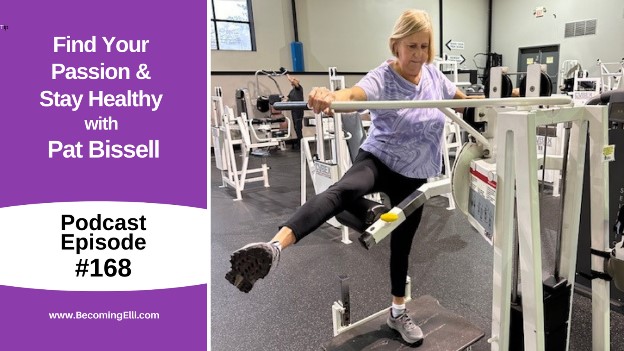
Find Your Passion and Stay Healthy with Pat Bissell

Find Your Passion and Stay Healthy with Pat Bissell #168

Download | Open in New Window

Pat Bissell talks with Jill and Chris about how she found her passion and has consistently found ways to stay healthy and fit.

A long time friend of Chris’s, Pat describes herself as a very active mature female. She has been active her whole life always enjoying sports, exercise classes and strength training for the past 25 years.

We discuss:

  • How important the social aspect is to enjoying exercise
  • Working out with strength training on machines
  • Types of cardio she enjoys
  • Working through injuries and rehabbing after surgery
  • Recently turning 70 and keeping fit
  • Lifetime membership in weight watchers
  • Her alternative to butter
  • The key of using Small Steps when you are facing a challenging time
  • Eating lots of vegetables and fruit everyday.
  • Measuring what she eats and enjoying lentils and other healthy grains
  • Tracking minutes or distance with exercise
  • Healthy eating, exercise you enjoy and socializing as a key to staying healthy with food and activity

To ask Pat a question, please email Chris at Chris@becomingelli.com and she’ll pass along your question and email.

Please Subscribe to the Fit Strong Women Over 50 podcastApple Podcasts  (iTunes) Google Podcasts | Pandora | Stitcher | Player FM Castbox | Tunein | Spotify | RSS | Amazon Podcasts | iHeartRadio |

Podcast Partner Spotlight for December 2024:

reinvention rebels podcast

Wendy Battles is a curious soul who loves to talk to people and understand their experiences. She believes that reinvention is a natural part of life and something that many of us have done numerous times.

Listen to the Reinvention Rebels podcast with stories of unapologetic women, 50-90 years young, who have boldly reimagined life on their own terms, to find renewed purpose and possibilities.

Website: Reinvention Rebels
Instagram
LinkedIn
YouTube
Email:  wendy@reinventionrebels.com

Healthy Weight from Spices and Greens

#135 Healthy Weight from Spices and Greens

Download | Play in New Window
Please SubscribeApple Podcasts  (iTunes) Google Podcasts | Pandora | Stitcher | Player FM Castbox | Tunein | Spotify | RSS | Amazon Podcasts | iHeartRadio |

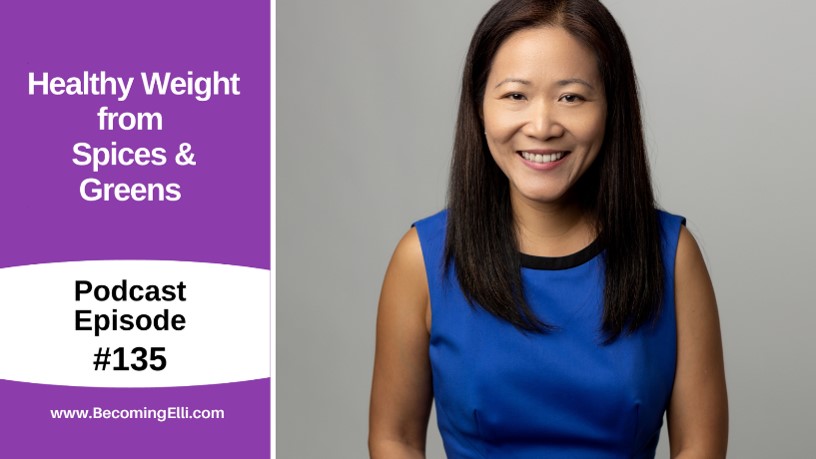
In episode 135, Jill and Chris speak about using spices and greens for a healthy weight with Joanna Wen.

Joanna Wen is a weight loss coach who helps her clients lose weight in a healthy and sustainable way. Her unique approach helps her clients love their food and lose weight without deprivation.

Joanna also helps her clients get to the true root cause of their overeating and remove those blocks so that they keep the weight off once and for all., Joanna specializes in online nutrition and weight loss coaching through her website, Spices & Greens.

Joanna has studied and experimented extensively with the healing powers of food to de-stress, gain energy, and lose weight. When she contacted us, she said that she enjoys learning about nutrition for longevity because she is approaching her 50th birthday.

Healthy weight loss with spices and greens

Joanna Wen uses spices and greens to help control cravings and aid in weight loss.

We discuss:

  • Why it is so difficult to be a healthy weight
  • How she helps her clients with food cravings
  • Special tips for losing weight for women over 50
  • Strategies to stay on track with healthy eating
  • Advice for dealing with hormonal changes and eating
  • Her top food hacks for reducing stress and emotional sweets cravings
  • What tweaks she made in her morning smoother to gain energy
  • Three spices she likes recommends for helping with weight loss and why
  • What type of exercise she recommends for losing weight
  • Why fiber in food helps and how juicing doesn’t work as well

Links:

Intermittent Fasting Insider with Ellen Britt

Episode 116 – Intermittent Fasting Insider with Ellen Britt

Download | Play in New Window
Please SubscribeApple Podcasts  (iTunes) Google Podcasts | Android-Google Play | Stitcher | Player FM Castbox | Tunein | Spotify | RSS

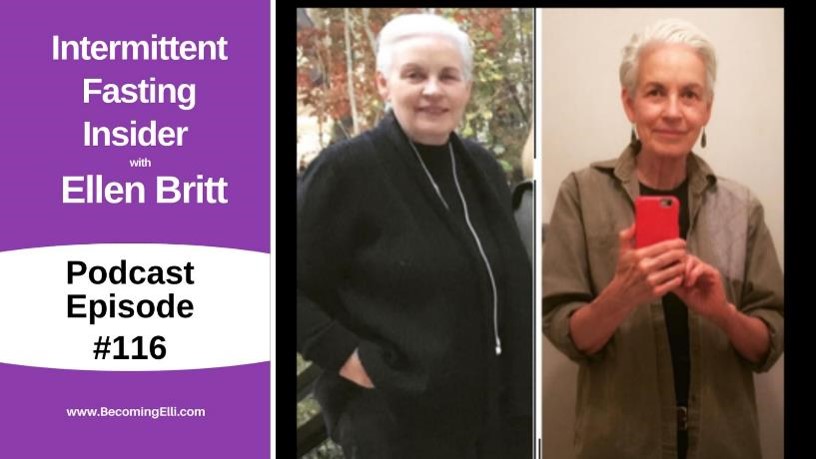
Jill and Chris talk with Dr. Ellen Britt, an intermittent fasting expert. She is the co-founder and principal writer of The Intermittent Fasting Insider, a bimonthly newsletter that brings her audience the most compelling developments in intermittent fasting as well as innovation in practices that can be stacked with IF.

She also co-facilitates with her colleague Denise Wakeman an 1800 member free Facebook group for entrepreneurs interested in intermittent fasting, as well as their latest paid membership project, The Longevity Experience.

Ellen has over two decades of experience as a PA in emergency and occupational medicine. She holds a doctorate (an Ed.D.) in biology, as well as a Master’s in Clinical Psychology. Ellen lives and works just south of Atlanta, Georgia.

You may remember our interview with Denise Wakeman: Adventure Travels with Denise Wakeman

During this episode we discussed:

  • Various types of intermittent fasting
  • Research findings concerning the health benefits of intermittent fasting
  • Which type she recommends for women over 50
  • Medical reasons for not doing an intermittent fasting regime
  • How to get started with intermittent fasting
  • The easiest hours to do an intermittent fast
  • How long to do an intermittent fast
  • Using intermittent fasting with other eating plans like paleo, keto, or vegan

Links for more information:

The Intermittent Fasting Insider, a bimonthly newsletter
Facebook group for intermittent fasting

10 Tips for Healthy Eating Motivation

Episode 84

DownloadPlay in New Window
Please SubscribeApple Podcasts  (iTunes) Google Podcasts | Amazon Podcasts | Android-Google Play | AudibleStitcher | Player FM Castbox | Tunein | Spotify | RSS

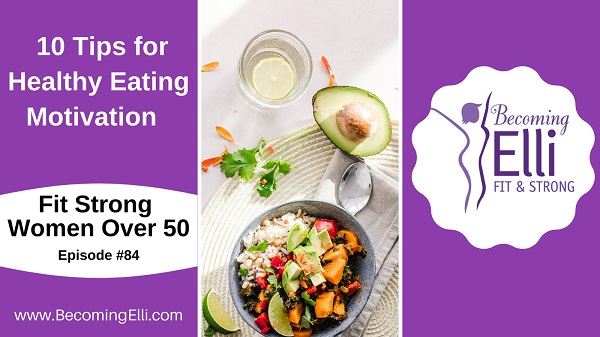
In episode 84 of the Fit Strong Women Over 50 podcast for the Becoming Elli community, Jill and Chris discuss motivation for healthy eating.

We all know that losing weight is hard, but many of us in the Becoming Elli community are committed to keeping the weight off means by maintaining a healthy eating lifestyle.

During this episode we discuss healthy eating motivation:

  1. Set a Goal
  2. Anticipate your weaknesses
  3. Plan your food
  4. Prepare and Prep ahead
  5. Weigh and track progress
  6. Swap out for healthier choices
  7. Find a friend/community
  8. Keep it simple
  9. Make routines
  10. Use a mantra

During other podcasts we’ve talked with nutritionists, dietitians and women who have lost weight and kept it off. Some people enjoy a keto lifestyle, or vegan, vegetarian, paleo, LCHF (Low Carb High Fat), or a Mediterranean diet. Others use intermittent fasting.

We don’t specifically talk about different foods, but more about the motivation to eat in a healthy way. We have found that having discipline will carry your through when your motivation is lacking.

Healthy Eating Motivation tip 5 weigh and track progress

In many episodes of our podcast we talk about motivation for exercise and many of the same tips work for keeping the healthy eating motivation. Remembering your WHY. Working with other people. Having a meal plan and “go to” options.

Thanks for listening! We’d love to hear from YOU! How do you maintain your motivation to eat healthy? Did we miss an important tip that really works for you? Let us know by leaving a comment below or leaving a voice mail at 330-970-6662.

The Joy of a Kettlebell Workouts

Kettlebell workouts are fun. Maybe it is the brightly colored kettlebell weights or maybe it’s because it’s easy to see the progression. Either way, I have loved learning more about these type of weights.

Here are some of my favorite kettlebell workouts for building strength.

The kettlebell swing is probably my favorite of the kettlebell exercises. I like this workout because I can feel it strengthen my hamstrings and glutes… that’s one place that definitely needs it from all the couch time and computer time I end up doing during a normal day.

If you’ve never worked with kettlebells before, I highly recommend you work with a personal trainer to make sure your form is correct! It would be easy to strain your back if you weren’t doing it right.

This applies to any kettlebell workout routine. Knowing the correct form will save you from injury! The same goes for kettlebell deadlifts or clean & press.

I think that the trick of a good kettlebell swing is to bend at the hips when you swing your kettlebell. The swings go all the way, back between your legs and then snap hips forward. After you get accustomed to this exercise, some trainers have challenged me to add one arm swings version by switching arms. I remember the first time I did it! I really was not trusting that the centrifugal force would work and I worried that I would throw the weight!

High plank doesn’t seem like a Kettlebell workout. This one is good for the core. I like to pick a light kettle bell and then slide it underneath me without moving any other part of my body but my arm.

At first I struggled with halo’s and kept bumping it on my head. Not fun. But with a little practice I got better at it!

The goblet squat is a great way to increase your challenge from a regular squat.

Although he may have worked up to his goal in this Christmas ad featuring a kettlebell, I would not recommend starting with a real heavy kettlebell on a challenging exercise. Nor do I use kettlebells that are all one black color. A one color set of kettlebells would take away a lot of the motivation for me.

I like to get ideas from NerdFitness and of course, Nia Shank, who was a guest on our podcast. Here’s an oldie but goodie kettlebell circuit.

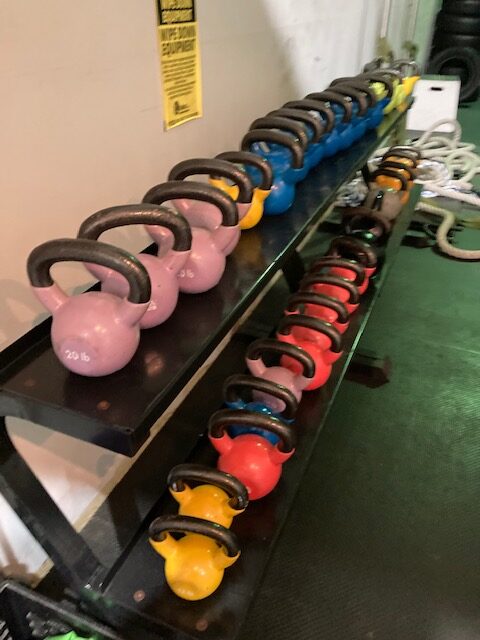
I’m lucky at my gym that there are colorful kettlebells. I think it’s a nice thing of using colorful kettlebells of varying weights. You can work up from the yellow to the green to the blue to the purple. The colors are a real incentive for me. I can tell at a glance I’m improving or just staying the same.

The First Steps to Losing Weight

What are the first steps to losing weight? You’ve decided that you need to lose some weight and now you need to figure out what the first steps are. Sometimes the hardest thing to do when you’re trying to make any kind of change is to simply start.

Do You Need to Lose Weight?

The first step is probably to determine if you actually need to lose weight and why you want to do so. If your doctor has told you that you need to  lose weight, then you probably need to do so. When you realize that your clothes have become tight or you need to buy larger sizes, you probably might consider losing some weight. If you just don’t like how you look, maybe you need to do some strength training instead of dieting.

Once you’ve decided that losing weight is appropriate, what do you do? If you’re like many of us, maybe you decide that you’re going to quit eating everything you like and only eat celery sticks because you remember being a teenager and someone saying that you burn more calories chewing celery than you intake from the celery. (I don’t know if that’s true but I still remember being told that.) If you end up with a diet of celery, sugar free jello, and some wilted lettuce, you need to rethink this.

Before You Start

If you’re going to do this, make sure you can determine how you’re doing. Before you start, do all of the following:

Weigh yourself. If your goal is to lose weight, make sure you know where you started.

Measure yourself. I suggest measuring your chest, waist, at your navel, and hips. You will be able to see results if you measure, even when the scale doesn’t seem to be moving.

Take photos. Use some judgment here because you might want to share some of these later in before and after photos. I suggest that you wear a bathing suit or sports wear. You want to be able to see your body but you want to be able to let others see as well. Don’t forget to take a full body shot and get a good picture of your face.

The First Steps to Losing Weight

Here are some things I’d suggest that you do first.

Track what you’re eating

Use an app like My Fitness Pal or LoseIt! to track your food for a few days. You can also log your food in the Fitbit app as well. The software will tell you how many calories you’re eating, how much fat, protein, and carbohydrates you’re ingesting, and some sense of what kind of nutrition you’re getting. Do that for a few days and then look at the numbers. Where are you overeating? When are you eating? Just get a sense of what you’re doing and what is the easiest to change.

Start Small

Look at what you’re doing and figure out something you can change. Maybe it’s to eat fewer potato chips and substitute in an extra vegetable at a meal. Maybe you see that you’re taking in a lot of calories at that late night snack. If you really want that snack, is there something you can eat that’s a bit lighter? Maybe you can just eliminate that snack.

Drink More Water

Drink some extra water. If you read enough or listen to people about losing weight, they’ll tell you to increase your water consumption. Before you begin drinking a gallon of water every day, just increase what you’re drinking moderately. Let your body adjust to a bit more water. If you’re drinking soft drinks, try to replace some of them with a glass of water.

Look for some support

Making changes in your life can be challenging and finding others who are doing the same definitely helps. Feel free to join the Becoming Elli Facebook group and post there. We’ll help you as best we can. You can pay for a community. For example, WW (formerly Weight Watchers) and Noom both offer communities of people who are doing the same program. This might be a good place to turn when you’re starting out. Remember that you’re not obligated to do the same thing forever so use what works for you now and worry about next year when it gets here. A free option is the LoseIt community on Reddit. There’s lots of free information there and lots of support. I bookmarked that subreddit years ago and still pop in to see how people are doing.

Be Willing to Make Changes

I think when you’re first starting to work on losing weight, you don’t need to decide you’re going to go Keto or vegan or paleo. Certainly, you may decide at some later point to try one of these ways of eating but when you’re first starting, I think you need to just give it a try. You can begin to learn more about healthy eating and different ways of eating and then begin to try them out. There is plenty of this kind of information in our podcast. Go through the old episodes and pick out some that you find interesting.

Here’s an important thing to remember. It’s better to make small changes that you can sustain than to totally revamp your life, do it for a few weeks, and then give it up because it’s too hard. You can make changes that help improve your health. Slowly figure out what works for you and don’t be afraid to change what you’re doing.

There you have what I think are probably the first steps to losing weight. Did I miss something? What would you suggest?

Mid January Re-Focus

There is a certain day in January that recognized as the day most people quit their resolutions. I think I might have hit that earlier than normal.

It’s been a weird start of the new year:

  • I had taken a flu shot, but still “caught” a bit of something.
  • I participated in an awesome healthy living / self care / meditation / yoga workshop, but ended up having back spasms on the way home. From driving??? Not sure. It took a couple of days with hot rice bags and stretches to get the kinks out.
  • Signed up for a “biggest loser” challenge at the gym. And in 2 weeks, somehow I’ve gained 2.4 pounds. (Honestly, I think it is salt and timing.)
  • Snow fall the last few days have resulted in more steps than the earlier weeks as I cleared the driveway, but has left me with cabin fever.

How I’m refocusing to get my head out of the funk:

  • I am replaying the most recent podcast episode about fighting processed food addictions. Wow. This one is hard to ignore!
  • Feeling discouraged, I did a “quick” summary of 2019 doctor visits and tests. (30 for my mom, 6 for my dad and 4 for me.) No wonder I’m feeling my focus has shifted.
  • Improving my workouts, circuit training, spinning, and light jogging. It’s easier now that I feel like I kicked that bug I caught.
  • Re looking at my words: Grateful/Habit Cue/Declutter
  • Entering and tracking my food in MyFitnessPal

Not the healthiest lunch when processed wrap and processed cheese meets tomato with oregano. Tomorrow will be better.


How are you getting back on track on your 2020 plans this January? Maybe you never got derailed – so how do you stay on track? Leave me a message by voice at 330-970-6662 or email chris@becomingelli.com. Thanks! I can use the encouragement.

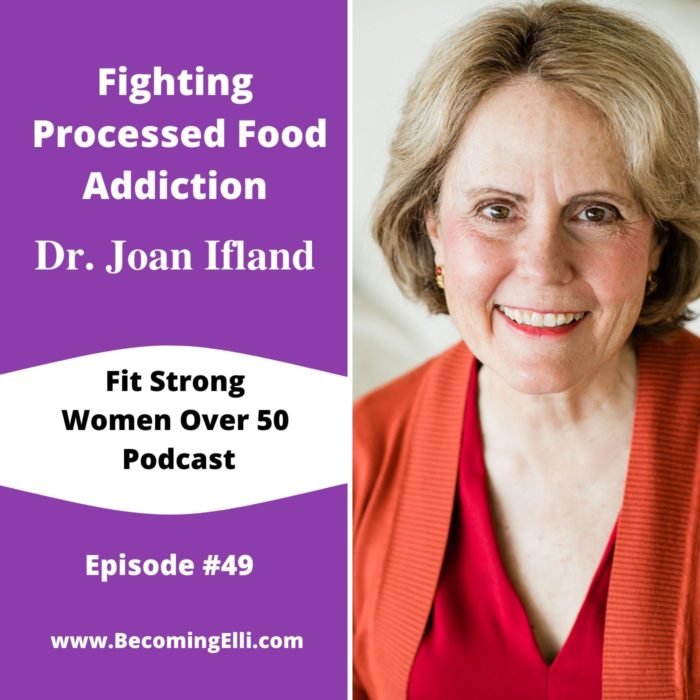
Fighting Processed Food Addiction with Dr. Joan Ifland

Fighting Processed Food Addiction – Episode 49
Download | Play in New Window
Please SubscribeApple Podcasts  (iTunes) Google Podcasts | Android-Google Play | Stitcher | Player FM Castbox | Tunein | Spotify | RSS

In Episode 49, Jill and Chris interview Dr. Joan Ifland, a processed food addiction expert. Dr. Ifland has been creating breakthroughs in recovery from food addiction since 1999, when her first popular book was published. In 2018, her textbook, Processed Food Addiction: Foundations, Assessment and Recovery was published. Her insights into fighting processed food addiction follow decades of research and are fascinating.

In this powerful episode we discuss:

What is processed food addiction?

  • The dangers of food addiction
  • The 11 questions to answer to discover if you have a food addiction
  • The six most common indications of addiction
  • A checklist of symptoms – Diagnostic Criteria for Addictions
  • What addicted eating looks like compared to non-addictive eating.
  • Why the triggers to eat processed food are so powerful
  • What happened after the tobacco industry purchased a significant part of food industry in the 1980’s.
  • The role of sugar, high fructose corn syrup, caffeine, salt, dairy, diet soda and artificial sweeteners in food addiction

How to stop eating processed foods

  • When it is better to wean slowly off of processed foods or go cold turkey.
  • Can processed foods be eaten in moderation? For instance, cheat days or special events?
  • What to expect when going through the withdrawal of processed foods (the first 4 days)
  • How to stay clean and avoiding relapse
  • Managing Withdrawal from Processed Foods
  • How to navigate holidays and special occasions that are filled with processed foods.
  • The role of cueing in food addiction and how to gain control.
  • Why mirror neurons can help or hurt us in fighting food addiction.
  • The importance of finding your tribe.

She created RESET WEEK, the first online live video program for withdrawal from processed foods.

Many resources were mentioned during the podcast. Some are directed to health professionals, others are for consumers and the general population.

Here is where you can find more education and resources for fighting processed food addiction:

  • Dr. Ifland’s website https://www.drjoanifland.com/
  • Food Addiction Resources http://www.foodaddictionresources.com
  • Facebook https://www.facebook.com/foodaddictionreset/
  • Instagram https://www.instagram.com/foodaddictionreset/
  • https://twitter.com/pfaddiction
  • The Addiction Reset Community (ARC) http://www.foodaddictionreset.com
  • Free services at her Facebook group called Food Addiction Education https://www.facebook.com/groups/1806154526275515/
  • Free resources and printable handouts http://www.foodaddictionresources.com
  • Grocery shopping list of unprocessed foods
  • Education and support by FAR-TV videos at Food Addiction Reset TV on YouTube

So Thankful and Grateful

I have a giant list of things I’m grateful and thankful for!

My Family
My Friends
My Health
Freedom to do what I want
Being physically able to work out
Feeling optimistic about the future
Being able to enjoy the holidays

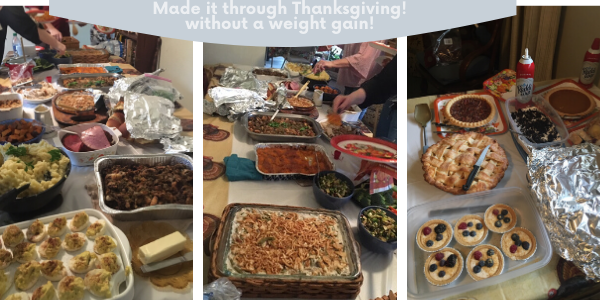
The morning of Thanksgiving I went spinning which set the day up with endorphins. We made the turkey and stuffing the night before, so when I got home from the gym, I just had some potatoes and roasted veggies to prepare before heading to my parents.

If I haven’t said that I am grateful for the Becoming Elli community before, let me say THANK YOU now. I know that this group, this community and my dear friend and co-host Jill has had a very positive impact on my life during the past few years.

Here we are entering December and I am feeling very thankful for so much in my life.

My weight is probably the most minor thing, but not gaining over Thanksgiving is a big accomplishment for me. And keeping the weight off is important to me for many reasons.

If I haven’t thanked you before, let me say it now, loud and clear: THANK YOU!!
Chris

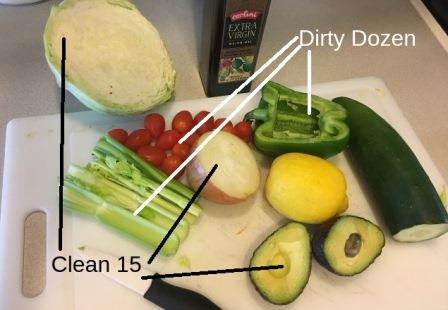
Dirty Dozen and Clean Fifteen

Since I’m trying to do a new veggie each week, I’d be remiss not to talk about the Dirty Dozen and Clean Fifteen.

Although this has been a thing for a while, I’m still trying to get on board. The “dirty dozen” and the “clean fifteen” are ways to deal with the about pesticides that are so difficult to wash off of the fruits and vegetables. These guidelines (which basically is just a list of foods) are a great place to know when to buy organic and when it is safe to buy regular.

Today’s post was prompted by a recent food report that  found some multiple samples of kale with 18 types of pesticide residue. Yikes! And kale is listed as number 3, meaning strawberries and spinach are worse offenders.

This list of dirty dozen is actually what I call a baker’s dozen with 13 different fruits and vegetables

The dirty dozen are the fruits and vegetables that have too much pesticide residue, washing doesn’t remove it and buying organic is a better solution. The clean 15 are okay to buy non-organic.

Dirty Dozen (buy organic)

  1. Strawberries
  2. Spinach
  3. Kale
  4. Nectarines
  5. Apples
  6. Grapes
  7. Peaches
  8. Cherries
  9. Pears
  10. Tomatoes
  11. Celery
  12. Potatoes
  13. Sweet Bell Peppers

Clean 15

  1. Avocados
  2. Sweet Corn
  3. Pineapples
  4. Sweet Peas Frozen
  5. Onions
  6. Papayas
  7. Eggplants
  8. Asparagus
  9. Kiwi
  10. Cabbage
  11. Cauliflower
  12. Cantaloupe
  13. Broccoli
  14. Mushrooms
  15. Honeydew Melons

I live in an area that has many choices of fruits and vegetables year round. And it’s not always apparent which ones to buy. Just like most things, price is one of the biggest factors. But now, as I continue to commit myself to getting fit and strong, keeping poisons out of my system has become more important.

It’s hard to realize the huge role pesticides play because it’s very cumulative.

Animals eat treated food. Genetically modified foods have some sort of effect. Pesticide residue is difficult to remove from some foods. I try not to be crazy about my food, but even if this was exaggerated and there are only 4 types of pesticides, that has got to do something to my body!! (Some of the grapes and strawberries I have seen in the stores are two or three times the size we grow at my house!)

Okay, so if you have trouble remember which fruits and vegetables are on which list, you may download this list of the Dirty Dozen and Clean 15 I typed up for myself. It is not a PDF, it is in Word. That way you can change it around as suits your shopping list! On my personal shopping list, I like to highlight what I’m going to buy. Either way, you can also cut out the list of the Dirty Dozen/Clean 15 and carry the little chart when you’re shopping.

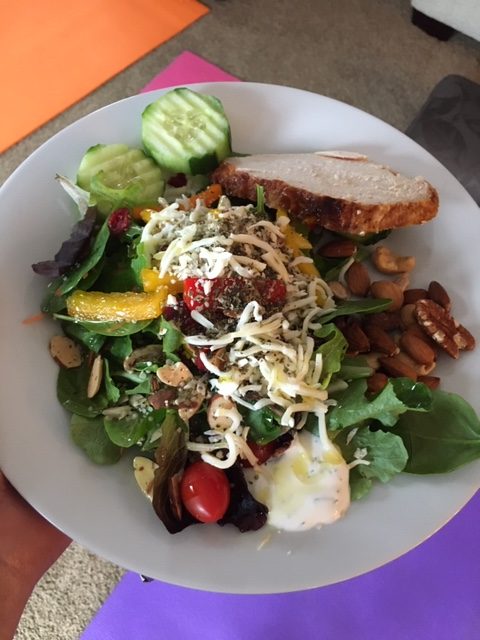
The photo I used was from a salad I had a few weeks ago. (Full disclosure, the only thing I bought organic was the avocado because they were ripe. But I’m trying to do better.) Notice the cucumber and the lemon didn’t make the list. Although I’m guessing it would be better to peel the cucumber and not zest the lemon. Just guessing here.

Do you follow the Dirty Dozen/Clean 15 recommendations? Do you have a good way to remember them? Maybe a little song or something?

« Older posts

© 2026 Becoming Elli

Theme by Anders NorenUp ↑