Category: Building Muscle (Page 1 of 3)

Bone Health with Dr. Lisa Moore

187 – Bone Health with Dr. Lisa Moore

Download | Play in New Window

Bone health is a topic that affects so many women, especially as we move through midlife and beyond. In this episode, we’re joined by Dr. Lisa Moore, Doctor of Physical Therapy and founder of Brick House Bones®. Lisa’s mission is to help people with low bone density or osteoporosis rebuild confidence, strength, and resilience—so they can keep doing the things they love with the people they love.

Dr. Moore is trained through BoneFit™ and the Institute of Clinical Excellence in bone health exercise. She blends the latest research with yoga, strength training, and mindful movement to help women strengthen their bones safely. She also offers a program called Journey to Fracture-Proof, which provides practical, research-based tools to improve bone health.

We discussed:

  • Why Lisa chose to specialize in bone health as a physical therapist
  • The difference between osteoporosis and osteopenia, and who is most at risk
  • Medications for osteoporosis—when they’re used, benefits, and side effects
  • How exercise and lifestyle changes can complement or improve medication outcomes
  • DEXA scans: what they are, when to start, and how often to get tested
  • Safe and effective types of exercise for stronger bones—weight training, balance, posture, and even jumping
  • Guidance on yoga, Pilates, deadlifts, and other specific movements if you have osteoporosis
  • Do vibration plates really help bone density?
  • Fall prevention strategies and simple posture exercises to protect your spine
  • The role of nutrition: calcium, vitamin D, and other key nutrients for bone health
  • Foods that may support bone density, including research on prunes
  • What to know about calcium supplements and how to navigate conflicting advice
  • Lifestyle factors that may harm bones, including alcohol, caffeine, and processed foods
  • Lisa’s top priorities for women over 50 who want to protect their bones
  • The biggest myths about bone health

Strong Bone Health with Dr. Lisa Moore, doctor of physical therapyDr. Moore also shares details about her 90-minute program, Journey to Fracture-Proof, designed to give women the tools and confidence to take control of their bone health.  Please note, this is ⚠️ General education, not medical advice.

Links mentioned during the podcast:
Website: Brick House Bones at DrLisaMoorePT
Workshop program: Journey to Fracture Proof
Website: StrongBonesPT
Facebook: Brick House Bones with Dr. Lisa Moore PT
Private Facebook group: Brick House Bones Group with Dr. Lisa Moore PT
Instagram: Dr. Lisa Moore PT and Brick House Bones
Seen Calcium Chews: Use DRMOORE10! affiliate link

Please Subscribe to the Fit Strong Women Over 50 podcast: Apple Podcasts  (iTunes) | YouTube | Pandora | Stitcher | Player FM | Castbox | Tunein | Spotify | RSS | Amazon Podcasts | iHeartRadio |

Our podcast continues to be among the top podcasts for women over 50, especially in the health and fitness categories. See our ranking in the top 2% of all podcasts here.

Podcast Partner Spotlight:

If you enjoy what we talk about on the Fit Strong Women Over 50 podcast, you may want to checkout the Boomer Banter podcast.

Wendy Green is the host of the popular and inspirational Boomer Banter podcast. She pursues real talk about aging well. At Boomer Banter, Wendy explores financial literacy, mental and physical health, relationships and having a purpose, to help you age well.

Listen to her podcast at the Boomer Banter Website at heyboomer.biz.  You may remember Wendy from  “New Goals and Dreams with Wendy Green”, episode 139 of Fit Strong Women over 50.


Changing Habits: Making One Change at a Time Works Best for Me

Have you ever tried to lose weight, gain muscle, add some new habits, quit bad ones, exercise more and meet all your goals at once. To me, that’s overwhelming!

When I first started my journey to better health in 2007, I felt like I had to change everything at once—my eating habits, exercise routine, sleep, and even my mindset. It seemed overwhelming and unattainable.

For years, work and family responsibilities had been my top priority. Once my kids were grown and off to college, I suddenly had the space to focus on myself, but I wasn’t sure where to begin.

Finding Structure and Accountability

One of my first steps was joining Weight Watchers. Looking back, I think the real benefit wasn’t  about counting points—it was the consistency of showing up for weekly meetings and tracking what I was eating. That structure gave me accountability. Still, each small change felt like a challenge, and some changes were harder than others. No one ever said that changing habits is easy

Over time, persistence paid off. I eventually reached my goals, and now I focus on maintaining and continuing to improve my health. These days, instead of trying to overhaul everything at once, I take a “one change at a time” approach. I’ve learned that piling on too many new habits usually leads to burnout.

For example, I’ve been experimenting with reducing butter in my meals. My swaps include homemade hummus, cream cheese, or even extra virgin olive oil. Each option has its pros and cons—flavor, texture, calories, nutrition, and convenience all play a role. Some swaps stick; others don’t. And that’s okay

In the beginning, my biggest focus was cutting back on pizza, pasta, and fried foods at dinner. Now, I rely on tools like the MyFitnessPal app, which helps me track what I eat in terms of meals and calories. More importantly to me it helps me measure and track macros (protein, carbohydrates and fats), water intake, and portion sizes. Paying attention to balance, rather than restriction, has helped me to stay consistent, feel more in control, less deprived and stay with it.

Small Changes Add Up

One of the most important lessons I’ve learned is that food changes don’t have to be drastic. In fact, to me small changes over time are better. I’m trying to build sustainable habits that fit my lifestyle. I find that the key is experimenting, finding what feels good, and continue with the changes that support long-term health.

One of my long term goals is to be fit and strong. To me, it means having muscle and stamina.

Eating enough protein is important to maintain muscle.  We’ve published a lot about eating enough protein and the effects of muscle loss as we age. Research shows that our needs increase as we age to help maintain muscle mass and strength. The right amount depends on activity level, size, and overall health. (Here’s a helpful resource from Harvard Health on muscle loss and protein needs in older adults.  National Institute of Health published a study of Dietary Protein in older adults.)

How much protein do I eat? Currently based on my height, weight, health and activity level, I’m finding that 72-75 grams of protein feels right. I used to eat more, I used to eat less. When I workout more, I find I need more.

How do you approach making changes?. Do you do baby steps like me? Or are you more likely to go cold turkey, rip the bandaid off and make a big change? Please leave a message in the comments below.


It’s Never Too Late to Get Strong: Strength Training for Women Over 50

I’ll be honest with you – when I first walked into a gym at 52, I felt completely out of place. All those young people lifting heavy weights, grunting and sweating, while I could barely figure out how to adjust the seat on the leg press machine. But here’s what I wish someone had told me back then: strength training for women over 50 isn’t just possible, it’s one of the best gifts you can give yourself.

Why Your Body is Actually Ready for This

Let’s talk real talk for a minute. After 50, our bodies start losing muscle mass faster than we’d like to admit. It’s called sarcopenia, and it’s not just about looking good in clothes (though that’s a nice bonus). We’re talking about maintaining the strength to carry groceries, play with grandkids, and feel confident in our own skin. According to the National Institute on Aging, strength training literally helps us stay independent longer and can even help prevent falls.

I remember the first time I deadlifted my own body weight. I was 54, and I cried happy tears right there in the gym. Not because it was easy – it wasn’t – but because I finally felt powerful again.

Starting Smart, Not Hard

Here’s the thing about beginning strength training later in life: you don’t need to bench press your weight or do anything Instagram-worthy. Many women over 50 find success starting with bodyweight exercises like squats, wall push-ups, and modified planks. Your couch can become your gym – seriously. Use it for incline push-ups, step-ups, and tricep dips.

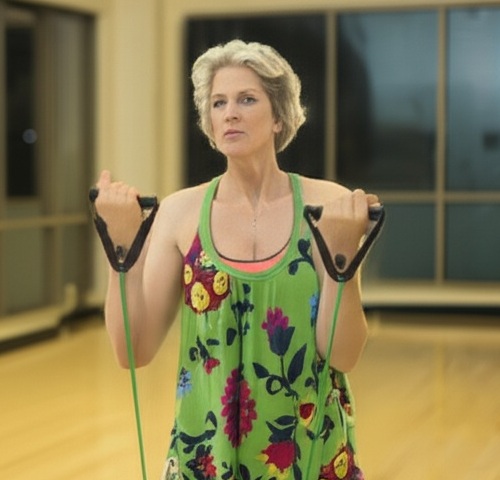
When you’re ready for weights, resistance bands are your best friend. They’re gentle on joints, affordable, and you can use them anywhere. I keep a set in my car because you never know when you’ll have ten minutes to squeeze in some bicep curls. For a complete beginner’s routine, check out my essential strength training moves for women over 50.

Listen to Your Body (It’s Smarter Than You Think)

Recovery becomes more important as we age, and that’s okay. While twenty-somethings might train six days a week, three solid strength sessions weekly can work wonders for us. I learned this the hard way after overdoing it early on and spending a week hobbling around like I’d been hit by a truck.

The Best Part? It Gets Easier

What started as intimidating became my favorite part of the week. I sleep better, my back doesn’t ache after gardening, and I feel genuinely proud of what my body can do. Plus, there’s something incredibly empowering about being the strong woman who doesn’t need help opening jars anymore.

Trust me, your future self will thank you for starting today.

The Benefits of Squats

I know there are benefits to doing squats. I end up doing a lot of squats though I don’t really enjoy them. They’re just not a fun exercise, at least I don’t think so.  I find them to be challenging and it’s hard to see progress. If you’re lifting weights, you can tell when you’re getting stronger but that isn’t as evident with squats.

So why do squats? One of the biggest advantages of squats is their ability to build lower body strength. Strong legs are essential for everyday activities like walking, climbing stairs, and lifting objects. Squats not only build muscle but also increase functional strength, which translates to better performance in sports and day-to-day tasks. Additionally, squats help strengthen your core muscles, which improves posture, reduces the risk of injury, and enhances stability.

There are days when I feel challenged just to get off a couch. That’s when I think, imagine how bad this would be if I didn’t do squats.

We’re always saying find what you enjoy and do that. But there’s some good reasons to do squats even if I don’t think they’re a lot of fun.

How to Perform a Proper Squat

Form is important if you want to get the most out of squats. Begin by standing with your feet shoulder-width apart. Keep your chest up, back straight, and core engaged. Slowly lower yourself by bending at the knees and hips, as if sitting back into a chair. Go down until your thighs are parallel to the ground, then push through your heels to return to the starting position.

Nia Shanks, who we talked to in episode 79 on the Fit Strong Women over 50 Podcast, has great instructions on how to do different squats. You might want to check out what she has to say.

Variations to Try

There are several squat variations to keep your workouts interesting and target muscles differently. Goblet squats, jump squats, and Bulgarian split squats add diversity and intensity to your routine.

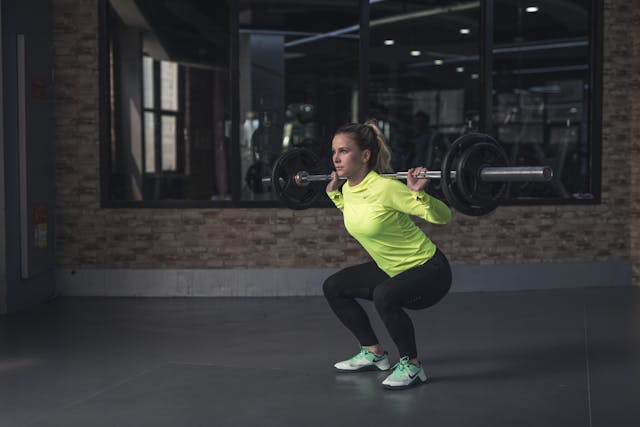
Once you start to build strength, you can add in front or back squats where you hold a barbell either to your chest or resting on your shoulders. I find these to be really challenging.

Benefits of Squats

As  you begin to add variety to your squats, it becomes even more important to maintain good form. If you’re not sure about  your form, ask someone to watch you and give you advice. If you’re at a gym, ask a trainer to check out your form. I’ve seen people post videos of them doing squats and ask people in fitness groups on Facebook to give them advice.

Incorporating squats consistently can lead to improved strength, better mobility, and a more balanced physique. So next time you hit the gym, make sure to add a few squats to your workout – your body will thank you!


Strength Workout developed by Artificial Intelligence

Wondering what a strength workout developed by artificial intelligence might look like?

I’ve been dabbling to figure out ways to use artificial intelligence in my everyday life, so I asked Google Gemini to make up a workout.

Here was the prompt: create a 20 lb kettlebell and 15 lb dumbbell workout plan designed for a middle-aged woman to build strength in the core, upper body, and lower body. Include a detailed warm up routine and specific stretches for the cool down.

Several caveats before you read further.

  • This does NOT replace the advice of a real personal trainer. AI merely searches different websites and compiles information. It doesn’t consider the real person you are and/or take into account your goals, strengths, injuries or hang ups. It’s just a computer application (which is can be a big problem!)
  • Maybe you are more advanced in your strength and weight training than I am and would find a 20 pound kettle bell and a 15 pound dumbbell way too light for what you need. But that’s what I use when I’m at home doing a workout.
  • Perhaps you’re just starting out and consider those weights way too much for you. Not a problem. This is not a competition!! Jump in where you are.
  • I still prefer going to the gym and doing a workout will a real instructor or personal trainer. But that’s not always possible.
  • It says “Middle Aged” because I tried my actual age in the prompt and it was ridiculously to easy for me. I guess Google Gemini thinks I’m a frail little old lady. Yes, at 67 I do qualify for the term “elderly” but my “healthspan” goal is much stronger than that. Maybe middle aged is not really realistic… as living to 114 seems a bit too much at the moment, but I’m thinking of it as a guess-timate… something like in dog years.

Here’s what the artificial intelligence (Google Gemini) returned:

Warm-Up (15-20 minutes):

Cardio:
Start with 5 minutes of brisk walking or jogging on the treadmill.
Transition to 5 minutes of jumping jacks, high knees, or butt kicks.
Finish with 5 minutes of dynamic stretches like arm circles, leg swings, torso twists, and hip circles.

Mobility Exercises:
Perform 10 reps of each of the following:

  • Cat-Cow Pose
  • Bird Dog
  • World’s Greatest Stretch

Workout (45-60 minutes):

  • Kettlebell Swings: 3 sets of 15 reps
  • Dumbbell Lunges (each leg): 3 sets of 12 reps
  • Kettlebell Goblet Squat: 3 sets of 12 reps
  • Single-Arm Dumbbell Row (each arm): 3 sets of 10 reps
  • Dumbbell Push-ups: 3 sets to failure (modify on knees if needed)
  • Kettlebell Turkish Get-Up (each side): 2 sets of 5 reps
  • Dumbbell Plank Row (each arm): 3 sets of 10 reps
  • Kettlebell Halo: 3 sets of 10 reps in each direction

Cool-Down (10-15 minutes):

  • Light Cardio: 5 minutes of slow walking or marching in place.
  • Static Stretches: Hold each stretch for 30 seconds, focusing on major muscle groups worked:
    • Hamstring stretch
    • Quad stretch
    • Hip flexor stretch
    • Chest opener
    • Shoulder stretch
    • Triceps stretch
    • Back extension

Additional Notes:

Rest: Take 1-2 minutes rest between sets and 2-3 minutes between exercises. *My Instructor’s only leave 10 to 15 seconds between sets and 1 minute or so between exercises. Often the instructor uses double body movements that work both legs and arms at once instead of just one area.
Form: Watch instructional videos and practice proper form before adding weight. Consider seeking guidance from a personal trainer if needed. *I agree!! Form is everything to avoid getting hurt with strained muscles, tendons, ligaments or something else.
Progression: As you get stronger, gradually increase the weight or reps. *Agreed. Jill always mentions this on our Fit Strong Women Over 50 Podcast!
Modifications: Feel free to modify exercises to suit your fitness level. For instance, you can perform assisted push-ups or choose a lighter weight for kettlebell exercises.
Listen to Your Body: Stop and rest if you experience any pain.

Important Considerations:

Hydration: Drink plenty of water before, during, and after your workout.
Nutrition: Consume a balanced meal with protein and carbohydrates within an hour of your workout to support muscle recovery and growth.
Sleep: Get sufficient sleep to allow your body to recover and repair.

By following this comprehensive workout plan, you can effectively build strength, improve your overall fitness, and enjoy the numerous benefits that come with a consistent exercise routine.

What do you think of the strength workout created by artificial intelligence? Have you used AI in your health and fitness plan or do you hate everything associated with Artificial Intelligence? Let me know your thoughts by leaving a comment below. Thanks!

From Wheelchair to Weightlifting Podium with Kim Rahir

147 – From Wheelchair to Weightlifting Podium with Kim Rahir

Kim Rahir is a 60-year-old mother of three who was diagnosed with Multiple Sclerosis (MS) 10 years ago. She decided to ignore her then doctor’s advice… muscle her way back to a happy life…  and in 2023, become the European Champion in Masters Weightlifting in her age and weight category.

Her journey inspired her to leave her career in journalism in her 50s and become a health coach for middle aged women – with a big focus on reactivating and rebuilding muscle.

Today, Kim helps women tap into an abundant source of vitality by reactivating and maintaining their muscles, while ditching diet culture conditioning to actually eat to nourish and flourish.

We discussed:

  • Being resilient during difficult times
  • About her situation with MS (multiple sclerosis)
  • Starting out in a wheelchair, progressing to crutches
  • How she started weightlifting
  • Progressing to the European Championship in Masters Weightlifting
  • Why she focuses on offsetting age related muscle loss over muscle gain
  • Reactivating, rebuilding and maintaining muscle mass
  • How muscle relates to metabolic, bone and even mental health
  • How she recommends her clients eat

Links:
website https://kimrahir.com
Instagram https://www.instagram.com/kim.rahir
Facebook https://www.facebook.com/kim.rahir
LinkedIn http://linkedin.com/in/kim-rahir
Her story on Facebook

Download | Play in New Window
Please Subscribe: Apple Podcasts  (iTunes) | Google Podcasts | Pandora |  Player FM | Castbox | Tunein | Spotify | RSS | Amazon Podcasts | iHeartRadio | Podchaser | Podcast Addict | Listen Notes

Building Strength at the Gym

I think it’s time for an update on how I’m doing building strength at the gym. In early September, I resumed going to my gym. I wrote a post about deciding to return to my gym and what I was doing. It’s now early November so a two month check in is a good idea, I think.

I’ve been working with a trainer twice a week. I decided that it was worth it to me to spend the money on personal training because it forces me to actually go and do a full workout. I know that when I’m left to  my own resources, I tend to think, “oh that’s good enough” and don’t do the extra set or knock off before doing all of the reps.

What are my favorite workouts? I really like deadlifting and bench pressing. I’m trying to improve my upper body strength.

I’ve noticed some definite muscle improvement. For example, I can see some definition in my biceps but I wish I could say the same for my triceps. I really need to work on tightening up that skin and getting some muscle.

The important thing for me is that I’ve taken this process slowly. Rather than going crazy with doing everything, I’ve been doing my strength workouts twice a week. I’ve tried to add in a class each week. Sometimes that focuses on strength. Sometimes it’s a yoga class. I also have gone swimming a few times and I try to get in a run once or twice a week.

I also am focusing on trying to get in plenty of protein on my gym days.

What I’m discovering is something that I already knew but it’s good to get a reminder. Consistency over time is what really helps show results. Doing my workouts every week is giving me more results than flitting from one thing to another. Also, forgetting about working out for a few weeks really sabotages your strength.

I still haven’t restarted attending my bootcamp class because I wasn’t feeling up to it. I finally am thinking that I can resume that class.

It will be the new year in a couple of months so that will be a good time to reassess how I’m doing with building strength at the gym. It will be a good time of focus on setting goals for 2024.

Strength Training Guidelines

We’ve talked a lot about strength training guidelines for adults on our podcast. I thought I’d provide a quick recap of those guidelines and give you some ideas on how to get in quality strength workouts.

Strength Training Guidelines

According to the American College of Sports Medicine (ACSM), healthy adults should perform strength training at least twice a week on non-consecutive days. Each session should include 8 to 10 repetitions that stress each of the major muscle groups or 10 to 15 repetitions for those who are older and frail.

If you go with longer repetitions, you’ll use lighter weight.

You can certainly train more than twice a week but you want to make sure you cover all of the major muscle groups at least twice a week. So, perhaps you do upper body and alternate with lower body twice a week. That gives you four days of strength workouts.

Major Muscle Groups

If we’re supposed to train every major muscle group twice a week, we need to know what they are. Plan on training these parts of the body:

  • Chest
  • Back
  • Shoulders
  • Arms:
    • Biceps
    • Triceps
  • Abdomen
  • Legs:
    • Quads
    • Hamstrings

Benefits of Strength Training

Why should we strength train at all? Isn’t it sufficient to just walk 10,000 steps every day?

The ACSM describes a variety of benefits of strength training. They are:

  • Maintain muscle or fight the loss of muscle mass
  • Prevent osteoporosis
  • Decrease the risk of heart disease
  • Decrease the risk of falls or the likelihood of injury if you do fall
  • Increase quality of life

Examples of Strength Training

You often hear strength training also referred to as resistance training. The goal is to put your muscles under tension using resistance. You can do that with weights like dumb bells and kettle bells, resistance bands, machines at the gym, or body weight exercises.

Examples of typical resistance exercises that can be performed using free-weights, machines, or body weight for the major muscle groups are:

  Free-Weight Machine-Based Body Weight
Chest Supine Bench Press Seated Chest Press Push-ups
Back Bent-over Barbell Rows Lat Pulldown Supermans
Shoulders Dumbbell Lateral Raise Shoulder Press Arm Circles
Biceps Dumbbell Curls Cable Curls Side planks
Triceps Dumbbell Kickbacks Press downs Dips
Abdomen Weighted Crunches “Abs” Machine Crunches Prone Planks
Quadriceps Back Squats Leg Extension Body Weight Lunges
Hamstrings Stiff-leg Deadlifts Leg Curls Hip-ups


If you aren’t sure how to do any of these, there are lots of demonstrations available on YouTube and a variety of strength training apps.

Don’t forget that the ACSM also recommends that you get in some cardio workouts during the week. I’ll write that up in a future post.

Differences Between Dynamic and Static Stretching

In our podcast episode with Carol Simpson, she talks about dynamic and static stretching. She commented that you often see runners at the beginning of a race doing static stretches when they should be doing dynamic stretches.

Shortly after that episode, I went to my gym and they had a flyer out entitled Flexibility Guidelines for Seniors. I really hate applying guidelines for seniors to me but there was some useful information, mainly describing the differences between dynamic and static stretching.

Dynamic Stretches

Dynamic stretches involve movement. You move your joints and muscles so they go through a full range of motion. These stretches should be done before a workout to warm up the muscles.

Sometimes dynamic stretches are movements that mimic the movement of the exercise. That’s why you see swimmers circling their arms before a swim or golfers imitating a golf stroke without the club.

Dynamic stretches are about movement and the stretches are not held for any length of time.

Some examples of dynamic stretches are:

  • Hamstring sweeps
  • Arm circles
  • High knees
  • Jumping jacks
  • Side shuffles

Because the function of dynamic stretches is to warm the muscles, these are not the stretches to do after a workout. That’s when you want to use static stretching.

Static Stretches

Static stretches are when you stretch a muscle to its furthest point. You hold this position for a period of time. You might hold a stretch anywhere from 10 seconds to 60 seconds.

Static stretches are usually performed after a workout when your muscles have been warmed up. These stretches help to stretch out those worked muscles.

Some examples of static stretches are:

  • Toe Touches
  • Knee to chest
  • T-spine rotation

Basically, name a body part and stretch it. You can do a neck stretch, a triceps stretch, a quads stretch. Any of these things help the worked muscles. The static stretches help you recover from your workouts.

Let me know what stretching you like to do.

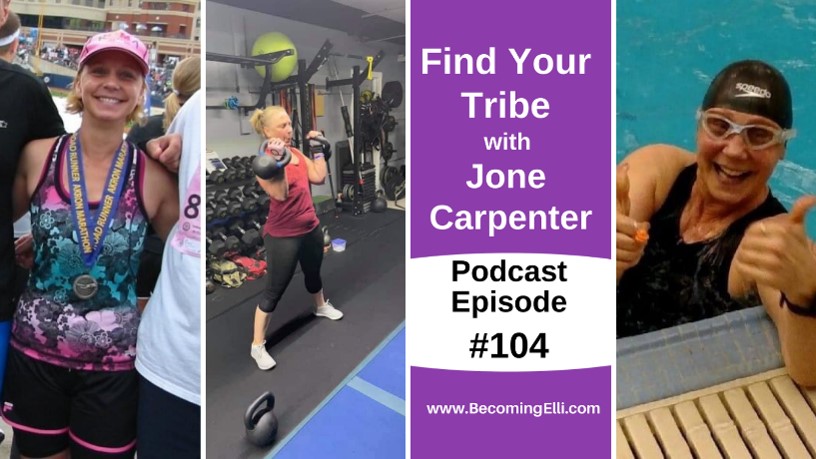
Find Your Tribe with Jone Carpenter

Episode 104 – Find Your Tribe with Jone Carpenter

Download | Play in New Window
Please Subscribe: Apple Podcasts  (iTunes) | Google Podcasts | Android-Google Play | Stitcher | Player FM | Castbox | Tunein | Spotify | RSS

Originally from rural southeastern Ohio, Jonella Carpenter, known as Jone, is both a mother and grandmother. She can often be found walking, running, or hiking in her local parks in all kinds of weather. Her attraction to the outdoors started when she was a kid (even the outdoor chores were fun for her) and grew as she became an adult.

In 2008, a friend suggested that Jone run a half marathon, and though she didn’t know what she was in for, she has never been afraid of a challenge. She toed the blue line of the Akron Marathon on a crisp September morning without training, and though she crossed the finish line three hours and forty-five minutes later, she couldn’t walk for days.

Needless to say, she learned quite a bit during that first race! Since then, Jone learned more about how to train, fuel her body, and stay motivated even when times were tough. As a breast cancer survivor, her body has been through significant changes but continues to be a way to explore nature, connect with friends, and challenge herself in a variety of ways. She even overcame a life-long fear of water to learn to swim in her 50s.

Among her friends and running buddies, Jone is known for always saying yes to any adventure (even the cold, muddy ones) and can often be found encouraging others (even strangers she’s met along the way) to keep moving. Through the miles, boot camp classes, swim lessons, and other adventures.

One key point of advice to women over 50 who want to be fit and strong: Find Your Tribe. Jone ran informal groups of friends calling themselves the Towpath Turtles or BCB – the Bad Choice Babes and works out at a gym where the group exercise inspires her.

During this episode we talk about:

  • Running races and training
  • Finding a group of like-minded friends, Finding Your Tribe
  • Lifting weights and cross training
  • Her experiences with breast cancer and running shortly after her mastectomy
  • Reframing your attitude to “I GET to do this” instead of “I HAVE or I SHOULD”
  • Learning to swim in her 50’s
  • How she listens to her body
  • Keeping muscle and protecting bones
  • Group cooking
  • Watching macros (using protein powder as a creamer)

« Older posts

© 2026

Theme by Anders Noren — Up ↑