Category: Fit and Strong (Page 44 of 57)

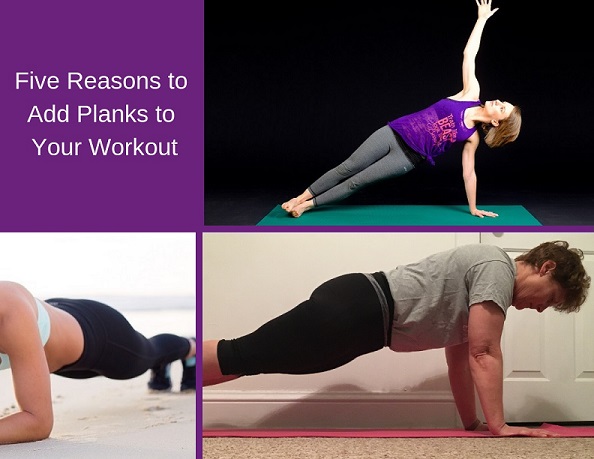
Five Reasons to Add Planks to Your Workout

Why should you add planks to your workout? It seems like trainers love to have us do planks and there seems to always be some type of plank challenge going on. Just go online to find people who can hold a plank for half a lifetime. Chris talked about using planks to help with strengthening the core in an earlier post. Planks are a great way to strengthen our bodies.

Add Planks to Your Workout

There are lots of reasons to add planks to your workout. I’ve listed five here but each of these reasons can lead to more benefits. Basically, if you add planks to your workout, you’re adding something that is quick and easy to do, well, easy as in you don’t need to do a lot of preparation or equipment for planks. They can still be quite the challenge.
Close to a Whole Body Workout

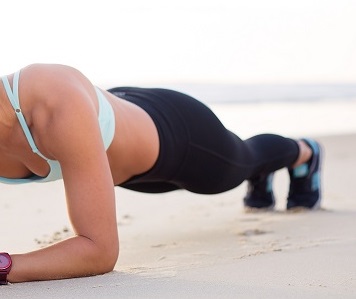
Doing a plank works your abs, your back, your shoulders, and your glutes. This is a great way to begin building strength in your core. Planks don’t put any pressure on your spine from folding up like you might get from crunches and sit ups so they also help to avoid injury.

A plank also works those side muscles such as the obligques.

Can Do Anywhere

Planks require no equipment. All you do is get into position and hold the plank as long as you can. You might use your phone to time the plank but you don’t even need that. I sometimes just count to approximate the number of seconds I’m holding.

Planks are great to do at the gym but also at home. Remember the idea of doing an exercise every time a commercial comes on? Think of planks for that.  These are even a good choice for traveling because you can do this in a hotel room without making noise or having to carry any equipment.

Improves your posture

Because planks strengthen your core, especially your abdomen and lower back, it becomes easier to sit and stand with better posture.

Many of us struggle with posture problems because of sitting too much and having weak core muscles. Poor posture causes back pain, feet and leg pain, and lots of general misery.

Improves Your Stability and Balance

Having stronger core muscles have been shown to help people be able to do more of their daily functions and to prevent injury. Even elderly people are often advised to do planks.

Can Do Daily

Starting your workouts with a plank is a great way to wake up most of your muscles. If you’re going to be lifting weight, this is a good starting point.  Of course, planks don’t have to be a warmup. You can just do them every day as a way to strengthen your body.

How to Perform a Plank
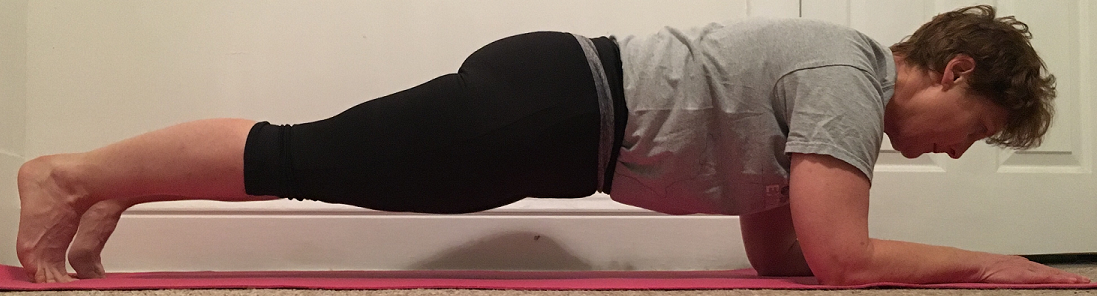
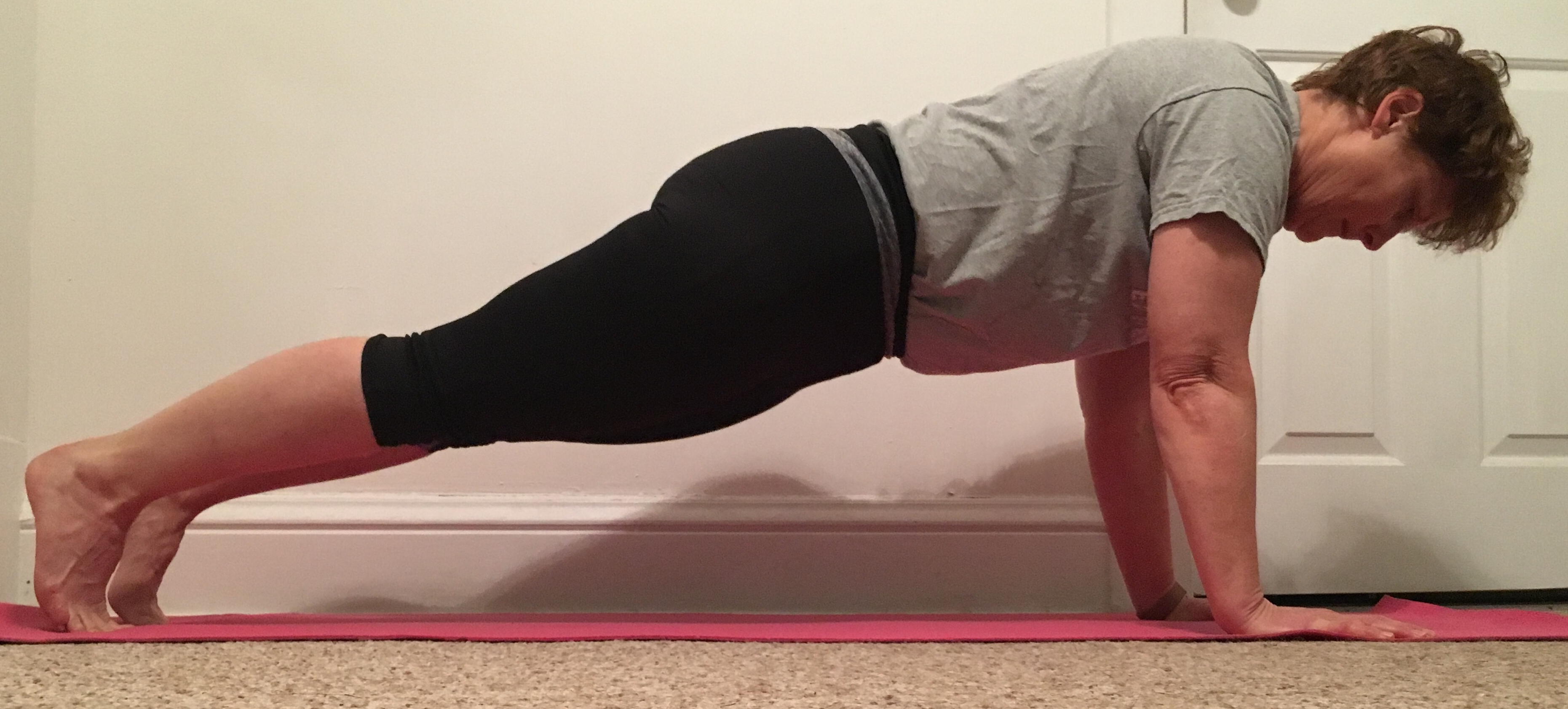
Get on the floor and get into a pushup position. Bend your elbows to 90° and use your forearms to support your weight. Make sure your elbows are directly beneath your shoulders. Your body should be a straight line from your head to your feet. Make sure your butt isn’t sticking too far up into the air and not sagging towards the ground. You need to squeeze your abs the whole time you’re planking.

Hold this position for as long as you can. You might start with 15 seconds and work your way up eventually to two minutes.

Some people hold the plank even longer but I’m not sure there’s a lot of value to that. Instead, put your knees down and take a rest and then repeat the plank.

Modification

If you can’t do a plank successfully, put your knees on the ground. Do a plank this way until you can lift your knees up. You’ll still get much of the advantages of doing a plank.

If getting on the floor and using your knees is too hard on your body, you can use a wall in the same way that people do wall push-ups. Move your feet away from the wall, place your hands shoulder height on the wall and hold your body up.

Variations

Straight arm planks

Instead of resting your weight on your forearms, hold your weight on straight arms. This increases the work on your arms and shoulders. It’s a good variation to do just to shake things up.
Side Planks

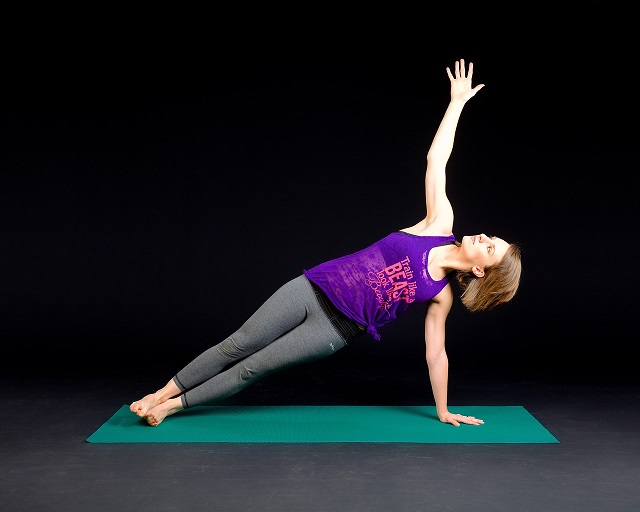
Hold a side plank for the same amount of time as the regular plank. Make sure to do both sides. This really helps strengthen the obliques, legs, and arms.
Plank Jacks

Hold your plank position and then basically move your legs out and then back to simulate a jumping jack. This takes some coordination.

Up and down planks

Move from resting your weight on your forearms to straight arms and then back again. This increases the effects on your whole body. It’s a challenging workout.

However you choose to do them, it’s a good decision to add planks to your workout. Let me know if you try them.
Hormone Health for Women Over 50 with Jeannie Beaudin

Fit Strong Women Over 50 Podcast Episode #29

Download | Play in New Window
Please Subscribe: Apple Podcasts  (iTunes) | Google Podcasts | Android-Google Play | Stitcher | Player FM | Castbox | Tunein | Spotify | RSS

In Episode #29 of Fit Strong Women Over 50, Jill and Chris interview Jeannie Beaudin, a recently retired pharmacist who specialized in balancing women’s hormones for over 10 years, while she owned her own pharmacy.

Her clients appreciated her broad knowledge of non-drug, natural and standard treatment options.

As a compounding pharmacist specializing in balancing women’s hormones, Jeannie would take time to thoroughly review the hormone-related symptoms, explain available choices and discuss the woman’s preferences for treatment.

In today’s podcast, Jeannie explains how she became known as “The Hormone Lady”. The podcast explains how women can work together with a compounding pharmacist and the doctor to improve hormone health. Four levels of treatment are outlined.

She describes how she and her husband eat following a health scare 14 years ago. “No white flour and I make my own bread.” She mentioned Michael Pollan’s rules for eating: “Eat real food. Mostly plants. Not too much.”

Also in this episode:
Chris and Jill talk about their winter training and look to the spring.

Veggie Challenge – how did you prepare your vegetable of the week?

Links:

Eggplant Veggie Challenge with Baked Rounds

Today’s eggplant veggie challenge uses purple eggplants but they do come in other colors too. eggplant veggie challenge

Eggplant is considered a nightshade vegetable, similar to peppers, tomatoes and tomatillos. You can tell it is a nightshade because it has an elf cap on it’s stem. Buying eggplant was intentional for me. It is not the type of vegetable that I routinely pop into my cart during the weekly grocery shopping (unlike carrots, celery, peppers and cauliflower.)

I was surprised to find out that botanically speaking, eggplant is actually a fruit. I guess that makes sense because although I’m calling them a vegetable for the Veggie Challenge, they have seeds on the inside and are the “fruit” of the plant. As a fruit, they are the part of the plant that bears fruit and has seeds in the middle. So I guess other nightshades. as well as cucumbers, peas and pumpkins are fruit too, although, I would classify them as a vegetable. I think cooks and most people consider them a vegetable.

The legal definition of a vegetable tends to lead to what cooks consider the fruit. For example, tomatoes are taxed as a vegetable even through they are technically a fruit.

Vegetables are technically the roots, stems and leaves of a plant.

Eggplant can be a great low carb swap for noodles in lasagna or other recipes. A nutrient dense food, one cup of eggplant, cubed and cooked, has only 35 calories and has good fiber, copper, potassium and manganese.

This eggplant veggie challenge is easy to make:

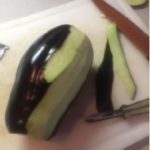
  • Peel the eggplant
  • Slice it into half inch thick rounds
  • Dip both sides into scrambled egg batter
  • Bread each side with bread crumbs
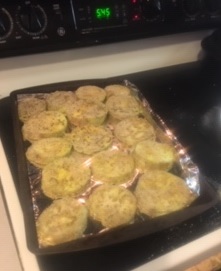
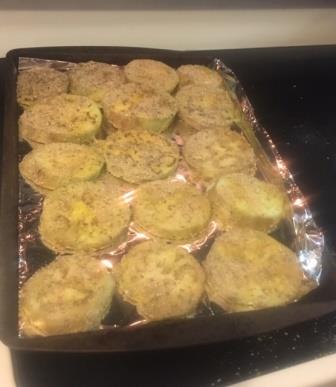
  • Bake in a 350 oven for 5-6 minutes each side

Of course if I skipped the bread crumbs, they would be lower in carbohydrates.

eggplant veggie challenge

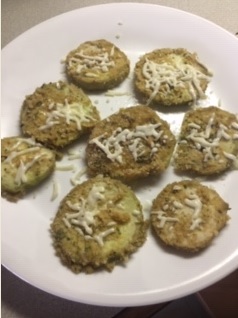
Later, I pulled this eggplant veggie challenge out of refrigerator, sprinkled them with a little parmigiana cheese and shredded mozzarella cheese. Then I microwaved them 30 seconds to take the chill off and to melt the cheese. I added salt and pepper to taste.

Do you have a recipe you enjoy for eggplant? Bake? Saute? How do you prepare it?

A Walk in the Woods Around the Lake on a Wintery Day

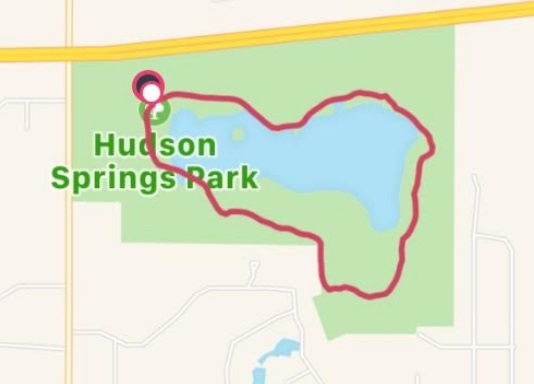
I love the outdoors and a winter walk in the woods, but it’s difficult to get out and walk during bad weather. I’ve managed to find a window of opportunity just a few times this winter. Last weekend was one of those.

While snow was in the forecast, the sun had peeked out for a few minutes and I just couldn’t help myself. Gathering the dog leash and my 8 year old dog, Lady, off we went to walk the loop around the lake.

Checklist:

  • Dog leash
  • Dog
  • Gentle leader (this is a special collar so she doesn’t pull)
  • Dog poop bags
  • Fanny Pack
  • Bee sting kit (not likely, but I don’t leave home without it!)
  • Phone
  • Spread the tarp-like cover over the back seat to protect from sandy paws
  • Hat/gloves/two heavy sweatshirts
  • Running shoes

The start of the walk felt so familiar. In the 27 years since we moved back to Ohio, I’ve probably hiked this route hundreds of times. The parking lot was practically empty with only one child and their attentive dad on the playground and a bundled-up dog owner bringing their labradoodle pooch back from walking the loop.

Nonetheless, I set out and the pea gravel crunched under my shoes. Canada Geese walked on the ice covered water. I half expected them to be swimming in places, but there was more ice than water. A couple walked past me saying “Good morning,” but then corrected themselves – “I mean good afternoon!” Funny, with the grey skies encompassing us, it sure felt more like morning. What had happened to the sun?

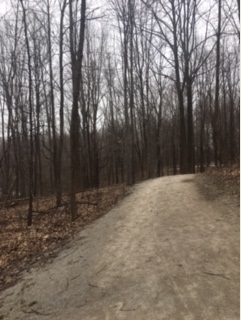
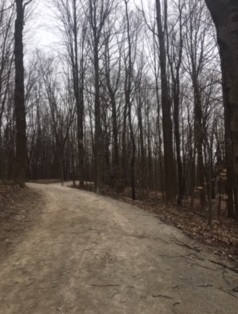
Entering the wooded part of the trail, I saw a lot of sawdust. The windstorm a week or so ago had caused several big trees to fall, but the clean up was complete. The trail was wide. In fact, much wider than I remembered. Maybe it just felt that way due to the lack of other people. It was definitely wide enough to drive a service truck along the entire path.
winter walk in the woods around the lake
Walking up the grade, I could feel my Achilles heel start to twinge. Geeze! I have hardly pushed it at all this past fall and winter. Not any tough work outs at all, just a lot of strengthening PT type exercises. How could it start acting up already!?!?

As the trail leveled off, my thoughts left my ankle and returned to enjoying the nature walk. No leaves meant that I could see through the woods to catch glimpses of the Interstate or look directly into people’s back yards. I wonder how those families feel about looking out from their dining room table and seeing the hikers walking on the trail?

Ugh Oh!! Did I see a snow flake? And another? Must have been my imagination. I passed the halfway point. Walking down the the hill, I passed a solitary figure walking with hands in his pockets. Must have forgotten his gloves.

I noticed the trail’s shortcuts into the neighborhoods have been cleared of snow and the pea gravel is packed down. I stay on the main trail with Lady. More flurries fell.

A white tail deer was right in front of us. Startled, she lifted her little white tail and bounded off toward the houses. I think Lady was startled too. She didn’t bark or pull on the leash, but her ears and tail lifted and I felt that she was as surprised as I was by how big and close that deer was!

Heading up the hill from the creek bed, squirrels rustled in the leaves. Lady began panting and I realized that I need to bring her out on this trail more often. She hasn’t been keeping up on her cardio! She’s only 40 in dog years and somehow I feel superior because I’m not huffing and puffing. I’m thankful for my indoor cycle spinning class at the gym!

Big flakes of snow started coming down. Where did this come from? I thought we had another hour or two before this weather was due to blow in! “No worries,” I said to myself, “Only three-quarters of a mile before we’re back in the car.”

As we finish the loop, we pass the same walker with his hands in pockets again. I say “Another loop?” and he replies “Why not!?” I’m already wanting to go around again. For a second I briefly consider it, but my Achilles told me that one loop would be enough. Although the cardio was ready and the muscles were ready, my tendon still needed more work.

I feel like this walk was my kickstart for spring!

I saw the smile on Lady’s face through her panting. Yep, that smile was how I was feeling too!

Daylight savings time starts this weekend. Spring is on it’s way!!! Just a few weeks and I’ll be able to do that trail without double sweatshirts and gloves!

winter walk in the woods

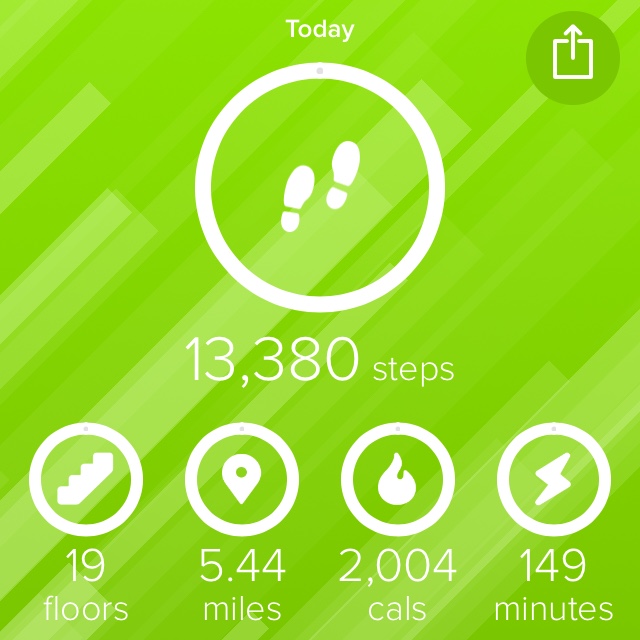
Although this trail was just under 2 miles, getting outside and walking the loop helped me hit my fitness goals for the day. Walking the loop also lifted my spirit and I know Lady loved it too.

What fitness activities help you to transition from winter doldrums into spring?

My Fitness Routine – Improving Strength, Flexibility, and Balance

Since I’ve been cleared to resume exercising, I’ve been struggling to come up with a fitness routine that works for me. I want to return to some of the things I’ve enjoyed doing but I also want to avoid injuring myself. I’ve decided I need to work on core strength, flexibility, balance, and variety.

I’m hoping that working variety into my fitness routine will help me avoid injury and any kind of repetitive stress problems.

I’ve come up with a fitness routine that is working for me right now. Of course, it’s still winter in Ohio so I’m not getting outside very often. This routine might change once spring and summer arrive.

I also find that if I assign certain days to certain exercises, I’m likely to get it all done.

Fitness Routine


Sunday

Sunday is now my upper body strength day. I asked my boyfriend to work with me on regaining my upper body strength so we now hit the gym on Sunday and use the dumb bells and equipment. It’s a challenging workout, that’s for sure. Last week, we did a lot of chest presses, flies, triceps dips, and some ab work. I felt it the next day, that’s for sure.

Monday

Monday is now my yoga day. I found a class I like at a rec center at a nearby town so I bought the non-resident passes and try to go every Monday evening.

If I can’t make it because of a scheduling conflict, I try to work some cardio in its place. That might be running or using a bike at the gym.

Tuesday

I’m now attending a Pilates class on Tuesday mornings. I’ve just started back into Pilates reformer classes and it was quickly apparent that this is a good thing for me to do.

The instructor commented on how tight my ham strings and calves are. I knew that of course but rteally haven’t found a solution. Hopefully, Pilates will help.

Wednesday

I meet my trainer on Wednesday late afternoon. She tends to give me a full-body workout that challenges me. She focuses on strength, balance, and cardio conditioning by elevating my heart rate.

Sometimes after my training session, I’ll add a brisk walk or a run or I go swimming.

Thursday

Thursday is my catch up day. I tend to do some kind of cardio. Since I want to swim at least once a week, this might be my swim day. If not, I’ll go for a run.

Friday

I see my trainer again on Friday morning. We do something that complements what we did on Wednesday.

Once in a great while, I treat myself to a orthopedic massage. An orthopedic massage is not necessarily the most pleasant massage. It’s not like a relaxation massage. Instead, it works on injury rehabilitation and improving range of motion. If I get a massage, I try to get it on Friday so I go into the weekend feeling better.

Saturday

I haven’t returned to my boot camp class yet, which is on Saturday morning. Instead, I’ve been riding a bike or running at the gym.  I look at what my fitness routine has been this week and Saturday becomes the day that I try to fill in whatever I’ve been missing.

The one thing that I’m struggling with right now is that my daily steps have dropped. That’s due to a change in my living arrangements and I’m just not getting in as many steps as I used to in doing my daily activities. I need to figure that out because while having some physical activity is important, so is getting in those steps. That’s next on my list of things to figure out.

I’m happy to have worked out a fitness routine that works for me. Of course, this will change when I can begin to go outside. For example, my Sunday activities will probably change when the weather improves. When that happens, I’ll adjust what I’m doing and figure out how to keep the variety going.

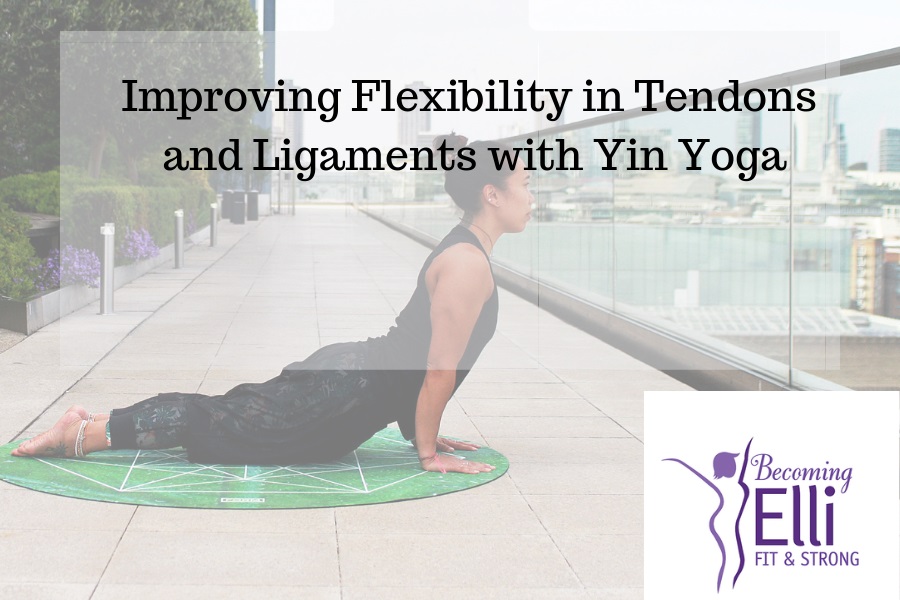
Improving Flexibility in Tendons and Ligaments with Yin Yoga

I used to only focus on muscles and strength, but as I get older I am finding that being strong and improving flexible in tendons and ligaments has become more important to me.

One way I am working on improving my tendons and ligaments with through yoga. I am very much a beginner and am still have so much to learn. Perhaps you’ve been in a yoga practice for a long time. If so, please let me know what works best for you.

I used to really enjoy the constant moving workout type of yoga that burns a lot of calories and works the muscles, but as I have gotten older, I’m finding that flexibility and releasing tension to be more of my goal with my yoga practice.

Only recently I have discovered yin yoga.

Yin yoga is a slow hold yoga that allows the connective tissues, ligaments and tendons to slowly release. It helps with stiffness. As we age, our bodies get stiffer and less supple. I guess that is obvious. If you think of a little baby and how flexible they are, with joints, muscles and even skin, that’s the other extreme.

Yin yoga helps to release tension in the body that comes from bracing and clenching. Dealing with difficult people, situations and problems will cause the body to stiffen and hold tension. It holds tension not just in the muscles, but also in the ligaments, tendons and joints that get very stiff.

I know that the hours of sitting still in front of the computer, working my “day job”, have made my neck, shoulders and parts of my spine become tight. Too often I end up hunched over the computer all day. It’s a bad position for the body! Of course the hip flexor tendon, the ones that connect my front thighs to my abdomen, get shortened and the rear tendons tend to get stretched. (I believe its the part that attaches the psoas and iliacus muscles to the upper thigh and the lower spine and pelvis.)

Whatever you call it, I know I can feel it! It’s especially noticeable when I stand up from sitting too long – either a 2-hour car ride or a 2-hour intense computer session! I feel the stiffness that has tightened in my body. Even when getting out of bed in the morning, I definitely move slower in order to let my whole body wake up.

Doing repetitive motion workouts like cycling and running also effects my body. I want to make sure that my ligaments and tendons don’t get over worked, stretched or too weak from not working out.

Yin yoga has helped. I enjoy holding the poses while I feel the benefits. This type of yoga has improved my posture, flexibility and strength. Although I have not measured myself lately, I feel like I have grown half an inch with a longer spine.

I do it slowly and progressively over the days, weeks, and months. It’s not the type of thing you force your way into, but rather relax your way into it. It’s not about stretching but rather about relaxing… if that makes sense.

Improving Flexibility in Tendons and Ligaments
It takes a while to warm up and get comfortable in these positions. I recommend taking a class with a certified yoga instructor or view a trusted site for a yoga class.

You’ve got to make sure your body is warmed up before going into these poses. I’ve been focusing on one or two classes a week at my gym and supplementing with online videos. The classes at the gym have been gentle Hatha yoga and restorative yoga. Both those classes employ yin yoga moves that I am finding very beneficial to adding to my work outs of cycling and run/walking.

Yin Yoga is not about doing the flowing type of yoga that people often think about. It is more about getting into a position and holding it for tension release. Holding for 45 seconds or two minutes allows other parts of your body to release. It’s difficult to relax enough to get your tendons and ligaments to let go. In some positions, being supported with a block, bolster or foam roller allows me to more easily relax for up to 5 minutes in a pose.

Here are 3 positions I find particularly beneficial to me for improving flexibility with tendons and ligaments.

  • Butterfly pose where you sit on your yoga mat with the bottoms of the feet touching each other. Right now I’m working on zippering my toes together. It’s difficult for me and I seem to only get a couple toes to cooperate. I’m in the very beginning stage of this! The tendons and ligaments in my toes are very tight.
  • Cobra pose with your feet, legs and hips on the matte with the arms supporting your front. Keep elbows bent and support the spine. It is difficult to relax my tendons that attach the hips to the abdomen but I can feel lengthening the front. This is a back bend pose. I am still working on sphinx and baby cobra but eventually will work on cobra and eventually upward facing dog where the legs, knees are off the matte and the elbows are straight.
  • Bridge pose where you lay on your back with your knees bent. Raise your hips. This pose off sets some of my sitting. This seems easy for the first 30 seconds but if I am holding longer, I like to use a prop to allow my body to relax to get the full benefit. It feels like the opposite of the spinx, baby cobra and cobra up dog poses.

Perhaps you know all about yin yoga, but maybe this is the first time you’ve heard of it. If you enjoy yoga, what type do you use? Are you working on flexibility and balance? Which are your favorite yin yoga poses for keeping your tendons and ligaments flexible and strong?

Gym Etiquette

I notice more questions about gym etiquette from people new to gyms than I do about working out. I think many of us are nervous about fitting in to the gym world. Many women over 50 did not grow up using the gym so we’re a bit more shy about it. I know I didn’t do much exercise of any kind until I was in my 40s or 50s.

Here are the most common questions about gym etiquette that I see and my answers. I’ve spent many years going to different gyms but I think there’s some common courtesies that hold true regardless of which gym you’re at. There’s no book of gym etiquette that I know of but I think these rules work.

Gym Etiquette

Sharing Equipment

If people are sitting on a machine or standing in front of it and talking, you can ask them to move. If someone is sitting on a machine and clearly not just resting between sets, certainly you can ask if you can use the machine. They’ll either say, “oh, I’m almost finished” and wrap it up and let you use it or they’ll just say “no problem” and let you have it.

Usually if people are standing by a machine and talking, they’ll simply move aside if you ask to use the equipment.Conversely, if you’re sitting on a machine and someone asks if you’re finished, either wrap it up or let them use it.Sharing equipment at the gym shouldn’t be a stressful thing.

Working In

What is working in? Sometimes you want to use a machine while someone is using it too. Typically people rest between sets so you can ask if you can work in which means use the machine for a set while the other person is resting. You basically end up alternating using the equipment. If a gym is busy, this is more common. If the gym is not busy, I find it’s better just to go use a different piece of equipment and then come back to this when the person finishes with it. There is nothing wrong with someone asking to work in. You can ask and don’t be offended if someone asks you. The best answer is “sure” or “I have one more set and then this is all yours.”

Clean Up

Put away your equipment. If you’re using free weights, it’s frustrating not to have the weight you want because somebody has stockpiled every dumbbell in the joint. Use the dumbbells and then put them back on the rack, even if you’re going to use them again. Obviously, if there are five sets of 12 pound dumbbells, this isn’t such a big issue, but if all of the 20 pound dumbbells are being used, don’t leave a set lying on the ground while you use something else.

If you’re looking for a set of dumbbells and someone has a set lying on the ground, it’s ok to ask to use them. The person may say sure or they may say they’re almost finished but at least you’ve let them know that you need those dumbbells.

Similarly, if you put plates on a bar, put the plates away when you’ve finished. Be considerate of the next person.

If you want to use a bar and someone has left the plates on, you may have to just put the plates away. It’s frustrating but that’s the only way you’re going to use the bar. I’ve seen young guys leave 100-pound plates on a bar which is probably more than I can easily remove. If that happens to you, you may have to ask someone for help. Again, there’s nothing wrong with that.  The people who work at the gym will help you if nobody else is around.

gym etiquette

Wipe the Equipment

Wipe off the equipment when you finish. If you’re using a machine or a mat or a bench, wipe it off when you are finished. Most gyms have some kind of anti-bacterial spray and towels or paper towels available. Be considerate of others and clean the equipment before leaving it.

Talking to People

It’s ok to talk to people and to ask for help if you need it. If someone is wearing headphones, don’t try to strike up a conversation. It’s still ok to ask if you can work in but it’s not the time to ask someone detailed questions.The flip side of that is not to tell people they’re doing something wrong. We all get irritated when a stranger starts to correct our form.  If you need help or advice, consider asking someone who works at the gym.

Spotting

A basic tenet of gym etiquette is that people spot each other. If you need someone to spot you, ask someone for help, but try to choose someone who is not intently focusing on their own workout. I notice that few people ask me to spot because I’m an older woman and I think they assume I’m not going to be a good spotter. That is probably true, especially for the guys lifting heavy weight.  Sometimes when I’m doing a chest press with dumb bells, I’ll ask someone to hand me a weight. Once the dumb bell is in my raised hand, I can do the exercise but getting started is sometimes a challenge.

Safety Concern

One additional point. If someone is rude to you or threatening or super critical, let a gym staff person know. They’ll deal with it. Don’t get into an altercation.

Basically, life in a gym is like life anywhere. Treat others in the way you want to be treated. Clean up after yourself, don’t hassle others, and be willing to share.


Using Triathlons to Overcome Adversity: Diana Woolf

Fit Strong Women Over 50 Podcast Episode #28

Download | Play in New Window
Please Subscribe: Apple Podcasts  (iTunes) | Google Podcasts | Android-Google Play | Stitcher | Player FM | Castbox | Tunein | Spotify | RSS

In episode 28 of the Fit Strong Women Over 50 Podcast, Jill and Chris talk with Diana Woolf about how she overcame her PTSD resulting from years in the fire service and how that motivated her to try to help others battling PTSD.

In 2009, Diana Woolf began competing in off-road trail races and triathlons to deal with her own PTSD symptoms and found great healing in the sport. Since then, she has competed in over 50 triathlons, including 7 half-distance and 3 full-distance Ironman triathlons, consisting of a 2.4 mile swim, 112 mile bike and a 26.2 mile marathon.

Diana has been a part of the fire service for 20 years serving on volunteer, part-time and career departments. Diana retired from her fire service career in December, 2018.  She now works in Environmental Health and Safety at the University of Akron.

Using Triathlons to Overcome Adversity

In order to raise awareness for others in the fire service who are battling PTSD, Diana has completed some of the full-distance Ironman triathlons while wearing full fire-fighting gear for the marathon-length run. She created Rescue 4 PTSD to help raise funds for the National Fallen Firefighters Foundation and to encourage others in the fire service to discuss their emotions with someone. Diana wants to help remove any stigma of dealing with PTSD and to support resources for others in the fire service.

In this episode, Diana talks with Jill and Chris about how she heals trauma through hard physical effort. She also discusses her training to be able to compete while wearing firefighting gear and how she cross trains. Diana does CrossFit in the off season and practices yoga on a regular basis. She attributes her lack of injury to yoga. Diana also tells us how she eats and how she fuels herself during a race.

Diana’s journey is an inspirational one. It’s amazing to hear what she has done to challenge herself.

Links:

Contact Diana Woolf: Rescue 4 PTSD

Rescue 4 PTSD Website

National Fallen Firefighters Foundation

Diana’s Ironman Boulder Video

You might want to check out an earlier episode of this podcast for a discussion with another triathlete, Loretta Harland.  Episode 18 of Strong Fit Women Over 50, Interview with Loretta Harland


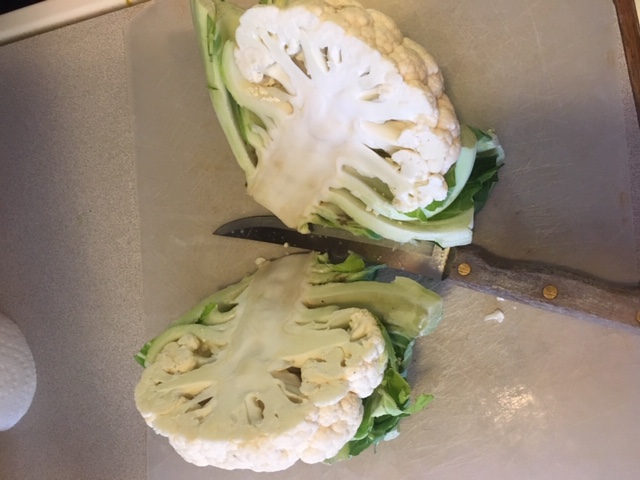
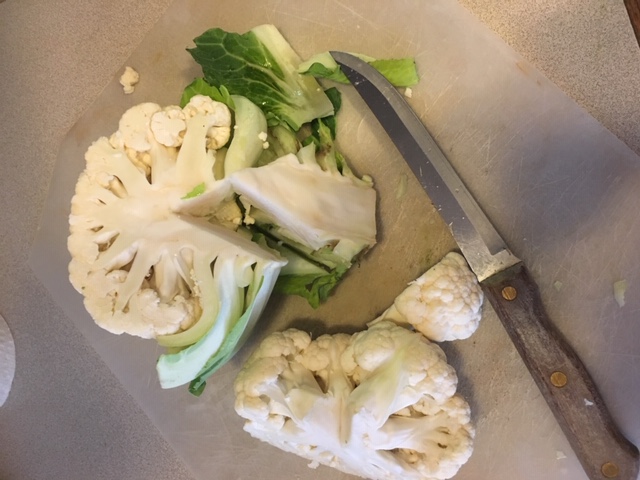
Fried Riced Cauliflower – Veggie of the Week

I prepared my cauliflower in a way I never tried before. I know I tried riced cauliflower last week, but I it was from a package rice and I tried it with a warm riced cauliflower salad. Pretty good!

However this week is special because I riced it myself to make “fried rice” which is actually “fried riced cauliflower.” All I can say is WOW, this is a WINNER!

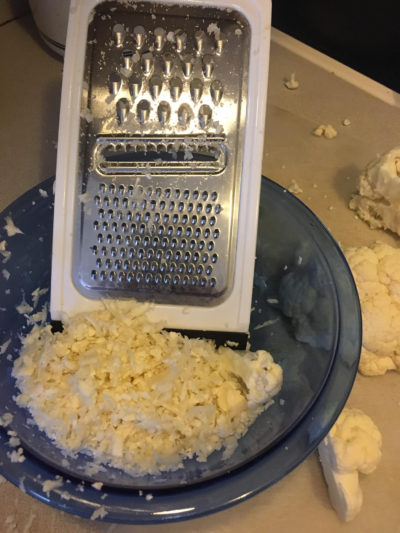
Start with a beautiful head of cauliflower. It’s still messy to rice cauliflower using a grater, but that’s okay, it’s easy enough to clean up and worth it for the delicious taste.

I even grate the core of the cauliflower to use the whole thing. Usually I throw that part away, but since it is riced so small, it doesn’t need to be discarded.

Chop up other veggies into a small size too. Use what is in your refrigerator, but make the cauliflower the star. By that I mean, don’t use a whole stalk of celery or a whole onion.

Ingredients:

  • Olive oil
  • Onions
  • Green pepper
  • Red pepper
  • Celery
  • Carrots
  • Riced Cauliflower
  • Salt & Pepper
  • Soy Sauce (if desired)

Heat a little olive oil in a large skillet. Add onions. After they get a little translucent, add the other veggies. Toss or flip with spatula. Add the rice, cover for a minute and flip again.

Wisk one egg to scramble it. Drizzle over the mixture. Stir, turn and blend into the veggie mixture while it cooks. The cauliflower cooks pretty quickly since it is riced so small.


Add soy sauce if you need to, but I like it plain.

Serve with stir fry chicken or inside out egg rolls.

3 Tips for Motivation using Little Rewards

Keeping focused on healthy eating, working out and being fit is very important to me. It’s both a long term and a short term goal. I know that staying focused and motivated will lead to bigger successes and reaching my goals.

Some days however, I’m just not feeling it, so I have some mental tricks I use. One of the tricks is something I call “Little Rewards” that use tools to finish something to get on to the next thing. It’s like playing a little game with myself.

Maybe everyone does this and it is nothing new or earth shaking. But if not, I thought I’d share what goes in my head when I’m trying to motivate myself. These Little Rewards flip some switch in my brain.

1) Baby Steps: I find it easier to tackle something I don’t want to do by breaking it down into steps. Then after each one of the steps, providing myself a little reward.

Rewards need to match the step. If it’s a big project with lots of steps I don’t particularly enjoy (let’s say doing taxes), I give myself a little reward for each little step. Gathering papers. Printing out reports. Finding a file. Gathering the forms. Making an appointment. I guess it all depends on the task you are doing.

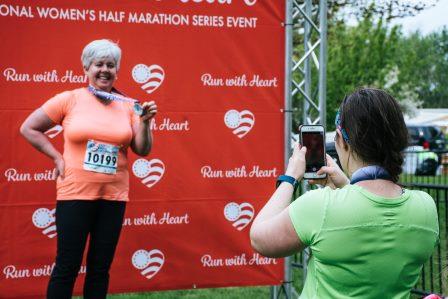
Here are some of the little rewards I might use are: have a cup of coffee after I complete the step, or put on lavender hand cream. or take a 20 minute walk and listen to a podcast, or call a friend to chat. Sometimes the reward is taking a selfie photo of myself after a run or bike ride. Sometimes listening to a favorite song does the trick.

2) Timer: I will set the timer at the kitchen stove or on my phone so that I can reward myself after I complete 20 minutes of something I have been putting off. It’s funny how much I can actually accomplish if take 20 minutes and just focus on that one thing. Procrastination often blows the project into a big thing in my mind, I find that if I set a timer and promise myself that I can stop when the timer goes off, I will get it done!

For the timer to work for me, I have to concentrate on the thing I don’t want to do. Maybe it is cutting up all the vegetables for food prep for the day. It’s not that I don’t like cutting vegetables… I do! But I also tend to procrastinate because I don’t need them right now. Then when I do need them, I’m in a rush and wish I had them ready. Setting a timer helps! Twenty minutes of vegetable chopping goes pretty quickly. I put them into containers in the bottom of the fridge and it’s amazing how much more often vegetables get added to something I’m cooking. Or I find I turn to them when I’m looking for a snack.

3) Gold Star: Although I don’t have the little stickers, I make a star on the pocket calendar that I use to track my various workouts. Two stars is an especially good workout. It’s funny that at my age, the stars still have a little power over me and acts as an incentive.

It must be a hold over from childhood and getting a star on a school paper, because now just a little hand drawn star, somehow feels like a great little reward. (I also remember getting pins with little gold star in Girl Scouts to represent each year of scouting – but I think those were considered awards, not rewards!

Either way, a gold sticker or a hand drawn star — it provides an Atta Girl and there is some switch in my brain that gives me the little oomph that I need to get something done.

Having the timer go off or coveting a little star may seem silly or pointless, but I’m still motivated by it. Looking back at old photos of biking or running activities is definitely motivational for me. Big rewards like a medal after a race are certainly motivating, but it’s the tiny things each day that helps me to make up a daily healthy and fit life.

What tools do you use to get yourself going? Please share below or send me an email at Chris@becomingelli.com. Or leave a voicemail at 330-970-6662.

« Older posts Newer posts »

© 2026

Theme by Anders Noren — Up ↑