Fit Strong Women Over 50.

Category: Book Review

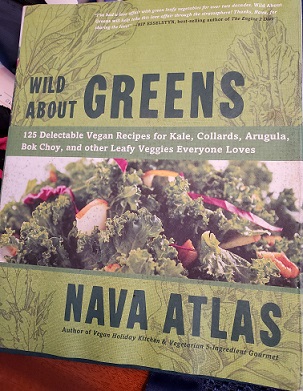
Review of Wild about Greens by Nava Atlas

A friend gave me Wild about Greens by Nava Atlas a while ago. I looked through this cookbook and thought “what a nice gift” but then never really did anything with it. I do enjoy reading cookbooks though I don’t always feel compelled to actually make anything from them.

Since we’re doing the 2021 Veggie Challenge and I’m trying to introduce some vegetables into my diet that, while not necessarily new, are foods that I don’t normally eat. When it comes to greens, I’m comfortable with a variety of lettuce, spinach, and kale. I struggle with some of the other greens but I’m feeling compelled to improve my greens repertoire. That’s when I remembered Wild about Greens.

This cookbook has 125 recipes in it, all based on greens.

The book is broken into five chapters:

  • One is about the basic preparations of greens. It includes wonderful descriptions of the different types of greens and the best way to prepare them.
  • Two focuses on greens with beans, grains, pasta, and other vegetables.
  • Three covers salad dressings and dips.
  • Four provides recipes for using greens in soups and stews.
  • Five is green juices and smoothies.

One thing I like about the recipes is that at the end of each recipe it lists what other greens would be best used to replace what is used in the recipe.

There’s lots of good introductory material about how to buy and store your greens. It also covers basic ways to prepare them and explain some of the differences between the different greens. If you’re at all intimidated by the thought of cooking collard greens or of using dandelion weeds, this is a helpful resource. The recipes cover a wide range of dishes and she provides lots of great advice about how best to use the various sauces and dressings.

The book is visually pleasing with lots of great photos and lots of white space. I used the index and found it to be well done. I hate cookbooks that don’t have a good index and this has passed the test.

The Author

Nava Atlas, the author of Wild about Greens, has written a number of other vegan cookbooks. She also has many recipes on her website, The Vegan Atlas. You might want to check out Wild about Greens and some of her other books.

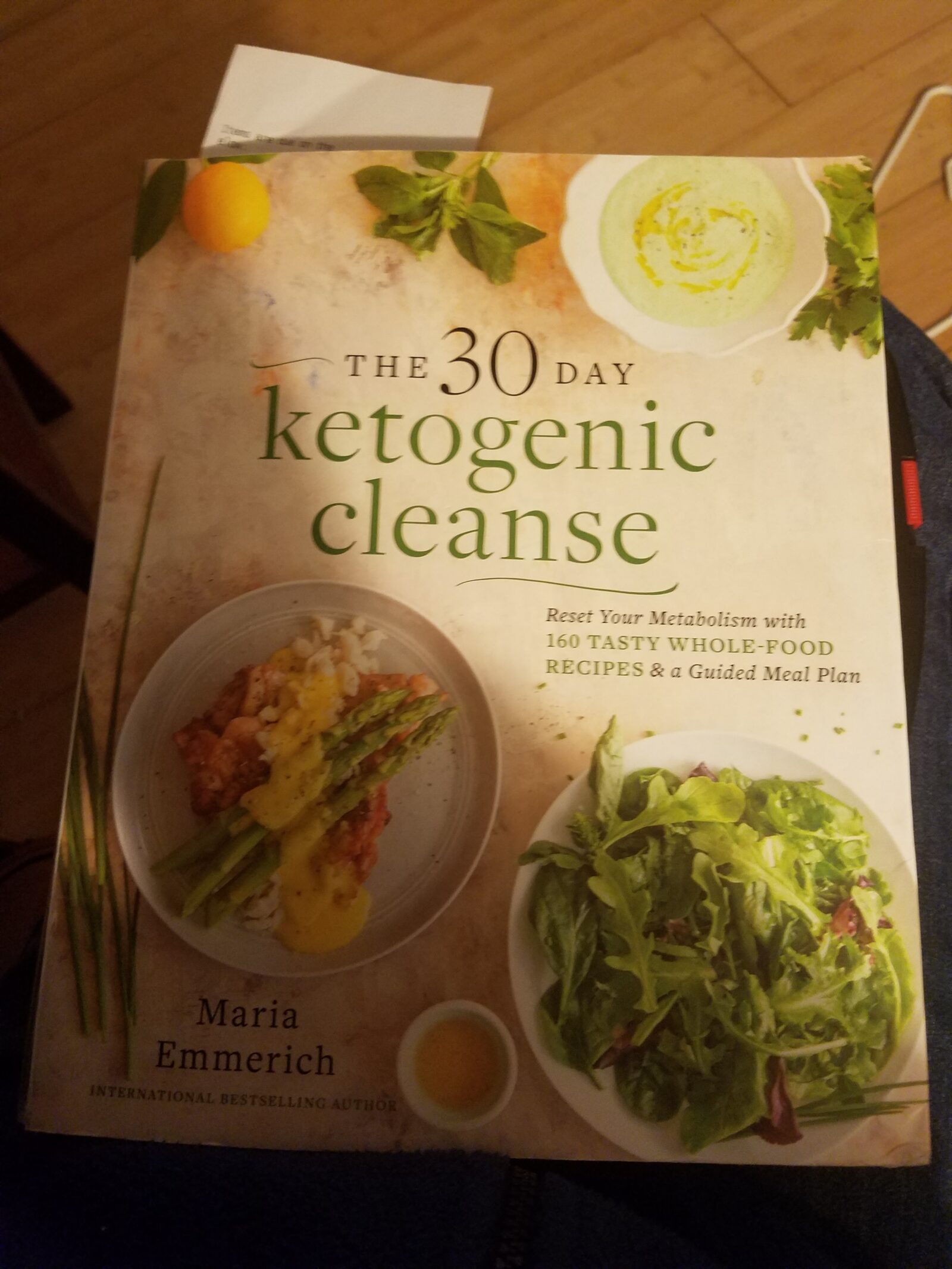
The 30-Day Ketogenic Cleanse by Maria Emmerich


Maria Emmerich has written a lot of books about following a ketogenic diet so I checked out The 30-Day Ketogenic Cleanse. I wanted to call this a cookbook but the publisher calls it a guidebook. I suppose that is more accurate because it covers a lot of information.

We’ve often talked about the keto diet often on the Fit, Strong Women over 50 podcast. Most recently, we talked to Keto Woman.

Overview of The 30-Day Ketogenic Cleanse

The book is divided into five parts. Part 1 tells you how to heal your body. This section discusses why a ketogenic diet is good for you. She touches on cholesterol and Alzheimer’s and describes the problems with consuming carbohydrates. She also covers information about consuming fat and sugar and the effects on your body’s production of insulin.

Sections of The 30-Day Ketogenic Cleanse

Emmerich defines the ketogenic diet in Part 1. She explains how it affects your body and then provides the steps to “establishing a well-formulated ketogenic diet.” The point of this cleanse is to help you get into ketosis. This section also includes information about intermittent fasting and exercise.

Part 2 is the Ketogenic Kitchen which cover subjects such as ingredients and tools.

The meal plan and shopping list broken down by weeks is in Part 3.

Part 4 is the bulk of the book. Here are the recipes that make up the cleanse.

Finally, Part 5 is a list of resources, a listing of personal care products, testimonials and the indexes. Personally, I love indexes (that’s a discussion for another day). This one is split into a recipe index and a general index. I find that usually works well as long as you remember where you’ll find the recipes.

The book is well organized and is visually appealing. It has beautiful photographs. The book is laid out nicely with easy-to-read tables and graphs. Emmerich also does a good job of defining terms.

Recipes

This guidebook has 160 recipes and a meal plan for the first 30 days of a ketogenic diet. The recipes in this book are also dairy free. The first couple of chapters are devoted to explaining what a ketogenic diet is. It’s a high-fat moderate protein and low carb way of eating. The theory of that is that it causes the body to burn fat rather than sugar for energy.

The first 30 days described in this book are set up as a cleanse. The premise is that you follow her meal plan for 30 days and then you should feel great because you’re in ketosis. Once you complete the cleanse, she says that you will want to continue to eat this way.

The book includes a wide range of recipes. There are sections on sauces, breakfast, snacks, salads, soups, and main dishes including chicken, beef, pork, and seafood. The recipes end with what she calls Keto treats. These appear basically to be desserts.

Good Variety

What I like about this cookbook is that the recipes are a nice blend of foods. Many Keto cookbooks are a lot of bacon and cheese recipes. There is some bacon in this cookbook but not much. Certainly not on every page. Since it is a dairy-free cookbook, there’s no cheese at all which I find a welcome change. Don’t get me wrong. I  like bacon and cheese but I’m not convinced that I should eat it every day.

Some of the recipes are a bit complicated. Because you’re supposed to eat this according to the 30-day cleanse schedule, she assumes that you have certain ingredients already prepared. For example, a recipe calls for cooked chicken so you need to have it on hand. This certainly isn’t a deal breaker but if you’re going to use the recipes without following the meal plan, make sure to plan ahead.

I don’t always do well with following a set meal plan but there’s lots of good recipes and ideas here that it’s worth checking out anyway.

A Good Place to Start

If you are curious about eating a Ketogenic diet, The 30-Day Ketogenic Cleanse is probably a good place to start. Emmerich provides lots of information about the diet and why you should eat this way. She includes a wide range of resources and information. Throughout this book, Emmerich mentions that she is a visual learner. It shows in her book design because it has lots of graphics and photos. I think overall this is a book I would recommend to others.

Published in 2016 by Victory Belt Publishing Inc. Copyright 2016 Maria Emmerich

Can’t Hurt Me: Master Your Mind and Defy the Odds

I bought Can’t Hurt Me: Master Your Mind and Defy the Odds by David Goggins from Audible because I’d heard multiple people, mainly at my gym, say that it was a great book. They said it was very motivational and was about a man who became a Navy Seal. One woman said she didn’t care for the “bad” language in the book. I needed to use a credit on Audible and decided to buy this book.

Can't Hurt Me:

That’s basically what I knew about the book and had no idea who David Goggins is. Therefore, I was startled when he mentioned running ultramarathons. I turned to Google and discovered that David Goggins has an extensive military career but also an extensive endurance race career. Also, apparently he has been on numerous podcasts but I’ve missed hearing him.

Can’t Hurt Me: Master Your Mind and Defy the Odds

The audio version contains content not available in the book. The book is read by the co-author, Adam Skolnick with breaks in the narrative where Goggins and Skolnick discuss what was read. They tell additional stories to supplement what is in the book. This at times is interesting though I began to find it a bit irritating and would become impatient to return to the actual book. Their conversation was repetitive. Adam Skolnick would take a break and say something like, “wow, that is amazing” and then David Goggins would repeat about how hard he had to work. He did tell some additional stories that were interesting but it could have been edited a bit.

Each chapter ends with a challenge for the listener. The point is that we can repeat much of what Goggins does to overcome our own fears and lack of discipline. Perhaps people do these challenges. I didn’t feel the need to bother with this. I suspect that says more about me than it does about the book.

Motivational Story

Definitely, David Goggins knows how to accomplish great goals. He is driven to perform and defies the odds to accomplish those goals. His motivation and drive is amazing.

I’m sure that many people find his story to be motivational. He overcame a difficult childhood that includes physical violence and poverty to succeed in life. There’s no doubt that he accomplished a tremendous amount in his search to be physically the best.

What Concerned Me

I found myself wondering about him however. Can’t Hurt Me: is about how to accomplish big goals and I think he does a great job of telling us how to do that but I’m not sure how successful he is as a person. He does say that we are not meant to be happy, that we need to focus on accomplishing what we want to accomplish.

Several times he decided to do something with a lack of preparation and then had to deal with injury and feelings of failure. I’m not sure that deciding to run a marathon when injured is a good decision. He also ran his first 100 mile race with no training and ends up with significant injury. Goggins thinks that shows what a “stud” he is. I suspect that I’m old enough that I think that’s just foolish. There’s no reason not to prepare for things. He’s very  impetuous.

Personal Life

Throughout the book, there’s the occasional mention of his ex-wives and a fiancée. Can’t Hurt Me: is certainly not about his personal life but he’s apparently been divorced at least three times. So, it’s not for me to criticize that but I felt that much of what he did was a way to avoid facing his feelings. He also talked about how he didn’t want to socialize with his platoon and other military people. While he succeeded in much of his goals, he seems to be emotionally stilted. I felt like much of what was driving him was the refusal to actually face the emotional trauma he suffered.

I found myself wondering about his brother. David Goggin’s brother was with him as a child but left their mother and David at some point to go live with their father. At that point, he drops out of the story until the last chapter. It’s mentioned that his brother ended up earning a PhD. Earning a PhD is definitely due to tenacity and commitment. I thought it was interesting that both of them ended up being successful, it would appear, despite the different paths they took in ways that required dedication and perseverance.

The Language

Oh yes, and the language. It is extreme. David Goggins says in the audio book that people who don’t like it should get over it because that’s how he talks. And that’s fine though most of us manage to speak one way and write another. So, it didn’t really bother me, but it felt gratuitous. It seemed to be more to be shocking than anything. The language could have been scaled back without affecting the intent of the book.

My Take Aways

I enjoyed the book but did not love it. The lessons that meant the most to me were how to come back after failing to reach a goal and the importance of stretching.

It’s easy when we fail in a project to give up. Goggins talks about how it took him three tries to earn the pull-up world record and what he learned from each failed attempt. That was motivational to me.

He also describes how his body rebelled from being so muscular without having any flexibility and that stretching became an important part of his routine. I think most of us fail to practice enough stretching and this was a great reminder.

I recommend this book unless you know you’re bothered by curse words. It may well motivate you to do more to meet your goals.

Don’t forget to check out some of my other book reviews.

Review of The Obesity Code

The Obesity Code: Unlocking the Secrets of Weight Loss by Jason Fung, MD answers a lot of questions we’ve all had about both weight loss and weight gain. It’s a well-written, easy-to-follow book that explains why so many of us are overweight or obese and why when we lose weight, we’re likely to regain what we’ve lost.

The Obesity Code begins with a look at the past few decades and how obesity has become an epidemic. Fung does a great job of explaining the science in terms that we can understand. I rarely felt like I needed to start skimming because I couldn’t understand.

Basically, according to Fung, we can pretty much pick a diet and we can work hard at losing weight and eventually we can take off the weight. Most of us then begin to slowly put the weight back on and sometimes put even more weight on. This is because our weight is really the result of hormones, especially insulin.

Because we’ve eaten so many simple carbs and processed foods and eat so many meals and snacks, many of us have become insulin resistant. That makes our bodies release more insulin and it’s insulin that makes us gain weight.

The Obesity Code covers why we’re so overweight and why “eating less and moving more” doesn’t work. Eating less makes us tired and often slows down our metabolism. Moving more makes us eat more. Basically, the body wants to weight what it wants to weight. Unfortunately, our unhealthy food choices makes our bodies want to be overweight.

Fung does come up with five basic steps of weight loss. This is not a diet book, however. It does not give you menus or recipes. Instead it discusses what to eat and what not to eat.

Interestingly, Dr. Fung points out that we all worry about what to eat but we don’t think much about when to eat. He says the advice to eat small meals every two or three hours is disastrous. Also, he dismisses the idea that breakfast is the most important meal of the day. He says, if you’re hungry, eat when you get up. Otherwise, wait until you’re hungry.

He ends the book by discussing fasting as a way to reset your body’s set point for weight. There are various different ways of doing intermittent fasting and he covers most of them. I just recently wrote about intermittent fasting so was glad to read about it.

I thought The Obesity Code was fascinating. It’s easy to read and understand and really makes sense of the weight problems most of us deal with. I wished there was a bit more information about fasting in this book.

Because the book has been around for a couple years, there’s a lot of information online about it so you can find more advice on the fasting that way. Oh, and Timothy Hoakes wrote the foreword, which I thought was great.

The Obesity Code: Unlocking the Secrets of Weight Loss
Disclosure: this review links to the Amazon affiliate program, where a portion of a purchase might help offset the expenses associated with the podcast and website.

The End of Alzheimer’s by Dr. Bredesen: Book Review

I was reading an article on line and the author mentioned The End of Alzheimer’s by Dale E. Bredesen, MD. I jumped over to Amazon, read the reviews, and ordered the book. I sat down and read it quickly. Given its complex subject, I have gone back and reread sections.

The End of Alzheimer’s

The End of Alzheimer’s: The First Program to Prevent and Reverse Cognitive Decline both an exploration of Dr. Bredesen’s research on Alzheimer’s and a guide to how we can prevent or even reverse Alzheimer’s and the beginning phases of dementia.

The first part of the book is an overview of standard thinking about Alzheimer’s and information on Dr. Bredesen’s work on reversing cognitive decline.  Some of this gets rather technical though he does a great job of explaining. I’ve worked for many years as a technical writer and know how difficult it is to explain detailed, technical information in a clear, straight-forward way. I think Dr. Bredesen does a good job explaining his work, basic biology, genetics, and pharmacology. A couple of chapters can probably be skimmed if you really don’t want to know why he came to the conclusions he reached and put together his protocol.

Dr. Bredesen says there are three different types of Alzheimer’s and what treatment is needed depends on the type that you have. Also, there are 36 different factors that contribute to Alzheimer’s, which is why this is such a complex program.

ApoE4

Dr. Bredesen does a good job of explaining the genetic component of Alzheimer’s and the risk component of having the ApoE4 gene variant. He does explain how you can find out if you have this gene. We all have to decide for ourselves if we want to know but Dr. Bredesen suggests that it’s better to know and to act than not.

He specifies a lot of testing that you need to do. Much of it is blood work though he does talk about scans as well. What you need is based at least somewhat on the lab results.

ReCODE

The remainder of the book is devoted to describing the protocol he calls ReCODE. This is the program created to prevent or reverse Alzheimer’s. This is a complex program and not for the faint of heart if you were to do everything he describes. The program includes an eating plan based mainly on vegetables with some meat and eggs. It’s a gluten-free and mostly dairy-free way of eating.  The eating plan is very similar to other anti-inflammatory diets I’ve read about.

He recommends that those following the protocol practice intermittent fasting of at least a 12 hour fast and to be in a mild Ketogenic state.

This protocol also includes lots of exercise. He recommends combining aerobic exercise with weight training. You want to work out at least four or five days a week for 45 to 60 minutes in total each day. When you read the list of benefits of exercise for cognition, you’ll be more motivated.

Besides diet and exercise, the protocol covers stress reduction, sleep, supplements, cognitive training, and more. As I said, it’s complicated.

Conclusion

I found this book to be enlightening and made me optimistic about our ability to treat Alzheimer’s. We keep hearing how there’s a tsunami of Alzheimer’s patients coming our way and this helps me hope that it’s not as bleak as most news reports sound.

The biggest question I had by the end of the book was how to figure out what you need. It wasn’t really clear to me what I would do next. The appendices list a fair number of resources and it was only when I started poking around online that I figured out that there are ways to get many of these tests done on your own. I also found that the Institute for Functional Medicine will be training medical practitioners in ReCODE (The Bredesen Protocol).  There do not appear to be a lot of doctors available right now who have been trained on this so I suspect you’ll have to figure some of this out on your own.

I found this book to be informational, inspiring, and made me hopeful that we can overcome many of the fears of Alzheimer’s. Just what exactly to do next is what has me a bit stumped.

Disclosure: the photo above links to the Amazon affiliate program, where a portion of your purchase helps to offset the expenses associated with the Becoming Elli podcast and website.


The End of Alzheimer's

Nutrition and the Best of Diet Writing 2017: Check It Out

There’s tons of information on the internet about diets. Oh my, I think diet information is only behind pornography in popularity for internet searches. I confess, I like reading some of it. even if I roll my eyes at what some people put out there.  Specifically, there’s a lot of discussion about nutrition and what we should eat and less writing about diet.

A good source for information about nutrition that seems to be pretty reliable and unbiased is the Nutrition Wonk blog and website. This site provides lots of detailed information about studies and nutrition science. Here’s their description of the site:

This is a site for the folks who love nutrition as much as they love food.

Nutrition Wonk gets into the weeds of nutrition science, old and new, to examine protocols, outcomes, and historical contexts for nutrition claims.

Nutrition professionals so often need to simplify nutrition science to bullet points.  At Nutrition Wonk, we do the opposite. It’s a site for people who ask, “but why?” and want to know how the mouse study gets made.

The most recent post on this blog is The Best Diet Writing 2017  (February 4, 2018 Katherine @NutritionWonk). I really liked her list and recommend checking some of this writing out. (I know that you’re going to have to click on this link and then click on her links but I still think it’s a good list and I want to share.)

The first book in this list is Hunger: A Memoir of (My) Body by Roxane Gay. I haven’t read this book yet but I saw Roxane Gay speak last year. She was fantastic: funny and articulate and well aware that she is a large woman. I want to read this book based solely on her talk.

Do you have any good diet writing or even food writing that you want to share? If so, add it in the comments.


Book Review: The Power of Habit

I recently read a book called The Power of Habit by Charles Duhigg. And I have been able to change some habits! The book explores how habits work. The author studied how businesses change the habits of their employees as well as how everyday people lose weight, keep it off and start consistently exercising.

My big “ah-ha” with this book was to learn to change the thing I do right before the action. I found this description of the book on Amazon:

At its core, The Power of Habit contains an exhilarating argument: The key to exercising regularly, losing weight, raising exceptional children, becoming more productive, building revolutionary companies and social movements, and achieving success is understanding how habits work.

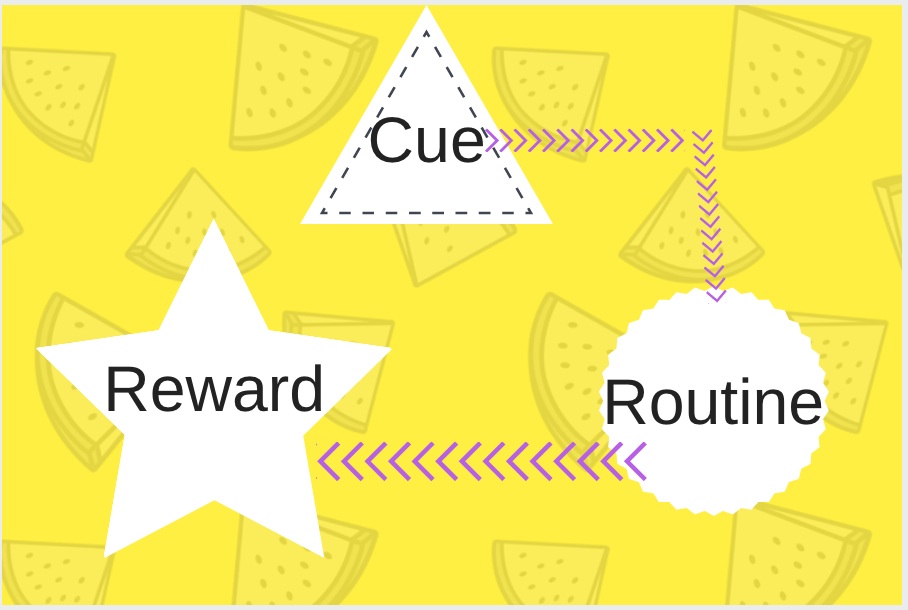
The book explains the 3 parts of the habit. Each habit has a cue, a routine and a reward.  The key is understanding the pattern before trying to adjust the outcomes. It starts with the cue. The cue might be the time of day or a situation.  The phone rings. Stuck in a traffic jam. An argument with a family member. The 3 pm slump.

Then, almost automatically the habit moves into the routine.  And finally there is the reward.

Here’s an example:

  1. I’m half-heartedly watching football on TV and a food commercial comes on (something like pizza or fast food.) That’s the cue.
  2. Suddenly I am “hungry.” Then next thing you know, the routine starts: I walk into the kitchen and look in the refrigerator for something yummy.
  3. What’s the reward? “Mmmm” the craving is satisfied with a momentary good taste on the tongue.  (And later followed by the “grrr, I did it again” feeling, but somehow that doesn’t link into the cue-routine-reward habit.)

If you think about it, we all do actions with a series of steps. Making coffee, driving a car, taking a shower, grocery shopping, reading Facebook.  I learned from this book, if you can breakdown and understand the cue, routine and reward of your habit, you have a chance at modifying any habit that you currently do.  Making my New Year’s resolution into a cue, routine, reward type activity that comes naturally and almost automatic, has helped me to redirect myself without too much thought or decision. In fact, I’ve found that there are a lot of good things that I can do, somewhat unconsciously.

Redirect the Habit

After examining some of my habits, here’s an example of one of them where I have been pretty successful at making the redirect:

Following the cue of a commercial with a yummy cheese-dripping pizza shown during a break in the action of a football game on TV, I will still go over to he fridge and peak in. But now I have placed a pile of fresh veggies (carrots, celery, tomatoes, mushrooms, spinach, broccoli, cauliflower, Brussel sprouts whatever is on sale/in season) front and center. Instead of grabbing something “yummy” to eat, I changed the routine. I pull out the vegetables and chop them up. Then, even if I don’t eat them right now, I’ve got stuff ready for salad toppings or a soup. And sometimes, just the act of looking in the fridge, pulling the veggies out and chopping them, satisfies my craving for that food I saw on TV that unconsciously sent me to the fridge to begin with.  I don’t know why it feels satisfying (the reward.) But it does. Usually halfway thru chopping, I have forgotten all about the dripping cheese from that pizza commercial because I’m focused on not chopping my fingers as I’m slicing the onion. And I’m thinking about what kind of salad or soup to make and should I add some protein.

Chopping veggies is very satisfying to me. I feel like I accomplished something, the movements are somewhat unconscious and the results are good.

Is there a habit that you are trying to change or redirect? What is your cue, routine and reward? Leave us a message below about your success or challenge with changing it.


© 2026 Becoming Elli

Theme by Anders NorenUp ↑