Fit Strong Women Over 50.

Tag: weight

Ups and Downs of Fitness Past 50

Let’s talk about some of the ups and downs of fitness past 50. A few things happened this week that made me feel good and then not so good. There were definitely some ups and downs of fitness this week.

Ups and Downs of Fitness

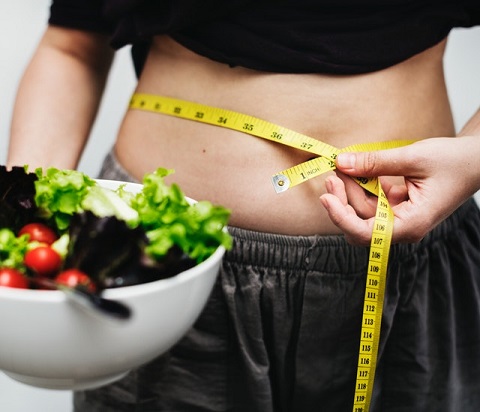
First, I signed up for a small group training class at my gym. The seven-week class starts and ends with measurements so we can track our progress. The measurements included weight, body fat percentage (oh, it’s been a rough year!), blood pressure, and actual body measurements. You know, the measuring tape around your chest, abdomen, waist, hips, thighs, and upper arm. Not really a good time.

This was followed by a brief physical test. We did inclined push ups. Inclined means we rested our hands on an elevated surface and did a full push up. The test was to see how many we could do in a minute. The other test was four minutes on the rowing machine.
I did not feel great about the weight and body fat percentage. I definitely have some work to do there. Too much time dealing with injuries and too much time traveling and having fun last year. It’s certainly an incentive to pay attention to this.

I did feel pretty good that, although I am clearly the oldest person in the training group, I was not the worst at the push ups and rowing. There were a couple young women there who looked very fit and said they go to bootcamp classes three times a week, but they couldn’t do the push ups. They said they always do pushups on their knees in boot camp. I don’t want to sound petty but that made me feel better that I managed to do some.

Oh NO! A Photo!

The second thing I did this week was scary. I took a selfie of myself while I was out running. It was a sunny day and the selfie of course was a close-up. Oh my, what a shock when I looked at the photo. I did not upload it to Strava where I log my runs. Yikes, I looked so much older than I felt. I know it was a sunny day so I was squinting and it was not a flattering shot but boy it knocked me for a loop. Fortunately, I didn’t see the photo until after I finished my run.
ups and downs of fitness

I know it’s more important to have completed my run successfully than to look good in a photograph but I still have some vanity left and that was painful.

Recovery

OK, so this week has had its ups and downs. I’m carrying around more weight than I like and I know I’ll feel better if I get it off. I prefer to focus on the body fat percentage, but I definitely need to lower that number.

I looked like a zombie in my selfie. Note to self, avoid selfies in the bright sunlight while running. It’s not a good look. All future sellfies should be taken after recovery from running, preferably after a shower, combing the hair, and maybe even using some makeup.

On the plus side, I successfully completed some pushups and rowed for four minutes. I ran my Couch to 5K session without problem and felt good afterwards. I’m choosing to focus on that. You know, the “be fit and strong” thing.

I guess all we can do is continue to work on being fit and strong and try to improve where we can. Set those goals and don’t feel bad about what you can’t control.

If anyone has any ideas on improving the selfie look, let me know. More importantly, let me know if you’ve had some successes this week in your fitness regime.
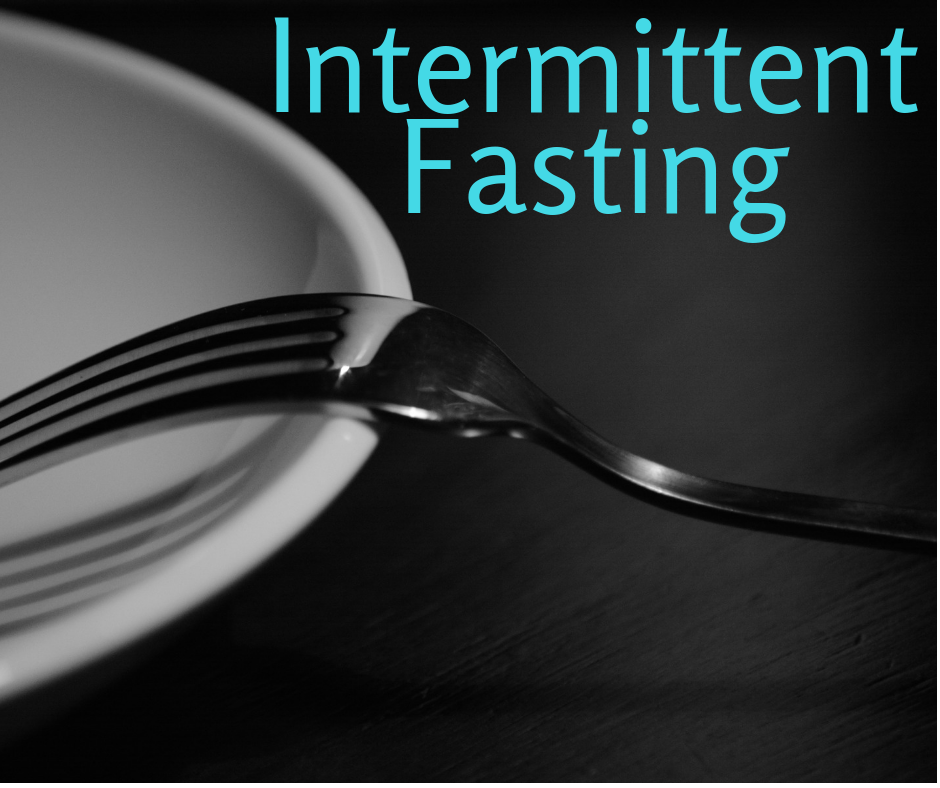
 

Intermittent Fasting for Weight Loss and Health

Everywhere I turn, I run into someone saying that intermittent fasting is the thing to be doing. I’d say it’s just a trend but a number of doctors and medical experts seem to be recommending some version of intermittent fasting.

Intermittent Fasting is not a diet. It does not involve what you choose to eat but when you eat it. Most doctor’s and nutrition experts will recommend that if you’re going to try intermittent fasting, you should still eat in a healthy fashion. Don’t let the fasting make you think that stuffing yourself with cheese curls is a great way to break a fast.

In The End of Alzheimer’s, Dr. Bredesen recommends an intermittent fasting plan. He suggests that you at least have a 12 hour window of fasting, which means you should have a 12 hour period of time each day of not eating. So, if your last meal or snack is at 7 PM, you can have breakfast at 7AM.  If you’re snacking at 11 PM, guess what? You’re supposed to wait until 11 AM to eat. To be honest, Dr. Bredesen says you should avoid eating in the 3 hours before going to bed, so you wouldn’t be snacking at 11. He says it might be even better to aim for 14 to 16 hours of fasting. Basically, if your last meal at the end of the day ends at 8 PM, you don’t eat until 10 AM. You can check out my review of this book.

So, all those people who said over the years, I don’t want to eat breakfast were perhaps on to something.

I’ve seen similar recommendations from Dr. Steven Masley, Dr. Mary Hyman, Dr. Perlmutter, and others.

Benefits of Intermittent Fasting

Why should we practice intermittent fasting? What’s the benefit to us? Well, a number of medical studies have shown that fasting helps us:

  • improve our mental health
  • lose weight
  • lower our risk of developing a chronic disease.

It helps with weight loss. There is the basic fact that if you’re omitting a meal each day, you’ll probably eat less. But there’s some evidence that this actually increases your metabolism. Also, intermittent fasting helps your body burn fat as energy which of course leads to weight loss.

Besides weight loss, intermittent fasting reduces the insulin resistance in our bodies which lowers our risk of type 2 diabetes.

Intermittent fasting also helps improve our mood and our memory. It’s supposed to be good for cognitive health.

Types of Intermittent Fasting

The method of intermittent fasting that I described above can also be called a time restricted fast. You eat every day but just limit the hours when you eat.

Intermittent Fasting

Related to the time restricted fast is the One Meal a Day plan. You can guess what this is…you eat once a day. Obviously if you’re eating one meal a day, you’d better make sure it’s a good one. I’ve met a number of people who eat this way and they claim to have lost a lot of weight and to like eating this way.

There’s also a 5:2 plan. Two days a week, you eat a restricted diet of about 500 calories and a normal number of calories the remaining 5 days.

There’s also a monthly fasting plan where once a month you reduce calories for 5 consecutive days to about 35 to 50 percent of your normal caloric intake. So, you normally eat 2,000 calories a day, you would reduce that to 700 to 1,000 calories for 5 days in a row.

Finally, some people fast for 24 hours at a time, a couple days a week.

Best Practices with Intermittent Fasting

Before you start fasting, make sure you don’t have health issues to prevent this. Women who are breast feeding should be careful with fasting. Also, if you suffer at all from any eating disorders, you might want to avoid fasting of any kind. If you are under a lot of stress, it’s probably not the time to add a major change in your eating patterns. Why introduce more stress?

If you’re not sure if you’re a candidate for trying intermittent fasting, check with your doctor.

Once you decide that you want to try intermittent fasting, keep a few things in mind.

  1. Remember to drink your fluids. Water, calorie-free drinks, black coffee, and green or herbal tea are probably all fine for you. Be sure you stay hydrated while fasting. Also, sometimes we feel hungry when we’re really thirsty.
  2. Get plenty of sleep. Your body needs sleep to repair itself. Sleep helps with cognitive health as well as physical health. Plus, while you’re sleeping, that fasting time goes by a lot faster.
  3. Be careful with working out when you first start. While your body is adjusting to fasting, you probably don’t want to also decide to take up some heavy duty workout regime. Be patient and let your body adjust. Then you’ll be able to tell how much working out you can handle in a fasted state. If you’re doing the 2:5 method, consider those two days of restricted calories as your rest days.
  4. Make sure you’re eating nutrient-dense foods when it’s time to eat. If you’re not eating for an extended time, you really want to make sure you’re getting your vitamins, minerals, fiber, fat, protein, and so on in your food.


Recording Your Body Measurements

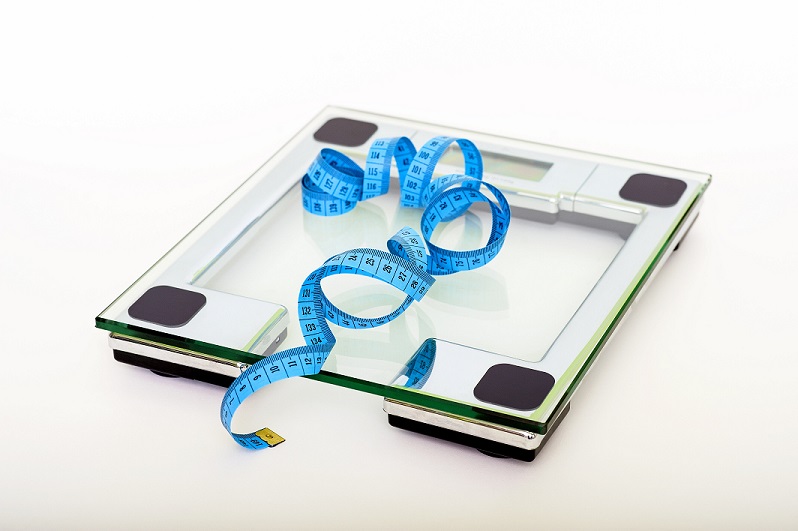
Today I want to talk about the value of recording your body measurements. We’ve talked about weighing ourselves in this blog (To Weigh or Not to Weigh) and I think that’s a useful measurement to track. It’s certainly useful to know that your weight jumped five pounds in the past month.

I gained some weight on my super-duper exciting summer of travel and now I’m trying to take it off. I went to the beach twice and on a ten-day visit to Italy and had a great time. There always comes that moment when you come home and jump on the scale. Sigh. Putting weight on is so much easier than taking it off. It doesn’t seem fair, but I guess it’s also a lot more fun to put the weight on than to take it off.

I’m back to working out and I’m training to run the half marathon at the end of September. That actually made me start thinking about the weight because I figured the running will be a bit harder if I weight more. It’s hard enough running 13 miles without adding extra weight.

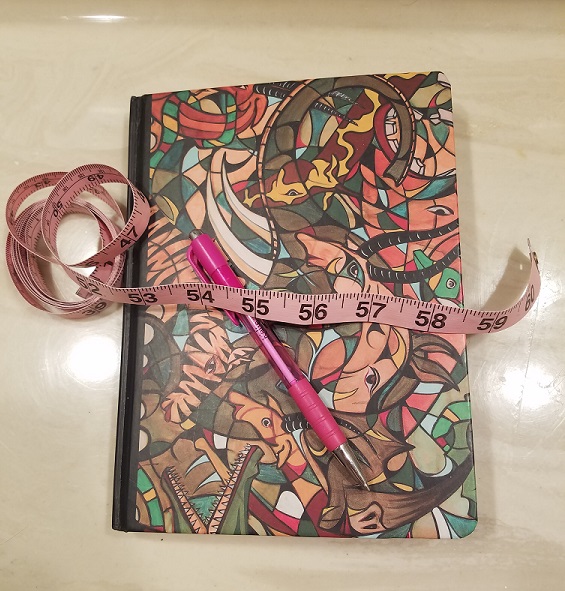
I keep a log of my weight. It’s just a paper journal that I use to write the date, my weight and the body fat number that my scale gives me. I flipped back to last year and found that last year in September I weighed 5 pounds less. OK, so I felt a bit better because it feels like I gained more than that. It made me feel a bit more confident about running the half marathon.

Body Measurements Journal

Tracking Body Measurements

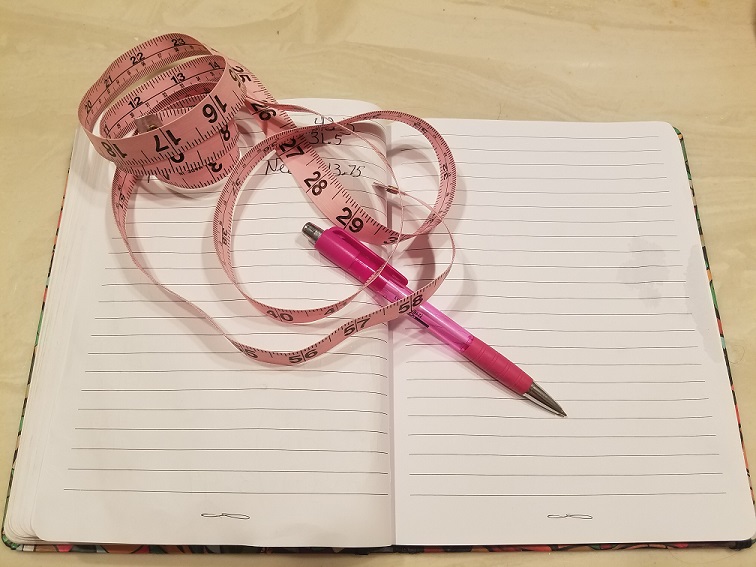
Besides recording my weight and body fat percentage, I also measure myself about once a month. I weigh my waist, at my navel, the widest part of my hips, and around my right thigh. Once in a great while I measure my neck but it’s difficult and I don’t think that number is very accurate.  I don’t measure anything else because it’s hard to do on myself. These numbers work well for me. These body measurements allow me to see my progress or lack of progress.

I write these numbers down in my log too, which allows me to refer back to them when I want.

When I returned from all of my vacationing, not only had I gained weight, my measurements had all gone up by an inch or more. That was alarming to me. So this is what I checked today. I’ve only lost a couple of pounds since I gained the weight over the summer but my measurements have improved. I’m not quite where I was at the beginning of the summer but it’s going in the right direction.

Here’s the interesting thing. I went back to September 2014 in my log. (Yes, I’ve been keeping this log for a while.) My weight is about the same number as it was then BUT my measurements are still consistently less than then. So, I weigh the same but I am thinner. That’s because I obviously have more muscle now and less fat than I did then.

This is why just fixating on what the scale says can be so misleading. Weight only tells you so much. It’s a great indicator of how you’re doing but don’t count on it as the ultimate fitness number.

You can do a similar thing by using a pair of jeans or some other item of clothing and try it on periodically. I like having the actual numbers but you may not like data as much as I do.

Body Measurements at the Gym

Besides the measurements that I do monthly, I get assessments done at my gym where they weigh me, calculate my body fat, and take body measurements.  They do more measurements than I can do so that’s also nice. Besides waist, hip, and thigh, they include chest, arm, and calf.  I do this approximately every six months or so. It’s also a great way to keep my eye on my progress.  Sometimes I’m delighted by the results. Sometimes I’m not so happy and I work on a plan to improve what I’m doing.

Body Fat

I’ll do a separate post about body fat some time because I’ve had this measured in different ways. It’s interesting how those results can vary.

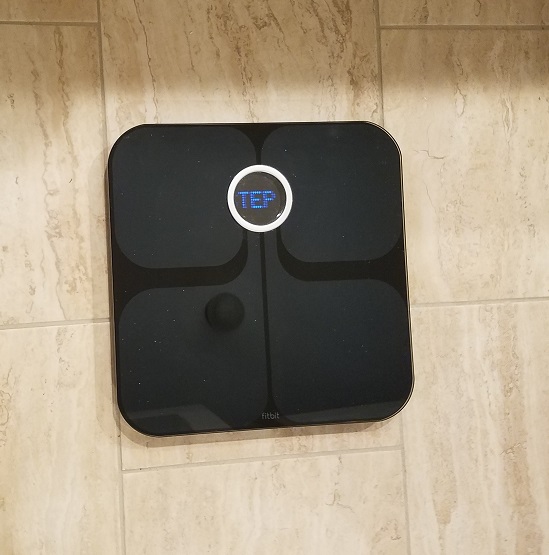
For my own personal log, I just use the number on my Fitbit Aria scale. I know it’s not the most accurate body fat measurement but it’s consistent. I can see how I’m doing on a daily basis. So right now my scale tells me that I have more body fat than I did six months ago.  It goes along with tracking my weight.

I don’t know that it’s the most important data in all of this but I track it just because the number is there in front of me.

Recording Body Measurements

Here’s my advice on tracking weight and such. Include measuring some parts of your body. Just grab a measuring tape and weigh what you can. Record it somewhere. If you use a food tracking app, you can usually add it there. I just write it down in my trusty journal because it’s quick and easy. Plus, I use food tracking apps inconsistently so I hesitate to rely on one for this.

I use a Fitbit Aria scale. That means it uses the WiFi in my house to access my Fitbit account and logs my weight and bodyfat percentage whenever I use the scale. Therefore, that data is also available online. I don’t log my body measurements there so that’s not included. I bet I could find a way to include that information if I wanted.

Body Measurements and Body Fat

Fitbit probably knows more about my body than my doctor but that’s a discussion for a different day.

I find it helpful in my journey to be fit and strong to keep track of how I’m doing. When I start to feel negative about myself, I go back and see how far I’ve come. If I see that my numbers are backsliding, I can begin to focus a bit more on how I’m eating and making sure that I’m getting in my exercise.

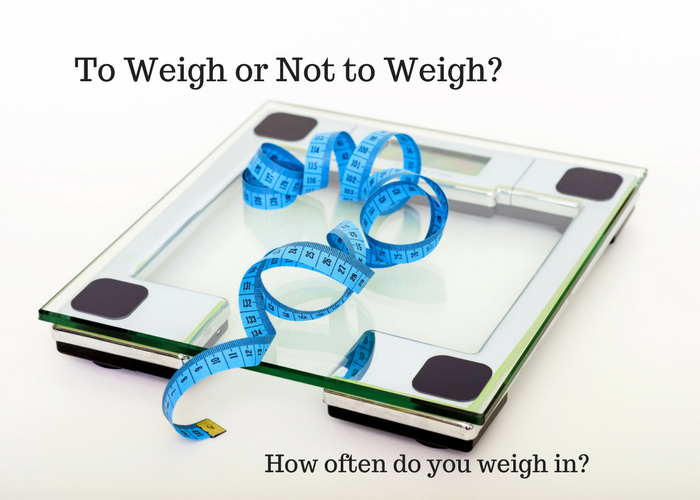
To Weigh or Not to Weigh?

After losing weight several years ago, I’m still weighing in everyday. I know that there is some discussion online if it is a good idea to weigh or not to weigh everyday. For me, the choice is to weigh.

I was reminded of this when something popped up on my Facebook feed in the memories section. It was about weighing in and BMI.

5 years ago on Facebook – March 2013 –
Had a great day the gym yesterday… I’ve been doing those weight management workouts twice a week and yesterday was the end of the first session. I lost 8.5 pounds and gained one pound of muscle over 8 weeks. My trainer said that I actually lost a whole other pound of fat to replace it with muscle, which he says burns about 40 more calories a day… I’m excited because my BMI numbers take me from overweight to normal. I even “ran” the track for 12 minutes. (Okay… my arms were running, but my feet still looked like a fast walk.) Best of all, I feel a lot stronger. I signed up for the second session that starts Monday. This has been my “solution to reach a new years resolution.”

To Weigh or Not to Weigh

Do you weigh yourself? Some people weigh everyday. I know that it helps me.

Some people just get on the scale once a week, usually at an organized weigh in. When I did the weekly weigh ins I would already know what I weigh from weighing in a home. I used to obsess about it.

Long ago, when I really did need to get fit, I rarely weighed myself. In fact, the only time I used to weigh in was at a doctor’s office.

I remember the first time a doctor talked to me about my weight: “You really need to get a treadmill. The Ohio weather just isn’t nice enough to exercise outside reliably.”

It wasn’t the lack of treadmill that was my problem! It was primarily food choices and food portions. I’ve since heard things like “It’s 80% the kitchen and only 20% the gym.”

After I decided to adopt a healthy lifestyle, I changed my relationship with the scale and have been weighing myself every morning when I wake up. It probably is a bit obsessive. I do find it helps me to keep things in check. I have a “scream weight” which I refuse to go over. But it is the strength and muscle mass I’d really like to stay focused on now — that and maintaining my weight loss.

Body Fat Percentage

Some scales measure a whole lot more than just weight. They will keep track of your body fat percentage and the muscle mass numbers as well as the overall weight.

Many of the new scales have the numbers for water percentage too. My water number changes all the time (obviously) based on how much I am drinking or if I am slightly dehydrated.

Not sure I can always believe the fat percentage, but that’s the number that I’d really like to change. Move some of my overall weight from the fat side to the muscle side.

I think I need to lift more – and run less. Well, maybe not run less. (I get more hungry when I run!!) I do like the effects of cardio exercise. The endorphin feeling is great and there is something satisfying about seeing the mileage add up.

I know some people are working on changing their BMI (Body Mass Index.) BMI is a quick way to measure the weight to height ratio. For a some people, for instance those who weight lift, it is way out of whack, but in general, it is a guide. A quick google search will provide lots of BMI calculators, if you want to check your BMI bynber,

General guidelines want your weight to be a at a BMI number 18 and 25. If I get to 25, it’s only for a little while, but I’m generally 26 or 27, which is just into the overweight category. While I like to think it is all my muscle mass, I’d be fooling myself! I’m not there yet!

I think better yet would be a BMI scale that measures fat percentage and muscle mass. There probably is those calculators too.

Being heavier really bothers me for running particularly, because it slows me down. Think of running around holding two 8 pound weights all day. I know I’d be faster if I could drop those weights.

So, while I weigh in everyday and know my BMI number, it isn’t what I want to measure! It’s muscle mass. Gaining muscle! But I still insist on stepping on the scale every morning.

How about you. Do you weigh every day? Why or why not? Do you know your percentage of muscle mass? Please leave a message below or send me an email at chris@becomingelli.com.

© 2026 Becoming Elli

Theme by Anders NorenUp ↑