Tag: vegetables

My Roasting Eggplant in the Air Fryer Experiment

If you Google how to roast eggplant in the air fryer, you will discover a lot of recipes. Trust me on that. I found lots of different recipes for roasting eggplant, even when I limited my search to using the Air Fryer.

I asked in the Becoming Elli Facebook Group (join us there if you haven’t already!) if anyone had any good ideas on what to do with eggplant. People made many suggestions so I have ways to prepare eggplant for a while. I also checked for other eggplant recipes in this site and found one recipe that Chris posted. It sounds good too so I may add that to my list of ways to prepare eggplant.

Roasted eggplant was one of the more popular suggestions so I decided to give that  a try. I love most roasted vegetables so I thought roasted eggplant would probably also be good.

Once I started researching the best way to roast eggplant, I found the one dividing point between cooks.  Salting the vegetable before cooking or not.

Eggplant has a lot of moisture in it. Typically if you’re making eggplant parmesan or some other Italian eggplant treat, you’re instructed to salt the slices of eggplant to draw out the moisture.

Some of the recipes for roasting eggplant insist the only way to get crips eggplant is to salt it first and remove the moisture. Other recipes said it doesn’t matter and you can skip that step.

The other discrepancy between the roasting methods was about removing the skin first. Some recipes said to peel the eggplant before cooking and other recipes said to keep it on.

To Salt or Not to Salt

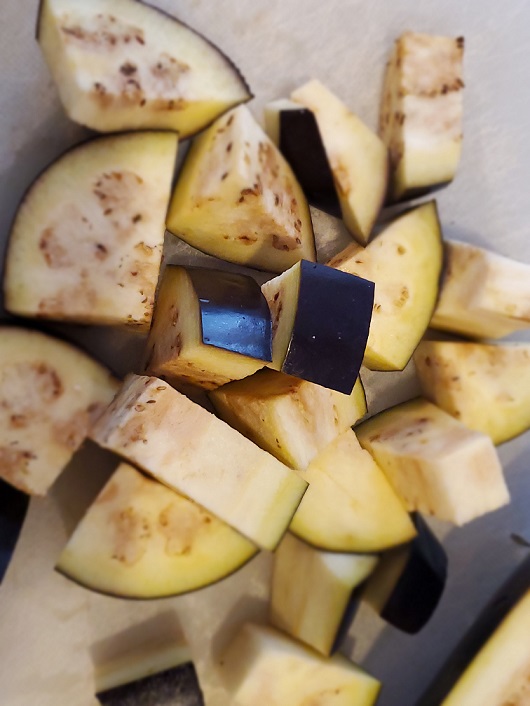
I decided to try both methods of roasting. I cut one eggplant into cubes and cooked half at a time.

To make sure I was conducting a fair experiment, I kept everything the same with both batches. I used the same oil and the same spices for both batches. However, I sprinkled salt on one batch and let it sit for about 30 minutes. The second batch I roasted without bothering with the salt.

I decided to leave the skin on the eggplant because my inclination with all vegetables is to leave the skin on if possible. For one thing, it’s a lot easier not to peel a vegetable before cooking. Secondly, it seems that for most vegetables, there’s more vitamins and fiber if you keep the skin on the vegetable.

Easier and better for you? Let’s try keeping the skin on the eggplant.

Roasting the Batches

For each batch of eggplant, I used about a tablespoon of avocado oil and then sprinkled on a mixture of spices. I used pepper, garlic powder, oregano, and a pinch of red pepper. Because I knew one batch would already be salted, I did not add salt to the spice mixture.

I roasted the first batch (the unsalted one) in the air fryer at 400 for about 15 minutes. I shook them up a couple of times while cooking. When they came out, the pieces were very dark so I thought I had burnt them. It turned out that they were fine but just had a dark color.

The second batch sat in a colander with the salt on for about thirty minutes. I stirred them occasionally to help remove any moisture. When I was ready to roast them, I wiped the salt and moisture off the eggplant chunks, and then prepared in the same way as the first batch.

I did cook the second batch for a couple of minutes less than the first batch. I thought I had burnt the first batch so wanted to try for a slightly shorter time.

Results

By the time the second batch had finished cooking, I had eaten most of the first batch. I forced myself to leave some so that I’d have them when the second batch finished. You can see in this photo how much I ate in the 12 minutes the second batch cooked. (The second batch is on the left. I know, they should have been on the right.)

The second batch was also good but did have a saltier flavor than the first batch. I was glad that I had not put any salt in the spice mixture.

I did not notice any difference in the crunchiness of the eggplant. Based on this small experiment, I would say you can safely skip the salting and wiping off part of the process.

And what about the skin?

The roasted eggplant became very soft so the only real crunch was from the skin. I really liked it. I thought the roasted skin added some great texture to the dish.

The result was that I ate an entire eggplant as a snack in the middle of the afternoon. It was delicious.

Roasting Eggplant in the Air Fryer

So here’s the simple recipe I used for the eggplant.

Ingredients

Eggplant

Oil

Spice Mixture. Use what you want for this but I used about 1 teaspoon each of oregano and garlic powder, ½ teaspoon of black pepper, and a scant 1/8 teaspoon of cayenne pepper.

Cut the eggplant into about one-inch cubes.

Toss them in about a tablespoon of oil. I used avocado oil but olive oil would work well.

Mix the spices together and then toss with the eggplant cubes.

Add the eggplant to the air fryer.

Roast at 400 for about 12 minutes. Stir at least once, halfway through the cooking.

These were good hot, right out of the air fryer, warm, and at room temperature.

They weren’t around long enough for me to try them on salad or any other dish.

I’m still open to other ideas for eggplant but I absolutely loved the roasted eggplant.

If you have any suggestions about roasting eggplant in the Air Fryer, other ways to cook eggplant or roasting other type of vegetables for me, be sure to share them with me.

Veggie Blender Dressing – Tricking Myself into Eating More Vegetables

This veggie blender dressing makes a big difference. Getting lots of vegetables can be more difficult in the winter months. Yesterday I got an idea on how to increase the amount of vegetables I eat.

So often I make the same veggies, my Brussel sprouts, cauliflower or my easy no panic potluck salad.

I thought, what if I use vegetables as the base of my salad dressing? This is my first attempt. It wasn’t bad, but I’m looking forward to making some modifications.

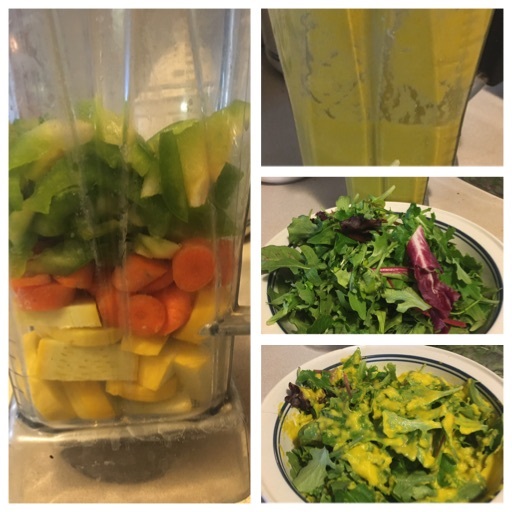
Recipe for Veggie Blender Dressing:

1 large Green Pepper
1 Yellow Squash
1 large carrot

Each of these veggies were rough chopped and placed into the blender (Vita-Mix)

Then I added some liquid: extra virgin olive oil, apple cider vinegar, lemon juice.

I blended the mixture on the smoothie setting and it took about a minute to get smooth and fully mixed.

Pour over a large bowl of spring mix. Toss.
Salad with Veggie Blender Dressing

Voila! Spring Mix Salad with a Veggie Blender Dressing. I think this might be really easy and good as a warm dressing over a cooked California Mix frozen vegetable dish.

Have you ever tried using veggies in your dressing? What were your results! Leave a message below.
#veggiechallenge #MoreVegetables

Cabbage Soup is Lunch of Choice

I am having cabbage soup for lunch today. I made a large batch of soup a few weeks ago and put some containers of it in the freezer to save for later. Today is a cold, snowy day here in Ohio and I’m working from home. I was daydreaming about what I was going to eat for lunch and decided to get a container of soup out of the freezer.

Customizing the Soup

The best thing about this soup is that I can add to it. When I made this soup originally, I added some cooked chicken and beans to the soup.

Today I decided to use up the chopped butternut squash that was in my refrigerator so I chopped it into smaller pieces, coated it with some avocado oil, and roasted it. I intend to add the butternut squash to my soup. I also have spinach in the refrigerator. It doesn’t take long to cook spinach so I’ll heat up the soup, add the squash, and add a handful of the spinach. That makes a great bowl of soup. If I wanted to add protein, some beans or shredded chicken might be a nice addition.

I make the big pot of soup without adding much in the way to seasoning. I’ll add some salt and pepper maybe. When I’m doctoring up the soup for a meal, I can add more seasoning to the smaller bowl. Some ideas on that might be some Italian seasonings or just some oregano with the salt and pepper. Sometimes I add some cayenne pepper to spice it up a bit. I think you could add some taco seasoning to the soup as well. Whatever strikes your fancy will work.

I’ll have some Mary’s Gone Crackers and goat cheese as a side dish. If you read this blog often, you know that I love those crackers.

I just noticed that we have many recipes for cabbage on the Becoming Elli website and recipes for soup but we don’t have a recipe for cabbage soup. The closest thing is Chris’ recipe for vegetable soup. So, let me give you my recipe.

You’ll want to know that you can swap vegetables in or out of this soup. Use what you have on hand.

Recipe for Basic Cabbage Soup

Ingredients

1 Tbs oil (I use avocado oil)

1 onion, diced

3 carrots, sliced

2 celery stalks, chopped

1½ cups green beans, chopped into 1 inch pieces

1 can diced tomatoes

½ head of cabbage, chopped into small pieces

8 cups chicken broth or vegetable broth

Directions

In a large Dutch oven or soup pot, heat the oil and then saute the onion in it until the onion begins to soften.

Add the carrots, celery, green beans, tomatoes, and cabbage.

Pour in the chicken broth.

Simmer for 10 to 15 minutes until cabbage is tender.

Notes

When you’re ready to eat the soup, add whatever ingredients you want.

Suggestions could be pasta or noodles, cooked chicken, chopped sausage, canned beans, greens, cooked potato. Use what you have on hand.

If you add white beans, kale, and some Italian spices, top your bowl of soup with some Parmesan cheese.

If you add chicken and cumin, top the soup with tortilla strips or some cheddar cheese.

Consider your soup to be the base for whatever you want.

Adding Vegetables to Breakfast

So now I’m adding vegetables to breakfast? Really? Why?

Recently, I attended a talk by a local doctor and a health coach. They said most of us need to increase the amount of vegetables we’re eating and said we should get nine to ten servings of vegetables per day.

The only way I can see to do that is by adding vegetables to breakfast.

My typical lunch is a big bowl of salad with a lot of different vegetables on it. I usually start with a bowl of greens, preferably a mix of some kind of lettuce and spinach and then I might add some kale or micro greens in there too. Lunch easily gives me three to four servings of vegetables.

Dinner is when I’m most likely to have some meat or fish. I try to fill my plate with an assortment of vegetables, some raw and some cooked. I might have another salad and roast a variety of vegetables such as broccoli, Brussels sprouts, cauliflower, and sweet potatoes. So, I can again get three to four servings at this meal.

This leaves me a bit shy of the nine servings of vegetables.

So, I am working on adding vegetables to breakfast. There’s a variety of ways to do that. Sometimes I just reheat leftover roasted vegetables from the night before and maybe top them with a fried egg. This is a delicious meal.

I use my blender at times to make a breakfast smoothie and try to include a few vegetables and fruit in that.  Here’s a recipe I posted on my current version of a good smoothie. This smoothie is an easy way to get several servings of fruits and vegetables.

breakfast smoothie

Another easy way to add vegetables is to make scrambled eggs with vegetables. Use whatever vegetables you have on hand, saute them, and scramble them with egg. A great way to start the day.

scrambled eggs with vegetables

How do you get all of the servings of vegetables you want to be eating? Is it difficult or a breeze? Let me know how you manage it or what you struggle with.


Seaweed Salad — New Vegetable Challenge

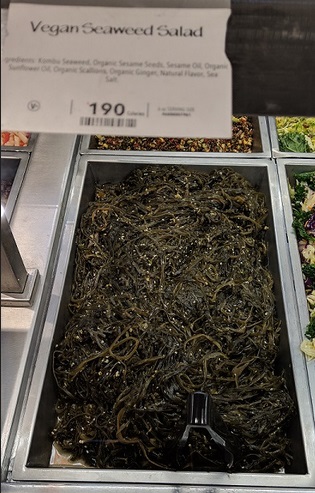
I found this seaweed salad on the salad bar at Whole Foods so of course I bought some, simply because I thought, “now this is a great choice for the new vegetable challenge we’re doing at Becoming Elli!” How was it? Pretty good, actually.

According to the sign on the salad bar, this seaweed salad is made with kombu seaweed, sesame seeds, sunflower oil, scallions,ginger, natural flavor (what does this mean anyway?), and sea salt.

Thanks to my Google search, I learned that kombu seaweed is a type of edible kelp. Kombu is a good source of glutamic acid, iodine, potasium, calcium, dietary fiber, and many obscure enzymes. You don’t want to eat too much of kombu because too much iodine can be harmful to you.

Because I bought this already prepared, I have no idea if it’s hard to make your own salad.

seaweed salad in a box

I will certainly buy this again next time I’m eating at Whole Foods. It was very tasty. I don’t know if I’ll buy it unprepared and make my own salad but perhaps if I’m feeling even more adventurous, I will.


Pea Shoots — Weekly New Vegetable Challenge

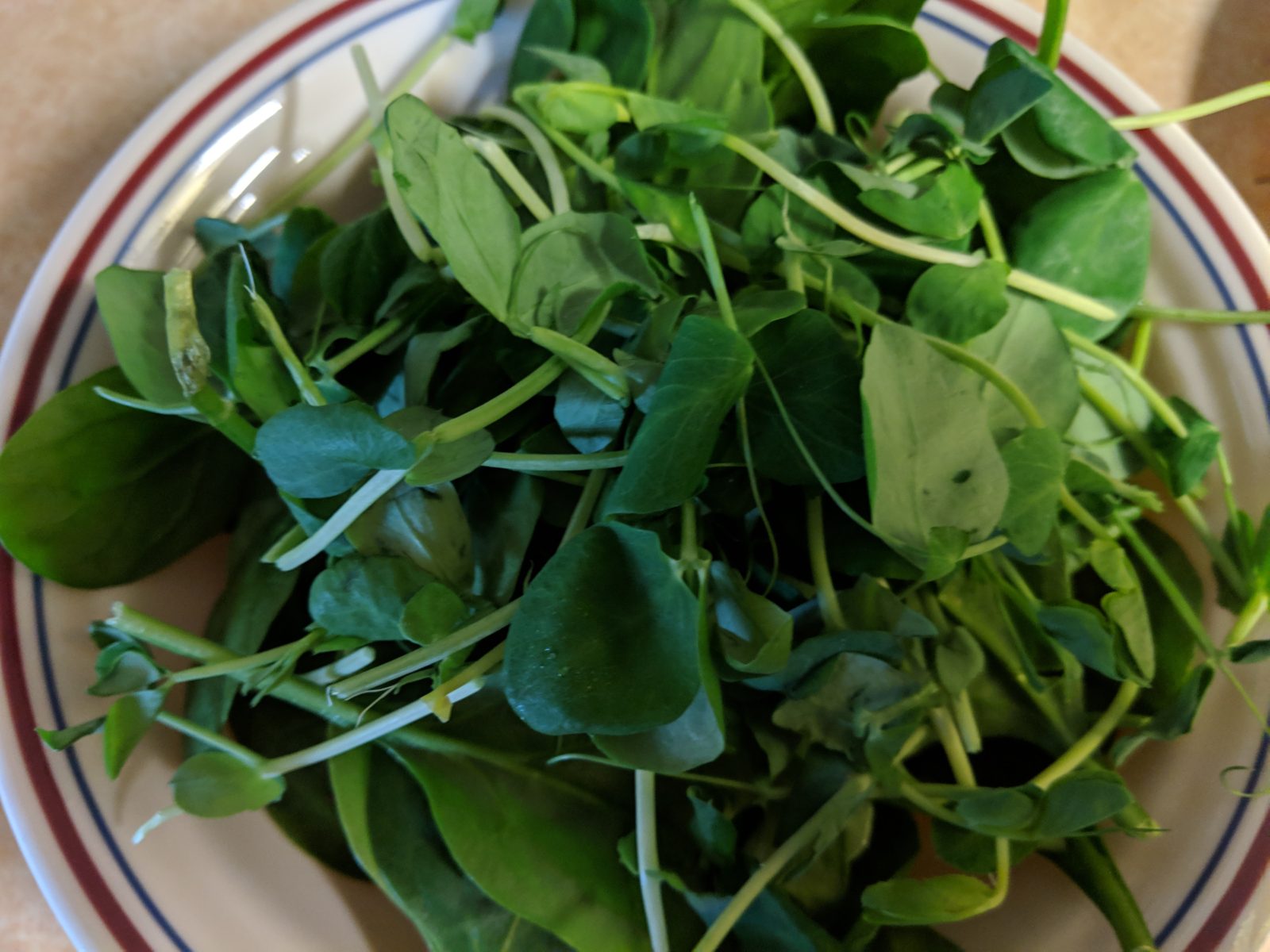
Pea shoots made it into my shopping basket this week for the Becoming Elli new vegetable challenge. Aren’t they gorgeous?

I bought these at Kriegers, a locally owned health food/produce store.

These microgreens are grown by Vigeo Gardens, an Akron, Ohio-based modern farm.

pea shoots

What is a microgreen? It’s a young vegetable, typically between one to three inches. They fall somewhere between a sprout and baby greens.

I did exactly as the label advised and threw them on top of my salad. They were delicious. I think I preferred them to the broccoli sprouts I tried a couple weeks ago. They’re crunchy and have a delicate flavor.

Jicama for Lunch – Veggie Challenge

How to Peel and Prepare a Jicama
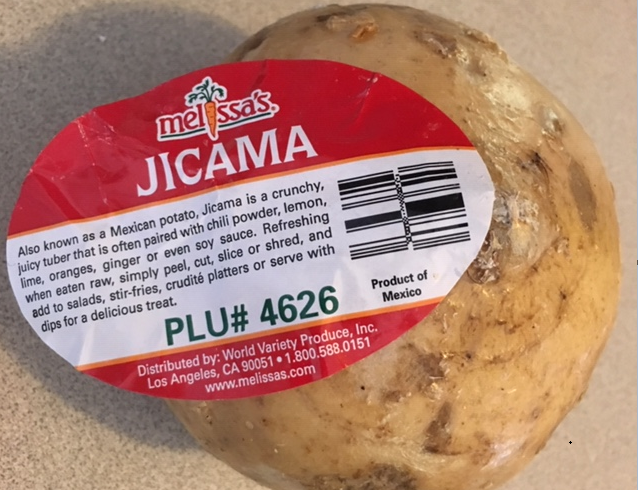
Jicama is pronounced “Hick – ah – mah” and has the texture of a sweet (not spicy) radish or a potato. Raw, it tastes almost like an apple. Its crunchy texture makes it perfect for slicing into strips to dip into hummus or guacamole.

Most recipes for jicama call for you to “julienne” slice it, which is cutting it into tiny slivers like matchsticks. You cut it half, then half again, slicing it into 2″ long and thin (about 1/4 to 1/8th”) strips.

The skin had to be taken off with a vegetable peeler, which was a bit awkward for me. It’s a tough skin but not too difficult to remove. Underneath it looks like a potato, but it has about half of the calories and also fewer carbohydrates. One cup of jicama has 49 calories and 11 grams of carbohydrates. One cup of potato has 116 calories and 26 grams of carbohydrate. I would dub the jicama a healthy vegetable.

I ate some of the jicama raw — like you would munch on slices of carrots or celery. I liked it a lot, especially the texture and slight sweet flavor. Most of the recipes I saw online talked about substituting jicama for potato to make fries. Then I prepared the rest of it by sauteing the jicama on medium heat on the stove in a little olive oil and lightly salted it. Delicious! I would give this one 5 stars. Low in calories. High in Flavor.

Before serving to guests, I need to perfect my julienne knife skills. My julienne slices are more like finger widths, not matchsticks. I should have sliced all of these again to get the slim stick-like size.

how to peel and prepare jicama

This one was grown in Mexico. It is in season during the fall, winter and spring. I bought it at Giant Eagle (which is a Pittsburgh-based large chain grocery store.) It’s a root vegetable, so no wonder I find it similar to a radish or a potato texture.

Next time I cut it, I’m going to cube it and mix with red, yellow, green peppers, along with carrots and celery to make a salad. A little lime juice and cayenne pepper sound like the perfect dressing!

2019 Resolutions: One New Vegetable a Week

Now that it’s the new year, we’re all talking about goals and resolutions. I’m looking for easy to make changes. In our podcast episode, Setting Goals for the New Year (episode 25), we discuss some simple changes we can make to our lives, such as add another vegetable to each meal or drink more water. I always need to drink more water so that’s a good one for me to do. I could probably add more vegetables to my diet so that might be a good one for me to work on too. One way I can do that is to take the “one new vegetable a week” challenge.

One New Vegetable a Week Challenge

Now that goals are on our minds, Chris and I decided it might be fun to do a one new vegetable a week challenge. We’re going to try to eat a new vegetable a week (new to us, that is).  It doesn’t have to be a completely new vegetable but can be a variation on one. For example, I’ve eaten red beets but I know that golden beets are very popular. If I buy, cook, and eat a golden beet, I’ll include that in the challenge.

This is similar to the benefits of buying a Community Supported Agriculture (CSA) package. That’s where you buy a weekly or monthly subscription to a local farm and get a bag or basket of whatever they’re harvesting at that time. People often say they must learn how to cook a particular vegetable because they’ve either gotten a lot of it or have never had it before.

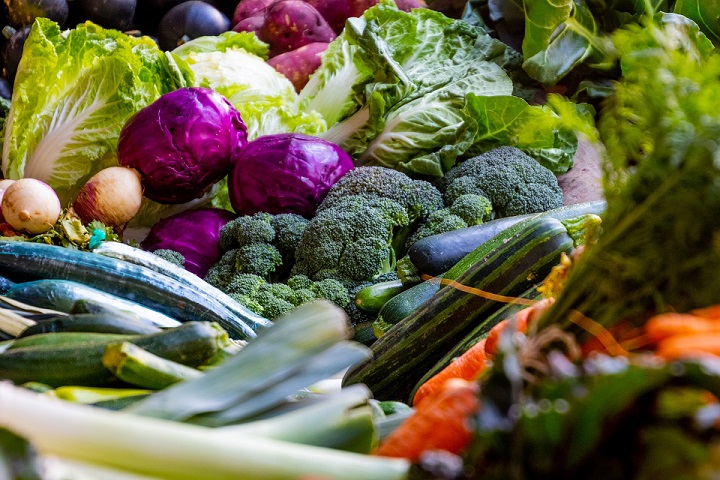
Regardless of how you’re eating, you probably are supposed to be eating vegetables. Eating a great variety of vegetables provides you with a greater variety of nutrients. Remember the thought of eating the rainbow. (I don’t know who started that saying but it’s all over the internet, so I can’t attribute this to its creator.)  The theory is to eat vegetables of all different colors because they provide a wide range of nutrients. In other words, the greater the variety of vegetables you’re eating, the great the variety of nutrients you’re getting.

Feel free to join us in our “one new vegetable a week” challenge! I think in our Facebook Private Group, we’ll be sharing our new veggie ideas with each other. Feel free to join us there. Or just post your new vegetable in the comments here or on the Facebook Becoming Elli page.

Salmon Veggie Patties with Avocado Lime Sauce

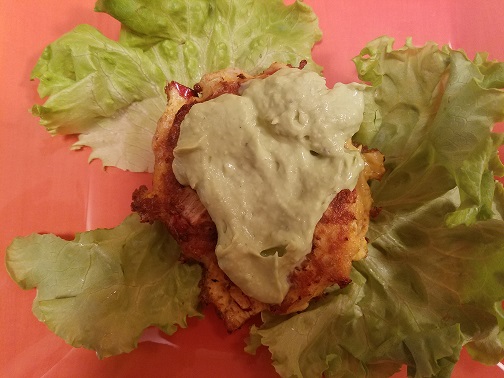
These salmon veggie patties are great. For one reason, they don’t have filler or, at least, no bread crumbs, no ground pork rinds, and no almond flour. Just do a search on salmon patties and you’ll see what I mean. Instead, these patties have vegetables as filler. I think you can make great salmon patties using vegetables in place of the crumbs.

As usual with my recipes, feel free to swap in what you have and leave out what you don’t have.

Salmon Veggie Patties Ingredients

1 can salmon

1 to 2 eggs, depending on consistency

½ cup diced onion

½ cup diced celery

½ cup diced bell pepper

Salt and pepper

Garlic Powder

Oil for frying

Avocado Lime Sauce Ingredients

½ to 1 Avocado

Lime Juice

2 Tablespoons Greek Yogurt or Mayonnaise

1 Clove garlic, crushed

1 Tbs. Parsley or Cilantro

Directions for Salmon Veggie Patties

Drain the salmon and break into chunks in a small mixing bowl.

Whisk the egg and add to the salmon.

Add the vegetables and mix well.

Make the patties and let them sit for a while. if you’re letting them sit more than 5 or 10 minutes, refrigerate them.

When it’s time, heat oil in frying pan.

Gently place patties in pan. After about 5 minutes or when the side is nicely browned, flip and cook the other side.

Directions for Avocado Lime Sauce

Blend the ingredients in a blender or food processor. Add more juice or yogurt/mayo to taste and to get the consistency you want.

Serving

Serve the patties on top of some greens and spoon some of the avocado lime sauce on top.

Notes:

I’m using a 6 oz. can of Wild Alaskan Pink Salmon. If you use the larger can of red salmon, double the other ingredients.

I had red bell pepper on hand. Use green if that’s what’s in your fridge. I think you could easily add different vegetables to these. Just make sure they’re chopped into small enough pieces. I think spinach might be an excellent addition.

You can fry these in olive oil, butter, ghee, coconut oil or avocado oil. If you eat peanuts, peanut oil would also work. Use the oil you prefer.  I’m experimenting with avocado oil and it seems to have worked well,

Because there is no filler added to these, the patties will be sloppy. Don’t fret over it, just fry them up.

If you like spice, feel free to add more spice to the patties. Cumin and turmeric might be good choices.

© 2026

Theme by Anders NorenUp ↑