Yes, my entry this week in the veggie challenge involves sauerkraut. I think fermented vegetables can count for the challenge. I’ve certainly eaten sauerkraut before but I came up with a new way to eat it.
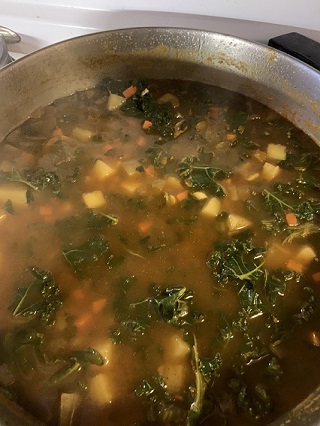
I know this is not a pretty dish. In fact, the photo is pretty bad but it ended up tasting better than it looks.
I thought of this and then I googled it. I discovered that I’m not the first person to think of it but I did think of it without prompting.
We’ve talked about fermented vegetables before and I’m trying to add at least one serving of fermented food into my day.
Sauerkraut with Sardines
This is a simple recipe.
Mash up some sardines and mix them with some sauerkraut.
That’s it. When I made it, I used about a cup of sauerkraut and a full can of sardines. The nutrition label on the sardines said the can was one serving so I used all of it.6
I think that mixing the sauerkraut with the sardines really made two servings. I couldn’t finish the whole serving. Let’s face it, a cup of sauerkraut is a lot of sauerkraut.
I usually buy sardines with the bones but this time I ended up with skinless and boneless sardines. They mixed well with the sauerkraut.
This recipe includes fermented cabbage which is supposed to be good for you and sardines which are also supposed to be good for you. Sardines are small fish so are unlikely to have mercury in them and have lots of good Omega 3 fats for you.
So, how was it? Actually, pretty good. The two ingredients both have strong flavors but combined together well.
I think this would be great on some pumpernickel rye bread because it also has a strong flavor that would complement this dish.
Next time, I’ll try wrapping it up in some romaine leaves to add a bit more crunch to it.
Let’s talk about resistant starch. What is it? Why should we eat it? What do we eat to add it to our diet?
We had a mini-Becoming Elli outing a couple weeks ago and went to see a screening of The Gut Movie. The website adds a subtitle of A Story of Poo and the Future of Medicine. The documentary was an interesting look at research on the microbiome which is the microorganisms living in our intestines and the effect it has on our health. If you have the opportunity to see this movie, take it. I think we all learned something new from watching it.
Here on the Becoming Elli website, we’ve discussed the benefits of eating fermented foods for our bodies and our microbiome. In The Gut Movie, they talked about the benefits of fermented foods and resistant starch. I knew some things about this from reading some recent health foods but in our conversation after the movie, I realized that this is probably worth discussing.
What is Resistant Starch?
Resistant starch is found in carbohydrates that our digestive system doesn’t digest. Instead, this starch passes through the stomach and small intestine and ends up in the large intestine where all of that bacteria live. The bacteria, especially the good kind apparently, loves this type of starch and they digest it and release good enzymes to our bodies.
Eating resistant starch helps to prevent a number of health problems or helps our bodies deal with already existing health problems. Studies indicate that this starch may help to lower your blood sugar levels after meals and help to improve your insulin sensitivity. Because this resistant starch has lots of fiber, it can also help with weight loss and controlling appetite.
Where Do We Find Resistant Starch?
Some good sources of are:
Oats
Cooked oats provide some resistant starch but apparently cooking the oatmeal and then letting it cool increases the amount of starch. This makes me wonder if oatmeal cookies are a good source. If nothing else, my recipe for oatmeal balls suddenly sounds even healthier than I thought.
Raw oatmeal is also high in resistant starch so try making overnight oatmeal instead of cooking the oats. Overnight oatmeal is where you soak the oatmeal in yogurt or milk or nondairy milk overnight in the refrigerator.
Potatoes
The best way to get resistant starch from potatoes is to cook them and then to let them cool. Think potato salad. Or a cold baked potato, I guess, but that doesn’t sound appetizing to me. I think we need to add a good recipe for a healthy version of potato salad to the Becoming Elli website.
Raw potatoes also provide resistant starch. I remember loving to eat raw potato as a kid. I’d beg my mother for a slice of potato. Now, this doesn’t appeal so much to me. If this appeals to you, great. Otherwise, check out the raw potato starch described below.
Rice
Rice is similar to oats and potatoes. It needs to be cooked and then cooled to get the full amount of resistant starch. This makes sushi seem like a good source of resistance starch. I’ve read that you can reheat the rice without destroying the resistant starch.
I don’t think raw rice is an option.
Beans and Legumes
Make sure you cook your beans and legumes thoroughly. These are a good source of resistant starches and apparently you don’t have to cool the beans first to reap the benefits.
Green Bananas and Plantains
The greener the banana, the more resistant starch it has. I’m not a fan of green bananas but maybe try to eat them before they’re fully ripe. As the banana ripens, the resistant starch turns into sugars like fructose and sucrose.
Raw Potato Starch
You can buy bags of raw potato starch. It’s a flour-like substance that can be mixed into smoothies or drinks or added to foods such as yogurt. Don’t heat the raw potato starch so if you decide to add it to soup, do so after you’ve heated the soup. Basically, you treat this as a supplement to increase the amount of resistant starch you get. If you decide to use this, start slowly and gradually increase to 2 to 3 tablespoons per day. You want to avoid overwhelming your digestive system by adding too much too quickly.
Basically, the resistant starch and fiber are related so be sure to drink lots of water if you decide to increase your consumption of these foods. Also, start slowly to give your body time to adjust.
Have you been trying to increase resistant fiber in your diet? What’s working for you?
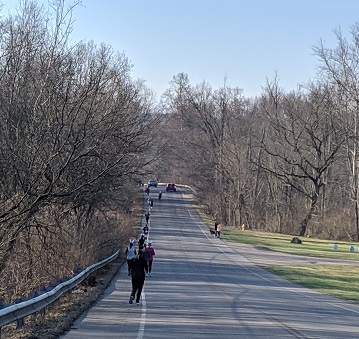
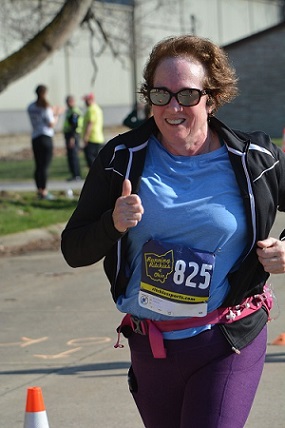
Last week I ran the 2019 Hop for Hope 5K. This is getting to be a tradition. It’s April 2019 and I ran my first race of the year. I’ve run this race a few times which I wrote about last year. It also seems to be a tradition that I’m not feeling prepared for running the race. I suspect that’s because it’s April and early spring in Ohio.
Quick recap of the race. I would say fewer people signed up for the race this year. This could be due to a few other 5/10 Ks going on in the area on the same day. It was a beautiful spring day with perfect temperatures for running, about 50 degrees Fahrenheit. It was sunny and dry. Really, it doesn’t get much better than that, does it?
The Easter Bunny was on site and after the race, the kids had an Easter egg hunt. They also put some golden eggs along the course for adults to win prizes. I knew I would never spot a golden egg because I was too far back.
Despite not having run 3 miles in a long time, I managed to run the 5K without having to walk or stop for a rest. I think this is where experience comes in. I knew I had run this before and managed to pace myself enough to finish the race running. I’ll be returning to my Couch to 5K app now and continue with my training.
I did some stretching before and after the race, trying to avoid any problems with my ankle or my piriformis muscle. That must have worked because I didn’t have pain the next day, which is a sign of success.
We got a great long-sleeved shirt this year and of course everyone who ran received a medal. Their rabbit logo is getting pretty hip these days.
I enjoy running and I like participating in races because they’re fun. There’s something about having official times that also spurs me on to try harder. On the other hand, running has caused me the most problems with my body and I need to pay attention to that.
So, how did I do? I ran the race at about the same speed as last year. I know that because Strava told me. Don’t you love technology? I was uncertain last year about how I’d do, much like this year, so I’m glad I stayed at about the same spot. They didn’t do age group winners this year but a quick look at the results list showed me I would have been second or third in my age group. Nothing to get excited about. Of course, I didn’t run it thinking I’d be fast.
I will continue to cross train with strength training and including yoga in the mix too. Strengthening muscles and tendons is important and working on flexibility and balance is critical. I’m going to also continue to run using my Couch to 5K app. I’m on week 5 so about half way through. I’ll keep you posted on how this goes. It’s so much more enjoyable to be able to run outside and get off the treadmill or an indoor track.
I’m already thinking about signing up for another 5K in a couple of weeks. What’s your plan for the next few months?
Watercress is a green that can be used in salads, sandwiches, soup, and anywhere else where you might use arugula, spinach, and other greens.
I just recently heard what a nutritional powerhouse watercress is so thought I’d give it a try. I found it at a local grocery store in a plastic tub similar to what the other greens I buy come in. The watercress that I bought was grown locally. Given that I bought it in March, it must be grown hydroponically or in a green house. There are no greens growing in fields in northeast Ohio this March.The cost was comparable to buying baby kale, spinach, and spring mix.
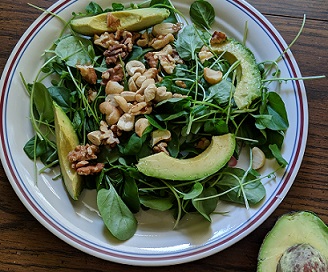
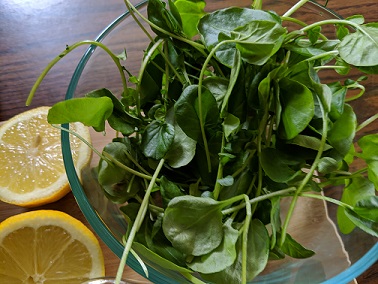
I liked the flavor of watercress. It’s has a bit of a bite to it, though not as strong as arugula. It’s good. It stands up against other flavors without being overwhelming. As you can see in the photo, watercress has long stems on it. Recipes all said to remove stems, at least the thick ones. That is a long, slow chore so I sort of skipped it.
According to the USDA food composition datatbase, watercress is very low in calories. Actually, it’s very low in fat, protein, and carbohydrates so you can eat a lot of watercress. It has a lot of vitamins and minerals, including potassium, Vitamin A, Vitamin K, and calcium.
Watercress Salad
Here’s a salad to make with watercress.
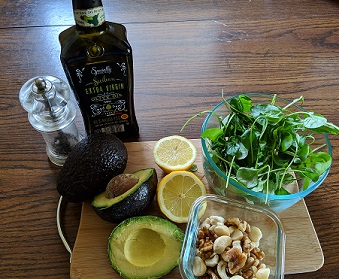
Ingredients
juice from one lemon
1 T minced onion
3 T extra-virgin olive oil
salt and pepper to taste
1/2 cup raw mixed nuts
1 ripe avocado, peeled and cut into wedges
4 cups watercress, thick stems removed
Directions
Preheat oven to 350.
Salad Dressing: Mix lemon juice and minced onion. Whisk in olive oil and season the dressing with salt and pepper.
Spread mixed nuts on a baking sheet and bake in oven for about 5 to 7 minutes. The nuts should be golden brown and fragrant. Watch them carefully so they don’t burn. Let the nuts cool and then chop them coarsely.
Salt the avocado wedges.
In a good-sized salad bowl, toss the watercress, nuts, and salad dressing until coated. Add the avocado wedges. Serve immediately.
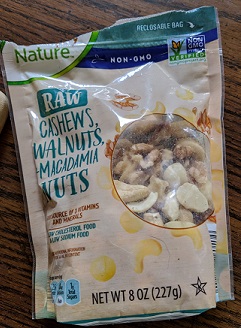
Note: You can use one type of nut. I had the raw mixed nuts that contained walnuts, cashes, and macadamia nuts so used that.
Recently, I did my first triathlon of any kind. I was nervous about it, mainly because I thought it was likely that I’d not be able to finish it. Fortunately, I did finish and ended up being happy over the results.
Indoor Triathlon Set Up
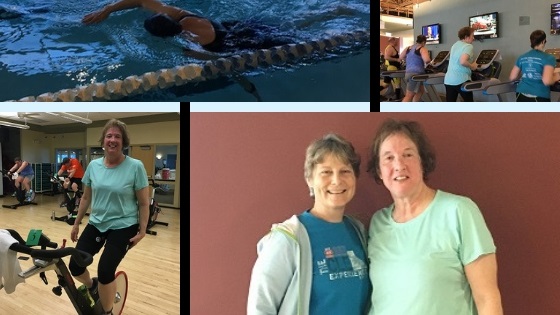
This indoor triathlon was set up for:
10 minutes swimming in a lap pool
25 minutes riding a stationary bike
20 minutes running on a treadmill
Indoor triathlons are probably easier than outdoor ones because the swimming is in a pool instead of open water. There are no issues with weather or having to figure out where you’re going. Also, it’s a great advantage to be able to kick off from the wall every time you turn direction in the pool. The bikes are easier because you don’t have to watch the road or deal with hills. Same with the treadmill. You just set it to the speed you want and there you go.
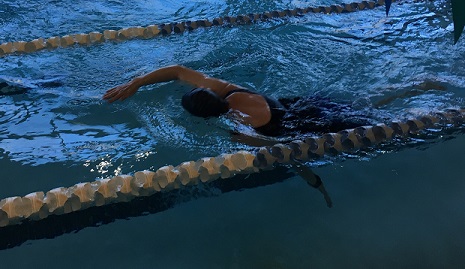
The pool is a 25 meter lap pool. There were four lanes in use and most of the lanes were shared by participants.
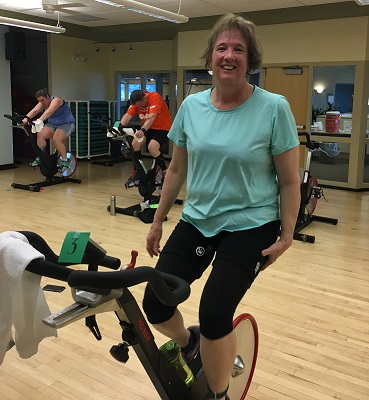
The bikes were in a studio class room, so we were isolated from the rest of the gym. Music was playing and people were cheering each other on. It was a fun, supportive atmosphere.
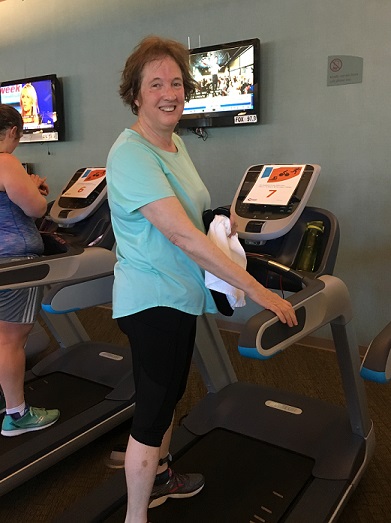
The treadmills were set up in the main cardio area of the gym. No special music was playing and I had not thought to bring my headphones. My fancy AfterShokz Trekz Air bone conduction headphones were sitting in my gym bag so they were on the premises but no time to get them. So, no inspirational playlist for me! Also, the TVs were on and not set to anything special. Sunday morning TV is not conducive to much, if you ask me.
My First Indoor Triathlon
I was nervous about doing this indoor triathlon because I only started training a short while ago. I’ve spent a few months dealing with piriformis and sciatica problems. In other words, I’ve had a lot of pain in my lower back, right hip, and right leg. Once it began to clear up, I started training again and then decided I’d do the indoor triathlon. Just to be clear, I was pretty active before this hip/lower back issue flared up and managed to do some exercise while dealing with the pain. I just wasn’t in competitive shape, I’d say.
Things I kept saying before the race were
“I don’t know what I was thinking.”
“I’ll probably be last in everything.”
“I probably shouldn’t be doing this”
Where were those positive thoughts I’m supposed to be saying to myself? I guess I still need to work on that.
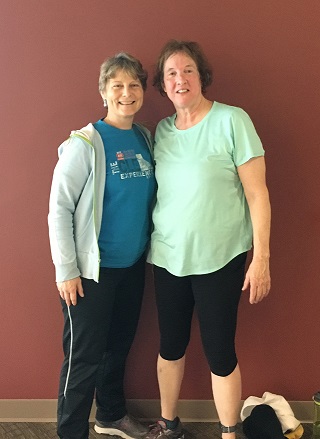
Chris came to take pictures and cheer me on. What a great friend! Having someone encourage me really helped.
Of course, you know how this goes. I ended up being very happy with my results even though I was pretty close to being last in everything. My performance was better than I expected.
Swim
I managed to swim the full 10 minutes without too much stopping though I really became winded during the swimming. Having to share a lane was challenging. Also, being a in a pool full of people trying to swim quickly makes for much more turbulent water than usual. I’m not used to thinking about speed when swimming, so I was glad to be able to put my feet down and take a quick rest at the end of a length.
Bike
The bicycling wasn’t too bad. I knew to set the resistance at a high enough level so that I’d get some mileage. I’d heard stories about people setting the resistance to the lowest level and then pedaling like crazy only to end up with very little mileage. I tweaked the resistance occasionally during the ride based on how I was feeling and how much time was left. Having music and being able to encourage each other was great.
Run
Running surprised me. I’ve been doing my Couch to 5K app and so hadn’t run for any consistent time for several months. I didn’t go for speed, but I did manage to run the 20 minutes with only two walking breaks. I was on a treadmill between two young women and was able to keep an eye on what they were doing. One ran at a faster speed but walked more frequently. The other was running at my speed or slightly higher. I liked not feeling like a true slow poke. We all ended up with very similar mileage by the end. I know we’re not supposed to compare ourselves to others, especially people a few decades younger, but it was a race, you know?
Transitions
Let’s not forget the transition times. Those are the periods of times between events where you get ready for the next one. We had ten minutes to get out of the pool, change, and get to the bikes. Between the bike and run, we had five minutes. Handling transition times in any triathlon is a challenge.
Here’s what I learned. First, it’s really difficult to get out of a bathing suit and into biking and running clothes quickly. I got stuck trying to put on my sports bra because my skin was damp. A woman in the locker room helped me get it down my back. Lesson learned: don’t wear a pull-over sports bra. I see why the outdoor triathletes wear clothes under their bathing suites.
I forgot to use the restroom during the initial transition time because I was hurrying to get to the bike. So, when I got to the second transition, I ran to the restroom, hoping to avoid a line. Success! but then I had little choice on treadmills so ended up with one that was between TV screens set to Fox News and ESPN. I really missed my headphones.
My Results
By the time I finished, I was sweaty, tired, but also exhilarated. Hooray! I completed my first indoor triathlon. Success!
Chris spent the whole event cheering me on, taking photos, talking to people and encouraging them too. She made the event even better.
Results weren’t released until later that evening. I received an email with a copy of the spreadsheet.
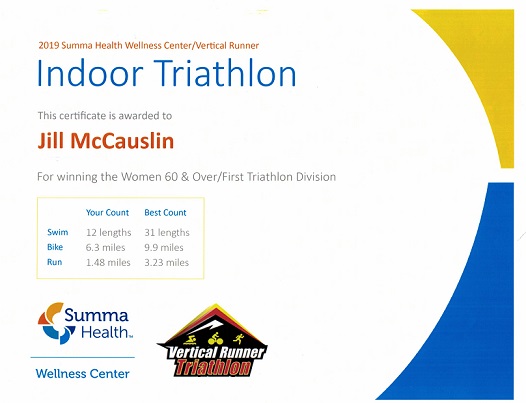
Here’s how I did:
Swim 10 minutes: 12 lengths
Bike 25 minutes: 6.3 miles
Run 20 minutes: 1.48 miles
I won for my age in the first triathlon division. Pretty good! Well, you know there weren’t many women who fit in that category but a win is a win, I guess.
There was someone in the locker room to make sure we knew how much time we had and that everyone found their way to the pool and the bikes.
Having a monitor and music in the bike area was great. I h getting my bike set up and appreciated having someone there to show me the way to work the bike.
I think the only negatives that I had were the TVs on talk programs in front of the treadmills and no music in the running area. Or, I wish I had realized I need my headphones.
The price of the race was low. As a result, there’s no shirt or whatever, but we did get a fantastic USB-chargeable bike light. That’s something all triathletes can use. The man organizing the race said it’s a great event for first-timers, so he likes to keep the price low to encourage them to participate. That’s a good goal.
Overall, it was a great event and I’m likely to do it again next year.
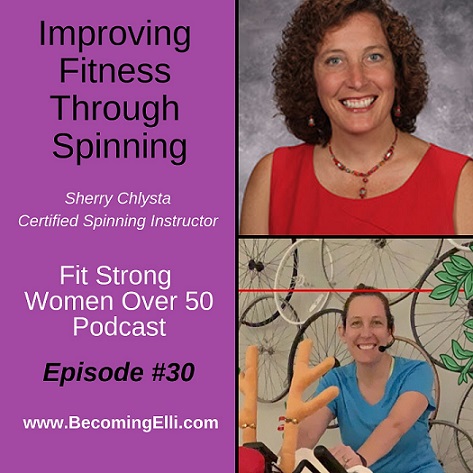
In episode 30 of the Fit Strong Women over 50 podcast for the Becoming Elli community, Chris and Jill discuss improving fitness through spinning with Sherry Chylsta. They talk about the basics of spinning, working your muscles, and share advice about working out.
Sherry is a Star 3 lifetime-certified spinning instructor who enjoys making classes challenging and fun for all at a gym in Hudson, Ohio. She has been a certified instructor for about ten years. Sherry loves athletics and while she misses road races, she knows a no-impact workout like spinning is something she can enjoy for a lifetime.
On a professional side, Sherry is the Director of Studies at Western Reserve Academy, a co-educational boarding and day school in Hudson, Oh. She teaches college level calculus and is the school’s head volleyball coach. During her tenure at WRA, she has coached track, girls’ basketball, and a winter conditioning and weight training program. She lives on campus with her husband and three children.
Improving Fitness Through Spinning
Chris has taken many spinning classes from Sherry and loves her ability to motivate. Sherry encourages everyone to try something new at the gym — especially different classes. She advises new members to overcome the feeling of intimidation by those who are already in shape. She suggests you remember that everyone had a first workout, and they didn’t look any better starting out than you do now.
In today’s episode, Sherry provides some advice for the gym in general and spinning in particular. She advises us to introduce ourselves to the instructor before class, who will help modify a workout if necessary. For a spinning class, Sherry says the instructor will also help get the bike adjusted for you before you begin. That’s something that many of us struggle with when we’re first starting out.
Spinning Tips and Techniques
Sherry explains some of the principles of spinning and how to use what she calls periodicity in work outs and in training. She also describes the three positions of indoor cycling and the advantages of each. Sherry shares some of the mistakes that some riders make that can cause injury and how to know when you have too much or too little resistance set on your bike. The group also discusses how to get faster for riding outside and how to use your heart rate to determine your recovery, even if you don’t wear a heart monitor.
Ever wonder about fast and slow twitch muscle fibers? Chris asked Sherry who explains the benefits of training both fast twitch and slow twitch muscle fibers and tells us what they are.
Having Fun
The point of spinning is that we all want to be there to have fun. If the instructor can make hard work fun, then you will continue to attend class. Sherry tells how she uses music, little mind games and light humor to making classes challenging and fun. These are some of the ways she helps with improving fitness through spinning. Sherry’s love of spinning is reflected in her words, “I get to teach spinning.”
Some of Sherry’s favorite sayings for spinning class are “No one wants to go spinning, but everyone wants to have been spinning” and “You can do anything for one minute.”
If you have any questions for Sherry, you can send them to Chris@becomingelli.com or Jill@becomingelli.com and they will forward the questions to Sherry.
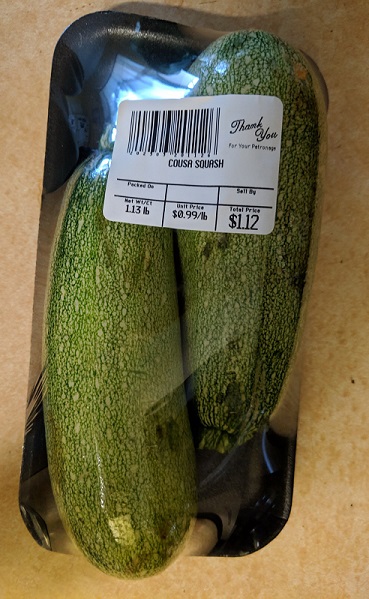
I wandered into a local neighborhood produce store, hoping to find something unique for our vegetable challenge. The selection was fine if I just wanted to buy some produce but trying to find something unique proved to be a challenge in itself. After wandering through the produce aisles two or three times, I spied some cousa squash on the shelf above the zucchini and yellow summer squash. I was way too excited to find a squash, let’s just say that.
I knew nothing about cousa squash so I searched on Google for it. Apparently, the cousa squash is from the Middle East and is similar to zucchini and other summer squash. I think it’s a bit sweeter and its shape is shorter and a bit fatter than zucchini but it is indeed very similar. I’m sure you could substitute zucchini and cousa squash for each other in any recipe.
Recipe for Cousa Squash
I saw lots of recipes for stuffed cousa squash. Basically you stuff them with a mixture of meat, rice, spices, and some other vegetables. I didn’t have the ingredients or the patience to make stuffed squash so I opted for a simpler dish.
Ingredients
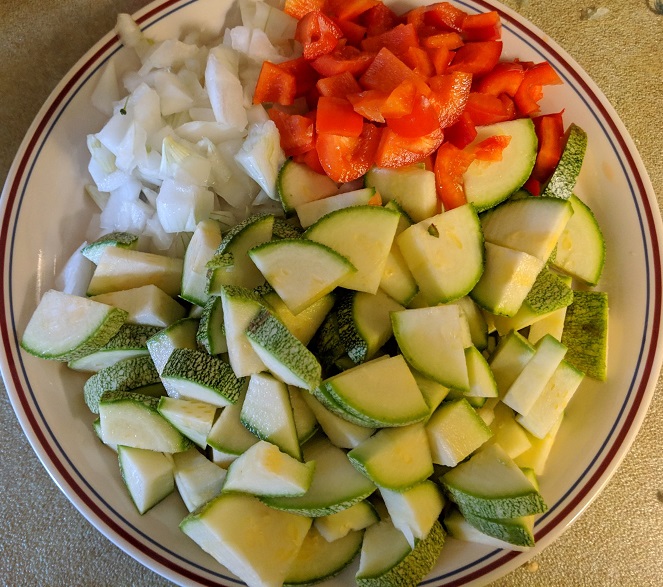
1 to 2 Cousa Squash, roughly diced
1/2 onion, diced
1/2 red pepper, diced
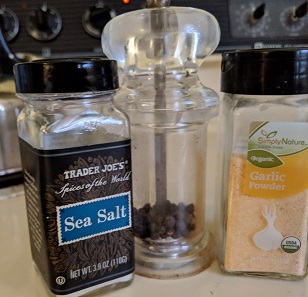
Garlic (1 to 2 cloves if using fresh. A generous sprinkle if using garlic powder)
Salt and pepper to taste
Oil of choice. You could use olive oil. I chose to use avocado oil because that’s what I had on hand.
Directions
Preheat oven to 400 F.
Line baking sheet with parchment paper and add a bit of oil.
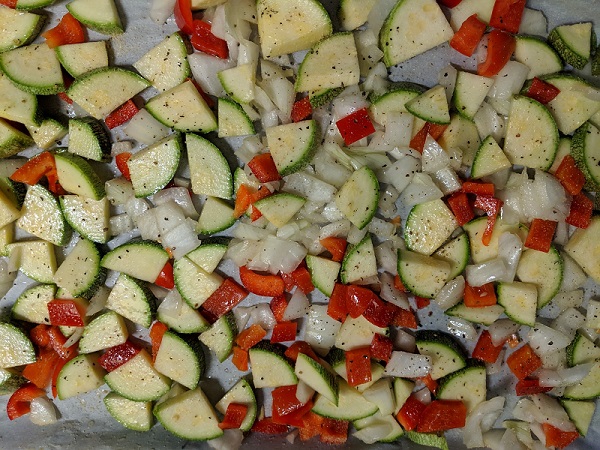
Dice the vegetables and mix together. Add a bit more oil directly to the vegetables and mix.
Sprinkle the spices on and then pour out onto the baking sheet.
Bake for about 20 minutes, stirring the vegetables about half way through.
Notes
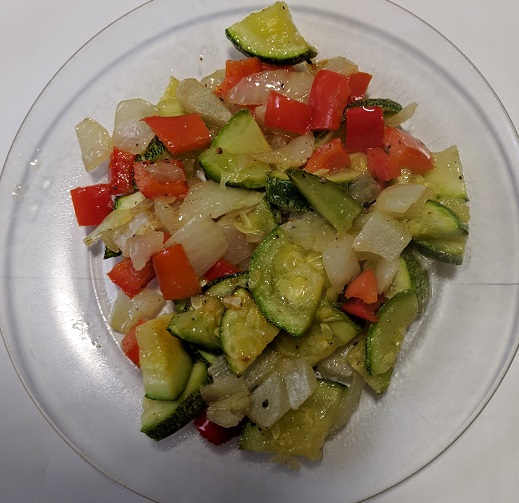
Even though you’re roasting these vegetables, the squash has a lot more liquid in it than you find in many vegetables. So this dish won’t roast in the same way as the vegetables we often roast such as winter squash, Brussels sprouts, cauliflower and so on. Instead, this is more similar to a sauteed dish. The squash will be soft.
Variations
I chose to roast this in the oven but you could make the same dish and saute it instead in a good sized saute pan.
You could also add a bit of cayenne pepper to the seasonings.
Once you’ve cooked this, you can serve it as is for a side dish or sprinkle a little parmesan cheese on it. You can also add this to an omelet or frittata or add it to some rice or quinoa to make a pilaf.
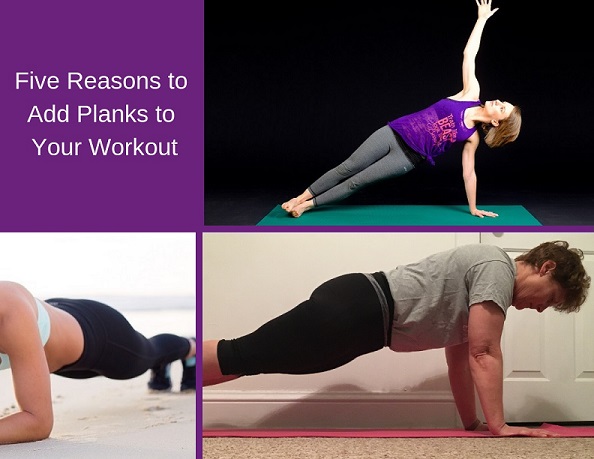
Why should you add planks to your workout? It seems like trainers love to have us do planks and there seems to always be some type of plank challenge going on. Just go online to find people who can hold a plank for half a lifetime. Chris talked about using planks to help with strengthening the core in an earlier post. Planks are a great way to strengthen our bodies.
Add Planks to Your Workout
There are lots of reasons to add planks to your workout. I’ve listed five here but each of these reasons can lead to more benefits. Basically, if you add planks to your workout, you’re adding something that is quick and easy to do, well, easy as in you don’t need to do a lot of preparation or equipment for planks. They can still be quite the challenge.
Close to a Whole Body Workout
Doing a plank works your abs, your back, your shoulders, and your glutes. This is a great way to begin building strength in your core. Planks don’t put any pressure on your spine from folding up like you might get from crunches and sit ups so they also help to avoid injury.
A plank also works those side muscles such as the obligques.
Can Do Anywhere
Planks require no equipment. All you do is get into position and hold the plank as long as you can. You might use your phone to time the plank but you don’t even need that. I sometimes just count to approximate the number of seconds I’m holding.
Planks are great to do at the gym but also at home. Remember the idea of doing an exercise every time a commercial comes on? Think of planks for that. These are even a good choice for traveling because you can do this in a hotel room without making noise or having to carry any equipment.
Improves your posture
Because planks strengthen your core, especially your abdomen and lower back, it becomes easier to sit and stand with better posture.
Many of us struggle with posture problems because of sitting too much and having weak core muscles. Poor posture causes back pain, feet and leg pain, and lots of general misery.
Improves Your Stability and Balance
Having stronger core muscles have been shown to help people be able to do more of their daily functions and to prevent injury. Even elderly people are often advised to do planks.
Can Do Daily
Starting your workouts with a plank is a great way to wake up most of your muscles. If you’re going to be lifting weight, this is a good starting point. Of course, planks don’t have to be a warmup. You can just do them every day as a way to strengthen your body.
How to Perform a Plank
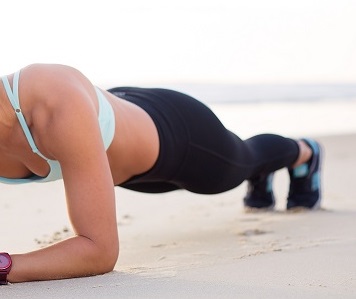
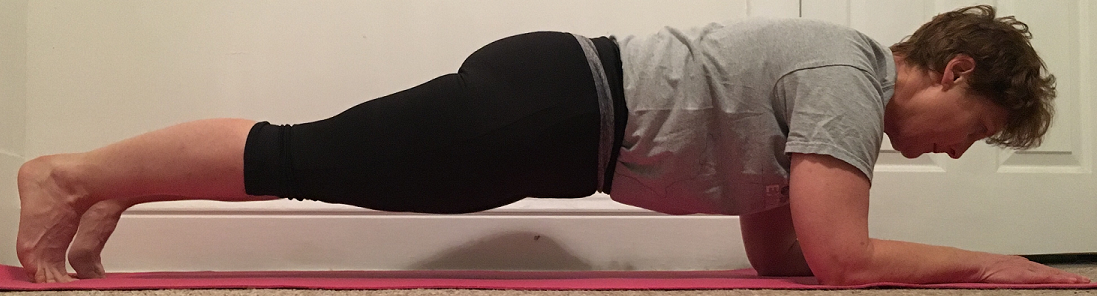
Get on the floor and get into a pushup position. Bend your elbows to 90° and use your forearms to support your weight. Make sure your elbows are directly beneath your shoulders. Your body should be a straight line from your head to your feet. Make sure your butt isn’t sticking too far up into the air and not sagging towards the ground. You need to squeeze your abs the whole time you’re planking.
Hold this position for as long as you can. You might start with 15 seconds and work your way up eventually to two minutes.
Some people hold the plank even longer but I’m not sure there’s a lot of value to that. Instead, put your knees down and take a rest and then repeat the plank.
Modification
If you can’t do a plank successfully, put your knees on the ground. Do a plank this way until you can lift your knees up. You’ll still get much of the advantages of doing a plank.
If getting on the floor and using your knees is too hard on your body, you can use a wall in the same way that people do wall push-ups. Move your feet away from the wall, place your hands shoulder height on the wall and hold your body up.
Variations
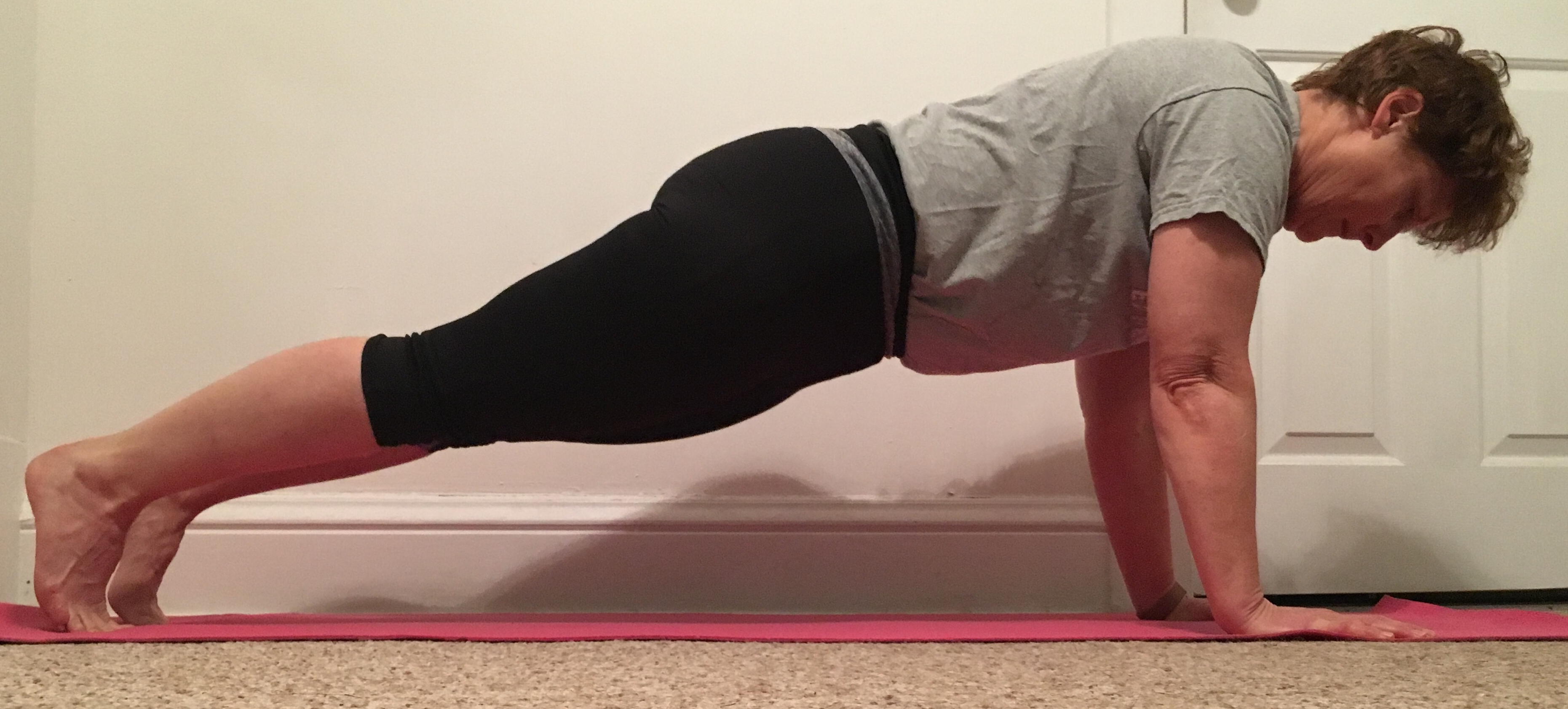
Straight arm planks
Instead of resting your weight on your forearms, hold your weight on straight arms. This increases the work on your arms and shoulders. It’s a good variation to do just to shake things up.
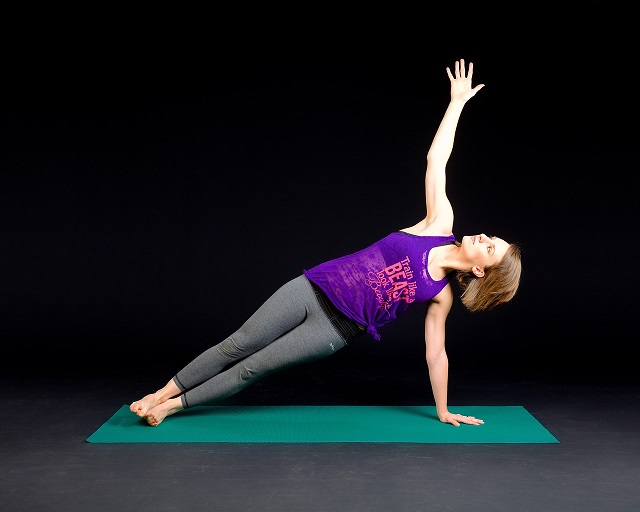
Side Planks
Hold a side plank for the same amount of time as the regular plank. Make sure to do both sides. This really helps strengthen the obliques, legs, and arms.
Plank Jacks
Hold your plank position and then basically move your legs out and then back to simulate a jumping jack. This takes some coordination.
Up and down planks
Move from resting your weight on your forearms to straight arms and then back again. This increases the effects on your whole body. It’s a challenging workout.
However you choose to do them, it’s a good decision to add planks to your workout. Let me know if you try them.
Since I’ve been cleared to resume exercising, I’ve been struggling to come up with a fitness routine that works for me. I want to return to some of the things I’ve enjoyed doing but I also want to avoid injuring myself. I’ve decided I need to work on core strength, flexibility, balance, and variety.
I’m hoping that working variety into my fitness routine will help me avoid injury and any kind of repetitive stress problems.
I’ve come up with a fitness routine that is working for me right now. Of course, it’s still winter in Ohio so I’m not getting outside very often. This routine might change once spring and summer arrive.
I also find that if I assign certain days to certain exercises, I’m likely to get it all done.
Fitness Routine
Sunday
Sunday is now my upper body strength day. I asked my boyfriend to work with me on regaining my upper body strength so we now hit the gym on Sunday and use the dumb bells and equipment. It’s a challenging workout, that’s for sure. Last week, we did a lot of chest presses, flies, triceps dips, and some ab work. I felt it the next day, that’s for sure.
Monday
Monday is now my yoga day. I found a class I like at a rec center at a nearby town so I bought the non-resident passes and try to go every Monday evening.
If I can’t make it because of a scheduling conflict, I try to work some cardio in its place. That might be running or using a bike at the gym.
Tuesday
I’m now attending a Pilates class on Tuesday mornings. I’ve just started back into Pilates reformer classes and it was quickly apparent that this is a good thing for me to do.
The instructor commented on how tight my ham strings and calves are. I knew that of course but rteally haven’t found a solution. Hopefully, Pilates will help.
Wednesday
I meet my trainer on Wednesday late afternoon. She tends to give me a full-body workout that challenges me. She focuses on strength, balance, and cardio conditioning by elevating my heart rate.
Sometimes after my training session, I’ll add a brisk walk or a run or I go swimming.
Thursday
Thursday is my catch up day. I tend to do some kind of cardio. Since I want to swim at least once a week, this might be my swim day. If not, I’ll go for a run.
Friday
I see my trainer again on Friday morning. We do something that complements what we did on Wednesday.
Once in a great while, I treat myself to a orthopedic massage. An orthopedic massage is not necessarily the most pleasant massage. It’s not like a relaxation massage. Instead, it works on injury rehabilitation and improving range of motion. If I get a massage, I try to get it on Friday so I go into the weekend feeling better.
Saturday
I haven’t returned to my boot camp class yet, which is on Saturday morning. Instead, I’ve been riding a bike or running at the gym. I look at what my fitness routine has been this week and Saturday becomes the day that I try to fill in whatever I’ve been missing.
The one thing that I’m struggling with right now is that my daily steps have dropped. That’s due to a change in my living arrangements and I’m just not getting in as many steps as I used to in doing my daily activities. I need to figure that out because while having some physical activity is important, so is getting in those steps. That’s next on my list of things to figure out.
I’m happy to have worked out a fitness routine that works for me. Of course, this will change when I can begin to go outside. For example, my Sunday activities will probably change when the weather improves. When that happens, I’ll adjust what I’m doing and figure out how to keep the variety going.