Author: Jill McCauslin (Page 2 of 23)

The Benefits of Squats

I know there are benefits to doing squats. I end up doing a lot of squats though I don’t really enjoy them. They’re just not a fun exercise, at least I don’t think so.  I find them to be challenging and it’s hard to see progress. If you’re lifting weights, you can tell when you’re getting stronger but that isn’t as evident with squats.

So why do squats? One of the biggest advantages of squats is their ability to build lower body strength. Strong legs are essential for everyday activities like walking, climbing stairs, and lifting objects. Squats not only build muscle but also increase functional strength, which translates to better performance in sports and day-to-day tasks. Additionally, squats help strengthen your core muscles, which improves posture, reduces the risk of injury, and enhances stability.

There are days when I feel challenged just to get off a couch. That’s when I think, imagine how bad this would be if I didn’t do squats.

We’re always saying find what you enjoy and do that. But there’s some good reasons to do squats even if I don’t think they’re a lot of fun.

How to Perform a Proper Squat

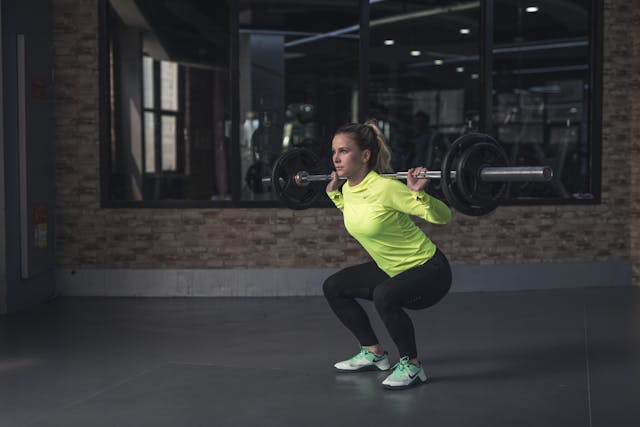
Form is important if you want to get the most out of squats. Begin by standing with your feet shoulder-width apart. Keep your chest up, back straight, and core engaged. Slowly lower yourself by bending at the knees and hips, as if sitting back into a chair. Go down until your thighs are parallel to the ground, then push through your heels to return to the starting position.

Nia Shanks, who we talked to in episode 79 on the Fit Strong Women over 50 Podcast, has great instructions on how to do different squats. You might want to check out what she has to say.

Variations to Try

There are several squat variations to keep your workouts interesting and target muscles differently. Goblet squats, jump squats, and Bulgarian split squats add diversity and intensity to your routine.

Once you start to build strength, you can add in front or back squats where you hold a barbell either to your chest or resting on your shoulders. I find these to be really challenging.

Benefits of Squats

As  you begin to add variety to your squats, it becomes even more important to maintain good form. If you’re not sure about  your form, ask someone to watch you and give you advice. If you’re at a gym, ask a trainer to check out your form. I’ve seen people post videos of them doing squats and ask people in fitness groups on Facebook to give them advice.

Incorporating squats consistently can lead to improved strength, better mobility, and a more balanced physique. So next time you hit the gym, make sure to add a few squats to your workout – your body will thank you!

 

Non-Dairy Sources of Calcium

My doctor told me to make sure I’m eating enough calcium to keep my bones strong. There may have been some grumbling because I’ve been trying to make sure I eat enough protein and fiber and now I have to think about calcium.

I know I can use supplements but I’ve heard concerns about heart health from calcium supplements. When I discussed this with my doctor, she recommended that I try to get as much calcium through my food as I can.

When I think about calcium, I think about dairy products like milk and yogurt and that king of dairy snacks, cottage cheese.

However, if you are vegan, lactose-intolerant, or simply looking to diversify your sources of calcium, you need to find some nondairy options. What are some of the best nondairy sources of calcium?  How do you keep your bones and teeth strong without reaching for the milk carton?

Non-Dairy Sources of Calcium

Check out these options for adding non-dairy sources of calcium into your diet

Leafy Green Vegetables

Dark, leafy greens are calcium powerhouses. Kale, collard greens, bok choy, and turnip greens are especially rich in calcium. For example, a single cup of cooked collard greens has about 268 mg of calcium—over 20% of the daily recommended intake for adults.

Be aware that some greens, like spinach and Swiss chard, contain oxalates, which can reduce calcium absorption. (I may have to write a post about oxalates because I don’t know a lot about them.)

I was disappointed when I learned about spinach reducing calcium absorption because I was eating a lot of spinach. I’ve tried to switch to kale and other greens. I’m sure I can eat spinach but eating it every day may not be a good idea.

Fortified Plant Milks and Juices

Many plant-based milks, like almond, soy, and oat milk, are fortified with calcium. They typically contain about the same amount of calcium as dairy milk, if not more, with 300 mg or more per cup. Similarly, some orange juices are fortified with calcium, providing a refreshing, tangy boost.

Apparently, consuming foods fortified with calcium is better than taking a supplement because the food provides other nutrients and isn’t just a blast of calcium into your system.

Canned Fish

Fish like canned salmon and sardines are great sources of calcium The bones that are in the can is what provides the calcium.

Soy Products

Tofu is a great source of calcium. It provides around 400 mg per half-cup serving.

Tempeh, a fermented soy product, also provides calcium, though in smaller amounts (about 100 mg per half-cup).

Edamame is also high in calcium.

You can use these foods in a variety of ways. Check out some of the ideas for tofu in other blog posts.

Nuts and Seeds

Almonds, chia seeds, and sesame seeds are particularly high in calcium. Just one ounce of almonds provides 76 mg of calcium, while a tablespoon of chia seeds has about 80 mg. Tahini, a paste made from sesame seeds, is also a great addition to dressings and dips, offering a calcium boost of around 130 mg per two tablespoons.

Beans and Lentils

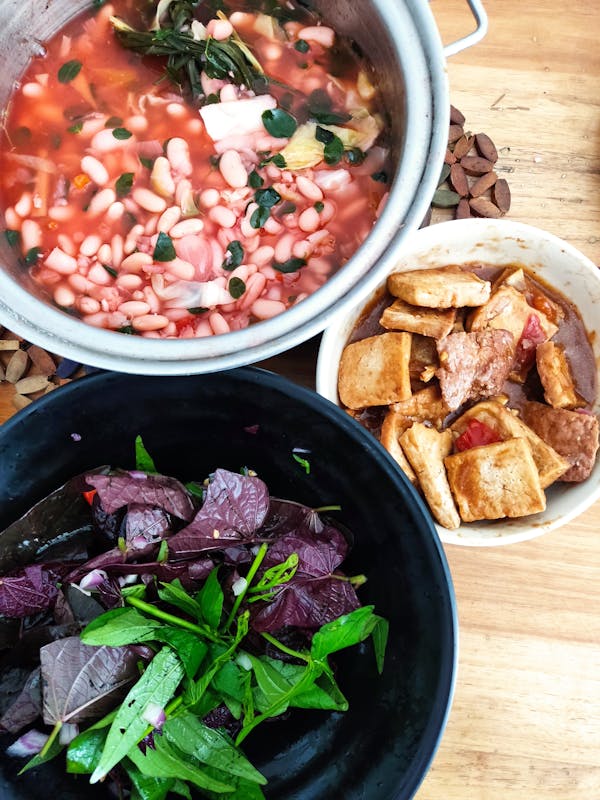
Legumes like white beans, black-eyed peas, and lentils are good plant-based sources of calcium. A cup of cooked white beans contains approximately 161 mg of calcium, making it easy to add to soups, stews, or salads for a nutritious boost.

Seaweed

Certain types of seaweed, such as wakame and kelp, are rich in calcium. A one-ounce serving of dried wakame can contain up to 130 mg of calcium. Seaweed is often used in Asian cuisines, but it’s easy to sprinkle dried seaweed onto salads, soups, or even popcorn.

I’m not a doctor or a dietitian so I’m just sharing information I’ve read. So, don’t let me stop you from using supplements or eating spinach. If you’re trying to figure out how to increase your calcium intake, adding these non-dairy sources of calcium to your diet is easy and delicious. There are plenty of options to keep your calcium levels high without the need for dairy.

Looking Back at Our Veggie Challenges

Chris recently posted about how eating more vegetables helps her maintain her weight and included some information about roasting zucchini. For some reason that made me think about some of our earlier posts about vegetables so I decided it was time for looking back at our veggie challenges.

If you enter Veggie Challenge in the search field, a lot of entries come up. Scrolling through the search results, I realized we have a lot of great ideas on how to get more vegetables onto our plates.

I found a recipe for a kohlrabi slaw that I made in 2019. Five years ago so I guess that’s why I forgot all about this dish but it sounds good. I need to make it again. It’s basically kohlrabi and apples chopped into matchstick sized pieces with a vinegar and oil dressing.

As I continued looking back at our veggie challenges, I found a post about making a watercress salad. The salad looks great and I remembered that a doctor recommended that I eat more watercress because I think it helped with digestive enzyme issues.

Chris and I are big fans of cabbage apparently because we’ve both posted plenty about it. Cabbage is a versatile vegetable so if you’re looking for ideas on using it, do a search on our website.

Besides maintaining weight, vegetables are good for getting fiber into our diets and provide a wide range of vitamins and minerals. For example, that watercress I mentioned includes calcium as well as plenty of other vitamins.

It was kind of fun looking back at our veggie challenges. This year (2024) we did a Eat the Rainbow challenge. Several of us struggled with getting all of the colors (curses, you blue/purple veggies!) I haven’t discussed it with Chris yet but perhaps we’ll repeat the Veggie Challenge in 2025. I’m sure we can all come up with even more creative ideas on getting in our vegetables.

Joy of Walking Two Dogs

This week I’m discovering the joy of walking TWO dogs. I think we’re all agreed that walking a dog gives you more steps but let me tell you about walking two of them. My grand-dog Stella is spending the week with Penny and me. They enjoy spending time together, which makes visiting a lot easier on all of us.

Neither Penny nor Stella has great leash manners. Penny is now a 50-pound dog and Stella is 75 pounds and strong. Both dogs, in fact, are strong. Because walking both at once is a tremendous challenge, I tend to walk one dog and then the other.

If they were easier to walk together, we could go to some parks for a good long hike. Unfortunately, because I can really only walk one at a time, we just walk around my neighborhood or go to the nearby Bike and Hike trail.

I’ve tried walking them together but what a disaster. It was like some slapstick scene where the person gets pulled in all directions at once. And there’s me, yelling, “stop! Both of you, just stop!” but they didn’t listen.

The past couple of days have been a return to winter weather but the dogs still have to go outside. That really works as a motivator for me to keep walking.

As I was walking Stella, I thought about our conversation with Chris Freytag and the benefits of walking. Stella is a fast walker. Granted, she does stop occasionally for a quick sniff but otherwise, she’s moving. I definitely was getting my heart rate elevated while walking her. I need to have her visit more often because she’s a good workout.

Walking a dog is a great way to increase your daily steps but walking two dogs separately really increases your numbers, bringing us back to the idea of the joy of walking two dogs! I hope nobody brings me a third dog to watch.

Adjusting soup on the fly

What do I mean by adjusting soup on the fly? Good question.

I made a pot of vegetarian chili in the Instant Pot the other day and had it for dinner. It was not my best attempt at soup or chili. I think I put too much broth in. It was not as thick as I expect chili to be. Maybe it was because I didn’t add any meat but I’m pretty sure I’ve made vegetarian chili before and it was fine.

I ate a bowl of the chili and stuck the remainders in the refrigerator.

Then the next day I made a pot roast for a family dinner. I made it in the Instant Pot as well. Basically the pot roast consisted of chuck roast (beef), potatoes and carrots. After we ate, I divvied up the leftovers for different family members. I was left with a small chunk of meat, cooked carrots, a couple of pieces of potatoes in a lot of beef broth.

(In case you can’t tell, I really like my Instant Pot. Here’s my recipe for Lentil Soup that I posted a year ago.)

At my next lunch, I scanned the refrigerator. There was the chili that I didn’t really like and the left over pot roast but not enough for a meal. I decided to experiment. I poured the chili into a large pot and then dumped the pot roast leftovers in the with chili. This was now more of a bean and beef soup and it needed a bit more potato. I chopped up a couple of potatoes, cooked them in the Instant Pot for about three minutes and then added them to the pot of soup.

Now my vegetarian chili was no longer vegetarian because it had beef and beef stock in it. My pot roast got eked out because I added it to the chili.

Once I heated the soup and stirred it thoroughly, I tried it. Not bad. The chili was certainly tastier for having the beef broth in there and the beef chunks and extra potatoes really bulked up the soup. There were still all of the spices that I had used in the original chili.

I had put diced carrot into the chili but the pot roast had large piece of carrots. I think the larger carrots really added to the soup. That’s a lesson for another time.

My only point with this is that I knew I wasn’t really going to eat the chili because it just didn’t wow me. I didn’t have enough of the leftover pot roast for a full meal. By experimenting and adding them together, I ended up with a much more delicious soup. I don’t really think that it was just adding the beef to the chili. I think a meatless chili can be fine but what I made was lackluster. By adding the complexity of the beef broth with the larger carrots and the meat chunks, the soup was improved.

Improvising in the kitchen can sometimes result in much better meals. We don’t need to discuss the times that this doesn’t work because this time it was a success!

Ending the Year with a Goal

Here it is, early December of 2023, and I’m thinking about ending the year with a goal. People usually focus on setting goals for the new year and I’m sure I’ll do that too but I thought it would be best to set a goal for the end of the year. That way I can end the year strong and move into the new year feeling like I can do more.

I signed up for a local 5K being held in the afternoon of New Year’s Eve day, i.e., December 31.

I haven’t run a race since the Towpath half marathon I ran in October 2021. That’s over two years ago, which seems like a really long time. We were still following pandemic protocols so the race was fine but the after-race felt a bit lonely. I’m sure this race will be much more social.

This year has felt like a year without many fitness goals. Lots of thinking about what I’d like to be doing but because I didn’t have anything really set as a goal, I feel like not a lot happened.

I’ve been trying to run recently but it’s been intermittent. So, even though I’ve been running, I haven’t really concentrated on training for a run.

Over this past weekend I went out just to see if I could actually run a 5K. I took off on my normal trail and thought I’d run about 1.6 miles one way and then turn around and run back. That would get me the required distance and I’d be fairly close to home when I finished.

To my surprise, I was able to run the whole distance without having to stop. I confess that there were a couple of times that I had to stop to cross a street and I enjoyed those brief breaks. Why is there not more traffic when you want to stand and watch cars go by while you catch your breath? I felt good after the run. I wasn’t too tired and I wasn’t particularly sore. All good news.

It’s great to have a race on the calendar and to know that I have to get out to train a bit more if I want to run this race successfully.

I know I won’t run it as fast as I would have a few years ago but that’s ok. My goal is to get out there and do it.

Maybe this will motivate me to put more races on my calendar as we move into 2024. Making a commitment really does help me with my motivation and discipline.

Let me know if you’re ending the year with a goal. Or, if you’re planning on starting the new year with some goals.

Building Strength at the Gym

I think it’s time for an update on how I’m doing building strength at the gym. In early September, I resumed going to my gym. I wrote a post about deciding to return to my gym and what I was doing. It’s now early November so a two month check in is a good idea, I think.

I’ve been working with a trainer twice a week. I decided that it was worth it to me to spend the money on personal training because it forces me to actually go and do a full workout. I know that when I’m left to  my own resources, I tend to think, “oh that’s good enough” and don’t do the extra set or knock off before doing all of the reps.

What are my favorite workouts? I really like deadlifting and bench pressing. I’m trying to improve my upper body strength.

I’ve noticed some definite muscle improvement. For example, I can see some definition in my biceps but I wish I could say the same for my triceps. I really need to work on tightening up that skin and getting some muscle.

The important thing for me is that I’ve taken this process slowly. Rather than going crazy with doing everything, I’ve been doing my strength workouts twice a week. I’ve tried to add in a class each week. Sometimes that focuses on strength. Sometimes it’s a yoga class. I also have gone swimming a few times and I try to get in a run once or twice a week.

I also am focusing on trying to get in plenty of protein on my gym days.

What I’m discovering is something that I already knew but it’s good to get a reminder. Consistency over time is what really helps show results. Doing my workouts every week is giving me more results than flitting from one thing to another. Also, forgetting about working out for a few weeks really sabotages your strength.

I still haven’t restarted attending my bootcamp class because I wasn’t feeling up to it. I finally am thinking that I can resume that class.

It will be the new year in a couple of months so that will be a good time to reassess how I’m doing with building strength at the gym. It will be a good time of focus on setting goals for 2024.

What Are Prebiotics?

What are prebiotics? How are they different from probiotics? We hear about both but it’s not always clear how they differ.

Probiotics introduce microorganisms into the gut. Many people take probiotic supplements, but you can also eat things like fermented foods to introduce “good” bacteria into your system. I wrote a blog post a while ago about the value of probiotic foods. The purpose of probiotics is to add certain bacteria into our systems.

Prebiotics serve a related but different function. They provide food for the microorganisms we’re trying to encourage to be in our system. Prebiotics are basically the food that bacteria eat to help them flourish and proliferate. If you’re taking probiotics, making sure you eat prebiotics might help those bacteria you’re introducing into your system survive and flourish.

Consume prebiotics to improve the balance of these microorganisms in your gut. Our microbiome is filled with a wide variety of microorganisms. The prebiotics help the ones that we want to encourage to stick around.

When healthy bacteria break down prebiotics, the bacteria generates energy, which increases their odds of survival. Also, the by-products produced by the bacteria are helpful to us.

Eating a diet high in fiber supports the health of the intestines. The prebiotic fiber improves our digestion, supports the immune system, and helps our bodies absorb nutrients.

Fiber can also help you feel full for longer after meals. This can promote a healthy weight. Fiber also helps regulate metabolism.

Curious about how to increase the prebiotics you’re consuming? Here’s a list of foods that contain prebiotics.

What are Prebiotics?

What are prebiotics?

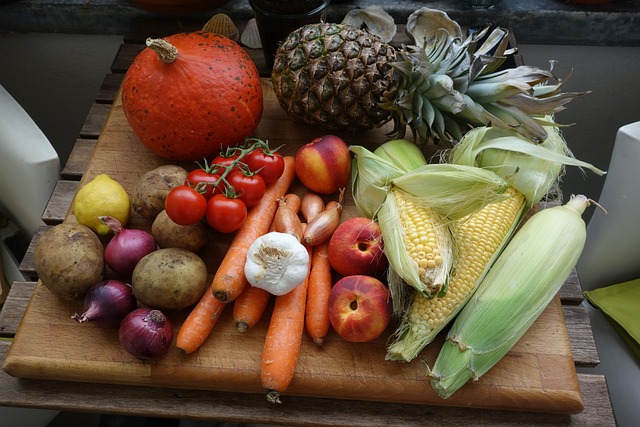
Fruit

  • Apples with the skin
  • Bananas
  • Berries
  • Nectarines
  • Pears
  • Watermelon

Vegetables

What are prebiotics?

  • Asparagus
  • Chicory root
  • Dandelion greens
  • Eggplant
  • Garlic
  • Jerusalem artichokes
  • Jicama
  • Leeks
  • Onions
  • Peas
  • Peas

Grains/Beans

  • Beans
  • Oats
  • Whole grain barley
  • Whole grain rye
  • Whole grain wheat

What are prebiotics?

Seeds/Nuts

  • Almonds
  • Cashews
  • Flax seeds
  • Legumes
  • Pistachios
  • Pumpkin Seeds


Try adding these foods to  your meals and see what happens. A word of caution. Sometimes it helps to increase fiber consumption slowly. Adding fiber too quickly can cause digestive issues.

Let me know if you try adding more of these foods to your diet and if you notice any differences in how you feel.

Returning to the Gym

I’ve returning to the gym that I’ve belong to for years after trying out some new gyms over the summer. It was interesting to see what was available to me and I didn’t get to check out as many as I intended. I may still go to some of the gyms that are further from my house just to see what they have to offer.

I decided that my gym was still a good option for me. It’s close to my house. I can drive there in five minutes. When I returned, it was good to be welcomed by people. Having people know your name has some value. (Of course, if you go to any gym, eventually they know your name.)

I decided to try some different classes once I returned to my gym. I thought it w would be good to see what was being offered in the classes. That has been fun. I’ve taken a few strength classes, a stretching and mobility class, a yoga class, and a Pilates Reformer demo class.

There were a couple of strength training classes I really enjoyed. I used kettlebells and dumbbells for some of the exercises. Body weight exercises were also popular. I ended up with some good workouts.

The yoga class made me realize that I really need to be going to yoga because I’m not nearly as flexible as I could be, and my balance is not great. Yoga would be a great way to get better at both.

A friend in my neighborhood recently joined the same gym and she’s very new to working out. I’ve taken her to some classes with me. It’s enjoyable to have some company. She has taken a liking to the yoga classes so I think that’s where she’s going to spend her time.

I have not been back to my bootcamp class because I felt that I should work my way back to it. It’s a strenuous workout and I liked starting my Saturday with that class so I suspect I’ll return soon.

Tips for Returning to the Gym

Here are some tips for returning to the gym after a long break:

  1. Start slowly. Don’t think you can start where you left off. You don’t want to return to the gym only to end up with an injury. This is true whether you are returning to strength training or endurance sports. Start with lower weights or run for a shorter distance. You’ll soon catch up to where you want to be.
  2. Try something new. You’re back after a break which can be exciting but it’s also a time to reevaluate your routine. Is there something new you can add to the mix? I tried some new classes and found some good options.
  3. Don’t forget to rest. Since it’s been a while, you might not want to return to the gym every day. Maybe take it a bit slower than you were doing before. Your body will need to recover as you adjust to the new fitness regime.
  4. This is a good time to set a goal and then track your progress. You’re starting with a clean slate so give yourself something to aim for. Personally, I’d love to find a bench press competition but haven’t managed to find one.

I’ll keep you posted on how I do with my workouts now that I’ve returned to the gym. Let me know if you have any suggestions on things to do when you’re ready to resume your fitness activities.

Tracking Food with Cronometer

I wrote about tracking food in the very early days of the Becoming Elli website. I wrote a blogpost entitled Counting Calories or Eat Less and Move More.  At that time, I was using SparkPeople for tracking my food. I stuck with that app because I had a large body of data in it. I had created recipes and lots of favorites. It was easy to use. Five years later, I’m now tracking food with Cronometer.

Unfortunately, SparkPeople closed its doors for food logging. It changed its focus and no longer provided a free tool for tracking food.

Within the past year, I tried logging food on the Fitbit app. It was ok but I definitely prefer tracking food with Cronometer.

Some of the reasons why I prefer Cronometer is that I can see my macros by food item and by meal. The Fitbit app just gave me the macro breakdowns for the day so I couldn’t tell which meal was low or high in protein or fat.

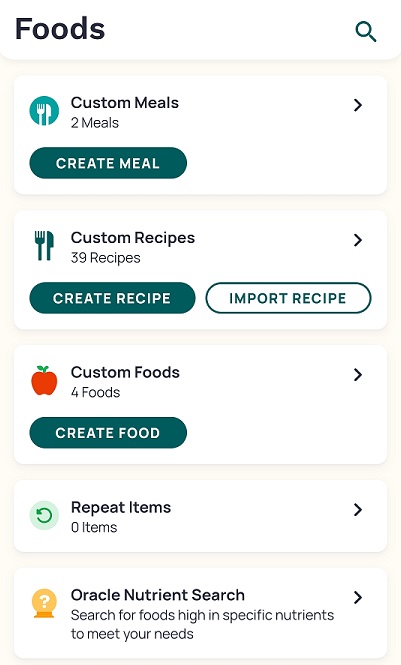
Logging food is easy. I can tag foods as favorites so they are easy to find. It also lets you swipe a bar code on the product and gives you the nutritional information right away.

One thing I noticed with the Fitbit food logger was that it also provided bar code scanning but often misread the bar code. I’d have to swipe the code several times to get the correct food. Cronometer is much more accurate.

The other feature I really like about Cronometer is the ability to import a recipe from a different website. You simply paste the URL into the field and it creates the recipe for you. You can modify the recipe if necessary but it’s so much easier than having to enter an entire recipe manually.

I use the Android version of Cronometer and I don’t know if the Apple version is different. Sometimes, I access the Cronometer website on my computer. It’s easy to use there too.

I’ve been working hard on tracking food for the past six months. I can see very quickly when I’m overeating or under-eating. I also like seeing how much protein and fiber I get each day. It’s a challenging habit to create because food logging takes work. It helps to use a tool that makes it a bit easier.

Let me know what tool you use to track food.

Tracking Food with Cronometer

« Older posts Newer posts »

© 2026

Theme by Anders Noren — Up ↑