Category: Fitness (Page 6 of 10)

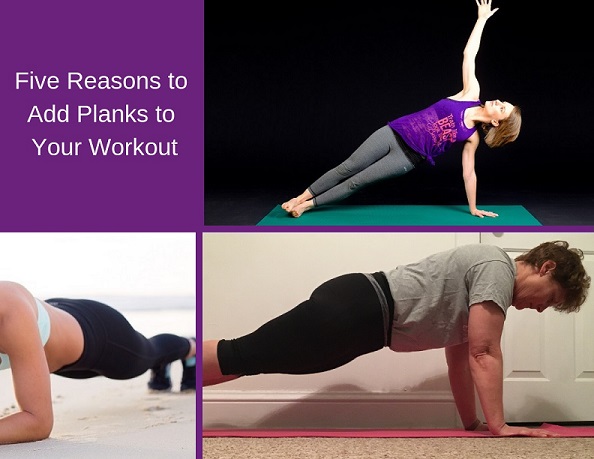
Five Reasons to Add Planks to Your Workout

Why should you add planks to your workout? It seems like trainers love to have us do planks and there seems to always be some type of plank challenge going on. Just go online to find people who can hold a plank for half a lifetime. Chris talked about using planks to help with strengthening the core in an earlier post. Planks are a great way to strengthen our bodies.

Add Planks to Your Workout

There are lots of reasons to add planks to your workout. I’ve listed five here but each of these reasons can lead to more benefits. Basically, if you add planks to your workout, you’re adding something that is quick and easy to do, well, easy as in you don’t need to do a lot of preparation or equipment for planks. They can still be quite the challenge.

Close to a Whole Body Workout

Doing a plank works your abs, your back, your shoulders, and your glutes. This is a great way to begin building strength in your core. Planks don’t put any pressure on your spine from folding up like you might get from crunches and sit ups so they also help to avoid injury.

A plank also works those side muscles such as the obligques.

Can Do Anywhere

Planks require no equipment. All you do is get into position and hold the plank as long as you can. You might use your phone to time the plank but you don’t even need that. I sometimes just count to approximate the number of seconds I’m holding.

Planks are great to do at the gym but also at home. Remember the idea of doing an exercise every time a commercial comes on? Think of planks for that.  These are even a good choice for traveling because you can do this in a hotel room without making noise or having to carry any equipment.

Improves your posture

Because planks strengthen your core, especially your abdomen and lower back, it becomes easier to sit and stand with better posture.

Many of us struggle with posture problems because of sitting too much and having weak core muscles. Poor posture causes back pain, feet and leg pain, and lots of general misery.

Improves Your Stability and Balance

Having stronger core muscles have been shown to help people be able to do more of their daily functions and to prevent injury. Even elderly people are often advised to do planks.

Can Do Daily

Starting your workouts with a plank is a great way to wake up most of your muscles. If you’re going to be lifting weight, this is a good starting point.  Of course, planks don’t have to be a warmup. You can just do them every day as a way to strengthen your body.

How to Perform a Plank

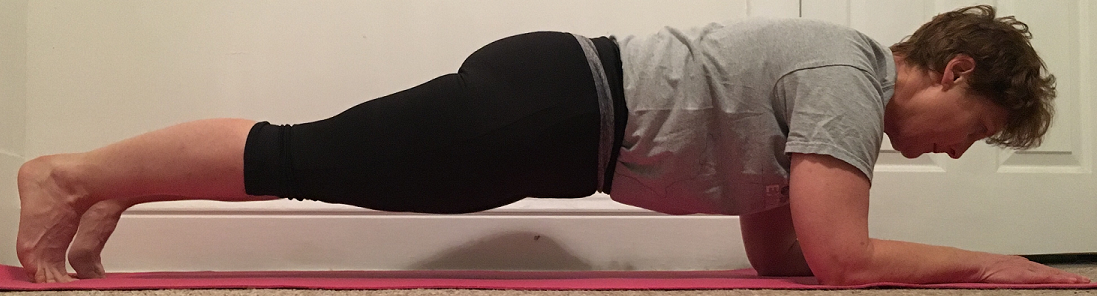
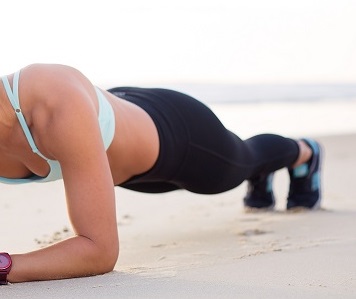
Get on the floor and get into a pushup position. Bend your elbows to 90° and use your forearms to support your weight. Make sure your elbows are directly beneath your shoulders. Your body should be a straight line from your head to your feet. Make sure your butt isn’t sticking too far up into the air and not sagging towards the ground. You need to squeeze your abs the whole time you’re planking.

Hold this position for as long as you can. You might start with 15 seconds and work your way up eventually to two minutes.

Some people hold the plank even longer but I’m not sure there’s a lot of value to that. Instead, put your knees down and take a rest and then repeat the plank.

Modification

If you can’t do a plank successfully, put your knees on the ground. Do a plank this way until you can lift your knees up. You’ll still get much of the advantages of doing a plank.

If getting on the floor and using your knees is too hard on your body, you can use a wall in the same way that people do wall push-ups. Move your feet away from the wall, place your hands shoulder height on the wall and hold your body up.

Variations

Straight arm planks

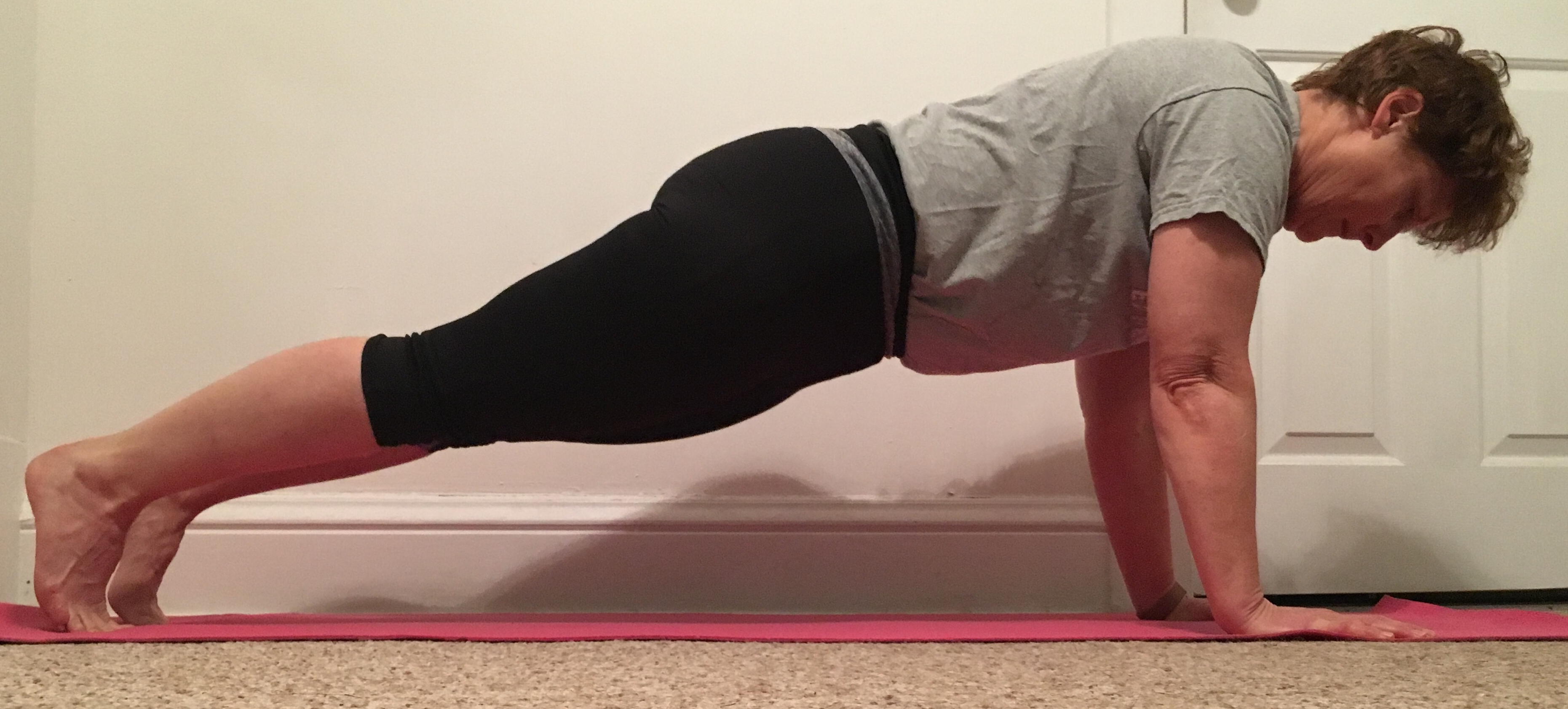
Instead of resting your weight on your forearms, hold your weight on straight arms. This increases the work on your arms and shoulders. It’s a good variation to do just to shake things up.

Side Planks

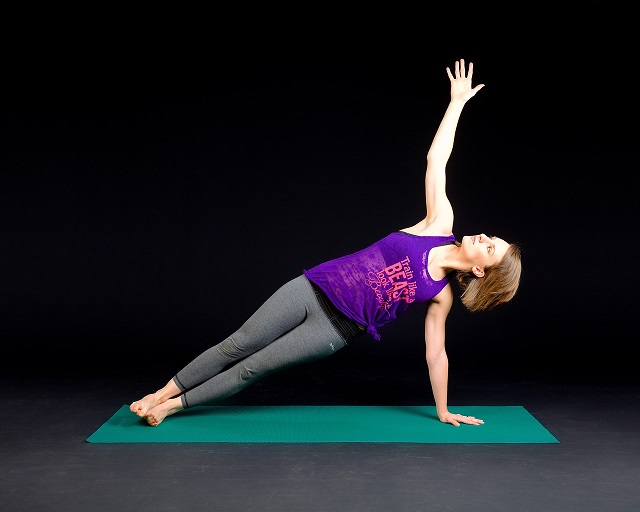
Hold a side plank for the same amount of time as the regular plank. Make sure to do both sides. This really helps strengthen the obliques, legs, and arms.

Plank Jacks

Hold your plank position and then basically move your legs out and then back to simulate a jumping jack. This takes some coordination.

Up and down planks

Move from resting your weight on your forearms to straight arms and then back again. This increases the effects on your whole body. It’s a challenging workout.

However you choose to do them, it’s a good decision to add planks to your workout. Let me know if you try them.

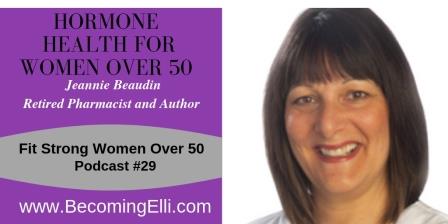
Hormone Health for Women Over 50 with Jeannie Beaudin

Fit Strong Women Over 50 Podcast Episode #29

Download | Play in New Window
Please Subscribe: Apple Podcasts  (iTunes) | Google Podcasts | Android-Google Play | Stitcher | Player FM | Castbox | Tunein | Spotify | RSS

In Episode #29 of Fit Strong Women Over 50, Jill and Chris interview Jeannie Beaudin, a recently retired pharmacist who specialized in balancing women’s hormones for over 10 years, while she owned her own pharmacy.

Her clients appreciated her broad knowledge of non-drug, natural and standard treatment options.

As a compounding pharmacist specializing in balancing women’s hormones, Jeannie would take time to thoroughly review the hormone-related symptoms, explain available choices and discuss the woman’s preferences for treatment.

In today’s podcast, Jeannie explains how she became known as “The Hormone Lady”. The podcast explains how women can work together with a compounding pharmacist and the doctor to improve hormone health. Four levels of treatment are outlined.

She describes how she and her husband eat following a health scare 14 years ago. “No white flour and I make my own bread.” She mentioned Michael Pollan’s rules for eating: “Eat real food. Mostly plants. Not too much.”

Also in this episode:
Chris and Jill talk about their winter training and look to the spring.

Veggie Challenge – how did you prepare your vegetable of the week?

Links:

My Fitness Routine – Improving Strength, Flexibility, and Balance

Since I’ve been cleared to resume exercising, I’ve been struggling to come up with a fitness routine that works for me. I want to return to some of the things I’ve enjoyed doing but I also want to avoid injuring myself. I’ve decided I need to work on core strength, flexibility, balance, and variety.

I’m hoping that working variety into my fitness routine will help me avoid injury and any kind of repetitive stress problems.

I’ve come up with a fitness routine that is working for me right now. Of course, it’s still winter in Ohio so I’m not getting outside very often. This routine might change once spring and summer arrive.

I also find that if I assign certain days to certain exercises, I’m likely to get it all done.

Fitness Routine


Sunday

Sunday is now my upper body strength day. I asked my boyfriend to work with me on regaining my upper body strength so we now hit the gym on Sunday and use the dumb bells and equipment. It’s a challenging workout, that’s for sure. Last week, we did a lot of chest presses, flies, triceps dips, and some ab work. I felt it the next day, that’s for sure.

Monday

Monday is now my yoga day. I found a class I like at a rec center at a nearby town so I bought the non-resident passes and try to go every Monday evening.

If I can’t make it because of a scheduling conflict, I try to work some cardio in its place. That might be running or using a bike at the gym.

Tuesday

I’m now attending a Pilates class on Tuesday mornings. I’ve just started back into Pilates reformer classes and it was quickly apparent that this is a good thing for me to do.

The instructor commented on how tight my ham strings and calves are. I knew that of course but rteally haven’t found a solution. Hopefully, Pilates will help.

Wednesday

I meet my trainer on Wednesday late afternoon. She tends to give me a full-body workout that challenges me. She focuses on strength, balance, and cardio conditioning by elevating my heart rate.

Sometimes after my training session, I’ll add a brisk walk or a run or I go swimming.

Thursday

Thursday is my catch up day. I tend to do some kind of cardio. Since I want to swim at least once a week, this might be my swim day. If not, I’ll go for a run.

Friday

I see my trainer again on Friday morning. We do something that complements what we did on Wednesday.

Once in a great while, I treat myself to a orthopedic massage. An orthopedic massage is not necessarily the most pleasant massage. It’s not like a relaxation massage. Instead, it works on injury rehabilitation and improving range of motion. If I get a massage, I try to get it on Friday so I go into the weekend feeling better.

Saturday

I haven’t returned to my boot camp class yet, which is on Saturday morning. Instead, I’ve been riding a bike or running at the gym.  I look at what my fitness routine has been this week and Saturday becomes the day that I try to fill in whatever I’ve been missing.

The one thing that I’m struggling with right now is that my daily steps have dropped. That’s due to a change in my living arrangements and I’m just not getting in as many steps as I used to in doing my daily activities. I need to figure that out because while having some physical activity is important, so is getting in those steps. That’s next on my list of things to figure out.

I’m happy to have worked out a fitness routine that works for me. Of course, this will change when I can begin to go outside. For example, my Sunday activities will probably change when the weather improves. When that happens, I’ll adjust what I’m doing and figure out how to keep the variety going.

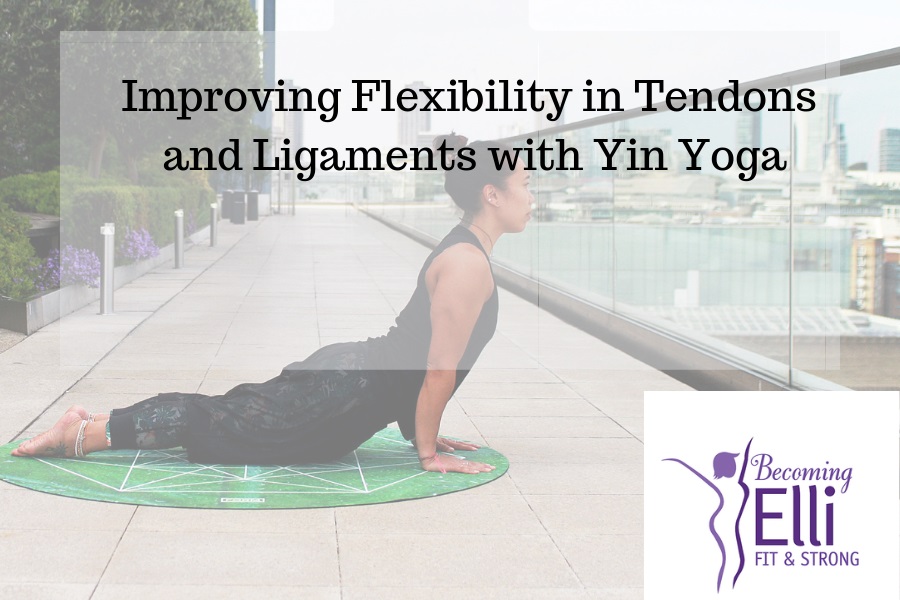
Improving Flexibility in Tendons and Ligaments with Yin Yoga

I used to only focus on muscles and strength, but as I get older I am finding that being strong and improving flexible in tendons and ligaments has become more important to me.

One way I am working on improving my tendons and ligaments with through yoga. I am very much a beginner and am still have so much to learn. Perhaps you’ve been in a yoga practice for a long time. If so, please let me know what works best for you.

I used to really enjoy the constant moving workout type of yoga that burns a lot of calories and works the muscles, but as I have gotten older, I’m finding that flexibility and releasing tension to be more of my goal with my yoga practice.

Only recently I have discovered yin yoga.

Yin yoga is a slow hold yoga that allows the connective tissues, ligaments and tendons to slowly release. It helps with stiffness. As we age, our bodies get stiffer and less supple. I guess that is obvious. If you think of a little baby and how flexible they are, with joints, muscles and even skin, that’s the other extreme.

Yin yoga helps to release tension in the body that comes from bracing and clenching. Dealing with difficult people, situations and problems will cause the body to stiffen and hold tension. It holds tension not just in the muscles, but also in the ligaments, tendons and joints that get very stiff.

I know that the hours of sitting still in front of the computer, working my “day job”, have made my neck, shoulders and parts of my spine become tight. Too often I end up hunched over the computer all day. It’s a bad position for the body! Of course the hip flexor tendon, the ones that connect my front thighs to my abdomen, get shortened and the rear tendons tend to get stretched. (I believe its the part that attaches the psoas and iliacus muscles to the upper thigh and the lower spine and pelvis.)

Whatever you call it, I know I can feel it! It’s especially noticeable when I stand up from sitting too long – either a 2-hour car ride or a 2-hour intense computer session! I feel the stiffness that has tightened in my body. Even when getting out of bed in the morning, I definitely move slower in order to let my whole body wake up.

Doing repetitive motion workouts like cycling and running also effects my body. I want to make sure that my ligaments and tendons don’t get over worked, stretched or too weak from not working out.

Yin yoga has helped. I enjoy holding the poses while I feel the benefits. This type of yoga has improved my posture, flexibility and strength. Although I have not measured myself lately, I feel like I have grown half an inch with a longer spine.

I do it slowly and progressively over the days, weeks, and months. It’s not the type of thing you force your way into, but rather relax your way into it. It’s not about stretching but rather about relaxing… if that makes sense.

Improving Flexibility in Tendons and Ligaments
It takes a while to warm up and get comfortable in these positions. I recommend taking a class with a certified yoga instructor or view a trusted site for a yoga class.

You’ve got to make sure your body is warmed up before going into these poses. I’ve been focusing on one or two classes a week at my gym and supplementing with online videos. The classes at the gym have been gentle Hatha yoga and restorative yoga. Both those classes employ yin yoga moves that I am finding very beneficial to adding to my work outs of cycling and run/walking.

Yin Yoga is not about doing the flowing type of yoga that people often think about. It is more about getting into a position and holding it for tension release. Holding for 45 seconds or two minutes allows other parts of your body to release. It’s difficult to relax enough to get your tendons and ligaments to let go. In some positions, being supported with a block, bolster or foam roller allows me to more easily relax for up to 5 minutes in a pose.

Here are 3 positions I find particularly beneficial to me for improving flexibility with tendons and ligaments.

  • Butterfly pose where you sit on your yoga mat with the bottoms of the feet touching each other. Right now I’m working on zippering my toes together. It’s difficult for me and I seem to only get a couple toes to cooperate. I’m in the very beginning stage of this! The tendons and ligaments in my toes are very tight.
  • Cobra pose with your feet, legs and hips on the matte with the arms supporting your front. Keep elbows bent and support the spine. It is difficult to relax my tendons that attach the hips to the abdomen but I can feel lengthening the front. This is a back bend pose. I am still working on sphinx and baby cobra but eventually will work on cobra and eventually upward facing dog where the legs, knees are off the matte and the elbows are straight.
  • Bridge pose where you lay on your back with your knees bent. Raise your hips. This pose off sets some of my sitting. This seems easy for the first 30 seconds but if I am holding longer, I like to use a prop to allow my body to relax to get the full benefit. It feels like the opposite of the spinx, baby cobra and cobra up dog poses.

Perhaps you know all about yin yoga, but maybe this is the first time you’ve heard of it. If you enjoy yoga, what type do you use? Are you working on flexibility and balance? Which are your favorite yin yoga poses for keeping your tendons and ligaments flexible and strong?

How to Work with Your Personal Trainer

I want to discuss how to work with your personal trainer. There’s a lot of information on how to find a trainer. We discussed that with Brenda O’Hara in our interview with her on the Fit, Strong Women Over 50 podcast. But what do you do once you’ve found one?

How to Work with Your Personal Trainer

Once you’ve hired your trainer, you have to go to that first session.  It can be a bit intimidating so that’s where some planning in advance helps.

Be honest

Be honest with your trainer. If you have injuries, be sure to tell him or her. There’s no point in doing something that is going to hurt you. A good trainer should be able to work around any injuries and, in fact, can help you build the strength to prevent injuries. Some of us are embarrassed or at least reluctant to mention our weaknesses. It’s far better for your trainer to know your weaknesses. That’s sort of the point.

Here’s the thing about being a woman over 50. If you’ve been working out for a while, you may well be stronger than many women your age. Make sure your trainer knows that.

Be patient

Just like a new co-worker or a new boss, it takes some time to get used to working together with a trainer. Don’t expect this to automatically be the best thing going. Your trainer needs to get to know you and you need to get to know your trainer. As your familiarity with each other grows, you’ll begin to be able to ask for more (or less!) of something and your trainer can begin to recognize your strengths and weaknesses. Once you’re comfortable working together, it’s easier to really start working towards your goals.

And just as I said to make sure your trainer knows that you’re stronger than many women your age, be sure to demonstrate that because your trainer may not really be sure of what you can or can’t do.

Have a goal

I find it better to discuss specific goals with my trainer after we’ve gotten to know each other. I do think it’s important to set goals. Many people hire a trainer and just go each week and do the exercise. I think if you’re paying someone, you should have some way to measure performance. And by performance, I mean both yours and the trainer’s. Discuss this with your trainer. Pick something measurable so you know when you’ve met the goal and make sure it’s something you want to be able to do.

The best goal I ever had was when I said I wanted to be able to do one pull up. My trainer put together a plan and we worked and worked on it. Finally, I did it. I saw that trainer recently and he said he still thinks about that day that I did the pull up.

I’ve also had more vague goals and they’re just not as good.

You can choose a goal like “I want to be able to deadlift a certain number of pounds” or “I want to be able to bench press some weight.” If you’re more interested in running, biking or swimming, you can set a goal of distance or time. For example, you can say, “I want to run a 5K in under 30 minutes.” A good trainer will help you figure out how to improve your speed or endurance even if he or she doesn’t actually run or bike with you.

Listen to Your Trainer

You’re paying this trainer to help you improve your fitness so listen to his or her advice. Obviously if something hurts, tell the trainer (see the be honest tip above!) but otherwise, your trainer is paying attention to what you’re doing and should be able to provide guidance to you. If your trainer says you can probably do something, try it. Don’t say, “I can’t.”

This also extends to the times that you’re not working with the trainer. If you’re trying to lose weight or build strength, you’re going to need to do more than just see your trainer one or two times a week. Ask your trainer for advice on what else you should be doing during the week. Perhaps the suggestion will be, add more cardio to your routine or go to a class each week.

The thing is, you’ve hired a trainer to help you reach your goals, not to do that work for you. So, get the advice and then figure out how you’re going to do what you need to do.

Be Professional

Many of us spend a lot of our training time talking with our trainers. Remember that you’re paying this person for his or her expertise, not to be your friend. There’s nothing wrong with developing a friendship with a trainer but the point is to work out, not to just chat.

I have a friend who says, “if you can talk through the entire set, you need to be lifting more weight.”

I watch a lot of people try to have flirtatious relationships with their trainers. Don’t put your trainer in the position of having to be polite while you flirt with him or her.

Also, don’t confuse your trainer with a therapist. Your trainer wants to help you be fit and healthy but can’t fix your marriage.

Be Willing to Change

Things change. We move, change jobs, have family changes. Sometimes our trainers leave for greener pastures. And sometimes we decide we’ve learned all we can from this trainer. There’s nothing wrong with making changes. If you’ve accomplished your goal, maybe it’s time to set a new goal and that might mean a new trainer.

If you want to switch sports, maybe you need a new type of trainer. That’s fine. Find a swimming coach or a Pilates trainer or whatever works for you.

Be open to changing trainers when it’s time. It can be frustrating because you have to get to know a new trainer and the new trainer needs to know what you’re capable of.

There is also nothing wrong with taking a break from using a trainer and going it alone with what you’ve learned. Sometimes it’s best to take a month or two off and then resume training.

The point is that you’re using a trainer to meet your goals to be fit and strong and you need to make the choices that are best for you.  Once you’ve identified who your trainer is going to be, make sure you know the best ways on how to work with your personal trainer.

Avoiding Foot Problems: Shoes, Sneakers and Boots

Who knew that the shoes you wore as a teen or in your early adult life would have such a long lasting effect in the last half of your life? I sure didn’t.

Maybe your feet have not reacted to your choice of footwear as much as mine have over the years, but if your toes tend to curl inward, then you may know what I’m talking about.

Years gone by I wore shoes that I wouldn’t consider now:

  • Flip flops on a summer day
  • Espadrilles to work in my flower gardens
  • Three inch heels on pumps every day for work
  • Cute boots (never mind the treads) for winter
  • As a teen in the 70’s, I would balance on top of crazy high wedges hiding underneath my bell bottom blue jeans.
  • In college earth shoes with a negative heel

I remember the day I was standing at the copy machine, feeling shooting pain in my calves and it occurred to me, why am I doing this to my body? I was 38 years old. It took almost 20 years of working in an office wearing heels that forced my toes into a point and strained my calves before I started valuing “sensible” shoes over “looking-good” shoes.

As a child I memorized a poem about shoes called “Choosing Shoes.” Judith Baxter wrote about the shoe poem on her blog “Growing Younger Each Day.”

I fear I have crossed over into the “THEY” that is talked about in the poem. Now when I select a shoe, my criteria is all about fit, function and support. Dress shoes are never higher than a two inch pump. My sneakers are all running shoes with insoles. I want them to have a similar heel height for running. And I make sure that my boots have arch support and a good non-slip tread.

Foot Problems
I hope you don’t share my foot problems.

  • Toes – My big toes curl toward the center and my baby toes curl under. This is from too many years in those tight, pretty office shoes with a heel.
  • Ankles – An old ligament injury from falling while giving my sister a piggy back ride has affected the resilency of my right ankle in my long term.
  • Achilles – Walking all weekend in flat mud boots back in April 2006 started Achilles tendonitis problems in both legs. It was 24 visits to physical therapy to repair that weekend injury. I still have issues with the right one, particularly if I over do the running without enough recovery time or build up time. Now I do a variety of exercises and recovery routines to keep strong and limber in those tendons.
  • Arch – I have high arches, but rolling a golf ball, medium lightly, under my arch, helps to keep the fascia pliable and helps to stop planter fascitis.
  • Corns – I used to have corns. The corns would form on my little toe where it rubbed all day on those office pumps with the high heels. When I wore heels, my foot was forced down so my little toes had no where to go but to curl under my other toes into weird positions. Now, after not wearing high heels for twenty-plus years, I don’t have any corns.
  • Bunions – Luckily I quit wearing those shoes before a full bunion formed on my right foot. There is a bit of a bone bump, but not too bad. My Mother-in-Law had painful bunion surgery. She had a very high threshold for pain and told me “If I knew how bad this would hurt, I would have done something differently.” I decided that was one problem I was going to avoid making worse on my foot, if possible. No more pointy toe shoes for me!

Tips for Avoiding Foot Problems:
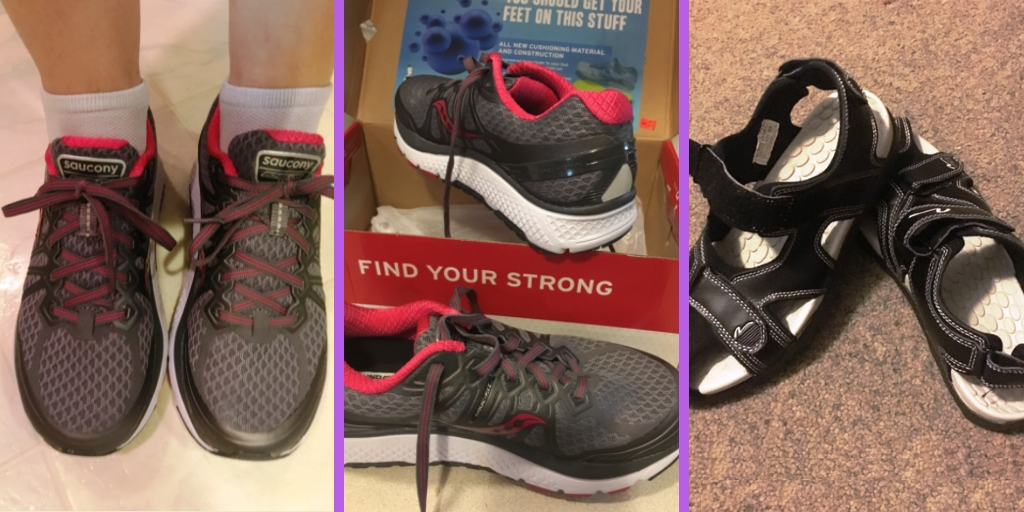
I am definitely focused on sensible shoes now. My work shoes are either Clarks or Aravon. My running shoes are  Asics, Brooks or Saucony (with a similar drop.)

“Drop” is a term that describes the thickness of the heel to the forefoot.  High heel shoes have a huge drop. I have become more acquainted with this word as it relates to the foam and gel in my running shoes. They say you shouldn’t change the drop abruptly. Drop refers to the heel height of the shoe. My freshman year of college I had a pair of “earth shoes” that gave me crazy pain when I decided to wear them all over campus. This was as a result of abruptly and exclusively switching the drop to a negative heel.

Zero drop means the heel and toe are the same distance from the ground. This is known as minimalist and mimics going barefoot.

I found out that easing into a new drop is important. Switching different shoes around helps your feet muscles to be more adjustable to different heights. For instance, I know when I wear dress shoes that I haven’t worn for a while – let’s say to a wedding where I do a lot of dancing – I sure can tell later in the night and next day. My feet tend to cramp up and I can feel the plantar fascia start to act up.

The amount of cushion you have on your shoe is a personal thing. Some people are very adamant about the right amount. I just know that switching the drop abruptly can cause foot problems for me!

In the last few years as I have started to run longer distances, I notice that it has become even more important that the shoes I select really have to fit well. I may try on 10 to 15 pairs of shoes before selecting the next running pair. Sometimes I go to four different running stores – not just to check prices – I want to hear the opinions of the different people who fit the shoes. I check out the online reviews of the different models, the brands and compare how they fit my feet.

Too tight around the toe area – the box – and my “dogs will be barking.” I don’t believe I have wide feet, but after running a few miles, my feet swell slightly. I try to remember that so I don’t tie the laces too tight at the beginning of a long run.

I’ve learned to do different lacing styles to hold my narrow heel into the back of the shoe. I use the last hole which helps to move my foot back in the shoe just slightly. I don’t want my heel to raise out of the back when I run forward. It would result at best in a callus and at worst a big blister.

Recently at the electronics show in Las Vegas, a shoe company launched a new self-lacing shoe that allows you to use your phone to adjust the fit to your foot. They cost around $300 and seem ridiculous! Maybe if I was a professional athlete, I wouldn’t think the price was so crazy or that changing the tightness of your shoe from your phone would be so silly.

I think back to the first time I ever did a run. I was in my red Keds. I went out for the track team when there was a new law (Title 9) and our school was forming a girls’ track team for the first time. I ran 5 miles the first day and ended up with shin splints. So much for my school athletics!

When I think of those shoes, I never would have dreamed that I would consider shoes that cost $120 a necessity. I like to comb eBay and various specialty running stores for a special on last year’s model that I know fits my feet like a glove (or maybe I should say like a sock?)

Special Functions
Just like when you are creating something, having the right tool for the job makes all the difference.

Finding the right shoe for exercise or just for walking can be a challenge as I have found out over the past few years. I often like to use my running shoes for walking and even some cross training. I know many runners that use their running shoes for running only.

When my current running shoes start getting older (around 300 miles on them), they get moved in the hierarchy of my closet.

Best pair – running. Second best – walking. Third best – gardening, yard work and mud.

My third best often get new insoles. I can end up doing a lot of steps in the yard without realizing it and having older shoes where the cushion is starting to get worn can create a bigger problem.

Many shoe models get revised slightly each year, so what fit perfectly last year, may not be what you want this year. Different drops, shoe boxes and even where the stitching runs over the top of the foot makes a difference.

Bike Shoes
I have found my favorite bike shoes and they are actually sandals. They have cleats on the bottom that clip into the bike pedals. The reason I like them so much is that they have three points of velcro adjustments. So fit is great. Also, because they have lots of room to breathe, my feet don’t get too hot when I’m riding in the summer.

The only weird part is that the bumps on the base, that are designed to massage the base of your foot I think, are too intense for my feet. I always wear socks. I know that this is a fashion faux pas, but like I mentioned, I’m more interested in fit, function and support than how they look.

This is my second pair of sandals. I wore the first pair until they were ready to fall apart! Most of the wear was on the right foot because that is the foot I tend to put down first.

How about Your Experiences with Shoes?
What shoes do you use for exercise? Have you changed the shoes you wear at work or play for comfort? Do you have any foot problems that you take into consideration? What about boots for hiking or in the snow? Let me know your thoughts. You can leave a message below or contact me by leaving a voicemail 330-970-6662 or sending an email to chris@becomingelli.com.

Disclaimer: I am not a doctor or a physical therapist or even an expert on shoes. I am just sharing my experiences with treating and avoiding foot problems. Consult your doctor or a podiatrist or a physical therapist if you have foot issues.
Staying Present while Looking Back and Looking Ahead

Paying attention to what is happening right now is so important. I sometimes find it difficult to stay with it. Mindfulness. Being present. Living in the moment. Focus on today. Focus on this minute. “Today is Yesterday’s Tomorrow.” One Day at a Time.

However you choose to describe it, sometimes (often) “staying present” can be difficult. Something about the end/beginning of the year has me thinking back and forward at the same time.

Yesterday is History.
Tomorrow is a Mystery.
Today is a Gift.
That’s why we call it the Present.

– attributed to Alice Morse Earle, Sun Dials and Roses of Yesterday: Garden Delights, 1902

Many new exercise programs will start in the new year. New Year, New You! (Or maybe Jan 2nd after the celebrating has finished and decorations are stored away.)

Staying consistent is more my speed. Something about jumping in both feet, too enthusiastically, has not ever served me well. I know some people have to go “cold turkey” and just “rip the band-aid off” to make a desired change.

I find it more long lasting if I slowly correct course, a bit like a giant ship at sea, one degree at a time, over and over. Last year my goal was consistency over intensity and “Resiliance!”

Looking back at 2018, I’m pleased with my fitness level, my eating habits, and the amount of exercise I did. I think I’m going to keep my motto and word for the year because of the success I had.

During 2018, my starting weight and ending weight were within two pounds. I know I ate better than I did in 2017 and payed more attention.

According to my FitBit, I averaged 80 active minutes per day and in all but two months, I exceeded over my 60 active minute goal. Some of the active days were doing races and rides, but most of these are merely taking the stairs more often, taking the parking spot farthest from the door and doing the outside loop in the grocery store. For 2018, I thought I’d have it worked out, I am still working on creating a standing desk. I know that will make a difference for some of my most sedentary days!

Best of all, exercise has become fun for me and I feel better afterwards. Some of the most enjoyable activities were:

  • the many, many walks at the dog park from May to September with our 2 dogs and my adult daughter.
  • the many bike rides followed by potlucks with my friends
  • the runs and races with my dear friend Jill.

As we end 2018 and begin 2019, I also wanted to say “thank you” to our podcast guests, podcast listeners, social media followers and blog readers. You all provide inspiration, motivation and accountability to me as well! Happy New Year!

Listening to Music During a Workout

Finding the perfect playlist to match the type of workout I am doing is an ongoing quest of mine.

There’s probably no way that your taste in music matches mine. I was reminded of this during a spinning class on Wednesday. Everyone has different tastes in music. I loved it when my spinning instructor played Dance of the Sugar Plum Fairies! (It starts slow and gets fast.) Run Run Rudolph is another holiday favorite of mine. It’s a fun and fast one that I love. Not everyone appreciates those I guess.

I find that exercising to music makes exercise fun. In fact it’s not a work out, for me it becomes a “play out”, but there are some challenges in getting the music worked out.

Here are the 3 problems that need to be overcome with music:

  1. Finding the music itself (right beat, keeps you going, are the words right or even not even important, even the right version of the song makes a difference I think. I usually prefer instrumental over vocals)
  2. Actually obtaining the songs to play them when you want them. – do you use Pandora or Spotify? Or do you buy music from iTunes? Or move a song to your playlist from your CD?
  3. Getting the right device to listen to them – Bluetooth speakers? Ear buds? Built in speakers in a beanie? Play the music out loud for everyone to hear?

This past Sunday afternoon, when the weather hit 63 degrees here in Ohio in December, I took a bike ride with 7 of my friends. The group of us witnessed a runner crossing a road right in front of an ambulance with lights and sirens. It seemed impossible he didn’t see or hear it. There is a dip in the road, so when he glanced to the right, the ambulance was obscured by the hill. But we decided that it was the Noise Cancelling Headphones that made it so he could not hear the ambulance. WOW was that scary. Luckily the ambulance driver was alert and averted a bad accident. We were all waiting at the edge of the road on the bike trail and witnessed the whole scene unfold just five or six feet in front of us. He was totally oblivious. In fact, he looked at us weirdly because of the panic on all of our faces. It was almost like a scene from a movie. He just continued running down the bike/hike path behind us like nothing had happened. It took about a half mile on the bike before the adrenaline washed away from my arms.

Please, if you use noise cancelling headphones, don’t use them on a bike trail or anywhere when you’ll be crossing a road. It can be really bad. I had no idea that they worked that well.

Listening Devices

My preferred way of listening to music during a run was with my old headband. I had cut some holes in the headband and slid some old headphone speakers into it for my outside runs. Sometimes for a bike ride, I would pull the headband down around my neck like a scarf. Much safer. Pretty ugly. I still don’t have the right answer.

When I’m running I have the neckerchief or headband fit under the baseball cap. You can see me with a version of it on in this photo and the old white headband in this photo. I tried using it for the 2018 half marathon but it failed me and I had to do the run music less.

During the winter, I use my iBeanie hat (a swag gift from the first FitBloggin’ conference I attended in Baltimore.) I don’t think the company makes these anymore, but here’s a link to something similar. This Bluetooth Beanie Hat that has built in speakers, which is great in the winter but way to hot if the weather is over 50 degrees out. (Mine is old and has wires that plug into my old iPod.) I like to keep the speakers off my ears so I can hear foot steps behind me. Because I run slowly, all runners (for the most part – and even many walkers) pass me and I don’t like to be startled.
I got some Bluetooth headphones last year for Christmas, but have had only some luck getting them to connect all the time.

Selecting the Songs

After getting a way to play the songs, I judge if I will like the music for a work out is to imagine if the song just started… would I want to get up and run out to the dance floor? If the answer is yes, then I’ll probably add it to my play list. Some songs make it to the play list only to be deleted a few weeks later.

There are lots of songs that end up going on the play list over and over.

I have different songs for running than I do for yoga or walking or even bike riding.

Anyway, back to what I wanted to write about – workout music that matches the workout.  I like songs that have a beat that matches my cadence. I’m not a fast runner by any means. My playlist matches my age, taste in music and pace.

Unfortunately as I list these out here, I realize the words to most of these songs are not good, and actually go against my more thoughtful side, so please ignore that part. I guess I am not listening to the words at all, but getting the beat into my bones.

  • Jackson Browne Running on Empty – kinda slow but a good warm up song.
  • Southside Johnny and the Asbury Jukes Got to Find a Better Way Home. This one is peppy!
  • Devo Whip it good – Strong steady beat.
  • Rocky Horror Picture Story – Time Warp (but not if I am doing hills, this is a fast one!)
  • J Geils Band – Freeze Frame (also fast)
  • Tag Team – Whoomp There it is (Easy run song)
  • The Proclaimers I would walk 500 Miles – Seems slow, but it keeps me going.
  • Parliament – Flashlight – Neon Light – I like the beat of this one
  • Gwen Stephani – the Cheerleader song B-a-n-a-n-a Hollerback Girl – Good pick up
  • Pittbull – Bon, Bon, Bon
  • Weird Al Yankovick’s Can’t Watch This

Obtaining the Songs

My method is to use my CDs, put them into the computer. I create a playlist folder and then move them onto my iPod. It’s frustrating that I can’t move my playlists onto my iPhone, but it does help that I can save my iPhone battery by not playing music on it. If I don’t have the CD, I can usually get it from the library.

My other choice is to use my iPhone and listen on Pandora. I don’t have my channels worked out very well on Pandora because I don’t use it often enough. The results are usually less than satisfying.

I am curious about Spotify. Some of my friends use it – I know Jill has really enjoyed using Spotify and she shared one of her playlists earlier this year. Some people listen to the podcast on it.

How about you? I’m curious. What are your best workout songs from your playlist? Do you listen on headphones? How do you build your playlist?

How do YOU Measure Fit?

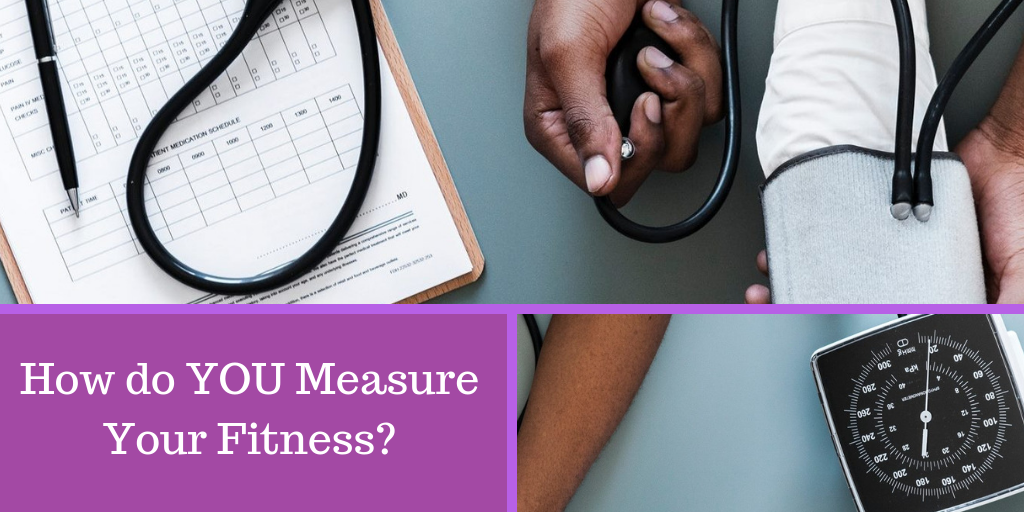
How do most women over 50 measure fit?

I am guessing that the first answer would be weight. Maybe stamina vs fatigue?

As women in 2018, we have the opportunity to access so much information, it can be overwhelming and obsessive. Those who know their numbers may point to BMI or A1c or VO2Max. Or waist size or blood pressure.

As I go deeper into focusing on fitness, strength and getting healthy, I’ve discovered that there are always new numbers and measurements to fine tune things.

When I first started running/walking/jogging in 2009, I wanted to know how long it took me to go one lap around the track, one mile and a 5K. Those became numbers I worked toward improving. I hadn’t even heard of VO2 Max and even now, that number is something that I associate with athletes who would be knowing and tracking their numbers.

During my years of going to Weight Watchers from 2007 to 2013, there were weekly weigh ins. During the week, I would be counting points that WW had assigned to various foods. After I reached my goal weight, I stopped counting the points and started focusing more instead on fiber grams, protein and looking at healthy omega fats. I became much more focused on counting the number of minutes I exercised each day.

I began to follow my resting heart rate numbers and maximum heart rate. I learned there are lots of ways to measure fit.

As my health improved, then I was looking into complex carbs vs simple carbs vs processed food. Is white wine really better than red wine (or just NO wine??) Fish vs chicken vs red meat vs beans and other legumes? I joined the nutrition club at my gym.

And the numbers started to become more refined as well. Blood draws to get much more accurate numbers than jumping on a scale in the morning.

For lipids, I’d used to just track only my total cholesterol number. Then it was tracking my HDL and LDL along with triglycerides. Next I was focusing on the particle sizes. For glucose, most of my tests included just one number. Now I’m more interested in A1c.

During this past year I began tracking my sleep — not just the number of hours that I sleep. (I used to count the hours I went to bed and got out of bed.) Now I have information about how long I have had deep sleep, REM, light sleep and awake hours.

Maybe I’m too obsessive about measuring my fitness, but at the same time, I find that tracking is a powerful tool for measuring improvement. It helps me to find out that what I am doing isn’t working or is working.

I’m curious about the other members of the Becoming Elli community. Do you follow your numbers? And if so, which ones and why?

Celebrating Milestones

Shout out to all the Fit, Strong Women Over 50
Today I’m celebrating milestones. Have you ever heard the saying “You are what you eat”? Or the saying “You are the average of the 5 people you surround yourself with.”? Perhaps you’ve seen this saying about “watching your thoughts” shown on the cover of this notebook?

* photo courtesy Amazon from the Motivational Journal Lover

I know that for me, whatever I put my attention and intention on, will pop up all around me. It is on my radar and I begin to really embrace it.

As we prepare to celebrate the first anniversary of Becoming Elli, I am reminded of this concept.

Celebrating Milestones
Depending on when and how you measure our official beginning, we’ve almost reached the first yearly milestone since our Becoming Elli website went live to the full internet.  It’s always fun to be celebrating milestones and going live is a big one!

It was about a year ago, when Jill McCauslin and I began forming the ideas for creating the Becoming Elli community as a website, podcast and private Facebook Group. Although we weren’t sure exactly what form it would take, we both knew we wanted it to focus on being fit and staying strong as we get older.

Jill and I both agreed that fit and strong are key qualities that we want to embrace in this endeavor and as we continue in the second half of our lives.

Creating Becoming Elli

Naming “it” was a bit of a challenge.

We also wanted to identify and combine the concepts of healthy living, being fit, and becoming strong with our “cohort.” While we wanted to identify our age group, we both felt that “Baby Boomers” wasn’t the right phrase. In the process of coming up with a name, we learned how many derogatory terms there are for “older” women.

Elli, the Norse Goddess of Old Age, seemed like the right fit for what we’re hoping to achieve because she was fit and strong.

The Becoming Elli website was developed during the fall of 2017. The first time I think we discussed it out loud with each other while we trained for the Akron half marathon, probably in late August. To start we began to write some blog posts and brainstorm about what to call it. We bought some podcasting gear and learned what it takes to put together plans for a podcast.

We wrote and published a few articles on the server before the website actually went public. Most of our early stories were about our 2017 races like the Cleveland Firecracker 10K, the Akron Half marathon and what we learned by training for it and running it.)

Our first podcast for “Fit Strong Women Over 50” took a while for us to figure out, record, find music, edit and launch. We switched hosting platforms shortly after the first one. It took a while to get it up and running. I think we’ll have an official milestone celebration of the podcast launch separately from the website launch.

Over all, what I think surprised and delighted me the very most, was the reaction, response and reception to the podcast by other women over 50! We found out we are on the right track!

Response from a listener of Becoming Elli Fit Strong Women over 50 - celebrating milestones

Some of the recent reviews on iTunes from our Becoming Elli Fit Strong Women Over 50 podcast.

During the past year of starting our podcast, I have learned so much through the podcasting process. It has been so interesting to interview personal trainers, exercise enthusiasts, nutrition experts, and so many women who are working to become and stay fit and strong as they navigate life’s ups and downs, and zigs and zags!

Building Community
During the past year we’ve also begun to build the community with our Facebook page and the private Facebook Group. This too has been a learning process with the ups and downs of using Facebook as a platform. We also started other social media platforms with Twitter, Instagram, YouTube and Pinterest. We’re still learning!

To me, “Becoming Elli” has been a great addition in my life.

It’s become more than a project, it’s a passion! I love the community and hearing from other women around the country and around the world. Through the Becoming Elli community, I find that I am learning more everyday about how to stay healthy, fit in exercise during busy times, eat right even when it’s difficult and develop mental resilience.

Today I am feeling full of gratitude. Celebrating milestones along the way is important. I especially want to make a point to say thanks to my friend Jill who is the co publisher of Becoming Elli. Believe me, without Jill this whole thing would still be a pipe dream.

And to all of our guests who have shared their stories on our website, in our podcasts and to the entire Becoming Elli Community: a very special THANK YOU to you too!!

(*affiliate link disclaimer: some links are to Amazon where a small portion of your purchase will help to offset costs associated with this website and podcast.)

« Older posts Newer posts »

© 2026

Theme by Anders Noren — Up ↑