Category: Fitness (Page 9 of 10)

Personal Trainer and Gym Owner – Brenda O’Hara – Becoming Elli Podcast #4

Podcast: Play in new window | Direct Download
Subscribe: Apple (iTunes) Podcasts |  Android-Google Play | Stitcher | Tunein | Spotify | RSS

Brenda started gymnastics when she was five years old and competed at a high level for 15 years. She decided to go into exercise as a profession when she was a junior in High School. With a major in exercise science, Brenda earned a Bachelors of Science degree from Kent State University.

Brenda holds the following certifications:

  • NASM (National Academy of Sports Medicine) Certified Personal Trainer
  • NASM Fitness Nutrition Specialist

She owns and operates Iron-Oak Fitness in Solon Ohio. Iron-Oak Fitness is a gym with daily challenging workouts.

Gym Owner – Brenda O’Hara In this podcast, Brenda explains the following to us:

1) Olympic LIfts (one rep max of a thruster, dead lift, power clean)
2) Endurance
3) Metabolic conditioning (cardio)
4) AMRAP (As Many Reps As Possible)

Most trainers will offer a free session. Brenda suggests that we ask them: why is this good for me? What muscle is working? Trainers should be able to answer your questions. Also, they should ask you if you have any past injuries so that they can develop a program to work around your injuries. They should follow up with you.

After a work our you should be sore (DOMS – delayed onset muscle soreness) where your muscles ache 24 hours after the workout, increasing around 48 hours but goes away after 72 hours.
If you have pain in your joints or only on one side or a sharp pain, that may be an injury, not muscle soreness.

Strength or Cardio? A combination is best with 2-3 days of full body strength conditioning and cardio workouts for 30-60 minutes on the days you are not strength training, with one rest day a week.

Brenda stresses being consistent. If you fall off your workout routine, just get back into it. If you only have 20 minutes, walk around the block.

Brenda suggests that you track your food in My Fitness Pal (a free app) for 2 weeks before making any changes. She suggests that her clients try to aim for 40% Protein, 30% Carbohydrates and 30% Fats as a starting point. Try this before adjusting. My Fitness Pal can easily show you the percentages when you track your food.

What should people do more of: “Take my advice.”


What should clients do less of: “Complain. I would never suggest to a client that they try something that they aren’t ready for.”

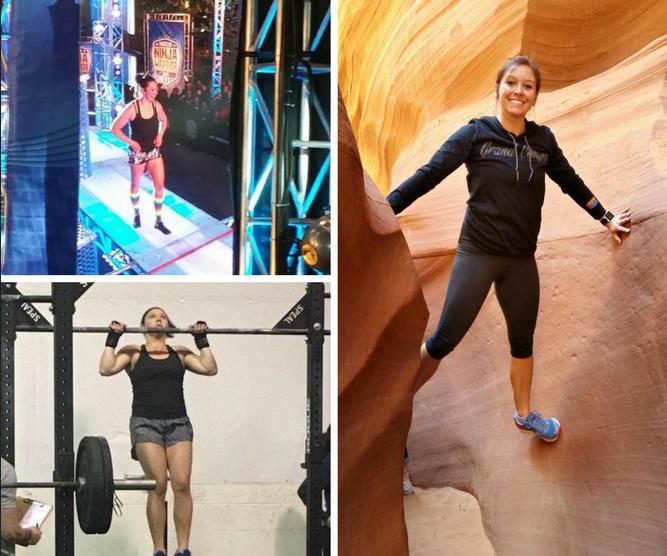
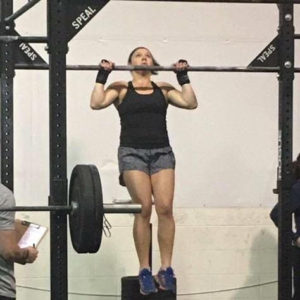
Brenda has also had experience competing in triathlons and Crossfit competitions and tried out for American Ninja Warrior. She decided to do an Ironman-length triathlon after reading Becoming an Ironman while pregnant with her second child.

To reach Gym Owner – Brenda O’Hara, visit Iron-Oak Fitness in Solon, Ohio.
Web: www.iron-oakfitness.com
Email: Brenda@Iron-OakFitness.com
www.facebook.com/Iron.Oak.Fit
www.instragram.com/ironoak.fitness
www.twitter.com/iron_oak_fit
www.pinterest.com/ironoakfitness
ironoakfit.tumblr.com/

Brenda O’Hara – Background

Education: BS Exercise Science, Kent State University
NASM Certified Personal Trainer
NASM Fitness Nutrition Specialist

Experience: 15 years competitive gymnastics.
10 years as a personal trainer including experience in a medically based facility and position as a metabolic specialist working with a variety of clients, metabolisms, different injuries, limitations, and goals

Vision: To help as many individuals as possible regardless of age, gender, goals and limitations. To help people have the best quality of living they’re capable of achieving.

We All Know a Stronger Core is Important for a Woman Over 50

Yeah, I know… And I’m pretty sure you know too. A stronger core is important. And it is especially important for a woman over 50!

When I first started working out, some instructors would talk about working abs, but others talked about the core. I thought it was the same thing for a long time.

Six pack abs is not something that I really had much of an interest in. However I suspected some of my back aches had something to do with weak stomach muscles. Actually stomach isn’t the right word, it’s not the right place. What I mean is the lower abdomen area, where I still had what I refer to as my “baby fat” (although those kids were well into college at that point!)

What exactly is the core?
Core actually refers to a large part of the body – not the legs and arms, but the glutes (butt), the pelvis, the abdomen, the lower back. I wouldn’t be surprised if it is nicknamed the “core” because is the main part of the body that everything else is attached to. When I think of an apple core, it’s the toughest part of the apple. Core is a foundation.

When I think about lifting a dumbbell weight, I realize that it is intended to work my arm, but I also have to be stabilized in the core to work those muscles. Skiing and biking works the legs, but having a strong core helps form and posture. This also helps with balance, to stay stable while skiing down the mountain or pedalling up a hill. Runners are often reminded to do cross training to strengthen their core muscles. There is no question that having strong glute muscles helps provide power when taking on a hill.

Why is toning the core so important?
Having a strong core isn’t just important for enjoying hiking, skiing, biking, running and a fun active lifestyle.

A stronger core means a stronger body and a better range of motion. It makes it possible to strengthen the rest of the body. Obviously, everything is connected. A stronger core means better balance, less likely to fall. A stronger core makes everyday tasks simpler. Just getting up from a chair, bringing in groceries, navigating an icy sidewalk all require balance and that means a stronger core.

Avoiding falls is top on everyone’s list. An unexpected fall can break bones, cause cuts and jar tendons, joints, ligaments and do unintended damage to a body! Do you know someone who suffered a fall recently? Maybe it was a slip on the ice, or missed a step? Tripped over a pet? Having a strong core gives you a better chance of not landing on the ground, staying stable, and keeping your balance when you’re knocked off kilter. We’ve all had a close call. A stronger core keeps us safe.

How can a strong core help reduce pain? I swear most of my back pain in my 40’s was from a weak core. Working your core helps to stretch and strengthen the lower back. One of the best ways to avoid back pain is to develop a strong core. (There are lots of causes and types of back pain, so consult a doctor and get the okay before you start any exercise program.)

Improving the muscles in your glutes and lower back helps to head off pain that comes from a strained back muscle when you tried to carry something too heavy.

Having a stronger core means having the strength when you need it. It gives you the strength to help move your body, but also basic things, like some boxes in the basement, furniture or groceries from the car into the house. We all know someone who tried to move something that seemed like an easy job, maybe something they had done when they were younger, but ended up straining a muscle or pulling something.

How to Start Strengthen the Core
You know your abilities. Don’t overdo it to try to get fit all in one day. Take it slow and begin with several exercises that you can master but also challenges you. If its been a while since you worked out*, you may want to start with some gentle yoga moves or seated exercises. If you’ve been working out and are ready to step things up for more challenge, progress slowly. Consistency over intensity!

We’re working with a personal trainer to pull together an exercise program to focus on developing a strong core and will make that available here at Becoming Elli in the future. But meanwhile, here are three basic exercises to get started.
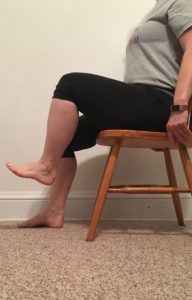
1) leg lifts – chair
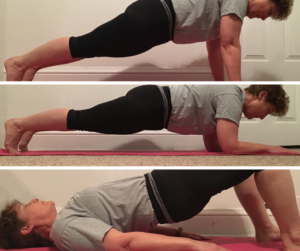
2) planks – high and low
3) bridge

Important to remember:
Start easy and build up. Plan to repeat over time, after you get strength increase intensity, but build up the time and repetitions over days and weeks. Don’t try to get strong all at once.

If it’s been ages since you worked out, start with chair leg lifts, then move on to more advanced core exercises. Check with your doctor.

Use good form. Trying to condition and strengthen your body while using bad form or the wrong form won’t achieve the results you want… and worse, bad form could lead to injury. Don’t try to hold a pose so long that you sacrifice good form. It’s better to do few reps and less time than it is to use bad form.

Consider taking a gentle yoga class.

Be careful not to have loose abs and glutes when you do these exercises. You need to tighten the belly and lower abs. Think “squeeze” to tighten those butt muscles.

Proper form is really important You don’t want to have your butt in the air during a plank. You need to tighten your glutes (butt) and your abs during the plank. Start with the easiest plank on your hands, then move to elbows. Make sure your body is straight. Engage your glutes and abs (tighten your butt and lower belly) hold it for 30 seconds. Relax. build up to 45 seconds, one minute, two minutes.

Get a picture of yourself doing a plank. I know I found it eye opening!

What’s your favorite exercise to strengthen your core? Do you have a story about how your stronger core saved the day with a close call? Share it below in the comments or send me an email!

*even if it hasn’t been a while since you worked out, check in with a professional before starting an exercise routine.

Training with Your Smart Phone– Fitness Apps

Today I’m thinking about fitness apps. In one of our recent podcasts, I made the comment that I like to be told what to do for my workouts. Sometimes I use a personal trainer to keep me on track. That’s not always an option and not everyone has the resources for hiring a trainer or doesn’t have a trainer close by. Of course, you can figure out something to do on your own but if you’re like me, and want that little bit of extra guidance, what do you do?

I realized this weekend that I have several apps on my phone that I use for workout routines so I thought I’d share some of them with you. Presumably, most of us have found different apps so please feel free to share the ones you like in the comments below. The ones that I’m listing are free though many of them have premium membership if you’re willing to pay a fee.

I’ve always used an Android phone so these apps are all available in the Google Play Store. I’m assuming most of them are also available for the iPhone.

Fitness AppsMixed Training

Fitbit Coach: This is part of the Fitbit family. It provides a wide range of workouts with instructions, including times and ratings of easy, medium, and hard. (I noticed some easy mediums and medium hards in there too.) Obviously, Fitbit is best known for counting steps but Fitbit Coach includes both strength and cardio workouts. There’s a lot of good advice in this one.

SparkPeople provides a lot of training videos and exercise routines. I tend to think of this site as more of a weight loss site but they provide exercises. SparkPeople does have an app so you’re not tied to a desktop.

Strength

7 Minute Workout:  This app is put out by Wahoo Fitness and is meant to be used with their heart rate equipment but you can download and use this app without any equipment. This is a basic full-body workout that can easily be done at home. If you have seven minutes, do this. If you have 14 minutes, do it twice.

Scientific 7 Minute Workout: This is the app that I believe New York Times promoted. This includes options to set the length of breaks between exercises. It also is a basic full-body workout. In fact, I think these two 7 minute workout apps have the exact same workout. You can check out both apps. I noticed that this one has a fair amount of advertising in it but also has a timer and the ability to set it to multiple rounds.

Stronglifts 5×5:  This app is a good option if you want to do the standard lifts. It is designed to do five main lifts in sets of five:

  • squat
  • deadlift
  • bench press
  • row
  • overhead press

This app asks you a few start up questions and then:

  •  tells you what to do
  • suggests the weight to use
  • provides instructions on how to do the lifts
  • tracks your workouts too
  • recommends you when to increase the weight.

JEFIT: This app has a wider range of workouts than the 5×5. The beginner routine follows a traditional weight lifting schedule of days divided into:

  • chest and triceps
  • back, biceps, and forearm
  • shoulders and legs
  • abs

This app tracks what you do and provides instructions on how to do the lifts.  You can find workouts of increasing difficulty. I think this is an excellent choice for those us looking for something to use in the gym.

Fitness Apps

Running

Get Running is a couch to 5K type app published by Splendid Things. I used this app to learn how to run. It really worked even though I had to repeat weeks sometimes because I wasn’t ready to progress. So, instead of taking 12 weeks, it probably took me closer to 18 weeks to run for 30 minutes straight. I love the woman’s voice on this: she has a charming British accent and is enthusiastic without being mushy. She also doesn’t speak all the time. As the runs get longer, you hear her less often. I keep this app because I find it useful now for running intervals. Plus I just like her voice.

RunKeeper tracks your runs but also includes training programs that you can access from your phone. You can select different distances that you’re training for and get a plan.

Map My Run lets you (you guessed it!) map your run. You can track your runs and get feedback on your performance.

Strava lets you track bike rides and running. It also provides a social media service; you can see your friends’ workouts and update your own via your Fitbit, Apple Watch, Garmin, or other sports watch.

This is a pretty good sized list and now that I’ve made it, I begin to understand why the guy at the phone store once called me the Queen of Apps. However, I suspect my list is a drop in the bucket, so feel free to share the apps that you like. These are great ways to track your performance and get lots of support, regardless of your sport.


Less than 100 Days to Go – Weekly Wrap Up

This week I got more serious about my training program for preparing to run the Cleveland half marathon on May 20th. Something about seeing less than 100 days on the count down clock makes me realize I better get on the bus, my rear in gear and work the plan!

My week, of course, did not exactly follow the plan, but I managed to get in some strength, conditioning, stretching and running in this week.

– Monday – got a good hour of spinning for cross training. Great music and heavy hills (resistance on the knob.)

– Tuesday – too much desk time. This resulted in a very satisfying yoga workout (via youtube videos) as well as important balance work. I specifically work on my ankles and calves to help with my reoccurring Achilles tendonitis.

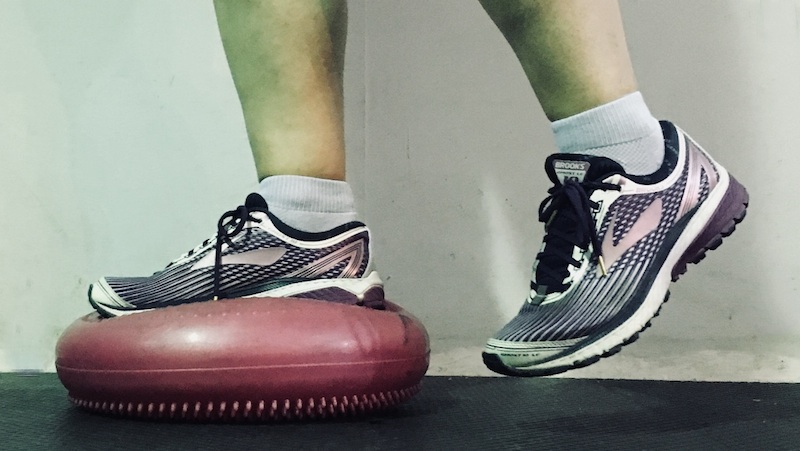
– Wednesday – up early (4:30 am.) Busy circumstances required that I only got 10 or 15 minutes cardio at a time. Taking the stairs is my “go to” on a day like this and it always gets the heart pounding – 7 flights, three separate times, plus a fast 500 steps to the parking deck twice. Glad I wore my Brooks Ghost shoes.

– Thursday – Rest day with only 38 active minutes and almost 8,000 steps spread out pretty evenly during the day. I think the 8 floors of stairs were a just a result of catching up on laundry.

– Friday – 30 minutes of spinning and 30 minutes of body weight workout (burpees, side planks, side lunge, squats, hold the squat, v-ups, triceps)

– Saturday – walk/run the indoor track for 30 minutes, then 10 minutes on the treadmill and 45 minutes of full body (core, arms and legs) sitting, bouncing and “dancing” on an inflatable exercise ball to peppy music. I know that going to the grocery store when you’re starving is never a good idea, so I was glad I brought some protein powder with me to mix in my water to hold off the hunger pangs.

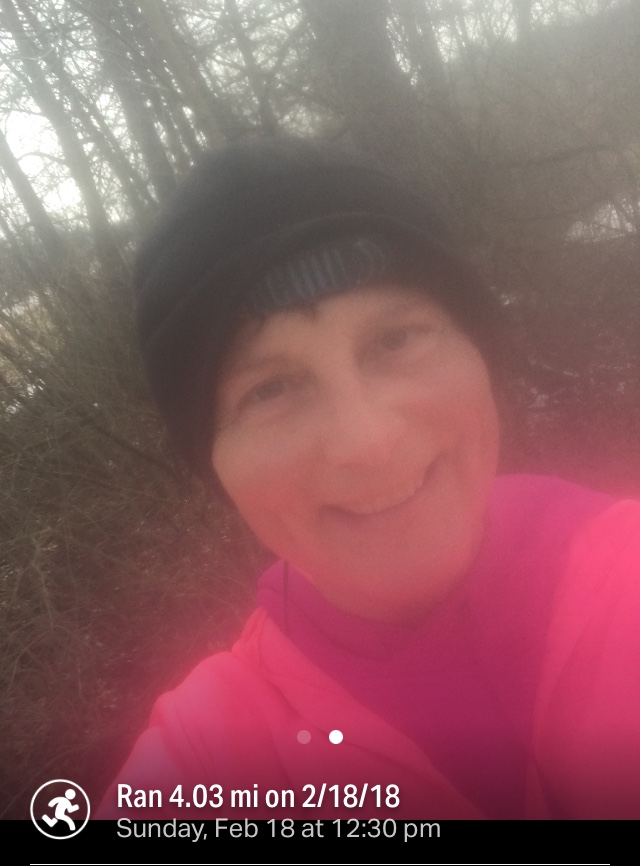
– Sunday – Beautiful spring like weather in Ohio means outside I go! That’s what I’m talking about!! I got in 4 miles with an easy, steady pace. It was a great run and I felt I could have done double the distance, but I know I’ve got to build the distance over several weeks! The photo looked a bit wet, because my phone got fogged up from me sweating – I sweat no matter what the temperature!

– BONUS: Sunday night Jill and I recorded an awesome podcast with a powerful woman who is a personal trainer and gym owner. Check back later for the release in Becoming Elli – fit, strong women over 50 – podcast #4.

Are you training for a goal in less than 100 days? Let us know how you’re doing on your quest to become more like Elli – fit and strong. Leave a message in the comments.

Reducing Painful Achilles Tendonitis Episodes

Ankle strengthening helps avoid my Achilles TendonitisI have to be careful about Achilles Tendonitis. Some people call it Achilles Heel.

In 2006 I walked around the local Girl Scout camp all weekend in mud boots. Without a support lining! High arches and too much weight turned a bonding experience with my daughter and her troop into a long painful education about a tendon called Achilles. What is Achilles Tendonitis? If you’ve never heard of it, you probably haven’t had a problem with it. The Achilles Tendon connects the calf muscles to the bone on the heel. The “itis” part means chronically inflamed. It can be painful, at least that has been my experience.

During that year, it got pretty bad, to the point I didn’t want to stand up and walk across the room. When I would first wake up, it hurt. During the night, it would stiffen. Even now during sleep my toes tend to relax and point out, so when I step out of bed, my heel lands on the floor, stretching the tendon and pulling it. I gained a lot of weight that year and ended up going to a sports doctor, who sent me to physical therapy. That helped quite a bit. Twelve sessions of various exercises and treatments got me moving again.

Then, about a year later when I was consulting my family doctor for a sinus infection, he noticed I was limping. So, he sent me to another round of therapy, which greatly improved it. Five years later, Achilles Tendonitis started coming back again. I got myself to a Sport Chiropractic doctor who treated it before things got bad and gave me a series of exercises to do consistently at home, which has really helped.

What causes Achilles Tendonitis?

For me, it’s a combination of things. Some things I can do to improve the situation. Other things I’m stuck with.

    • Too much weight – Having to carry around extra pounds makes it hard on all my joints, tendons and ligaments. I guess that is no surprise to anyone.
    • High arches – Can’t change genetics.
    • Tight calves – Bouncing on my toes tends to tighten my calf muscle. It’s like I can almost feel it tighten with each up and down. My calf muscle gets tight which in turn pulls too hard on my tendon. I avoid the bouncing step moves in Zumba and don’t do a regular jump rope jumping where you take off from your toes and land again on toes. I tend to take off and land on one foot at a time instead of both toes each time.

I prefer prevention to treatment. Strengthening my ankles in particular, really seems to help. Conditioning helps the little muscles in my feet.

What works for me to combat my Achilles Tendonitis?

I do a variety of things to keep it at bay. I do other things when I have a flair up. This is what works for me:

    • Balance exercise – I start by standing on one foot on the floor. Then swing my leg. Progress to a pillow. Without my shoe. Then a stability cushion. And a bosu ball. I stand next to a chair or wall to catch myself. Building strength in those little muscles in my feet has made a huge difference. It also has helped me not to take a spill on the ice during the winter and helps me catch myself when one of our cats affectionately tries its very best to trip me in the morning!
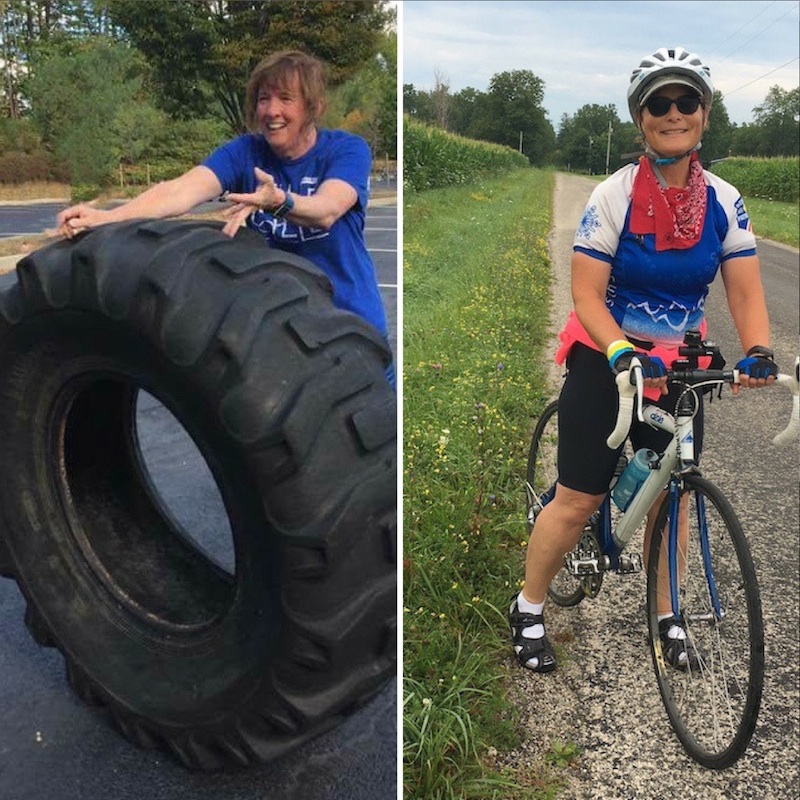
    • Massage – a good sports massage helps to attack that one calf muscle that still tends to get too tight. I also do a self massage with a tennis ball or lacrosse ball and a roller on the calf muscle which helps to release the tightness and not lead to that constant pull on my Achilles.
    • Stretching – After a workout when my body is limber, I slowly lower my heels while standing on a step, and then raise back up to lower again (only when my Achilles tendon is healthy, not when it is sore and swollen.) There is an old Swedish study which followed two groups. The group that did this exercise improved. The other group not so much.
    • Physical Therapy – when it gets bad, I’ll go to my doctor and have had a series of things: ultrasound, Graston technique (painful but works) and an inflatable massaging boot. Plus exercises to do at home.
    • Strengthening – I’ve found that consistent strength and conditioning – my ankles, my glutes and my core – really seems to improve my luck with my Achilles tendon. I like to use the stability cushion; it helps to strengthen my ankles.
    • Shoes – I use inserts in most of my shoes, especially the mud boots. I have a pair of expensive insoles designed for ski boots always in my mud boots. I use SuperFeet insoles in my running shoes. I do NOT wear flip flops because there is zero support and the chance of tripping and pulling tendon/muscle/ligament etc. is huge with flip flops and me. I buy good supporting shoes over cute shoes. And I am very picky about sandals.
    • Warm Up – before doing anything, especially running, walking, hiking, working out in general, I try to do a dynamic warm up of mild stretching to get some blood flowing to the calves and massage my tendons.
    • Ice/heat – after a long run, I put a bag of frozen peas under my tendon and prop my leg up. Just for a short time. Then I move my ankle around, and alternate ice with a warm rice bag. The idea of the ice is to reduce swelling. The warm rice bag helps with blood flow.
    • Tape – (update) I’ve had some success with using kinesiology tape and have tried different patterns around my ankle.

I use a variety of tools including the foam roller, pillow, stability cushion, bosu ball, lacrosse ball/tennis ball and stair steps with a railing. These tools are all part of my on-going effort to strengthen the tendons and ligaments.

How about you? Do you deal with Achilles issues? Have a suggestion on how to strengthen, stretch or otherwise manage this tendon? Please let me know by leaving a message below in the comments!


Disclaimer: I am not a doctor or an expert on Achilles Tendonitis. I am just sharing my experiences with treating it and avoiding it. Consult your doctor or physical therapist.


Turning 50 and Getting Fit – Becoming Elli Podcast Episode 3

Turning 50 and getting fit

Podcast: Play in new window
Subscribe: Apple (iTunes) Podcasts |  Android – Google Play | Stitcher | Tunein | Spotify | RSS


In episode 3 of the Becoming Elli Podcast, Jill and Chris discuss how they lost weight, got into working out and what they did when they started. They explore a variety of topics about getting stronger and fit as well as what worked for them and what they learned to avoid.

Turning 50 and Getting Fit – Discussion topics:

  • Starting regular exercise after losing weight
  • Using weights
  • Using personal trainers
  • Staying motivated
  • Class exercises
  • Bike riding outside
  • Achilles heel injury
  • How work out plans are like a recipe
  • Weight and losing it
  • Weight Watchers
  • Community
  • Avoiding cookies and trigger foods
  • Regular food
  • Weight maintenance

Helpful Tips:
How to maintain healthy food diet while having fun with friends.

Please leave a comment below about the podcast to let us know your thoughts. Is there one of the topics we mentioned that you’d like to explore further? Do you agree (or disagree) with the thoughts we shared? Let us know!

Maintaining Weight Loss – Consistency Over Intensity

During the winter months, it can be difficult to stay the course for maintaining weight loss. Long dark nights. Cold blustery weather.

We are almost six weeks into New Year’s Resolutions and I find that I need a reminder about what I promised myself.

Maintaining weight loss. Developing muscle strength. Cultivating good eating habits.

Already this year I’ve not been to the gym on a regular basis as much as I intended. Maybe two days a week instead of my usual four or five.

Generally I go skiing down the slopes at a nearby resort during the winter months. This year I haven’t been outside as much as I’ve wanted to, partly due to sub freezing weather the early part of January. Then I’ve also been dealing with an unexpected schedule, requiring me to be out of town and away from home. Consistent eating habits are more of a challenge when I’m away.

I am reminded that fitness is not a race. The ocean smooths large rocks into tiny grains of sand by consistently waves washing in and out.

My big goal this year is to stay consistent with exercise and healthy eating habits. I know that this will help me with maintaining my weight loss.

Consistency Over Intensity

For 2018, I’ve picked a phrase that I want to focus on: Consistency Over Intensity. It kinda follows that mantra of many marathon runners – just put one foot in front of the other.

I think about this when I push snow around on the driveway. Shoveling some snow has helped me get steps when I really hadn’t expected to get some. I talked about that in our recent podcast episode 2. When my son was in high school, it became his job to shovel the snow on the walks and the drive. When he went away to college I returned to snow removal duties. The result was one of the rude reminders of being out of shape. By consistently getting my steps, challenging myself and going to the gym to get exercise, I’m now able to easily spend 30 minutes clearing the snow, without any problem.

I was reminded of consistency over intensity when I read a post in Weighty Matters from a Canadian doctor who writes about the food industry. “And I tell people, day in and day out, that if they’re curious about how they’re doing, the answer to that question isn’t how much they weigh, how much they’ve lost, how their clothing fits, how they feel physically, or how they feel mentally. Rather I tell them that if they want to know how they’re doing, they have to reflect on what they’re actually doing…”

Going skiing is fun. It requires a lot of gear. Fitting into those same pair of ski pants is one indication that I’m maintaining my weight loss.

We all know it is so important to stay mobile, flexible, strong and fit. Lately I have been especially reminded of that when I’ve had recent unexpected challenges of caring for a relative. By keeping myself healthy, fit and strong, I’m able to be there to help others.

Having a “go-to” exercise routine helps replace that dragged out feeling of tiredness with the powerful feel good hormones that are released after exercising – dopamine and endorphins. This keeps me coming back for more.

Being more fit and strong just feels good. It allows me to do things that I find really difficult. I guess that’s called a feeling of self-confidence, but it’s not exactly that.

Consistent change = Positive Progress

I find that too much intensity leaves me feeling a bit overwhelmed. All or nothing dieting. Over the top exercise. Too many rules and changes. I simply won’t stick with it if the plan is too drastic. I need to stay the course. Keep on keeping on.

Sometimes consistency feels boring. I’m tempted to switch out with something “not so good.” Just this once. Special occasion. (Why does it sometimes seem that there is a special occasion more often than a regular day?) Birthdays, holidays, happy times, sad times. Friday night TGIF. Sunday Funday. Stressed-out-Monday. It’s easy to make exceptions, isn’t it?

I know in my heart that consistency is the key to maintaining a weight loss. Intensity comes and goes. Heck, I know that too much intensity can easily lead to injury. And if I’m not consistent with my recovery strategies I can end up having a problem.

Motivation wanes. Huge goals overwhelm, but I know when I have a good step-by-step plan, that I can do consistently, I can reach goals that I never thought possible. For instance, back 10 years ago, I never would have dreamed that I could have run a half marathon or bike 150 mile in a weekend.

I’ve come to realize that the way to make it work is to get a good plan and work it.

At one point I liked the phrase “when the going gets tough, the tough get going.” I helped me to dig in, knuckle down and do something I was struggling with. I’m not exactly sure when my brain started completing that saying with my own “yeah, right out the door!” Some how the cynical side of my self talk popped in. It probably when was I was digging too deep, white knuckling too hard and finding that my consistency was replaced with too much intensity.

I have several strategies (or maybe they are actually tactics) for maintaining weight loss that have worked pretty well for me in the six plus years that I’ve managed to keep the weight off. And since I’ve become an exercise lover (athlete?) I’ve found that recovery and pacing are part of my training too. I’m working on an article to share with you in the future. More about that at another time.

Now it’s your turn. Tell me:

  • What do you do consistently to help you to get fit and strong? Or stay fit and strong? Are you working on your New Years Resolution consistently?
  • What is your motivation for maintaining weight loss?
  • Remember that song “Keep on Keeping On”? What phrase or mantra is in your head that you repeat over to yourself?

Ten Ways to Avoid the Gym

So, let’s say your idea of fun is not going to the gym and working out but you know you need to get some exercise to stay healthy. How do you avoid gym? Whether it’s because you don’t have a gym nearby, you don’t want to spend the money on gym membership, or you just don’t like gyms, you still need to get some exercise, right? We all know that fitness depends on moving our bodies. What should you do? I have some ideas to share.

  1. Get a Fitbit and count your steps. We all hear this, get 10,000 steps a day. Well, get a Fitbit or some other step counter (pedometer, Apple Watch, Garmin watch) and see how many steps you get in a day. I was shocked when I first started to track my steps. Working in an office was not conducive to walking. If you’re only walking 2,000 to 3,000 steps a day, you probably shouldn’t make your first goal 10,000 steps. Instead, add 1,000 steps to what you walk normally and see if you can get that. Continue to bump up your goal until you get to the level you want and can meet it frequently.I adjust my goal for steps depending on what’s going on in my life. These days, I try not to lower my goal below 10,000 steps but if I’m in a period where I can walk a lot, I’ll bump my goal up. Then, if I know that I’m entering a period where just getting the 10,000 steps is a challenge, I’ll reset my goal.
    The important thing to remember is that you get to control those goals.

    Dog on hiking trail. Avoid gym

    Nunu on a hike.

  2. Continuing with the walking theme, join a hiking club and get in some lengthy walks and enjoy nature. This can be an excellent way to meet people and to enjoy some exercise without having to really think about it being exercise. If you have a dog who likes to walk, take him along with you. Dogs make great hiking companions.
  3. There are other kinds of clubs you can join. There are biking clubs and skiing clubs. All of these are a great way to combine social activities with fitness. Ride your bike, go skiing, do whatever appeals to you and that you can find a club. I just recently learned of a mountain climbing club near me. I’m in Ohio and there’s not a lot of mountain climbing here but it turns out, this group meets at a local wilderness supply store and uses their climbing wall.
  4. Think about the things that you enjoyed as a kid or teenager. If you loved playing sports, look for some adult leagues for baseball or softball, basketball, soccer, or touch football. Many recreation departments in different towns offer sport activities for adults. If you think you want to do this, check out the team and make sure that they play at the level you’re looking for. Don’t forget bowling. The last time I went bowling, I was shocked at how much I had to use my arms. That’s a serious arm workout.
  5. Maybe you loved dance as a kid. If so, many dance studios and rec departments offer dance classes for adults. You can find all types of dance available to you. Whether it’s ballet, tap, or ballroom dancing, put on your dancing shoes and enjoy!

    Three women dancing

    Dance

  6. Don’t forget sports such as golf and tennis. These can be great ways to get fit. Look for local leagues to join.
  7. Check out yoga studios or yoga classes offered through rec departments or churches. You’ll often find places that offer yoga classes that are reasonably priced and set up for those of us who are as flexible as we once were. A lot of barre places have opened. These are a combination of ballet, yoga, and Pilates and uses a ballet barre for balance. This might be a good option for you.
  8. In the same vein, Jazzercise classes or similar types of classes are offered in a variety of locations. This might be a good solution to doing something without having to join a gym. I just recently saw a place that is offering a class called Blessercise. It’s a religious based fitness class and was housed in a small retail area. You just pay by the class or pay for a monthly membership.
  9. Let’s not forget the favorites of running and bicycling. Neither require a membership to anything and you can do both without a lot of preparation. A good pair of running shoes is the minimum requirement for running and a bike and helmet works for bicycling.

    Chris Running

    Chris Running

  10. If you really want to just do a workout in the comfort of your home, check out what’s available online for help. Many women enjoy Leslie Sansone. You can buy a DVD or borrow one from your local library or check her out on YouTube. You can get some exercise equipment to use at home. Many people enjoy rebounders at home. Rebounders are like mini-trampolines. Others like to have some dumb bells at home for workouts. Don’t forget simple things like jump ropes. You can invest more money and get a treadmill or elliptical or even a Pilates Reformer machine. If you don’t want to invest in any equipment, do body weight exercises like pushups, lunges, and squats.

    Jump rope to avoid gym

    Jump rope


I’m sure there are lots of ways that I’ve not thought of to get exercise without joining a gym. Feel free to share what you do. We all need help on our way to becoming like Elli.

Who Thought Up Swimming as a Sport?

It was 2o F this morning so what did I decide to do? Go swimming! I’m signing up for an indoor triathlon at my gym. It’s held in early March. The race is swim for 10 minutes, bicycle for 25 minutes and run for 20 minutes. Everything is done in the gym, so the run is on a treadmill and the bicycle is a bike used for spinning classes. For me, the order of ease with this is running, bicycling, and dragging up the rear is swimming. I know I can run for 20 minutes. I can ride the bicycle for 25 minutes though probably not very fast. The swimming is a problem.

Initially I thought, swim for ten minutes? How hard could that be? Turns out, a lot harder than I first thought.

I go to the pool at my gym and I’m always amazed at the people who effortlessly swim laps. When I swim, I swim one length, catch my breath, swim back and rest. I’m not sure I understand why swimming is so difficult for me. I obviously have the respiratory capacity and am physically able to swim. There’s something about the breathing that challenges me.

Swimming as a Sport

I’ve not been a swimmer since I was a kid. I remember those Saturday morning swimming lessons I took. I’d like to go back to my instructors and thank them for teaching me something that I can still remember.

I break out the kick boards and use them to practice kicking. It’s a good break from swimming up and down the pool. I guess I just need to practice more and eventually I’ll get better.

swimming as a sport, Flippers, goggles, and swimcap

Swimming Accessories

Since every sport I take up seems to require special accessories and clothing, I now own goggles, a swim cap, and mini flippers. I have a couple of old bathing suits that fit me. I think I’d like to get a new workout bathing suit. I’m not sure what exactly that would be but I’m sure if I start shopping, I’d find something.

I see people using aquatic headphones and feel that itch to go buy another accessory but I’m not sure that I want to listen to music or podcasts while I swim. I suspect if I ever get to the point where I can swim without feeling like I need to stop to breath that it could become a great meditative exercise.

Here’s my thoughts on swimming:

  • It’s easy on the joints and it really doesn’t require much in the way of equipment.
  • I can do it at my own pace because, let’s face it, there’s plenty of better swimmers and there’s some who are worse. Doesn’t matter because we can all just grab a lane and go for it.
  • It’s a good whole-body workout. It works the abs, hips, legs, shoulders, back, and arms but it doesn’t overwork them. It’s not like going into the weight room and lifting heavy weights. It’s easier on the body than running because you don’t have that pounding on the ground.
  • The biggest problem for me, and I know that this is silly, is that I must wear a bathing suit, I have to get wet, and then I’m usually cold when I return to the locker room.

Because I’m going to do the triathlon (indoors, mind you!), I’ll keep practicing my swimming. I’d like to be able to swim for 10 minutes without constantly stopping. I’ll keep everyone posted on how my training and that race goes.

What is Really Great about Indoor Cycling

I really like doing indoor cycling. The bikes at my gym are the Spinning(r) brand. I remember the very first time I got pulled into the class when I was walking the track at the gym and trying to get fit.  It was Nov. or Dec. of 2010 and a friend of mine was already riding in the room. I was very tentative at the beginning. It was a big deal for me to enter the room with all the bikes. They showed my how to set up the Spinning bike to fit me with 3 different adjustments. (handlebars, seat height and seat forward/back.)

Spinning water bottle with Nashbar bike sandles.

Over time I built up my knowledge base of what the spinning instructor mean when they would say things like “out to 3” or “jumps” or “turn… turn… turn… now off… off… off”. After a few classes, it became familiar and I learned what I could do. I bought the equipment (padded shorts, a water bottle that fits in the bike holder and bike shoes with cleats.) Spinning was the gateway class to get me outside riding on my bike.

By March 2011, I signed up for my first big outdoor ride commitment for August and began to “train” for it. I’ll write about that another time.

Now the Spinning classes have become a staple in my exercise program – especially in the winter when it’s uncomfortable (dark:30, ice and frozen degrees) to ride outside. I like to take classes in the morning twice a week.

On the mornings when I need more sleep, I snooze the alarm and do a class in the evening instead.

Things I really enjoy about this indoor cycling morning class:

  • Great music – slow, fast, familiar, unusual, bluesy, funk, heavy rock – it’s all mixed in together and it’s different just about every ride.
  • Experienced instructor – he cues things 10 seconds before they happen, matches the ride to the music, and rides hard – It’s always difficult to keep up with every “TURN!”
  • It is even better after the first 8 minutes. At that point it feels like my blood vessels are dilated, I’m breathing hard and my muscles are warming up. Before that I feel like my blood flow is tight and its a big effort until my body gets used to it. For me, it is 8 minutes… sometimes six. I didn’t know that until after I got past the beginning of exercising and would give up too soon.
  • Being able to close my eyes and not worry about watching for cars, other bikes or squirrels running across the path makes it somewhat relaxing. I like the dark room.
  • I like not worrying about my balance, I can close my eyes and daydream… almost meditate.
  • Pulling up with the cleats of my shoes clipped in and pushing down on the pedals, trying to make an even circle. It feels like it activates 2 different muscle groups, so I feel I’m getting a better all round workout.
  • I like it when we go fast (sprint!) as well as jumps, running and out to third (standing up with hands at the top of the handlebars)
  • The seat padding combined with the pad in my bike pants make any seat chafing/pain a total non issue. This used to be a concern for me before I got the right equipment.
  • Bike Position – the handle bars up high (at the 10), the seat fairly low (E for my short legs), and the seat back far enough (3.5 for me) that I have my feet underneath of me when I’m in the saddle.
  • Position in the room – not too close to the fans, but not too far. Near the back so the music is not too loud, but I can still hear the instructor.
  • Having a towel for all my sweat, and always one, but sometimes two, water bottles.
  • During the warm up, we loosen up the upper body: neck, shoulders, biceps, wrists, and back. Dynamic stretching for about 4 minutes.
  • At the end, we stretch for another few minutes: calves, hip flexors, quads, glutes, and hamstrings. Two big deep breaths in and out.
  • Burning between 450 and 500 calories. (AWESOME!)
  • Feeling the endorphin feeling kicking in during the stretch.
  • I walk the track another 12-15 minutes to get another 100 calories and stop sweating.
  • By 7 am I’m on my way home from the gym, looking forward to breakfast and already have my exercise done for the day

The evening classes are great too, with many of the same advantages. However I’m a morning bird (a lark?) so the morning exercise appeals to me more.

Years ago, it took encouragement from a friend to get me into the class. Now I like to repay the favor by inviting others to try it and pay it forward!

Let me know if you’ve tried an indoor cycling class by leaving a comment below.

« Older posts Newer posts »

© 2026

Theme by Anders Noren — Up ↑