Category: Building Muscle (Page 3 of 3)

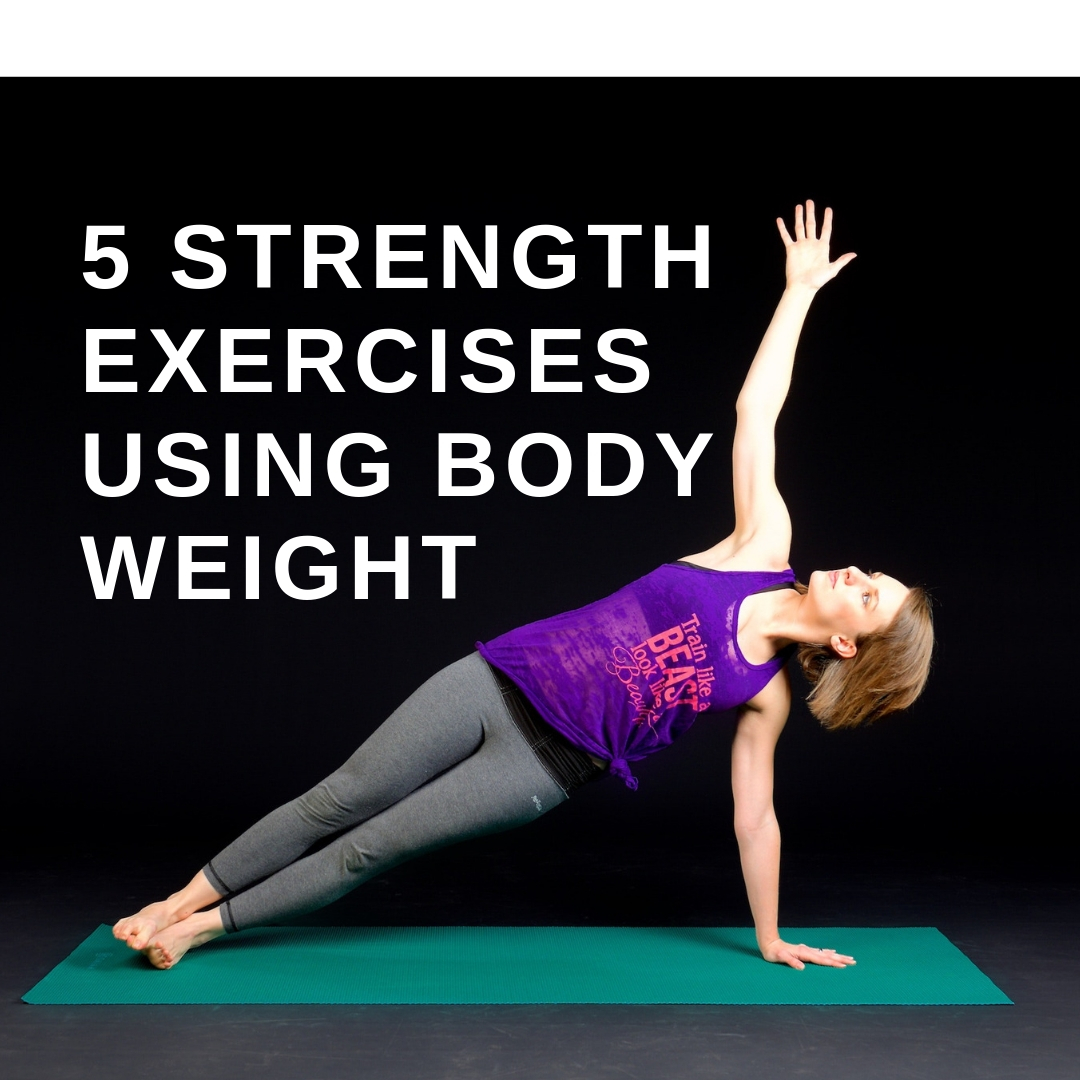
Five Strength Building Body Weight Exercises for Women Over 50

I have been trying to focus on building a strength exercises in my workout routine.

We know that as we get older, the body naturally loses muscle tone, so my strength routine is an attempt to keep my muscles toned and functioning correctly. For whatever reason, I find it much easier to go to walking, running and cycling which are more cardio based.

I like strength exercises that use weights, but sometimes just using body weight is enough of a challenge. Because I am looking for more endurance and resiliency, I tend to really love strength work outs.

Keep Good Form with Bodyweight Exercise
As with all exercises, form is critical to making it work your body and not to injure yourself. When learning these, it’s good to use a mirror to check and make sure form is good. (Always check with your doctor if you are new to exercise or aren’t sure these are good for your body’s situation, like if you’ve had a previous injury.)

Sometimes I like to do variations to mix it up. It helps me from feeling bored. But other times I prefer to time myself to hold the position for a longer time before moving on to the next exercise. If some of these seem too easy to you, try a different one. If you find you can only do them for just a few seconds, over time, as your strength builds up, you will find you can hold the position for a longer time.

Here are five exercises that seem simple because they are holding your body weight. Each one has modifications to make it less or more challenging.

  1. Bridge – One Leg Bridge – Marching Bridge
  2. Plank – Elbow Plank – Straight Arm Plank – Up Down Plank – Side Plank – Toe Touch Side Plank
  3. Cat/Cow – Bird Dog on Knees – Bird Dog on Toes – Bird Dog with Elbow Crunch
  4. Wall Sit – One Leg Wall Sit
  5. Calf Raise – Single Leg Calf Raise – Calf Raise and Hold – Single Leg Calf Raise and Hold

Most of these body weight strength exercises listed above are isometric, meaning you hold your body in a position.

Advantages of Isometric Strength Exercises
Isometric strength exercise helps build stamina. Another advantage is that these types of exercises are easier if you have arthritis or ligament injury. And you don’t need any equipment. You can do them almost anywhere when you have a few minutes.

Although these exercises won’t help you build speed, they really do help with strength and endurance. It is so important to add strength to an exercise routine for women over 50 to keep fit and active.

Do you have a routine of body weight exercises that you do regularly? Which one are your favorites? Which exercises would you rather skip? Let us know by leaving a comment below.

Developing Core Strength

Winter is strength building time and to me, that means working on core strength. This is particularly important to women over 50 who want to improve balance, reduce injuries and build a base.

I became more familiar with this concept a few years ago when I had an angry piriformis muscle. Until that happened I had never heard of that little muscle that runs overtop of the sciatic nerve in the glutes. The piriformis muscle helps to make your foot rotate out to the side.

If you overwork that little piriformis muscle by having it do the work that your three glutes should be doing, it may become inflamed. Weak hips or weak glutes mucles were responsible for my problem. These muscles are the gluteus maximus, gluteus medius and gluteus minimus — more commonly known as the butt muscles.

Piriformis pain is more commonly known as a pain in the a$$.

It happened a few years back I was working on a big project for a client and put way too many hours in front of the computer (without getting up each hour to stretch, walk around and reactivate my glutes.) I also got a bad cold/flu and was on the couch for several days in a row which nailed it.

I was also working out, but too much intensity and not enough consistency, which is a recipe for injury. Because the piriformis lies right on the sciatica nerve, the pain radiated all the way down to my ankle and it hurt to sit, walk, even reach into the cupboard for a coffee cup. Nasty!

As with many injuries, the first step fpr recovery was RICE. (Rest. Ice. Compression. Elevate.) I had to take time off from working out to let the irritated muscle heal before even starting to exercise again. I worked with a massage therapist, a personal trainer, and a chiropractor to get my glutes back into working order again. (Disclaimer: *If you have pain, consult a professional! I am sharing my story but am not a physical therapist or doctor. Pain indicates a problem!)

They told me, I had to train my glutes to “fire” instead of the piriformis.

Anyway, after my pain died down, I began each morning with a cup of coffee and pulling out my foam roller. I roll my glutes on my foam roller, loosing up the fascia so that it helps the right muscles fire when needed. I learned about how important it is to have a strong core when you are a woman over 50.

I used to think of strengthening my core with crunches or sit ups, but after my piriformis problem, I found that hips, glutes, abdomen, chest, back and basically the whole torso plays into the core.

Here is the list of glute strengthening exercises that I am currently doing to strengthen my core:

  • Single leg squat (I hold something to the side to help with balance.)
  • Single leg dead lift (not all the way to the floor, I do this one slowly and touch something for balance as needed)
  • 3-way thigh band (standing on one leg, lifting the other leg to the front, then side, then back)
  • Lunge (This helps to stretch the psoas muscle deep inside the core, which tends to shrink up when I sit too long working in my computer chair)
  • Side raise (down on a yoga mat. Side plank after I get stronger)
  • Hip hike (seems so easy until you do a few! You need a step for the stationary foot)

Runners World had this routine for hip strengtheners and I found this routine while reading the book “Injury Prevention and Recovery” (*affiliate link) while working to improve my right ankle Achilles problem. I particularly like this online version because it links to online videos so you can watch the exercise being demonstrated. The book has lots of recovery exercises and advice for many common runner injuries. (Only 11% of all running injuries are Achilles Tendinitis.)

(The Achilles gets pulled because the calf is too tight, the calf is too tight because it’s doing too much of the hips’ work – as evidenced by hip drop while running and my piriformis pain.)

Hopefully as you begin your 2019 new years goals and action plan, you don’t overdo it and end up working on recovery and PT exercises. Let me know what you think of this core routine!

8 Reasons Why I Should Love Pushups

I shouldn’t start out saying I hate pushups… but that is pretty much the truth.  Whether you spell it push-up, pushup, push up or even press-up – they all mean a real upper body challenge to me!

Arm strength has never been my thing. Pushups are great it that you don’t need any equipment to do them. Pushups are a “real” exercise. My arms feel like jello after doing them. I’m still struggling to do good form pushups and often complete the round on my knees.

I’d love to be able to do something like 25, from the TRX. I can do four, when I’m fresh and really feeling strong.

More often than not, I’m struggling to keep good form. I don’t want to have to go to my knees in order to keep my body straight. I also find I want to bend my neck instead of looking slightly forward. Good form, which is important for all exercises, is really important with pushups.

Love Pushups

Photo credit – Form – via Unsplash.

I know I need to LOVE pushups. Why?

Here are some of the benefits of doing pushups:

  1. I want to be strong. Carrying groceries, lifting boxes, putting a suitcase in the overhead bin – I don’t want to ask for help. Being strong is good.
  2. Good upper body strength will help to catch me if I start fall or help me get up off the floor (after getting worn out trying to do pushups – ha ha!)
  3. Pushups work my core. Each pushup has a bit of the plank in it. Its one of the most basic exercises.
  4. Pushups definitely make stronger shoulders. That’s a good thing for me after a skiing crash on my left shoulder in 2015 that still bothers me when I’m sleeping from time to time.
  5. They help with posture, because pushups work the shoulders, the back and the chest.
  6. Pushups improve balance – very important for bike riding. (I didn’t realize this until I read about it this morning. It must be the core.)
  7. Because they are so hard I feel like they have to be good. Maybe it is because I feel so accomplished after I actually can do them.
  8. Even 85-year-old Ruth Bader Ginsberg does 20 pushups each morning – and not on her knees – in her Notorious RBG workout

They say form is most important. So I’m trying not to just flail up and down but really focus on my form. In fact, I find that when I break them up throughout the workout so my arms don’t get so fatigued, it helps me to complete more pushups with good form. (Okay, now I’m just trying to convince myself I don’t hate pushups.)

Sometimes I distract myself by doing different types of pushups. Here are various kinds of pushups that have been part of my group exercise classes in the last few years:

  • on my knees (which may seem like a copout, but I find can still get a good work out and keep form)
  • on a bosu ball, with the solid side up and the rounded side down. We did four pushups and then four mountain climbers – repeat – for one minute
  • on a raised step – either a bench with risers underneath or an actual stair step
  • doing pushups off the wall or a countertop – different angles works things differently I’ve found
  • putting your feet in the loops of the TRX strap and doing pushups while your feet are suspended (YIKES!)
  • pushup on dumb bells combined with one arm rows
  • adding a pushup in the middle of burpees (The reason I like these pushups is because then I am concentrating on hating the squat thrust part of the burpee instead of the pushup — ha ha!)
  • pushups as part of yoga in sun salutations or cobra style (love these!)
  • hindu pushups (I have not been able to ever do these, but I try. If you’ve never tried them, you gotta Goggle it and try it. Makes normal pushups feel so much better.)
  • dolphin pushups
  • suicide pushups – These are not as bad as they sound. Start in a low plank and then go to high plank. Then back to low plank. Switch which arm you lead with each time.

Pushups are a love/hate thing with me.  I’d love to love pushups. The only way that is going to happen is for me to do them regularly and don’t give up. And stop saying “I can’t” or “It’s too hard.”

Are you doing pushups? What type do you do? How did you learn to love them? Leave a comment below.

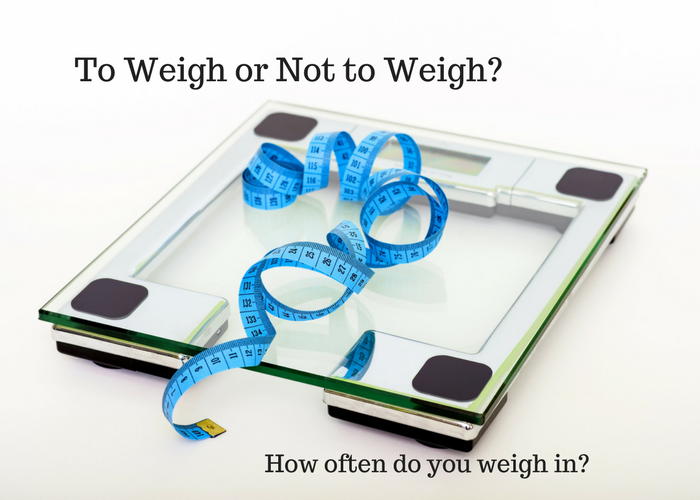
To Weigh or Not to Weigh?

After losing weight several years ago, I’m still weighing in everyday. I know that there is some discussion online if it is a good idea to weigh or not to weigh everyday. For me, the choice is to weigh.

I was reminded of this when something popped up on my Facebook feed in the memories section. It was about weighing in and BMI.

5 years ago on Facebook – March 2013 –
Had a great day the gym yesterday… I’ve been doing those weight management workouts twice a week and yesterday was the end of the first session. I lost 8.5 pounds and gained one pound of muscle over 8 weeks. My trainer said that I actually lost a whole other pound of fat to replace it with muscle, which he says burns about 40 more calories a day… I’m excited because my BMI numbers take me from overweight to normal. I even “ran” the track for 12 minutes. (Okay… my arms were running, but my feet still looked like a fast walk.) Best of all, I feel a lot stronger. I signed up for the second session that starts Monday. This has been my “solution to reach a new years resolution.”

To Weigh or Not to Weigh

Do you weigh yourself? Some people weigh everyday. I know that it helps me.

Some people just get on the scale once a week, usually at an organized weigh in. When I did the weekly weigh ins I would already know what I weigh from weighing in a home. I used to obsess about it.

Long ago, when I really did need to get fit, I rarely weighed myself. In fact, the only time I used to weigh in was at a doctor’s office.

I remember the first time a doctor talked to me about my weight: “You really need to get a treadmill. The Ohio weather just isn’t nice enough to exercise outside reliably.”

It wasn’t the lack of treadmill that was my problem! It was primarily food choices and food portions. I’ve since heard things like “It’s 80% the kitchen and only 20% the gym.”

After I decided to adopt a healthy lifestyle, I changed my relationship with the scale and have been weighing myself every morning when I wake up. It probably is a bit obsessive. I do find it helps me to keep things in check. I have a “scream weight” which I refuse to go over. But it is the strength and muscle mass I’d really like to stay focused on now — that and maintaining my weight loss.

Body Fat Percentage

Some scales measure a whole lot more than just weight. They will keep track of your body fat percentage and the muscle mass numbers as well as the overall weight.

Many of the new scales have the numbers for water percentage too. My water number changes all the time (obviously) based on how much I am drinking or if I am slightly dehydrated.

Not sure I can always believe the fat percentage, but that’s the number that I’d really like to change. Move some of my overall weight from the fat side to the muscle side.

I think I need to lift more – and run less. Well, maybe not run less. (I get more hungry when I run!!) I do like the effects of cardio exercise. The endorphin feeling is great and there is something satisfying about seeing the mileage add up.

I know some people are working on changing their BMI (Body Mass Index.) BMI is a quick way to measure the weight to height ratio. For a some people, for instance those who weight lift, it is way out of whack, but in general, it is a guide. A quick google search will provide lots of BMI calculators, if you want to check your BMI bynber,

General guidelines want your weight to be a at a BMI number 18 and 25. If I get to 25, it’s only for a little while, but I’m generally 26 or 27, which is just into the overweight category. While I like to think it is all my muscle mass, I’d be fooling myself! I’m not there yet!

I think better yet would be a BMI scale that measures fat percentage and muscle mass. There probably is those calculators too.

Being heavier really bothers me for running particularly, because it slows me down. Think of running around holding two 8 pound weights all day. I know I’d be faster if I could drop those weights.

So, while I weigh in everyday and know my BMI number, it isn’t what I want to measure! It’s muscle mass. Gaining muscle! But I still insist on stepping on the scale every morning.

How about you. Do you weigh every day? Why or why not? Do you know your percentage of muscle mass? Please leave a message below or send me an email at chris@becomingelli.com.

International Women’s Day Calls for Deadlifts

March 8 is International Women’s Day. This year I happened to be at the gym working out with Maria Stadelman and I was doing deadlifts.  Somehow we got the idea that since it was International Women’s Day, we were celebrating by seeing how heavy I could lift. Hey, you know things can get a little goofy in the gym.

Deadlifts are a strength-building lift that involves lifting a weighted bar from the floor to your hips. Deadlifts provide a full-body workout and are great for building strength. There’s lots of information online about deadlifts and you can see a variety of videos on Youtube, of course. According to Nerd Fitness, “when you deadlift, you use every single muscle in your body.” Deadlifts differ from squats because you should be sticking your butt out rather than down as you do when squatting. Also, the thing that everyone tells you when you’re deadlifting is to keep your back flat and lift through your heels.

I worked up to 135 pounds:


And then we decided well, let’s go higher so we added 10 pounds to the bar for a total of 145 and I lifted that.

And finally, we said, “It’s International Women’s Day, let’s keep going” so we added ten more pounds. I deadlifted 155 pounds. This is why I like to work with a trainer. She added the weight but also didn’t let me go crazy.

So, is deadlifting 155 pounds an amazing feat? Not for everyone but it felt good to me. I don’t know what my personal best is but this was my personal best in recent memory.

I’m going to say that I did not go to the gym with the intention of having videos created. I might have dressed a bit better and combed my hair if I had realized what I’d be doing. And isn’t that a typical female reaction? I’m deadlifting but I’m also worried about how I look in these videos.


Reducing Painful Achilles Tendonitis Episodes

Ankle strengthening helps avoid my Achilles TendonitisI have to be careful about Achilles Tendonitis. Some people call it Achilles Heel.

In 2006 I walked around the local Girl Scout camp all weekend in mud boots. Without a support lining! High arches and too much weight turned a bonding experience with my daughter and her troop into a long painful education about a tendon called Achilles. What is Achilles Tendonitis? If you’ve never heard of it, you probably haven’t had a problem with it. The Achilles Tendon connects the calf muscles to the bone on the heel. The “itis” part means chronically inflamed. It can be painful, at least that has been my experience.

During that year, it got pretty bad, to the point I didn’t want to stand up and walk across the room. When I would first wake up, it hurt. During the night, it would stiffen. Even now during sleep my toes tend to relax and point out, so when I step out of bed, my heel lands on the floor, stretching the tendon and pulling it. I gained a lot of weight that year and ended up going to a sports doctor, who sent me to physical therapy. That helped quite a bit. Twelve sessions of various exercises and treatments got me moving again.

Then, about a year later when I was consulting my family doctor for a sinus infection, he noticed I was limping. So, he sent me to another round of therapy, which greatly improved it. Five years later, Achilles Tendonitis started coming back again. I got myself to a Sport Chiropractic doctor who treated it before things got bad and gave me a series of exercises to do consistently at home, which has really helped.

What causes Achilles Tendonitis?

For me, it’s a combination of things. Some things I can do to improve the situation. Other things I’m stuck with.

    • Too much weight – Having to carry around extra pounds makes it hard on all my joints, tendons and ligaments. I guess that is no surprise to anyone.
    • High arches – Can’t change genetics.
    • Tight calves – Bouncing on my toes tends to tighten my calf muscle. It’s like I can almost feel it tighten with each up and down. My calf muscle gets tight which in turn pulls too hard on my tendon. I avoid the bouncing step moves in Zumba and don’t do a regular jump rope jumping where you take off from your toes and land again on toes. I tend to take off and land on one foot at a time instead of both toes each time.

I prefer prevention to treatment. Strengthening my ankles in particular, really seems to help. Conditioning helps the little muscles in my feet.

What works for me to combat my Achilles Tendonitis?

I do a variety of things to keep it at bay. I do other things when I have a flair up. This is what works for me:

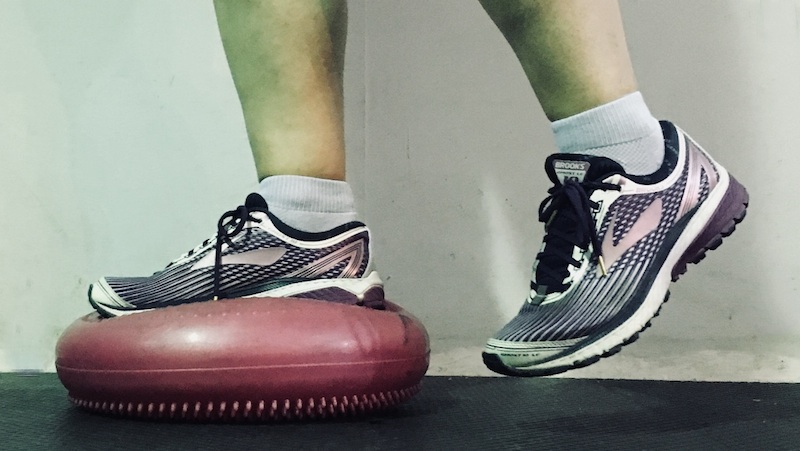
    • Balance exercise – I start by standing on one foot on the floor. Then swing my leg. Progress to a pillow. Without my shoe. Then a stability cushion. And a bosu ball. I stand next to a chair or wall to catch myself. Building strength in those little muscles in my feet has made a huge difference. It also has helped me not to take a spill on the ice during the winter and helps me catch myself when one of our cats affectionately tries its very best to trip me in the morning!
    • Massage – a good sports massage helps to attack that one calf muscle that still tends to get too tight. I also do a self massage with a tennis ball or lacrosse ball and a roller on the calf muscle which helps to release the tightness and not lead to that constant pull on my Achilles.
    • Stretching – After a workout when my body is limber, I slowly lower my heels while standing on a step, and then raise back up to lower again (only when my Achilles tendon is healthy, not when it is sore and swollen.) There is an old Swedish study which followed two groups. The group that did this exercise improved. The other group not so much.
    • Physical Therapy – when it gets bad, I’ll go to my doctor and have had a series of things: ultrasound, Graston technique (painful but works) and an inflatable massaging boot. Plus exercises to do at home.
    • Strengthening – I’ve found that consistent strength and conditioning – my ankles, my glutes and my core – really seems to improve my luck with my Achilles tendon. I like to use the stability cushion; it helps to strengthen my ankles.
    • Shoes – I use inserts in most of my shoes, especially the mud boots. I have a pair of expensive insoles designed for ski boots always in my mud boots. I use SuperFeet insoles in my running shoes. I do NOT wear flip flops because there is zero support and the chance of tripping and pulling tendon/muscle/ligament etc. is huge with flip flops and me. I buy good supporting shoes over cute shoes. And I am very picky about sandals.
    • Warm Up – before doing anything, especially running, walking, hiking, working out in general, I try to do a dynamic warm up of mild stretching to get some blood flowing to the calves and massage my tendons.
    • Ice/heat – after a long run, I put a bag of frozen peas under my tendon and prop my leg up. Just for a short time. Then I move my ankle around, and alternate ice with a warm rice bag. The idea of the ice is to reduce swelling. The warm rice bag helps with blood flow.
    • Tape – (update) I’ve had some success with using kinesiology tape and have tried different patterns around my ankle.

I use a variety of tools including the foam roller, pillow, stability cushion, bosu ball, lacrosse ball/tennis ball and stair steps with a railing. These tools are all part of my on-going effort to strengthen the tendons and ligaments.

How about you? Do you deal with Achilles issues? Have a suggestion on how to strengthen, stretch or otherwise manage this tendon? Please let me know by leaving a message below in the comments!


Disclaimer: I am not a doctor or an expert on Achilles Tendonitis. I am just sharing my experiences with treating it and avoiding it. Consult your doctor or physical therapist.


Three Goals for the New Year

I asked my mother on New Year’s Day if she was making any resolutions for the new year. She said, “No, I’m past all that.” She’s now 88 years old so I guess that makes sense. I sort of want to be past all that too so no resolutions for me. No, instead I’m setting goals. Is that different than making resolutions? I hope so. Instead of saying, this year I’m gong to lose weight and be fit and healthy, which is what I want to be all year long and not just in this year, I’m trying to set clear definable goals.

So, here are my top three goals for this year:

Goal 1: Run three half-marathons this year

Running

Last year I ran one half-marathon and it felt like a big deal. This year I want to repeat the Akron marathon and hopefully run it faster than before. I also want to do two more. Why two? I don’t know. It just seems like a good number. I’ve already registered for the half marathon that’s part of the Cleveland Marathon in May and I signed up for the half marathon that’s part of the Akron Marathon in September. I need to find one that’s in between those times or do an extra one later in the fall. I feel confident about this one since I’ve already committed money to two races.

Two races are on the calendar with the first one being in May. That means I’ll need to start training soon. It will be a good idea to figure out my training plan and begin to implement it.

Goal 2: Reduce my body fat percentage

Berries

I’d like to get it beneath 30 percent. There’s at least two ways to do this: increase muscle or lose fat. Ideally, I’ll do a bit of both. This seems like a healthier way to set a goal than to make a resolution to lose weight. Is this goal any different than a lose weight resolution? Maybe not but I feel better about it and it’s measurable. If I said I want to lose 20 pounds, I could do that but I might lose muscle as well as fat. One thing I’ve learned is that we want to keep as much muscle as we can.

One of the hardest things about being over 50 is that losing weight becomes more and more difficult. I definitely have to watch calories and figure out the best way to eat to build muscle and lose fat. I’ll share my successes and failures with this as the year progresses. In some ways, this feels like the most difficult challenge.

Goal 3: Do a pull up

Kettlebells

I want to get back to doing a pull up. I reached this landmark a couple of years ago and then my trainer left, and I’ve lost the strength to do it. It took a lot of work to get there and I’d like to get there again. It takes a lot of upper body strength to do a pull up. I don’t think many women past 50 can do one and I like the idea of it. Plus, my arms looked fantastic when I was working on this before.

How will I accomplish this? Lots of upper body strength training. Doing a pull up requires a strong core, strong shoulders, back, and arms. I work with a trainer so we’re going to have to discuss these goals and how I’m going to reach them.

My three goals fall into running (endurance), body fat (weight or health), and pull ups (strength). That’s basically what I’m working on so I feel confident I can reach all three goals in 2018. It will be a challenge but that’s what goals are about, right?


Starting to See Results from the Strength Building Season

Now that we’re well into December, I’m thinking about what I’ve been able to accomplish this past year… and what I’d like to focus on for the new year!

I’m really thrilled that I was able to train for the 13.1 half marathon and finish it feeling good about myself.

As usual, my first thought for a new year resolution is to lose weight. But actually, it’s not the number on the scale I’m interested in as much as what it represents. Yes, I’d like to weigh less but I’m more interested in converting some of the fat or water weight into strong lean muscle.

I wrote a little bit about “strength building season” recently. For the past month I’ve focused on lifting weights two or three days a week. Not tons of weight. And not tons of time. But consistently lifting two or three days a week.

One nice difference, I’ve started to get more confidence. One way I know is that I’m doing fewer laps around the track every other weight, to psyche myself up.

This morning when I did my usual Saturday morning workout group exercise class at the gym, I really noticed the difference in my strength!

Using weights during the workout felt “easy”… even though I’d gone up 2 pounds,

from my usual 6 pounds to the 8 pound weights. Some of the moves where I really noticed it:

  • Reverse lunges with a hammer curl. Sweet. Trying NOT to swing the weights, but intentionally lift and slowly lower, to get the max muscle effect.
  • Side lunge reach down, then up, stand on one leg then push press the weight over head. Sweet. Balance on left foot seems so much easier to me than on the right.
  • Even the reverse crunch with feet out and then knees to chest seemed much easier because of the leg raise machine I’ve been working on.

Last spring and summer when I was doing those same moves, I was using 5 pound weights and they seemed heavy enough that I was getting a good work out.

It feels good to progress. I wonder what I’ll notice by mid-January? Any one else focusing on gaining muscle (instead of focusing on losing weight?)

Strength Building Season Arrives

I used to refer to the fall as the “eating season” because of the Halloween candy, Thanksgiving day meals and all the nonstop holiday goodies offered throughout the month of December.

But something that Maria said during our podcast interview the other day has re-framed the fall into a new label for me: “STRENGTH BUILDING SEASON”.

Yesterday was a good day for a quick strength workout. During my lunch break, I drove over to my gym and instead of doing spinning, yoga or a group exercise class, I walked directly over to the foam roller and rolled.

Then proceeded to lift some weights.

I usually feel intimated because of all the mirrors and fit middle-aged guys who look like they have lifted weights since they were 14.

But during lunch time, the place is very lightly attended with just a few people on their lunch breaks and also some retired folk. Not heavy lifters in the weight area.

I started by doing 15 leg lifts. About a year ago I got a training plan from one of the personal trainers at the gym and he had me do leg lifts last. It’s great for your abs. Gotta tell you, doing leg lifts as the last on the routine are hard to do. And that’s when he had me doing them. But I did them first, when they are easy. It was more of a mental victory than a good work out, but I need the mental push to get into the weight area and not feel intimidated.

Next, I walked the track. Again to psych myself up.

And then I walked right past two guys who had moved into the area and put two 10 pound weights onto the leg press machine. I knew I could do this. Most of the leg press machines on Google show people pushing the weights up with their feet, but the machine I use has your feet on a big base near the floor. Your shoulders and back move the carriage up and down as you squat and then stand with the weights. I did three sets of 15 reps.

Weight lifting isn’t cardio (I don’t think), but it sure gets my heart pumping and me breathing hard!

More than a year ago, I started on the weight machine with no weights, just the weight of the machine. I could hardly do it. Now that I’ve been doing it awhile, I’ve been able to add weight onto the machine.

This fall – the strength building season – I’m planning to do strength training twice a week. And I will try to increase the weight I put on the machine while maintaining three sets of 15 reps.

From there I walked over to the free weights and grabbed two 15 pound weights. I wanted the 20 pound ones but someone else had them. I laid down flat on my back on the chest press bench – (the one without a rack for holding a big bar) – and did 30 reps with the 15 pound weights. Not hard at all for me, but I’ve been working on this and at one point was able to do 15 reps with the 25 pound weights. But that was in September and I want to build up to it again.

And so it went.  Here are my notes from the workout:

  • Started at the roller- rolled legs/butt really good
  • Walked one lap
  • 15 leg lifts
  • 15 pounds on squat machine with a 10 pound weight on either side three reps
  • Walked a lap
  • Chest press 15 pound weights times 30 reps
  • Swing kettle bell (purple one) 25 swings
  • One arm kettle bell dead lift high press, five times each arm
  • 20 kettle bell 25 more swings
  • 20 pounds each arm – chest press – 9 reps.
  • Walked one lap
  • 15 Leg lifts
  • Smith machine 25 pound weights on either side, 10 squats low. (Heavy!)
  • Walked one lap
  • 10 bird dogs – each side 5 low (one knees)/5 high (on toes).
  • 15 leg lifts

Done! Half hour or less.

Walking laps in the middle of my work out is unnecessary, but is more of a mental thing for me. I need to regroup often and get myself psyched up. I gain confidence as I walk the track. When I’m in the weight area for a while, my thoughts go to, “do you really have any idea of what you’re doing?” I resent those thoughts running thru my head.

As the strength season progresses, besides getting stronger, one of my goals is to become as comfortable in the weight room as I am walking around the track.

Certainly some of the machines I feel more confident on. Like the leg lifts. I like that machine. It’s simple. And it’s off to the side, not in the middle of the weight area. It’s hard to do, but I’ve been doing it consistently for about a year and can do it with good form and not much strain.

The Smith machine intimidates me. I’d rather do “free” weight bar bells, but really don’t feel like my psyche is ready for it. On the Smith machine I know I have good form (or think I do) and don’t feel as intimidated. Lifting the bar bell off by rotating it slightly which the bar bell is on my shoulders with a pad is “easy” and I feel confident that I can master a good low squat with my butt out behind and knees over heels.

So I’m going to build more strength and confidence with the Smith machine and then during the “strength building season” switch over to free weight bar bell with less weight.

Ate a lunch with good protein afterwards. Build those muscles!!

This morning I am surprised I’m not as sore as I thought I’d be.  Next strength workout, will be Friday or Saturday. Depending on the weather and trying to get a run in to the schedule.
Newer posts »

© 2026

Theme by Anders Noren — Up ↑