Becoming Elli

Fit Strong Women Over 50.

Page 19 of 65

Obstacles on the Bike and Hike Trail

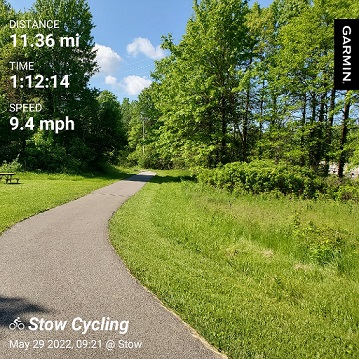
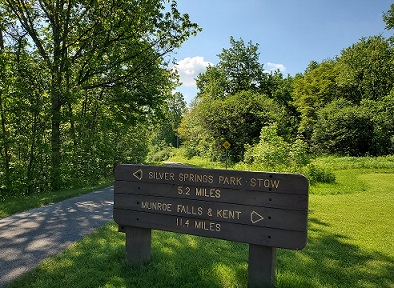
I discovered some obstacles on the bike and hike trail that’s close to my house. I’m lucky to live close to the park’s trail. I use it frequently all year round. This past weekend was a holiday weekend and we had gorgeous summer weather. I was not the only person eager to use the bike and hike trail.

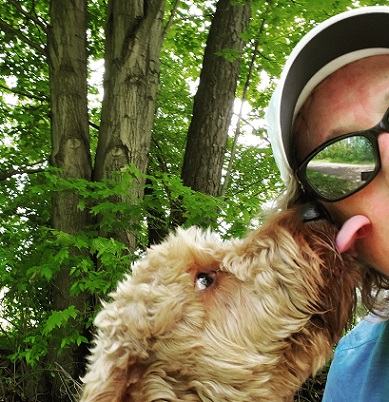
On Saturday, I took Penny for a run on the bike and hike trail close to my house. It was a great day for a run, plus it’s a holiday weekend. There were lots of people using the trail.

I know I’ve written about running with Penny before. Penny is doing well with running with me though I’m so slow that Penny doesn’t actually run. She just sort of trots along with me.  She has learned how to stick with me, though, so it’s easier to run with her.

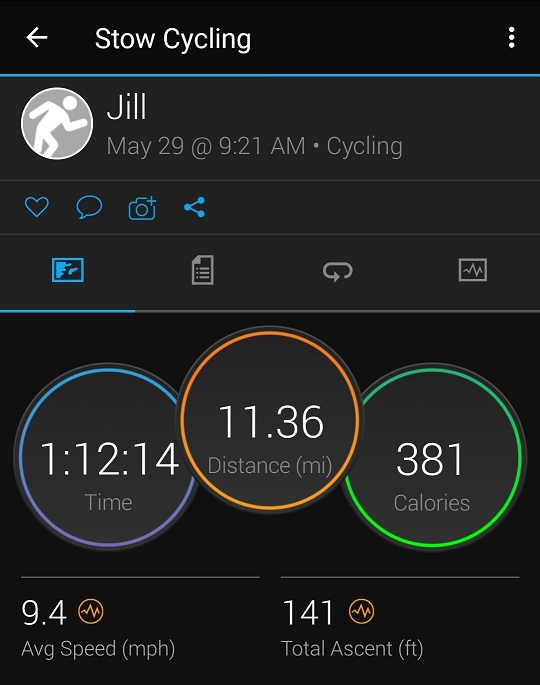
On Sunday, I got out my bike and went for a ride on the same trail. It was another gorgeous day and I rode for a little over an hour, which was the furthest I’ve ridden in a long time.

Obstacles on the Bike and Hike Trail

When I was running, here’s what I noticed. Many bikes zipped past me without saying anything. No “on your left” or even just “I’m passing you!” Several times I was startled by a bike that I was unaware was behind me.  I also encountered both groups of bikes and runners running two or three abreast. Each time I’d watch to make sure they moved over so I could continue my run. It felt like I was playing chicken with each group. Running with a dog makes it a bit more challenging. I try to make sure both of us are safe so I would usually make sure Penny was running alongside the trail. A couple of times we both had to get off the trail because there wasn’t enough room for us while people were passing.

When I was riding my bike, here’s what I noticed. A few people out walking and running had complete, over the ear headphones on so they couldn’t hear me say “on your left.” They couldn’t hear much of anything, I guess, except for whatever they were listening to with the headphones. I also noticed groups of bicyclists who were riding three abreast coming towards me. I wasn’t sure if they were going to move over in time.

Obstacles on the Bike and Hike Trail

There were two women walking their dogs on the trail. Both dogs were walking off leash and when I called out, “on your left” the women darted around trying to grab their dogs. I ended up having to stop and wait while they got their dogs back on their leashes. The women thanked me and were grateful that I stopped and waited. The trail seemed busy to be walking dogs off leash but fortunately no mishaps occurred.

For the most part, I think everyone was being careful to share the trail. The people wearing the over the ear headphones were probably the most at risk because I don’t think they knew who was approaching them. They seemed to be at the most risk for an accident.

We had such beautiful days over the weekend that I really wanted to enjoy running and riding on the trail, but it did remind me why I prefer using the trail on weekdays. I still enjoyed both days and will continue to use the trail, despite encountering obstacles on the bike and hike trail.

Do you encounter similar obstacles? Let me know.

Intermittent Fasting for Women Over 60

Intermittent fasting is one of the most popular trends right now in eating. People are using IF for both weight loss and health benefits.

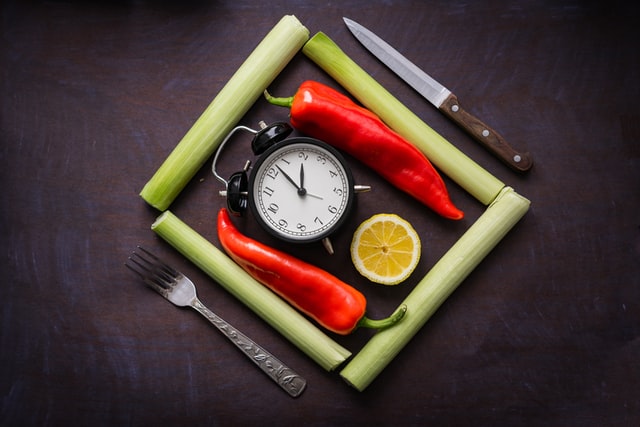
Intermittent fasting is really an umbrella term for a variety of ways of fasting. Most often, people are really referring to Time Restricted Eating. This is where you avoid eating during a period of time. It can be as short as not eating after dinner and then having breakfast first thing in the morning. It can be longer than that, where you fast all day and then consume all your calories in a single hour. Most people who I hear talking about time restricted eating probably have a 16 to 18 hour window of non-eating, with a 6 to 4 hour window of eating.

Chris and I talked with Gin Stephens about Intermittent Fasting and she provided us with lots of information. If you are interested in learning more about it, I recommend  listening to our podcast episode, Intermittent Fasting with Gin Stephens.

Is time-restricted eating effective for post-menopausal women? There’s lots of discussion about IF for the general population but women over 50 tend to have unwanted weight gain so this might be a good option for them.

While I was reading some articles about IF, I came across a study published in the International Journal of Environmental Research and Public Health. It addresses weight loss for women over 60.

Intermittent Fasting for Women Over 60

The study enrolled 45 women over the age of 60. The women were randomly assigned to either the control group or to the group instructed to fast for 16 hours. The women assigned to the IF group were told to fast from 8 PM until noon the next day. Neither group was told to change what they ate, but only to change when they ate.

After six weeks, the women who fasted for 16 hours had a loss of about three pounds (1.4 kilos) and fat mass. The control group had no loss of weight. Compliance to the time-restricted eating was good with 88% of the women completing the study. No negative results were reported.

This study only lasted six weeks so the small amount of weight loss is not surprising. Also, it’s worth remembering that the study made no changes to the food the women ate.

This was a small study but appears to indicate that Intermittent Fasting (or Time Restricted Eating) can be a good tool for women trying to lose weight.

I also think it’s great to see studies being done of older women. It’s unusual for studies to be of women over 50, or 60 in this case. It’s unusual to see a study on Intermittent Fasting for women over 60.

Bicycling All 50 States with Joyce Guenther

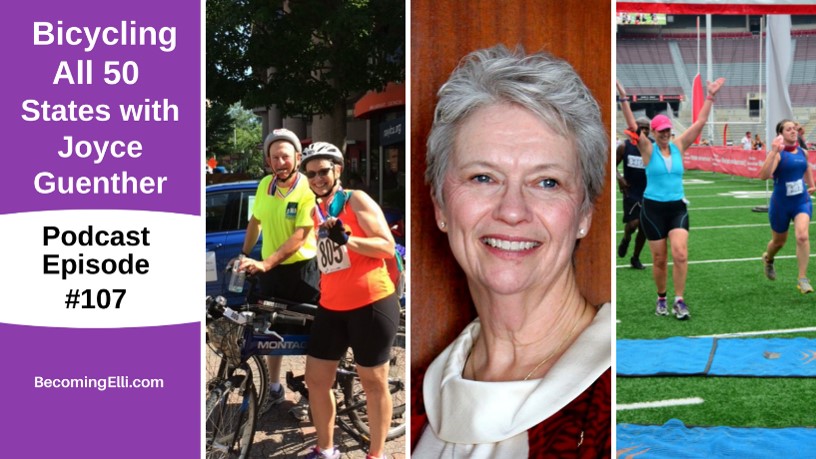
Episode 107 – Bicycling All 50 States with Joyce Guenther

Download | Play in New Window
Please SubscribeApple Podcasts  (iTunes) Google Podcasts | Android-Google Play | Stitcher | Player FM Castbox | Tunein | Spotify | RSS

In Episode 107, Jill and Chris talk with Joyce Guenther who has ridden her bicycle in all 50 states of the USA. Jill met Joyce Guenther in high school and they ended up at the same college together. Years later they reconnected on Facebook.

Joyce has completed bike rides in all 50 states and has turned her attention to Europe. She is a member of our private Becoming Elli Facebook Group.

Her education was in the sciences. She worked in business for many years and then ran her husband’s medical office. She lives with her husband in central Ohio and has two adult daughters.

Joyce is also very active with the Red Cross and getting people to donate blood. She hosts blood drives and has been donating blood since she was in college.

We discuss:

Rides, Tours and Links mentioned:
Red Cross blood donation
An Interview with Joyce Guenther at the Buckeye Lake Women’s Triathlon
Mediterranean Chicken Sheet Pan Dinner
5 Boro Bike Tour (New York City)
Chicago Bike The Drive on Lake Shore Drive on Memorial Day
Armed Forces Cycling Classic in the summer in Washington DC
Napa Valley Bike touring in California
Fall Foliage ride in Staunton VA
Shenandoah Valley Bike The Valley

More detail about her bicycling all 50 states from Joyce Guenther:

Probably in the mid to late 1990s my husband got this idea that a supported bike ride would be fun. I said, sure thing, thinking that would be the end of it. Well, he signed us up for a Vermont Bike Tours week. I was positive I could not do this. He rode a lot and I really didn’t. I biked around our hilly neighborhood and was freaking out. People, I CRIED getting on the plane to Vermont.

Supported bike tours are a great way to get started. You can rent your bike from them and if you do, they take care of it, fixing flats, swapping out another bike, etc. The bikes are excellent. These fancy tours (Like VBT Vermont Bike Tours, Backroads, etc) provide some awesome food along the way, group activities and a lot of knowledge. One of the guides rode next to me and described the gears/shifting ratios. After that week, I got a better bike and we rode more.

At some point we realized that just by riding a bike on vacations, at home, etc we had biked in 12 states and decided to do all 50. A great way to do this turned out to be Amtrak train routes. We got folding bikes (Montague) and could take the train with them as luggage. (now Amtrak has bike cars and you load your bike in a rack.) We took the Empire Builder from Seattle to Chicago and got off in all the states and biked, got back on the next train the day. This train goes through WA, ID, MT, ND (got a car and went to SD and WY), MN, WI, IL. Most train routes have rail trails nearby. This train goes right through Glacier National Park.

We did the same with the City of New Orleans Amtrak line which goes DC to New Orleans. (Editor’s note: it goes from Chicago to New Orleans now.)

“The best ride we did was the Great Allegheny Passage (GAP) ride from Pittsburgh to DC. This is a 360 mile trail (100% trail, no streets!) If you ride east it’s pretty much flat/downhill. We did this end of June and got to DC on July 4th. We had a high school guy drive our truck with supplies and he met us at the trail head every day. We stayed at motels and B&Bs. You can also camp (and do a supported camp) but NO. That was our 25th anniversary trip. This trail connects to the C&O canal and you pass 76 locks on the way. It’s beautiful.”

There are lots of local bike trips/trails too. The Kentucky Redbud ride (they have pancakes!) was so great and one of the last ones we did which is funny since it’s close by. New York City has the 5 Boro Bike Tour ( in May which is a tour of all the Boros. They close down the bridges which is fun. Chicago has Bike The Drive on Lakeshore on Memorial Day. We do an Armed Forces ride every summer in DC and a Fall Foliage ride in Staunton VA every Oct.  Fat Tire Tours were great.  Backroads was how we did Napa.

After we finished the USA in 2013 or so we started looking at Europe. We did Versailles, Madrid and Barcelona a few years back. We have done a few Bike and Barge tours (Netherlands and Danube) We went to Japan in 2017 and my husband got a rental bike just to say he biked there!

Electrolyte Replacement for Hot Weather Workouts

I am a sweater. That is, I perspire during hot weather and especially during work outs… a lot!

Replenishing electrolytes is a real thing for me or I can easily become overheated, dizzy and feeling very weird. During summer bike rides I’ve had to take advantage of the SAG truck more than once when the temperatures go higher than 85 degrees and I’m pushing myself.

If this is not a problem for you, you probably don’t know what I’m talking about, but if you bike ride or run during super hot weather and tend to sweat a lot like me, you may be very aware of the need for electrolyte replacement.

Many of the organized rides and runs that I’ve done in years past have rest stops with water and gatorade, as well as orange slices, ice and more to help combat the high temps.

The other day I took my second bike ride of the year. It was 18 miles with a breakfast break in between. But by the time we actually got back it was around 12:30 and well over 80 degrees. We had been gone for a bit over 3 hours.

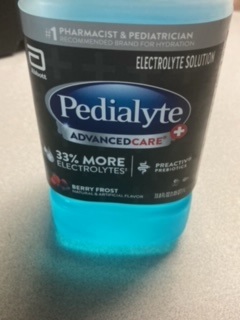
I knew it was going to be hot so I tried something new for electrolyte replacement. I usually go through 2 water bottles when I do the Kent loop. This time I added about a half cup of Pedialyte to one of my 24 ounce water bottles. It didn’t taste too bad (like if I had had straight Gatorade) but helped to replace some of the electrolytes I sweated off.

I’m definitely going to try this again.
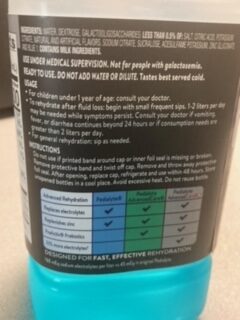
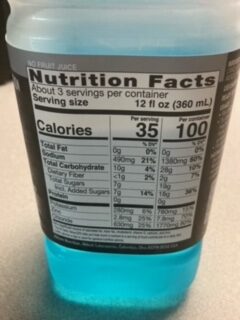
Here are some photos of the package:
electrolyte replacement

electrolyte replacement

electrolyte replacement

While the package says not to add water or dilute, I am using this as a preventative measure, not as a fix.

I got this in an email from LMNT from Runner’s World, so this was designed specifically for working out and replacing electrolytes. Have not tried it. Let me know if you have and what you thought.

What do you do to replace your electrolytes during hot weather and long workouts?

Positive Mental Attitude

When I was at the gym this morning I talked to a friend who I always love to see. We only talked maybe 5 minutes. She’s someone that Jill and I hope to have as a guest on the podcast.

One thing that she said to me that I’ve been thinking about on the drive all the way home. “It’s your attitude… you’ve got to keep a positive attitude.”

Today I’m going to work on having a positive mental attitude.

It reminds me of part of the Optimist’s Creed – To Promise Yourself — “To be too large for worry, too noble for anger, too strong for fear, and too happy to permit the presence of trouble.”

When I’m working out, I love to take group classes.

I try to not compare myself to my younger self, or more fit pre-covid self. Instead I’m trying to say things like:

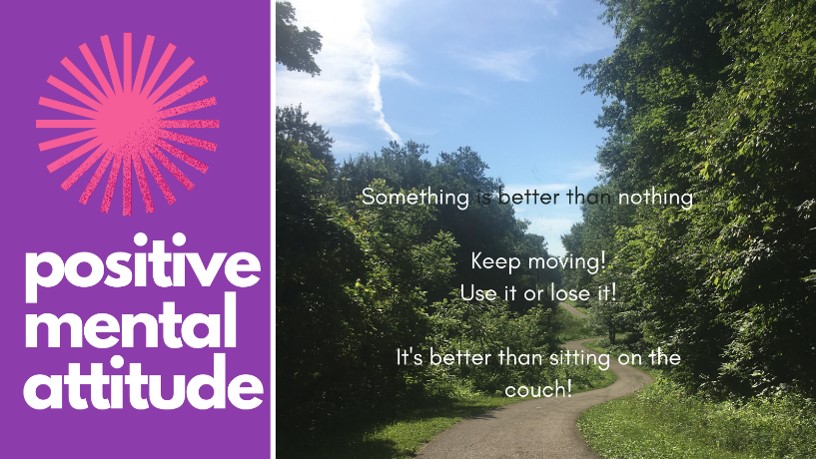
  • Something is better than nothing
  • Keep moving!
  • Use or Lose it
  • It’s better than being home on the couch!

Positive Mental Attitude – That’s going to be me. At least for today!

By the way, this month is mental health month, so here’s to a Positive Mental Attitude for the whole month. (or at least just today!)

12 Tips to Get More Protein

12 Tips to Get More Protein – Episode 106

Download | Play in New Window
Please SubscribeApple Podcasts  (iTunes) Google Podcasts | Android-Google Play | Stitcher | Player FM Castbox | Tunein | Spotify | RSS

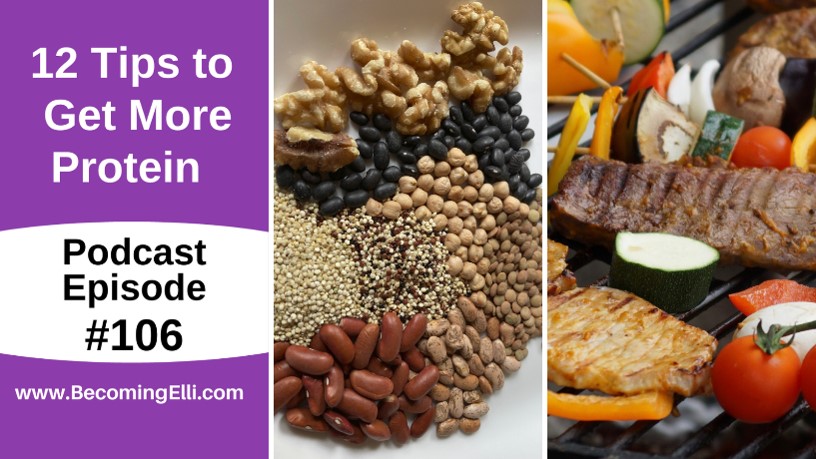
In episode 106, Jill and Chris discuss the importance of protein in the diet, especially for women over 50. They offer12 different ways to get more protein in your diet.

  1. When doing meal planning first figure out the proteins, then adjust for the veggies.
  2. Precook protein in a crockpot so you have a lot available ahead of time. Refrigerate to add to other meals.
  3. Precook quinoa when doing meal prep. Easy to sneak it into soups, salad, other meals. 20 grams of protein per serving
  4. If you are avoiding dairy use plant protein soy- based proteins like tofu tempeh lentils and beans
  5. When making a vegetable salad add in chickpeas kidney beans black beans quinoa even tuna
  6. Add sardines to your fish choices. Sardines make a great addition to tuna salad here is another recipe for sardines
  7. When you sit down to eat, start with eating your protein first
  8. Add Greek yogurt to your breakfast routine or dessert. Fage Greek yogurt 0% milkfat has 20 grams of protein in a serving
  9. Consider breakfast with eggs instead of cereal
  10. Use protein powder in smoothies Orgain is available on Amazon or at Costco with many choices of flavors. Great for smoothies adding into coffee as a creamer.
  11. Protein bars dash keep them handy for when you might miss a meal link to episode #38
  12. Try this protein oatmeal ball recipe

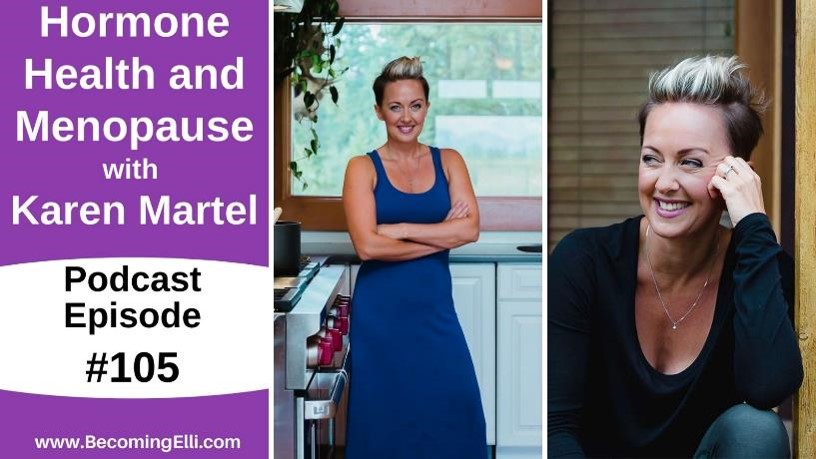
Hormone Health and Menopause with Karen Martel

Hormone Health and Menopause – Episode 105

Download | Play in New Window
Please SubscribeApple Podcasts  (iTunes) Google Podcasts | Android-Google Play | Stitcher | Player FM Castbox | Tunein | Spotify | RSS

In episode 105 Jill and Chris speak with Karen Martel, a Certified Hormone Specialist & Transformational Nutrition Coach and women’s weight loss expert.

Karen is the host of the top-rated women’s health podcast The Other Side of Weight Loss where she helps women to unlock the mysteries of female fat loss and hormone imbalance.

After struggling with her own health issues, Karen was determined to bring her knowledge to others with a bold new approach to women’s hormone health and weight management. Karen’s passion lies in helping women balance and optimize their hormones in peri and post menopause and breakthrough weight loss resistance.

She sheds light on many hormone health and menopause issues that may not be fully understood.

In this episode we discuss:

  • Thyroid hormones – T3, T4 and metabolism
  • Estrogen, DHEA, Progrestrone, Testosterone
  • Lymph nodes
  • Which hormones affect weight loss
  • The safety of taking bio-identical hormones

Links:

Karen’s Podcast: The Other Side of Weight Loss
Website: www.KarenMartel.com
Instagram

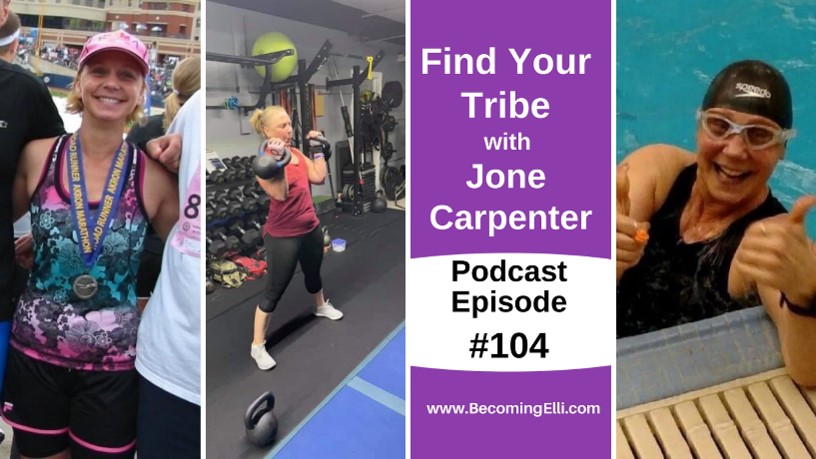
Find Your Tribe with Jone Carpenter

Episode 104 – Find Your Tribe with Jone Carpenter

Download | Play in New Window
Please SubscribeApple Podcasts  (iTunes) Google Podcasts | Android-Google Play | Stitcher | Player FM Castbox | Tunein | Spotify | RSS

Originally from rural southeastern Ohio, Jonella Carpenter, known as Jone, is both a mother and grandmother. She can often be found walking, running, or hiking in her local parks in all kinds of weather. Her attraction to the outdoors started when she was a kid (even the outdoor chores were fun for her) and grew as she became an adult.

In 2008, a friend suggested that Jone run a half marathon, and though she didn’t know what she was in for, she has never been afraid of a challenge. She toed the blue line of the Akron Marathon on a crisp September morning without training, and though she crossed the finish line three hours and forty-five minutes later, she couldn’t walk for days.

Needless to say, she learned quite a bit during that first race! Since then, Jone learned more about how to train, fuel her body, and stay motivated even when times were tough. As a breast cancer survivor, her body has been through significant changes but continues to be a way to explore nature, connect with friends, and challenge herself in a variety of ways. She even overcame a life-long fear of water to learn to swim in her 50s.

Among her friends and running buddies, Jone is known for always saying yes to any adventure (even the cold, muddy ones) and can often be found encouraging others (even strangers she’s met along the way) to keep moving. Through the miles, boot camp classes, swim lessons, and other adventures.

One key point of advice to women over 50 who want to be fit and strong: Find Your Tribe. Jone ran informal groups of friends calling themselves the Towpath Turtles or BCB – the Bad Choice Babes and works out at a gym where the group exercise inspires her.

During this episode we talk about:

  • Running races and training
  • Finding a group of like-minded friends, Finding Your Tribe
  • Lifting weights and cross training
  • Her experiences with breast cancer and running shortly after her mastectomy
  • Reframing your attitude to “I GET to do this” instead of “I HAVE or I SHOULD”
  • Learning to swim in her 50’s
  • How she listens to her body
  • Keeping muscle and protecting bones
  • Group cooking
  • Watching macros (using protein powder as a creamer)

Running and Grief

Is there a connection between running and grief? I think perhaps there is. Not for everyone, of course, but for some of us dealing with grief, running provides some mental health benefits.

There’s a lot of discussion about how running helps with our mental health. If you want to read a great memoir about this, check out Depression Hates a Moving Target by Nita Sweeney. Chris and I talked with Nita about running and mental health on our podcast. You might check that episode out too.

I don’t know if there’s much specific talk about running and grief, which is different than depression. Grief causes a lot of different emotions; sadness, anger, guilt, loneliness are a few. I think what makes running helpful is that it provides an outlet for all of that emotion stored up inside.

When my husband died, I felt bereft. I was angry that other women still had their husbands. I was lonely and worried about my teen-aged son and I felt completely unprepared for life on my own. Grief is an overwhelming emotion.

Shortly after my husband’s death, I began to go to the gym. I was overweight and out of shape because I’d been taking care of him for a couple of years and just couldn’t focus on myself. Once I started going to the gym, I used the weight machines and the cardio equipment, basically both the treadmill and the elliptical.

At some point, I decided that running would be helpful.

I don’t think I was thinking too much about getting in shape but I felt horrible and needed to do something. I downloaded a Couch to 5K app and began to try to run. I’d never been a runner before in my life, so this was a novel activity for me. Looking back, I can’t quite say why I decided to take up running. It just seemed like a good idea.

The act of running makes you think about something other than your day-to-day details. My mind would wander, and I’d be completely away from my sadness. You really have to focus on your body and what’s around you and less on what you’re feeling.

Also, getting better at something helped my mental state. I would do a particular week of my Couch to 5K and if I couldn’t move on to the next week, I’d repeat the current week. Eventually, I’d be able to move on. When I ran 30 minutes without stopping, I felt so happy with myself. That moment of success was fantastic.

Just the act of going outside to run helped. I put on running clothes of some sort and my running shoes and prepared to go out. Just having to do the prep work helped me feel better. I put together a play list and figured out how to have water handy. Those details were something different to think about.

I went to a grief support group for a while. A couple of women said that when their husbands died, they spent months in bed and never went out. That’s when I realized that we all grieve differently. I couldn’t

Losing a loved one is so hard. I’m not saying that running makes it better, but it makes facing life and grief just a bit easier.  There’s some time where you’re not focused on your grief but instead on how it feels to run.

Do you think running has helped you with grief? Or some other kind of fitness? I’d love to hear from you.

Ways to Get Started with Strength Training

One thing I’ve noticed in the Becoming Elli community is that many of us are looking for ways to get started with strength training. Many women who have joined the Becoming Elli Facebook group (it’s a private group and if you haven’t joined, please do so!) want to get started with strength training.

Most of us know how to do cardio exercises. We use the treadmill or the elliptical or we bicycle indoors and out.

If you listen to the Fit Strong Women over 50 Podcast, you know that we talk a lot about the importance of strength training for women as we age.

Why Strength Train?

We lose muscle more quickly than men and that loss begins earlier than we’d like to think about. Losing muscle makes it harder to keep our metabolism going at a good pace. It makes it harder to move. There are lots of reasons why we should be strength training, also called resistance training. We can go into those reasons in a different post.

There are lots of ways to do strength training, whether you belong to the gym or workout at home but we can all use some help in getting started. You can use weights such as dumb bells, kettle bells, and resistance bands. You can also use your own body weight doing things like squats, push ups, and lunges. Knowing what you can do is, of course, not the same as actually doing it.

Ways to Get Started with Strength Training

I’ve come up with a few ways to help get started with strength training.

Set Goals

Set goals with a timeline related to strength training. While long term goals are great, be sure to include some shorter term goals as well.

Perhaps your long term goal is to be able to do ten regular pushups. That’s a great goal but it may take you a while to get there so make some goals to hit on the way. Perhaps it’s to be able to do ten modified pushups. Then you can make a goal of being able to do one regular pushup. Finally, you hit that long term goal of ten regular pushups.

Invest in Yourself

I find spending money on something is a big motivator. If I pay for a training class, I’m much more likely to go. Perhaps you buy some new weight equipment to include in your home gym. Buying a kettlebell is sure a major investment. Or perhaps you pay to access a strength training app. Or you pay for personal training. Whatever it is, I think most of us do more when we’ve made a financial commitment to something.

Sure, people buy treadmills and gym memberships that they don’t use but I think if you combine the desire to get started with strength training with the financial commitment, you’re more likely to work at it.

Tell people what you’re doing

Tell friends and family member. Confide in your co-workers. If you’re open about wanting to get stronger, you’re more likely to get some support. It helps to tell people who also strength train or workout in some way. I remember telling my mother what I was doing and she really only walked. She told me I didn’t need to be doing this, that walking was enough. So telling your friend at your yoga class might be better.

Find support

Do you have friends who are also interested in strength training? If so, try to work out together. If that’s not possible, maybe try comparing workouts and giving each other ideas of things to try. Online communities, such as the private Facebook group for Becoming Elli, can be helpful. If you’re feeling overwhelmed, discussing with like-minded people can help.

If you’ve joined a gym, talk to the staff. There are people there who can show you how to do different exercises or how to use a piece of equipment. Take advantage of that resource.

Try to Improve

Look for ways to improve. I guess this might be related to goals but what I mean is, just be aware of your body and what you’re capable of doing. If last week, you could only carry two plastic bags of groceries, see if you can increase to three this week. If you can do biceps curls with 8 pound dumbbells, see if you can bump it up to 10 pounds.

Give It a Chance

Stay out of your head. Some of us start strength training say we don’t like it. The problem with that is we usually don’t want to do things that we dislike. If you work on having an open mind, you may realize after awhile that you’re actually enjoying yourself. Give it a fair trial. I really work on no longer saying, “I hate this” when doing squats.

Suggestions?

We know that strength training is important for us as we age so it’s important to figure out ways to get going with it.

What suggestions do you have? I would love to hear other ideas. Comment below if you have something to share.

« Older posts Newer posts »

© 2026 Becoming Elli

Theme by Anders NorenUp ↑