Fit Strong Women Over 50.

Category: Weight (Page 2 of 3)

Becoming More Healthy by Eating Healthy Fats

Healthy Fats and Non-Healthy Fats

I am on a bend, trying to learn more about nutrition and healthy fats in particular. I am seriously trying to learn more about the role of fat in my diet. There is a lot to it.

For most of my life, I lumped all of the different kinds of fat together — things like belly fat, saturated fat, and Omega-3 fats.  Most of my eating plans would revolve around calorie counting. I have a better handle on it now, but I’m still learning about nutrition, macros (protein, carbohydrates and fat) and how to be more healthy as I work on maintaining my weight loss. Note: I am not a dietitian or nutritionist, just someone trying to sort it all out.

Today is the Saturday after Thanksgiving. Although it has been about 12 years since I gave up baking hundreds of Christmas cookies, that I would allegedly give away to friends and family or to have available if someone dropped by, I still remember pulling cans of Crisco shortening, sticks of butter and bags of sugar in preparation for this baking tradition.

Now, I have replaced this activity by pulling out the lights and putting Santa decorations on the mantle instead!

I guess my lack of knowledge had me just figuring that anything with a lot of fat in it would probably make me fat. I didn’t actually know that there were so many types of fats.

Of course, I’m still learning. Jill and I named this Becoming Elli because we are still learning and working at it. However, now my cupboard is stocked with a big can of Extra Virgin Olive Oil, a jar of coconut oil and stack of sardine cans. I haven’t bought corn oil for a very long time. Crisco is a distant memory.

It wasn’t until about 10 years ago that I bought my first avocado. Now during my visits to the grocery store, I’m always giving the avocados the squeeze test to find the best ripe, but not too ripe, ones. I’ve really developed a taste for sardines too.

I have learned that there are a lot of good reasons to add healthy fats into my food plan. I’d rather eat my healthy fats than take a pill. Taking a gel tab from my big jar of fish oil gel tablets tend to make me burp.

Good to know facts about healthy fats and oils

Perhaps you already know these facts about fat. I’m probably late to the party. It is still relatively new information to me, as I wasn’t brought up knowing this and have been learning it as I go.

    • Certain fats (omega-3) helps your brain think – Psychology Today – Have you fed your brain today?Omega-3 fatty acids are great for mental clarity, concentration, and focus.”
    • Low fat isn’t always a good thing. Lots of times something that is low fat has been changed to taste better by adding in lots of sugar. Too much sugar in your system ends up with extra fat being stored because it cannot be processed. Your body processes sugar first, then fat. But it won’t get to the fat if there is too much sugar.
    • Certain fats help you feel full and satiate those hunger urges. (Sugar causes the hunger urge in me.)
    • Some fats help to regulate hormones which helps regulate body weight. I think the hormone is called leptin but there is still some mystery around how that all works.
    • Healthy fats protect you against some diseases – diabetes, cancer, heart disease.

The word fat is a bit deceiving to me. I know that I don’t want to be fat, or at least I don’t want to have too much body fat. The word fat is used different ways and not always for describing the same thing. Fat, floating on a soup or the top of a gravy, is pretty unappealing. Fat hanging over my blue jeans isn’t good either, but healthy fats keep you thinking, satiated and protect against some diseases.

I know I can’t trust my taste buds anymore. “It tastes too good to be healthy.” That’s not always true either. I love the taste of avocado. Things that taste delicious are sometimes very good for health and that is the case with avocados for sure.

Healthy Fats

Like most things, in many cases healthy fats are a matter of degree.

Eggs, a wonderful source of fat and protein that I consider a staple, used to be considered a potential cholesterol-raising food. We’ve now had the all-clear on eating eggs. Apparently cholesterol in our bodies does not really come from the cholesterol in our food. I have 11 chickens laying eggs, so you know how I feel about eggs!

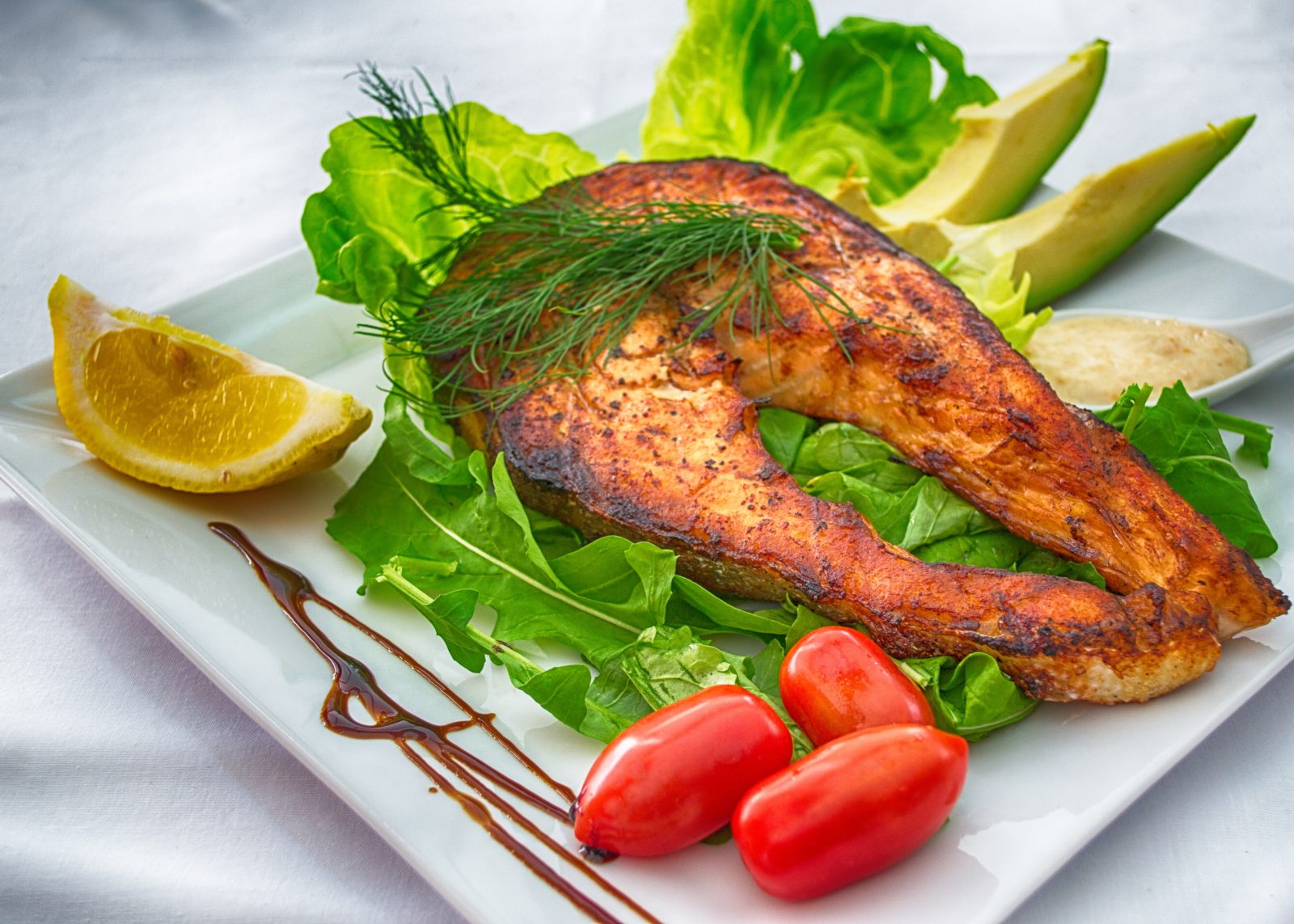
Omega3 fats are important for us to eat and most of us don’t get nearly enough of them to eat. That’s why I have sardines to my diet. Oily fish like salmon and sardines are great sources of omega 3 fats.

I’ve heard people argue about coconut oil, which turns to a solid under 76 degrees. Some say that cooking with coconut oil when using higher temperatures is the way to go. Others say that coconut oil has the most saturated fat of any fat. People are arguing over saturated fat now. Some say we need it; others still insist it’s bad for you. Here’s the reason people like to use coconut oil. Some of the fats in it are what’s called medium chain triglycerides. These types of fat go straight to the liver and are used for energy rather than being converted into body fat. You’ll have to make up your own mind about coconut oil because many of the food experts advice against using it, while many others recommend it.

Of course, there have been much discussion about the virtues of dark chocolate. I gather the darker the chocolate, the less sugar and the better it is for you. I’ve seen recommendations for dark chocolate with at least 70% cocoa and others as high as 85%. The darker the chocolate, the less sweet it is but if you give yourself some time, you’ll get used to it and really think of dark chocolate as a treat.

Unhealthy Fats

I am still skeptical about “smart balance” and “healthy choice” brands. While many foods are under discussion, I think we can all agree that trans fats are bad.

Trans fats were found in fried foods, fast food and certain baked goods… or at least they used to be. Trans fats raised the bad cholesterol and lowered the good cholesterol. In 2015, the US government passed a ban on all trans fats, which had 3 years to take effect (June 15, 2018, almost 6 months ago!) So, in theory, they are gone.

Trans fats (partially hydrogenated fats) had a very weird chemical bond. It is where hydrogen was during a manufacturing process to make a liquid oil into a solid.

It can still be confusing about which are healthy fats and which are not. Saturated and unsaturated fats are on the spectrum, with saturated fats being on the bad side, and unsaturated fats on the better side.

I figured I could just go to a chart (put out by the USA government) and it would be clear to me which fats are the right ones. Ha ha! Not so fast!

Healthy Fats chart from the health.gov website

Courtesy page 26 of the PDF on the Health.GOV website. Click for full 144 page report.

See the chart about common fats and oils shown on page 26 of this 2015-2020 PDF from the US government.

What is the difference? (Here is where my eyes start to get glazed over, as the memories of high school chemistry class come back.) It has to do with the bonds, double bonds versus single bonds and if it has been manufactured. I’ll spare you the diagrams.

Saturated fat are usually a solid at room temperature… in general saturated fat is a solid or a liquid, depending on the temperature. like butter, cheese and animal fats.

Some, if not many, people think saturated fat is linked to heart disease and high cholesterol. Saturated fat is “packed tighter” than unsaturated fat.

Others say we should avoid most vegetable oils except for a few oils like olive oil and avocado oil. They recommend using butter, coconut oil, and other oils high in saturated fat. Not to be wishy-washy, but this can become a bit confusing.

I’ve seen articles saying – “choose” soft butter (processed?) or choose choose “low-fat” ice cream (more sugar?). I’m not convinced that either is right. These may be worse. (Editor’s note: I do tend to drink light beer, but most beer drinkers scoff and wonder why someone would drink any beer if it is light. But I digress, as beer doesn’t have fat in it and that’s the subject at hand.)

So now, leave a message below with your take on the healthy fats. Which do you eat? Which do you avoid? Do you disagree with my take on the situation?

Time for me to go decorate the mantle and put on some Christmas music.

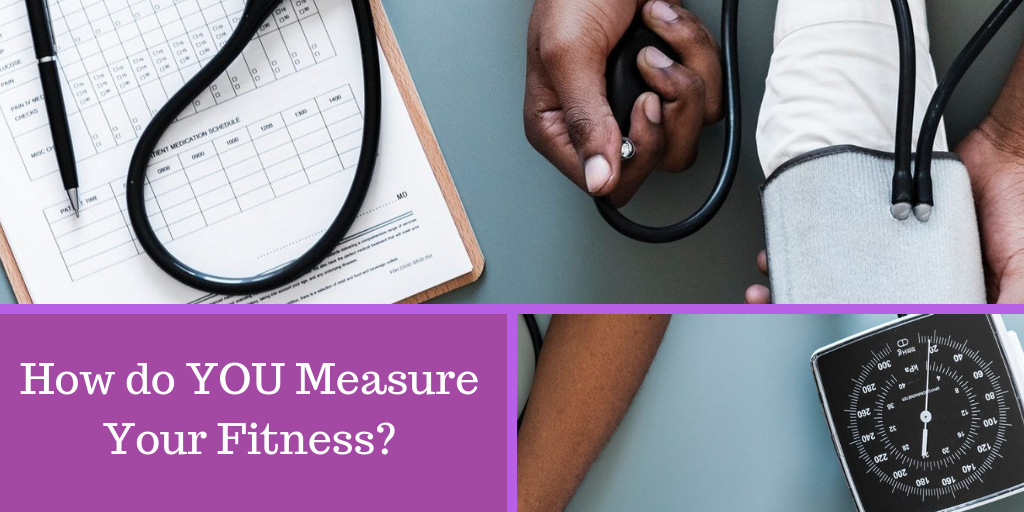
How do YOU Measure Fit?

How do most women over 50 measure fit?

I am guessing that the first answer would be weight. Maybe stamina vs fatigue?

As women in 2018, we have the opportunity to access so much information, it can be overwhelming and obsessive. Those who know their numbers may point to BMI or A1c or VO2Max. Or waist size or blood pressure.

As I go deeper into focusing on fitness, strength and getting healthy, I’ve discovered that there are always new numbers and measurements to fine tune things.

When I first started running/walking/jogging in 2009, I wanted to know how long it took me to go one lap around the track, one mile and a 5K. Those became numbers I worked toward improving. I hadn’t even heard of VO2 Max and even now, that number is something that I associate with athletes who would be knowing and tracking their numbers.

During my years of going to Weight Watchers from 2007 to 2013, there were weekly weigh ins. During the week, I would be counting points that WW had assigned to various foods. After I reached my goal weight, I stopped counting the points and started focusing more instead on fiber grams, protein and looking at healthy omega fats. I became much more focused on counting the number of minutes I exercised each day.

I began to follow my resting heart rate numbers and maximum heart rate. I learned there are lots of ways to measure fit.

As my health improved, then I was looking into complex carbs vs simple carbs vs processed food. Is white wine really better than red wine (or just NO wine??) Fish vs chicken vs red meat vs beans and other legumes? I joined the nutrition club at my gym.

And the numbers started to become more refined as well. Blood draws to get much more accurate numbers than jumping on a scale in the morning.

For lipids, I’d used to just track only my total cholesterol number. Then it was tracking my HDL and LDL along with triglycerides. Next I was focusing on the particle sizes. For glucose, most of my tests included just one number. Now I’m more interested in A1c.

During this past year I began tracking my sleep — not just the number of hours that I sleep. (I used to count the hours I went to bed and got out of bed.) Now I have information about how long I have had deep sleep, REM, light sleep and awake hours.

Maybe I’m too obsessive about measuring my fitness, but at the same time, I find that tracking is a powerful tool for measuring improvement. It helps me to find out that what I am doing isn’t working or is working.

I’m curious about the other members of the Becoming Elli community. Do you follow your numbers? And if so, which ones and why?

Review of The Obesity Code

The Obesity Code: Unlocking the Secrets of Weight Loss by Jason Fung, MD answers a lot of questions we’ve all had about both weight loss and weight gain. It’s a well-written, easy-to-follow book that explains why so many of us are overweight or obese and why when we lose weight, we’re likely to regain what we’ve lost.

The Obesity Code begins with a look at the past few decades and how obesity has become an epidemic. Fung does a great job of explaining the science in terms that we can understand. I rarely felt like I needed to start skimming because I couldn’t understand.

Basically, according to Fung, we can pretty much pick a diet and we can work hard at losing weight and eventually we can take off the weight. Most of us then begin to slowly put the weight back on and sometimes put even more weight on. This is because our weight is really the result of hormones, especially insulin.

Because we’ve eaten so many simple carbs and processed foods and eat so many meals and snacks, many of us have become insulin resistant. That makes our bodies release more insulin and it’s insulin that makes us gain weight.

The Obesity Code covers why we’re so overweight and why “eating less and moving more” doesn’t work. Eating less makes us tired and often slows down our metabolism. Moving more makes us eat more. Basically, the body wants to weight what it wants to weight. Unfortunately, our unhealthy food choices makes our bodies want to be overweight.

Fung does come up with five basic steps of weight loss. This is not a diet book, however. It does not give you menus or recipes. Instead it discusses what to eat and what not to eat.

Interestingly, Dr. Fung points out that we all worry about what to eat but we don’t think much about when to eat. He says the advice to eat small meals every two or three hours is disastrous. Also, he dismisses the idea that breakfast is the most important meal of the day. He says, if you’re hungry, eat when you get up. Otherwise, wait until you’re hungry.

He ends the book by discussing fasting as a way to reset your body’s set point for weight. There are various different ways of doing intermittent fasting and he covers most of them. I just recently wrote about intermittent fasting so was glad to read about it.

I thought The Obesity Code was fascinating. It’s easy to read and understand and really makes sense of the weight problems most of us deal with. I wished there was a bit more information about fasting in this book.

Because the book has been around for a couple years, there’s a lot of information online about it so you can find more advice on the fasting that way. Oh, and Timothy Hoakes wrote the foreword, which I thought was great.

The Obesity Code: Unlocking the Secrets of Weight Loss
Disclosure: this review links to the Amazon affiliate program, where a portion of a purchase might help offset the expenses associated with the podcast and website.

Intermittent Fasting for Weight Loss and Health

Everywhere I turn, I run into someone saying that intermittent fasting is the thing to be doing. I’d say it’s just a trend but a number of doctors and medical experts seem to be recommending some version of intermittent fasting.

Intermittent Fasting is not a diet. It does not involve what you choose to eat but when you eat it. Most doctor’s and nutrition experts will recommend that if you’re going to try intermittent fasting, you should still eat in a healthy fashion. Don’t let the fasting make you think that stuffing yourself with cheese curls is a great way to break a fast.

In The End of Alzheimer’s, Dr. Bredesen recommends an intermittent fasting plan. He suggests that you at least have a 12 hour window of fasting, which means you should have a 12 hour period of time each day of not eating. So, if your last meal or snack is at 7 PM, you can have breakfast at 7AM.  If you’re snacking at 11 PM, guess what? You’re supposed to wait until 11 AM to eat. To be honest, Dr. Bredesen says you should avoid eating in the 3 hours before going to bed, so you wouldn’t be snacking at 11. He says it might be even better to aim for 14 to 16 hours of fasting. Basically, if your last meal at the end of the day ends at 8 PM, you don’t eat until 10 AM. You can check out my review of this book.

So, all those people who said over the years, I don’t want to eat breakfast were perhaps on to something.

I’ve seen similar recommendations from Dr. Steven Masley, Dr. Mary Hyman, Dr. Perlmutter, and others.

Benefits of Intermittent Fasting

Why should we practice intermittent fasting? What’s the benefit to us? Well, a number of medical studies have shown that fasting helps us:

  • improve our mental health
  • lose weight
  • lower our risk of developing a chronic disease.

It helps with weight loss. There is the basic fact that if you’re omitting a meal each day, you’ll probably eat less. But there’s some evidence that this actually increases your metabolism. Also, intermittent fasting helps your body burn fat as energy which of course leads to weight loss.

Besides weight loss, intermittent fasting reduces the insulin resistance in our bodies which lowers our risk of type 2 diabetes.

Intermittent fasting also helps improve our mood and our memory. It’s supposed to be good for cognitive health.

Types of Intermittent Fasting

The method of intermittent fasting that I described above can also be called a time restricted fast. You eat every day but just limit the hours when you eat.

Intermittent Fasting

Related to the time restricted fast is the One Meal a Day plan. You can guess what this is…you eat once a day. Obviously if you’re eating one meal a day, you’d better make sure it’s a good one. I’ve met a number of people who eat this way and they claim to have lost a lot of weight and to like eating this way.

There’s also a 5:2 plan. Two days a week, you eat a restricted diet of about 500 calories and a normal number of calories the remaining 5 days.

There’s also a monthly fasting plan where once a month you reduce calories for 5 consecutive days to about 35 to 50 percent of your normal caloric intake. So, you normally eat 2,000 calories a day, you would reduce that to 700 to 1,000 calories for 5 days in a row.

Finally, some people fast for 24 hours at a time, a couple days a week.

Best Practices with Intermittent Fasting

Before you start fasting, make sure you don’t have health issues to prevent this. Women who are breast feeding should be careful with fasting. Also, if you suffer at all from any eating disorders, you might want to avoid fasting of any kind. If you are under a lot of stress, it’s probably not the time to add a major change in your eating patterns. Why introduce more stress?

If you’re not sure if you’re a candidate for trying intermittent fasting, check with your doctor.

Once you decide that you want to try intermittent fasting, keep a few things in mind.

  1. Remember to drink your fluids. Water, calorie-free drinks, black coffee, and green or herbal tea are probably all fine for you. Be sure you stay hydrated while fasting. Also, sometimes we feel hungry when we’re really thirsty.
  2. Get plenty of sleep. Your body needs sleep to repair itself. Sleep helps with cognitive health as well as physical health. Plus, while you’re sleeping, that fasting time goes by a lot faster.
  3. Be careful with working out when you first start. While your body is adjusting to fasting, you probably don’t want to also decide to take up some heavy duty workout regime. Be patient and let your body adjust. Then you’ll be able to tell how much working out you can handle in a fasted state. If you’re doing the 2:5 method, consider those two days of restricted calories as your rest days.
  4. Make sure you’re eating nutrient-dense foods when it’s time to eat. If you’re not eating for an extended time, you really want to make sure you’re getting your vitamins, minerals, fiber, fat, protein, and so on in your food.


Recording Your Body Measurements

Today I want to talk about the value of recording your body measurements. We’ve talked about weighing ourselves in this blog (To Weigh or Not to Weigh) and I think that’s a useful measurement to track. It’s certainly useful to know that your weight jumped five pounds in the past month.

I gained some weight on my super-duper exciting summer of travel and now I’m trying to take it off. I went to the beach twice and on a ten-day visit to Italy and had a great time. There always comes that moment when you come home and jump on the scale. Sigh. Putting weight on is so much easier than taking it off. It doesn’t seem fair, but I guess it’s also a lot more fun to put the weight on than to take it off.

I’m back to working out and I’m training to run the half marathon at the end of September. That actually made me start thinking about the weight because I figured the running will be a bit harder if I weight more. It’s hard enough running 13 miles without adding extra weight.

I keep a log of my weight. It’s just a paper journal that I use to write the date, my weight and the body fat number that my scale gives me. I flipped back to last year and found that last year in September I weighed 5 pounds less. OK, so I felt a bit better because it feels like I gained more than that. It made me feel a bit more confident about running the half marathon.

Body Measurements Journal

Tracking Body Measurements

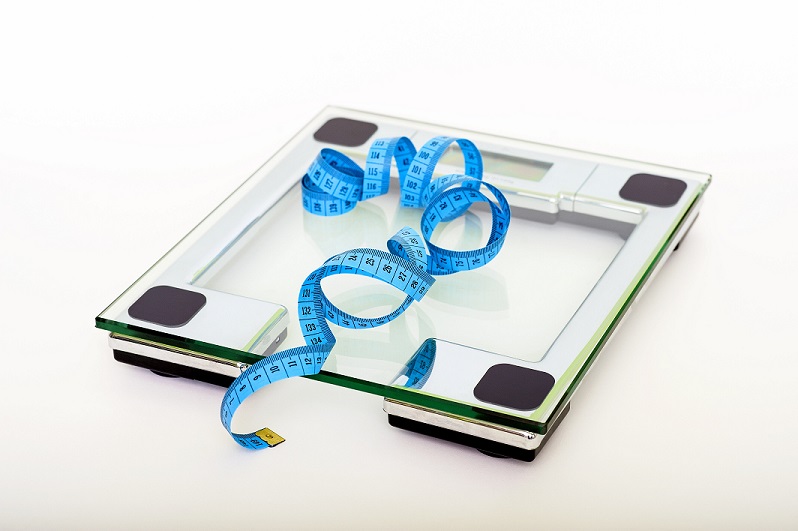
Besides recording my weight and body fat percentage, I also measure myself about once a month. I weigh my waist, at my navel, the widest part of my hips, and around my right thigh. Once in a great while I measure my neck but it’s difficult and I don’t think that number is very accurate.  I don’t measure anything else because it’s hard to do on myself. These numbers work well for me. These body measurements allow me to see my progress or lack of progress.

I write these numbers down in my log too, which allows me to refer back to them when I want.

When I returned from all of my vacationing, not only had I gained weight, my measurements had all gone up by an inch or more. That was alarming to me. So this is what I checked today. I’ve only lost a couple of pounds since I gained the weight over the summer but my measurements have improved. I’m not quite where I was at the beginning of the summer but it’s going in the right direction.

Here’s the interesting thing. I went back to September 2014 in my log. (Yes, I’ve been keeping this log for a while.) My weight is about the same number as it was then BUT my measurements are still consistently less than then. So, I weigh the same but I am thinner. That’s because I obviously have more muscle now and less fat than I did then.

This is why just fixating on what the scale says can be so misleading. Weight only tells you so much. It’s a great indicator of how you’re doing but don’t count on it as the ultimate fitness number.

You can do a similar thing by using a pair of jeans or some other item of clothing and try it on periodically. I like having the actual numbers but you may not like data as much as I do.

Body Measurements at the Gym

Besides the measurements that I do monthly, I get assessments done at my gym where they weigh me, calculate my body fat, and take body measurements.  They do more measurements than I can do so that’s also nice. Besides waist, hip, and thigh, they include chest, arm, and calf.  I do this approximately every six months or so. It’s also a great way to keep my eye on my progress.  Sometimes I’m delighted by the results. Sometimes I’m not so happy and I work on a plan to improve what I’m doing.

Body Fat

I’ll do a separate post about body fat some time because I’ve had this measured in different ways. It’s interesting how those results can vary.

For my own personal log, I just use the number on my Fitbit Aria scale. I know it’s not the most accurate body fat measurement but it’s consistent. I can see how I’m doing on a daily basis. So right now my scale tells me that I have more body fat than I did six months ago.  It goes along with tracking my weight.

I don’t know that it’s the most important data in all of this but I track it just because the number is there in front of me.

Recording Body Measurements

Here’s my advice on tracking weight and such. Include measuring some parts of your body. Just grab a measuring tape and weigh what you can. Record it somewhere. If you use a food tracking app, you can usually add it there. I just write it down in my trusty journal because it’s quick and easy. Plus, I use food tracking apps inconsistently so I hesitate to rely on one for this.

I use a Fitbit Aria scale. That means it uses the WiFi in my house to access my Fitbit account and logs my weight and bodyfat percentage whenever I use the scale. Therefore, that data is also available online. I don’t log my body measurements there so that’s not included. I bet I could find a way to include that information if I wanted.

Body Measurements and Body Fat

Fitbit probably knows more about my body than my doctor but that’s a discussion for a different day.

I find it helpful in my journey to be fit and strong to keep track of how I’m doing. When I start to feel negative about myself, I go back and see how far I’ve come. If I see that my numbers are backsliding, I can begin to focus a bit more on how I’m eating and making sure that I’m getting in my exercise.

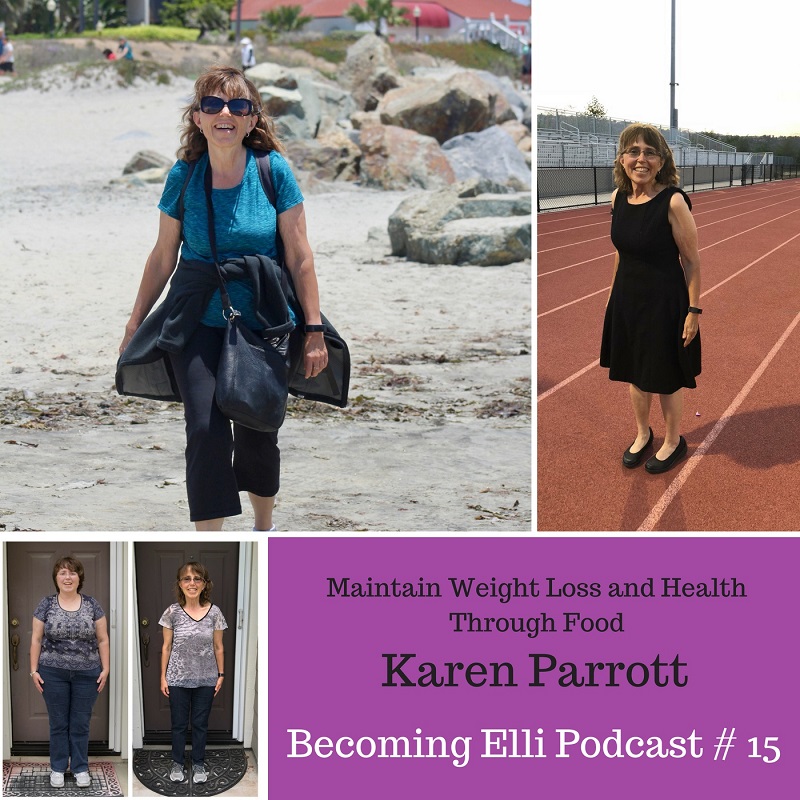
Maintain Weight Loss and Health Through Food with Karen Parrott

Episode #16 of Becoming Elli – Fit, Strong Women Over 50

Podcast: Download | Play in New Window
Subscribe: Apple Podcasts  (iTunes) Google Podcasts | Android-Google Play | Stitcher | Player FM Castbox | Tunein | Spotify | RSS

In today’s podcast, we talk with Karen Parrott, a popular blogger who writes about her weight loss journey and how to maintain weight loss. You can find her blog at Garden Girl, Weight Maintenance and Food Sobriety by abstaining from sugars, grains (NSNG) using a Paleo, LCHF, modified AIP, mild Ketogenic food template with a Primal Blueprint lifestyle. If you’re wondering what exactly all that means, we get Karen to define this and describe her way of eating in more detail.

How Karen Lost Weight

Karen Parrott is a 52 year old Licensed Medical Technologist living in Carlsbad, CA. She began gaining excess weight as a child and struggled with yo-yo dieting, obesity, morbid obesity, and binge eating until she was 46.

In 1997, Karen was diagnosed with Hashimoto’s disease and takes synthetic thyroid hormone replacement with great success. She also focuses on her diet to support her health.

In May of 2011, a month after a co-worker died suddenly, Karen decided to lose weight by using a packaged weight loss plan and a health coach. She lost 70 pounds in 40 weeks. She says, “the first thing I did at goal weight was to go into menopause! I transitioned onto Paleo (it fit well with my post-auto immune disease), then onto Low Carb.”

Finally, after an 8 to 10-pound unintentional weight regain, she tried a fasting protocol from The Salk Institute, from Dr. Satchin Panda’s lab. Switching to 16:8 fasting most days (16 hours of fasting with a 8-hour window for eating) helped Karen lose that regained weight slowly over half a year back to maintenance. It also produced the same low levels of ketosis that helped her lose the weight in 2011, without having to buy the packaged food.

Maintain Weight Loss

Karen uses about 20 different weight maintenance tools with abstaining from her binge triggers as the top tool.

She measures and records the following at various times:

  • glucose
  • ketones
  • weight
  • hemoglobin
  • A1C,
  • high-sensitivity C-reactive protein (hs-crp)
  • triglycerides,
  • bone density

She wears a Fitbit and tracks her weight and food on My Fitness Pal. www.myfitnesspal.com

For exercise Karen walks 5- 6 miles daily, stair runs 3-4 days a week for intervals, and she goes to the gym to do resistance training one or two times a week. Karen says she often does stretching, pushups and some flexibility movements.

In this episode, we talk with Karen about:

  • How she lost 70 pounds
  • How she has kept the 70 pounds off for more than 6 years
  • The food template she uses to select her daily meals
  • How she exercises

Chris “met” Karen online in 2012 when Chris hit her goal on Weight Watchers and was looking for resources on maintaining a weight loss. “I feel it is strange when one person knows someone from reading their blog, but they don’t know the other person,” Chris says. This is how we support each other these days. We meet and get to know each other from social media, forums, blogs, and podcasts.

Karen’s Tips

Karen follows a low carb eating plan. She identified foods that cause her problems by following an Autoimmune Protocol (AIP). She describes this in her food discussion with us. Based on the results of this protocol, Karen realized that besides avoiding grains and dairy, she also needed to quit eating nuts.

Karen says that we all need to do the research and figure out what works best for each of us. Some of us can eat a lot of carbs while others cannot. What works for Karen may not work for me and what works for me may not work for you.

Perhaps the best advice that Karen gives is not to be apologetic about what you eat or don’t eat. She suggests that we all need to be methodical about our eating. Nobody can tell us more about what makes us feel the best than ourselves. Don’t let others make you feel embarrassed about how you choose to eat.

Karen is a researcher by training and clearly loves to research the different ways we can support our health.  The following are links to the different books and sites that she refers to in our talk:

Links:

Refuse to Regain!: 12 Tough Rules to Maintain the Body You’ve Earned by Barbara Berkley MD Kindle or Softcover

The Paleo Solution  Robb Wolf

Paleo resource Sarah Fergoso

AltShift Diet, Jason Sieb

The Four Tendencies   Gretchen Rubin –

23andMe DNA Genetic Testing & Analysis – 23andMe is the first and only genetic service available directly to you that includes reports that meet FDA standards. Use your 23andme raw genetic data to learn the environmental and lifestyle contexts research suggests may be best suited to your genetic polymorphisms.

Found My Fitness – A website by Dr. Rhonda Patrick – a Ph.D in biomedical science/expert on nutritional health, brain & aging. The focus is on genetics with a database where you can run your 23andMe report.

Promethease is a computer program developed by the SNPedia team which allows users to compare personal genomics results against the SNPedia database, generating a report with information about a person’s attributes, such as propensity to diseases, based on the presence of specific single-nucleotide polymorphisms (SNPs)

Franziska Spritzler – Low carb dietitian

Cleveland Clinic Function Medicine

Dr. Mark Hyman

Satchin Panda, Ph.D.- Salk Institute

Rhonda Patrick and Satchin Panda, Ph.D. have worked together on the benefits of a Low Carb diet. Watch this interview to learn more.

Gut microbiome may have its own circadian rhythm. Check out My Circadian clock app

Dr. Jason Fung

Ruth E. Patterson – Fasting and Breast Cancer

Valter Longo, Ph.D.

The Salt Fix

AIP – Auto Immune Protocol (elimination diet)

Vinnie Tortorich   NSNG – No Sugars No Grains –

Anna Vocino – Eat Happy

Ultra runner NSNG Zack Bitter

Adele Hite Easy Vintage Meals 

Definitions:

Hashimoto’s Disease: Auto Immune disease

High sensitivity C reactive protein (CRP)

IRB approved study – Institutional Review Board of the US Food and Drug Administration

Intermittent fasting 12:12 or 18:6. Eating early in the day is referred to as Early Time Restricted Eating

Otto Warburg Effect

BRAF Gene Mutation

How to contact Karen Parrott:

Blog: Garden Girl

Instagram: Karenspaleolife

Twitter: @Gardengirl_kp

Facebook: Garden Girl KP – Weight Maintenance and more 

Pinterest: Gardengirlkp

Counting Calories or Eat Less and Move More

If you want to lose weight and you start to look around on the Internet for information on the best way to do so, you’re going to find countless different diets and methods of weight loss. There’s way more than I can discuss in a blog post, but I thought I could pick a few and write different posts about them. So today, let’s discuss counting calories. This is the type of dieting that most of us have been familiar with since we were teenagers: you count calories and eat fewer calories per day or week than you burn.

This is not a new idea by any means. We all learned about this kind of diet and probably have tried numerous times. If you’re very diligent about this and track everything, it may well work for you.

Weight Watchers falls into this category, though instead of counting calories, you count points and over the years Weight Watchers has tried to take types of foods into consideration.  You can add some exercise into the mix to try to burn more calories, which allows you to eat more calories each day.

Products like Slim Fast and Nutrisystem also fall into this calorie counting category. The advantage is that you don’t really have to log your food because they’re providing you low calorie food and doing the calculations for you.

The mantra you hear for this is “eat less and move more.”

Counting Calories

The thing about calorie counting is that it doesn’t tell you what to eat. In theory, you can eat junk food and if what you eat falls into your calorie plan, you’ll be OK. In practice, this won’t work for most of us because junk food doesn’t make us feel full for very long and we end up overeating. (Brenda O’Hara talked about this in her interview on the Becoming Elli Podcast.) So, really, the best way to consume fewer calories than you burn is to eat foods that sustain you over a longer period. Eating foods that don’t have a lot of calories and fill you up (think vegetables), you’ll hopefully begin to lose weight.

How you choose to eat is up to you. Calorie counting works for people who follow any number of eating plans, whether it’s vegetarian, vegan, Keto, or Paleo.

The way you follow a calorie counting plan is to determine how many calories you burn in a day. There are many TDEE (Total Daily Energy Expenditure) calculators online. You enter in your age, height, weight, gender, and a general indicator of how active you are. The calculator then tells you how many calories you can eat per day to maintain your weight and how many to eat to lose weight.  The FDA puts out called Body Weight Planner.

You then track calories. The best way to do that is to log what you eat and calculate calories. You can log your food online; there are many popular sites where you can log. Check out myfitnesspal.com, loseit.com, and sparkpeople.com for different options. Some features you probably will want is the ability to add recipes for tracking and to be able to scan barcodes for easy logging.

I’ve used a couple of different sites and have ended up sticking with Spark People, mainly because I’ve created enough recipes and groups there that it seems like more effort to leave than it’s worth.

Most of these sites will give you recommendations on what to eat and how much to eat to lose weight. I’ve noticed that myfitnesspal always tells me to eat around 1200 calories. I’m sure I’d lose weight at that, but I much prefer the 1500 calorie per day mark that other sites give me.

If you don’t want to log your food online, then to track calories, you’ll need to write them down. Maybe just use a tablet to write down each day’s meals and the corresponding calorie count.

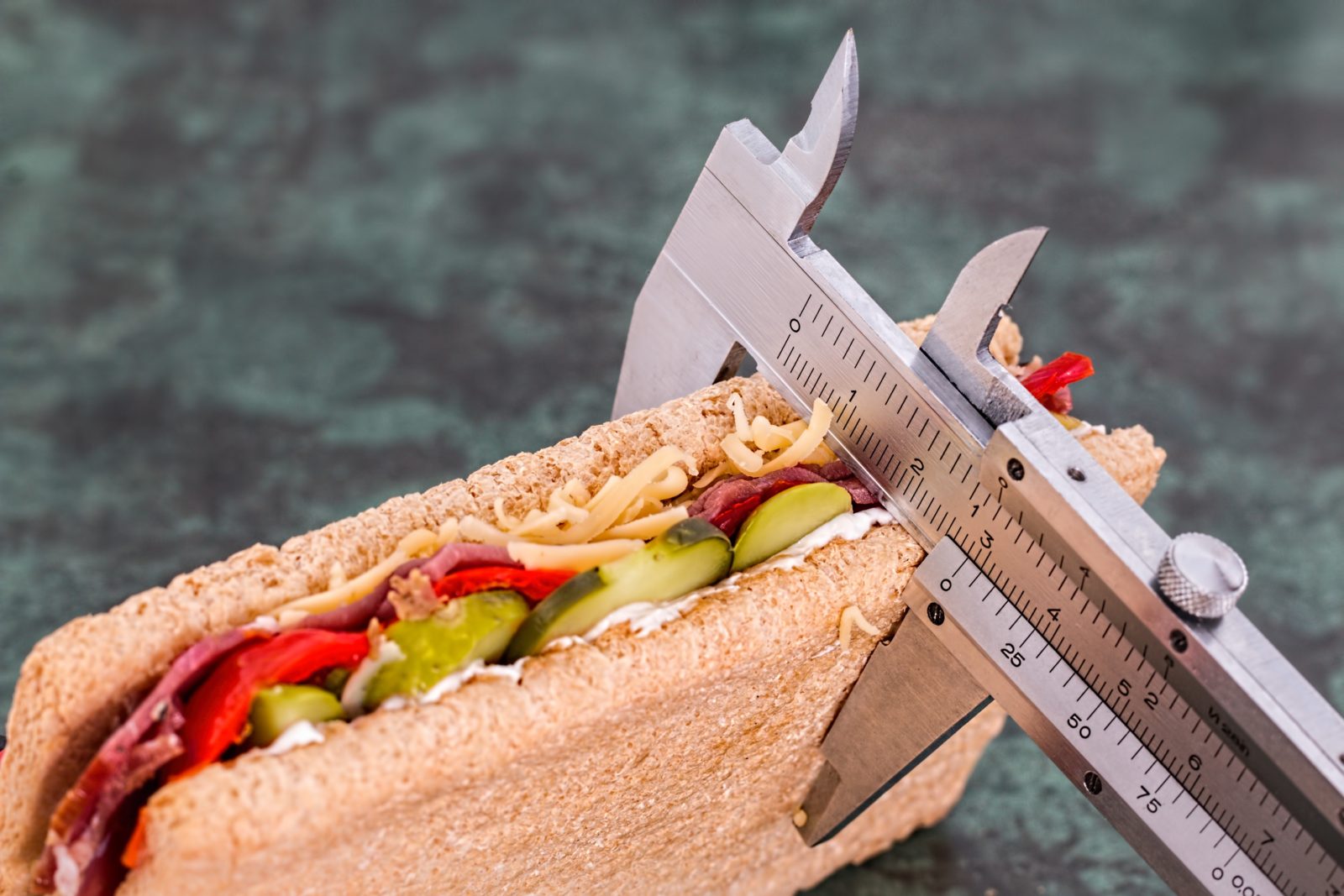
You also need a way to determine how much food you’ve eaten so you can correctly count calories. You’ll probably need a food scale to do this. You can use measuring cups and spoons but determining weight is often the best way to calculate calories.

Counting Calories

My recommendation for a food scale is to look for one that has a tare feature; that’s where you can put a dish on the scale and then push a button to reset the scale to 0. That way you can add food to the dish and get a weight just for the food. Also, get a scale that converts weights to both ounces and grams. Sometimes it’s easier to count the calories if you have the grams and sometimes knowing pounds and ounces works better.

Pros and Cons

Pros: No food limitations except for quantity. You can eat any food group that you want. You can also do this with any diet plan you want to follow.

Cons: Logging food can take time and for this to work you have to know how much you’ve actually eaten. Guessing usually means you’re underestimating what you eat. You may be frequently hungry. This is hard for many to do on a continual basis so if you’re going to do this, try to find some way of eating that works for you for the long term.

Resources:

There are many resources out there for information and tracking your calories. These are just a few of the better known.

www.reddit.com/r/loseit/

www.weightwatchers.com

www.myfitnesspal.com

www.loseit.com

www.sparkpeople.com

Race Recap of the 2018 Cleveland Half Marathon

Becoming Elli Podcast Episode Number 11

Podcast: Download | Play in New Window
Subscribe: Apple (iTunes) Podcasts | Android-Google Play | Stitcher | Tunein | Spotify | RSS

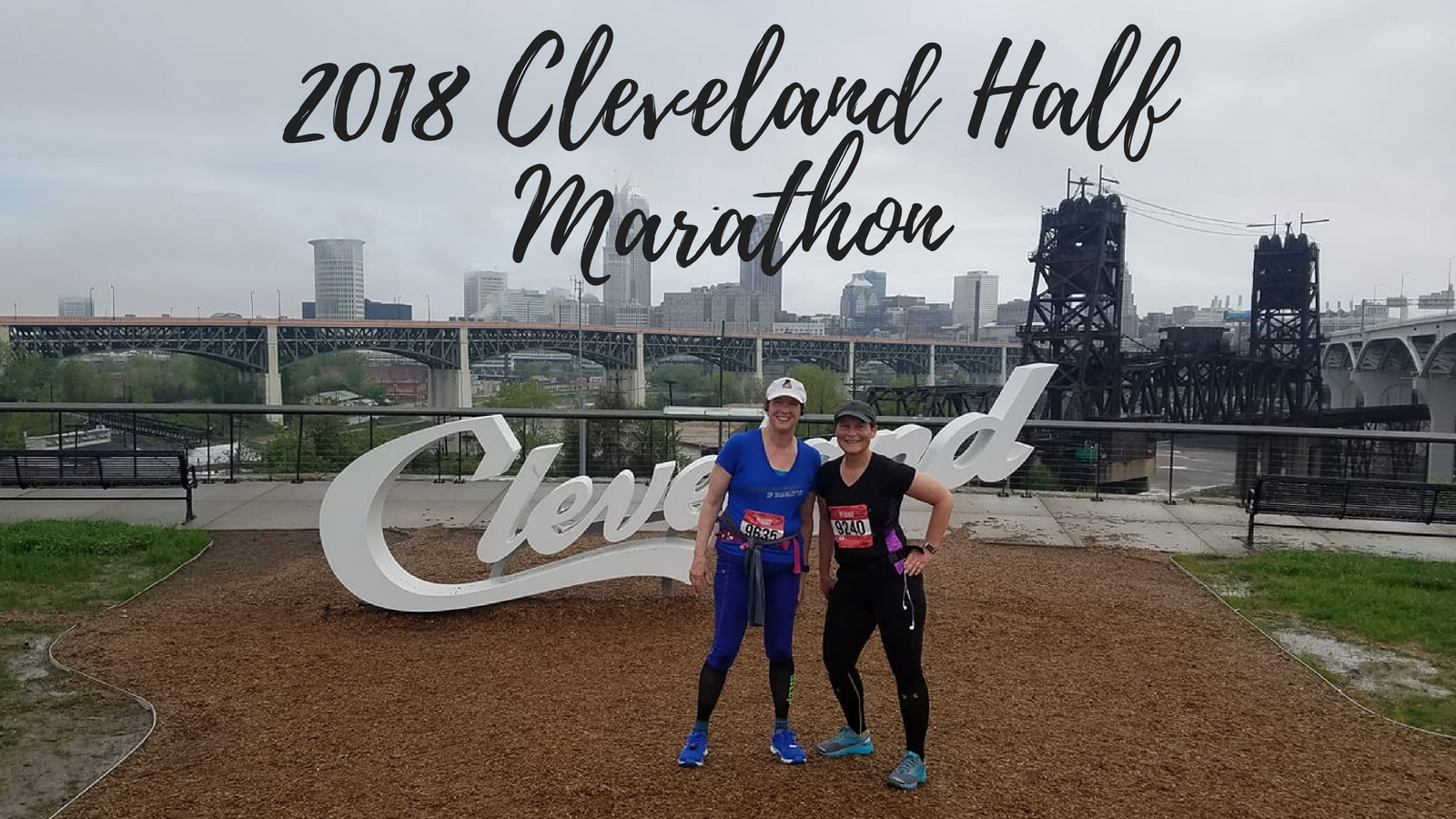
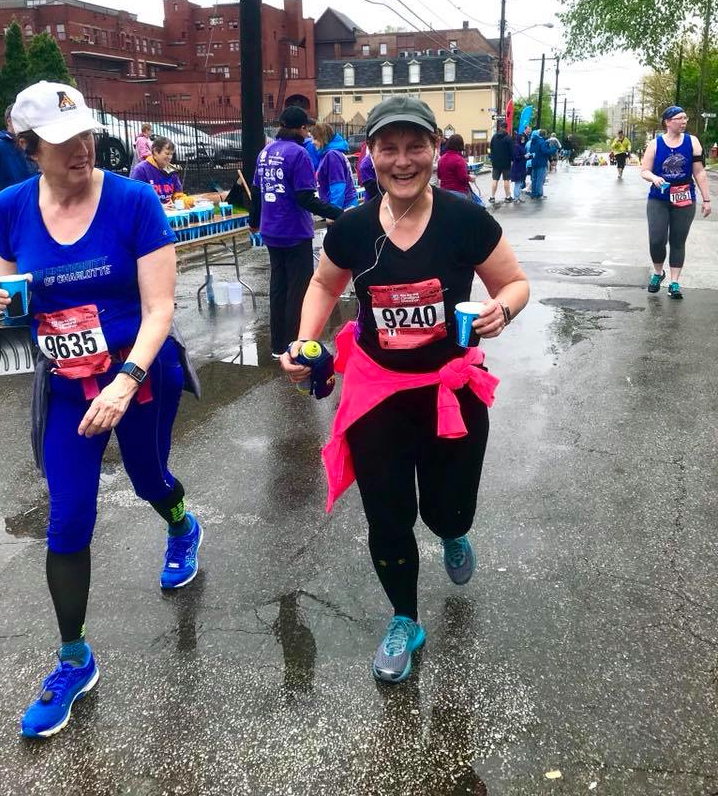
In Podcast #11 of Becoming Elli, Jill and Chris share their experiences with the Cleveland Half Marathon. Running 13.1 miles with less training than they would have liked, Jill and Chris found that changing expectations made for a fun event.

Listen today to hear about:

* Expo
* Parking
* Expectations and attitude
* Weather and what to wear2018 Cleveland Half Marathon before the race
* Running the 13.1 mile course through downtown past the stadiums, into the Flats, up into Tremont, past Ohio City, down through Gordon Square and finishing in Public Square
* The food and the medal
* Fun in the Beer Garden and listening to live music

Finishers - 2018 Cleveland Half Marathon

Finishers – 2018 Cleveland Half Marathon

In the tips section, Chris shares her tactics on how she works to maintain her weight loss so she can maintain a healthy weight. It’s challenging road to find the right mix of exercise, sustainable recipes, and mindful eating patterns.

1) getting on the scale
2) keeping track of the food
3) signing up for a race and training for it
4) focus on joints, ligaments and muscles
5) exercise moderately
6) use GO TO recipes

What tactics do you use to maintain your weight loss? Do you feel it’s like a marathon trying to maintain weight after a weight loss?

Becoming Elli where women over 50 inspire each other to become fit and strong.

The Marathon of Maintaining a Weight Loss

After gaining weight following a fateful Girl Scout Camp weekend in the mud (injuring both of my Achilles tendons,) I realized I had to get back in shape or I’d continue to gain.

In October 2007, I began eating better. Then I started exercising. Slowly the weight came off and I got more fit. In July 2012, I hit my goal weight, then went a little lower as a buffer zone. I lost 70 pounds and for the most part have kept it off – with a few ups (in the winter) and downs (in the summer.) Right now, at the beginning of summer 2018, I’m about 10 pounds over my goal weight, but am feeling strong and fit from I gaining muscle. Because I’ve been focusing on losing the weight and then getting fit and strong for the past 11 years, I feel younger and am more active now than I ever felt during my forties.

Two weeks ago, I ran the Cleveland half marathon race. Tomorrow, I’m trying something new – a 14 mile duathalon that includes two miles run, ten miles bike and two miles run. I’ll let you know how it goes!

the marathon of maintaining a weight loss

Chris running in the Cleveland Half Marathon on May 20, 2018.

I believe that staying fit and keeping the weight off is a lot like a marathon. It’s a challenging road of finding the right mix of exercise, sustainable recipes and mindful eating patterns. Just like in a real marathon, there are hills – both up and down. There are water stations of support, along with wide open empty spaces where your mental toughness has to get you through.

Music, mantras and crowd support makes a big difference.

Sometime I think it is my activity level of running and biking in the summer that makes it easy to not be hungry. I just feel more focused on fun. But maybe it is the cold, overcast days in the Ohio winters that make me feel like eating and hibernating.

Regardless of the season, I have to be on the lookout for emotional eating. Whether it is too much grazing from a fabulous potluck before the Jimmy Buffet concert, birthday celebrations with double chocolate cake, or giving in to the cravings of “comfort food” following a loved one’s doctor visit – if I give in to emotional eating, it derails my successful efforts in the marathon of maintaining a weight loss.

I have found that there is a lot of support and many resources for losing weight, but not many available for maintaining a weight loss. If you’ve been a loyal reader or podcast listener, you know that one of my goals for the Becoming Elli website and community is to become a great resource for maintaining a weight loss.

Here are some of my more successful weight maintenance tactics:

* Getting on the scale everyday – especially when I don’t want to. Most days I find it routine to get on the scale and record the weight of my body. It’s even more important to weigh on days after an event, when I know it’s likely I’ve gained a bit.

* Keeping track of what I eat using My Fitness Pal. When I first was losing weight, I went to Weight Watchers and logged things on a paper tracker. Then later, I tracked on the WW app with smart phone. Now, when I do track, I use the My Fitness Pal app. I like how it shows the macros. It also works with FitBit so days when I’m super active and need more food, I can eat more while not going over. Even with the ease of an app, why is it easier to measure and track exercise and my weight, but not to measure, weigh and track food? Even when I was seriously dieting, I find it difficult to track my food, let alone weigh it on a scale before the meal. That is a subject for a whole separate article!

* Signing up for a race, then training for it. I’ve heard that there is a calculation that every additional pound adds xx number of seconds on to your time.  Maybe 10 seconds per mile? Being “in training” helps me consciously make decisions about food, instead of just digging in.

* Saying “No, thank you” to fancy desserts. In many ways I am lucky in that I don’t really crave fancy desserts. Unfortunately, if they are sitting in front of me, I will eat them, partly because everyone else is. It’s odd. I wouldn’t seek out cake or mousse or whatever, but if everyone else is eating it and I don’t conscientiously think about it, I’ll just eat 600 calories of non-nutritious, high-calorie sugar-filled dessert.

* Thinking about my joints and ligaments. I’ve heard that every extra pound on your body feels like xx pounds on your knees and joints. Maybe 5 times? This tactic is wonderful motivation for me to really continue exercising but make sure I don’t overdo it.

* Making my “go to” recipes. There are various meal plans that I fall back on time and time again — things I love to eat, that are nutritious, satisfying and delicious. You’ll find some of the recipes that I have shared are ones that help me to not regain the weight.

Do you feel like you are running a marathon for maintaining a weight loss? If so, what maintaining strategies and tactics do you use? When you get a chance, please leave a comment below or email me at Chris at my Becoming Elli email address. I’d love to hear your strategies!

New Inspiration from Taking Stock and Looking Ahead

New inspiration looking ahead for 2018I’m feeling new inspiration.  Why? With 100 days into 2018 already, spring is here and winter is behind us (hopefully.)

Best of all… the Becoming Elli Facebook Closed Group is active now. Jill and I have had a dream of finding more women like us who are working on becoming (and staying?!) fit and strong. We started this website and our podcast series to provide a place to connect with others who may have some of the same struggles, concerns and goals as we do.

To that end, we are encouraging you to join the Becoming Elli Facebook Closed Group as a way to connect with other like-minded women.

Why I am personally excited about the Closed Group:The Becoming Elli Group provide new inspiration to me

  • I’ve found I have to keep an eye on my weight – it is a still a struggle for me  – and other women are going through the same challenges.
  • Having friends and acquaintances (or even strangers who I have a lot in common with) who are going through the same things gives me the feeling that I’m not alone in my struggles.
  • I’ve found that I will do exercise when it is fun, I know I won’t get hurt doing it and I have other people who are “in it” with me.
  • A closed group offers a more open conversation. It’s easier to discuss something on the internet when I know it’s not wide open to the world.
  • Sometimes just one person telling me “you can do it, I know you can.” gives me the added incentive to do what I’m trying to accomplish.
  • Hearing about someone else’s challenges and what they are able to overcome really motivates me

Why you may be interested in joining the group:

  • Motivation/inspiration
  • Looking at things from another angle makes a difference.
  • New ideas are helpful and reinforcing your existing ideas helps too.
  • Taking steps to do the action plan for a dream or a goal you’re working on feels really good.
  • You can have questions answered – or discussed with pros and cons – find others with the same concerns
  • Celebrate your “wins” – with weight loss, muscle gained or challenges met

Please use this link to join the group.  Jill and I have a few common sense ground rules. We are eager to connect with you. We review and approve each person’s membership in the group so that it will not be a public group.

Maybe you are like me and are taking this change of season time to look at where things stand with your fitness.

I’m thinking about my fitness – the half marathon I committed to running is coming up fast. I’m thinking about my weight – ready to recommit to eating right by planning and keeping track of what I put in my mouth.

Meanwhile during this past week:

  • I’ve done 2 really strong workouts – the kind that leave you sore the next day in a good way. Not hurt, but my muscles are building.
  • I was able to get a couple of shorter runs completed.
  • Jill and I attended a health fair at my gym that inspired us. I found some new ways to maintain better health and we discovered some new podcast topics. While at the health fair, we took advantage of some free screenings.  I was excited to see good test results on blood pressure and bone density, but I found I still have a lot of muscle to gain! More about all that in a later post.

If you live anywhere near me in Ohio, you may be excited that the weather has actually become spring. I’m going to wrap up this post so I can get outside and enjoy the weather. I better be fast to beat those April Showers!!

Don’t forget to connect with us with the new Facebook Group. – Chris


P.S. Leave a message in the Becoming Elli group about why you’ve joined. I’m eager to hear from you!

« Older posts Newer posts »

© 2026 Becoming Elli

Theme by Anders NorenUp ↑