Fit Strong Women Over 50.

Author: Chris Brown (Page 32 of 41)

Looking Forward to Spring Bike Riding

When spring rolls around I start thinking about riding my bike outside. For me, happiness is bike riding.

It reminds me of when I was 10, 11 and 12 years old. Lots of good memories of riding bikes as transportation to go visit friends, using the construction site around the corner as my personal BMX course, and having freedom to go where I where ever my bike could take me.

Just seeing the weather get a little more sunny and a little less cold has me thinking about bike riding.

Doing something you love, that just happens to help you get fit, is a real lucky thing, I think! This time of year is full of anticipation for me.

I’m going to do a big ride in August as a fund raiser and my team will begin riding soon, I’m pretty sure. Before that, I’ve got a checklist:

  • The bike itself:
  • handlebar tape
  • chain
  • tires
  • tubes
  • rims
  • brakes
  • shifter

Bike gear:

  • spare tube, co2 and tools
  • rain gear
  • shoes
  • bike pants
  • light
  • reflector
  • water bottles
  • helmet
  • snacks
  • sunscreen
  • phone rain protector
  • bike gloves

I’m going to be gathering my equipment and checking out my bike. Now that the sun sets well after 7 pm, it gives me a chance to get a little riding in after work!

Do you enjoy bike riding? Does it remind you of your childhood? If you’re not a bike rider, what do you look forward to in the spring?

Heart Rate Training for Endurance

Since the beginning of the year, I’ve been experimenting with a lower heart rate training than I usually do in my workouts. I’m trying to improve endurance and stamina.

Some people call it exercising in the “Fat Burn Zone.” I’m not convinced that it is burning my fat, but I do know this: it has improved my endurance. It is much easy to keep going and I don’t feel tired or worn out from exercising.

The idea is to work out at the level of exertion where your heart rate stays at the aerobic level. On my FitBit, it is called the fat burning level.

If you exercise just a little harder, you begin to breathe harder, your heart pumps harder and you’ll enter the cardio level. Really push it and then you’ll go into the peak level.

If you’re like me, you have been exercising at the heart rate similar to the charts at the gym. Those are based on 75 to 85% of your maximum heart rate. The charts show subtract your age from 220 to get your exercise number for your heart rate. The vast majority of my running and group exercise workouts have been at those cardio/peak levels. While these high level workouts burn a ton of calories, I find I am really hungry and want to eat up all the burned calories!

Target Heart Rate Calculator This calculator is set up for the 220 – your age. The results show the five workout zones. The fat burning zone may seem ridiculous to be working out in.

The heart rate training for endurance program that I’m following is a different formula. Instead of working out at 85% of my maximum heart rate based on the 220 minus my age, I’m using Dr. Phil Maffetone’s formula of 180 minus your age as my target exercise heart rate. The idea is to hold “that” number during the exercise because that is where your body is aerobic.

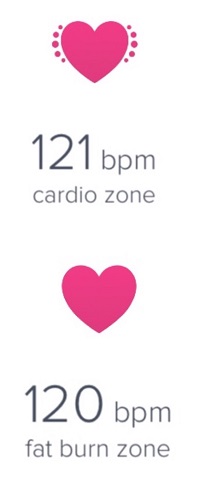
Of course this number is different for everyone. You can see from the artwork I’ve attached to this post, my FitBit thinks my magic number is 120. When I go just a fraction harder, it turns to 121 and calls it cardio.

While doing workout in the fat burning level feels like I’m not doing enough to be considered working out, I find that I can keep going a very long time and not get tired. I’ve been going to a double spinning class on some Saturdays where I still manage to burn over 700 calories. Because it hasn’t been a big push, I’m not tired at the end of class.

The idea of building a strong base by focusing on endurance and working out at the fat burning level is supposed to increase your ability to do more work. You build endurance and eventually you can accomplish more at the lower heart rate. Over time the intensity stays the same, but the speed or resistance increases.

I find it is difficult to keep my heart rate at the lower level.

If you’re interested in learning more about this type of endurance training, you may want to learn more about of Dr. Phil Maffetone’s work. He uses a formula to calculate your exercising heart rate. The MAF (Maximum Aerobic Function) formula is 180 minus age. (Dr. Maffetone has you add and subtract numbers based on your exercise history and health as well.) He has a lot of information about it – videos, podcasts, books and many articles. Here’s a link to his 2 minute overview video.

Besides improving endurance and performance, he claims that it benefits recovery from high impact exercise as well as stress and protection from metabolic syndrome. I really like this method of exercising because I’m looking for increased endurance and still wanting to keep coming back for more.

While doing my indoor cycling classes, I’ve been using my FitBit watch to monitor my heart rate. However after most of the classes I find I easily still enter into the cardio mode and have to slow down to go back to the fat burn mode.

Heart Rate Training for Endurance

Because I’m 61, my goal heart rate number is to workout at around 120 beats per minute. Dr. Maffetone has different adjustments too. I give myself another 5 points because I have consistently exercising since 2009 or 2010, so my goal is to keep my heart rate steady at 125 while I’m exercising.

I have found that it is very hard to hold a heart number when you’re working out! A motivating instructor and some good music… the next thing you know, I’m wanting to go faster and harder. Plus, going harder is what I’ve been accustomed to doing for years!

Here are some of the ways of thinking that have helped me to stay in the Fat Burn Zone:

  • Focus on my breathing
  • Try to keep two counts in and five counts out
  • When I have to open my mouth to breathe out, slow down
  • If the music speeds up, keep focus on the breathing
  • When walking up a hill, slow down
  • If indoor biking, take off some resistance
  • It is not about “no pain, no gain”
  • It’s not too often that I find it has dipped and I have to speed up, but sometimes that happens if I daydream.

A few weeks ago, I put my phone on the bike so I could monitor the phone instead of my watch and I was able to hold my heart rate more steady.

Although it’s only been about 10 weeks, I’ve found that I enjoy doing more exercise than I used to at a time, meaning I like two hours rather than 45 minutes or an hour. I feel stronger and am noticing that I can go harder with less effort. I’m interested to see when I get back to biking outside if this experiment has made a difference. At the end of March, I’m going to see how I have improved.

Jill asked me if I was also following his eating plan. No, I haven’t. There’s a whole lot more to his MAF program… actually 8 parts (click for his chart.) I was only working on number 5 which is the low heart rate aerobic system training.

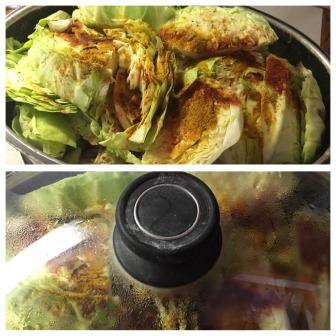
While I’ve not specifically been doing his food plan, I have been doing the Veggie Challenge! (Why do I feel like I just said “No but I stayed at a Holiday Inn Express!?!”)

Here are all of the 8 steps that he talks about.

1 Carbohydrates
2 Inflammation
2 Vitamin D
4 Folate
5 Aerobic system (Heart Rate Training for Endurance!)
6 Stress
7 Brain
8 Aging

In theory, I’m already doing the other 7 to moderate levels, but seriously, the only change I have made and tracked in 2019 on Dr. Maffetone’s list during the past 10 weeks has been to work on number 5. So if it doesn’t work, maybe I will blame it on the fact I only did a halfway job (or one eighth) job of actually trying his program.

Have you experimented with heart rate training? What has been your experience? Which heart rate monitor do you use? Do you feel like this is all just too analytical for getting exercise? Let me know your thoughts.
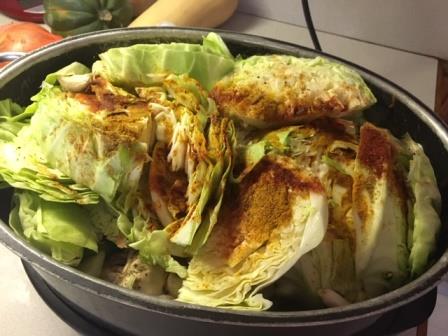
Collard Greens Rainbow Wrap – New Veggie Challenge

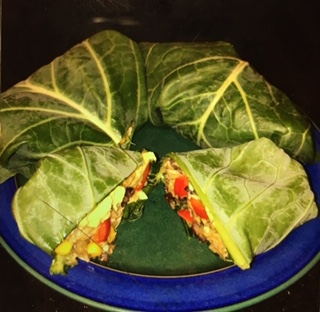
Last week I took a grocery store tour with Revitalize, a functional group that focuses on women’s health. Today’s recipe is from Beth Kaczmar who told me it was okay to “cheat” and use her photo of her Collard Greens Rainbow Wrap.

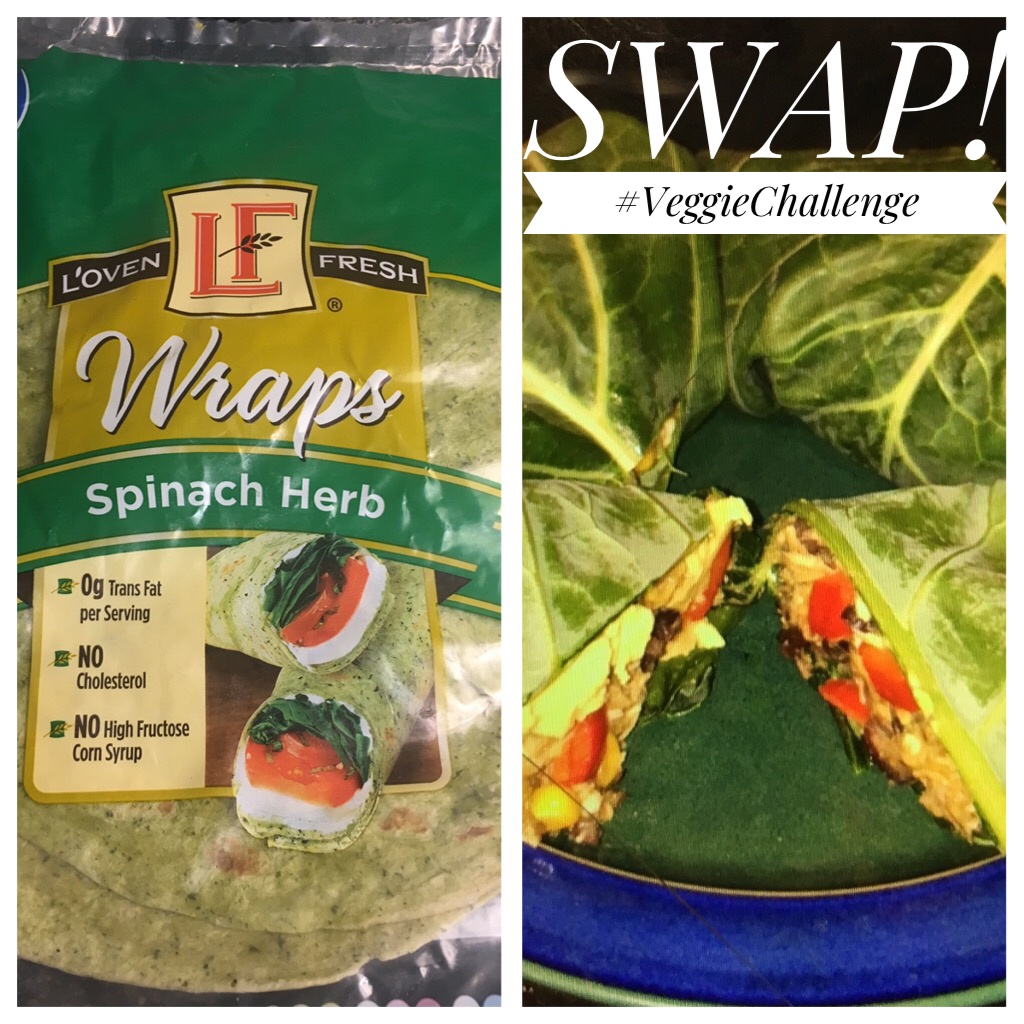
It looks delicious, doesn’t it? This is a photo of the photo on her phone!collard greens wrap veggie challenge

I think it’s a great way to swap out the 200 calorie spinach herb wrap that has 34 grams of carbohydrates for something REAL that has more like 11 calories, only 2 carbs and less than 10% of the sugar!

Here’s what Beth says about rainbow collard greens wrap veggie sandwich:

“My Collard Green Rainbow Wrap is something different from your ordinary wrap. It’s low in carbs, packed with vitamins A,C,K, B12, B6, calcium, iron, magnesium, potassium, folate and rounded out with monounsaturated fat, fiber and protein to give you a feeling of fullness and satisfaction!”

Collard Green Rainbow Wrap
Several large Collard Green leaves (washed and dried)
1/2 Cup Cherry Tomato, diced
1 Large Carrot, diced
1/4 Cup Yellow Corn
1 Whole Ripe Avocado, mashed
1/4 Cup Black Beans, rinsed
4 T Purple Onion, diced
1 Cup Shredded Chicken Breast (can leave out if desired)
1 T Fresh Lemon Juice
1/4 tsp Garlic Salt
1/4 tsp Fresh Ground Pepper

*In a medium size bowl, add all ingredients. (Mash avocado well before mixing in). Mix everything together well. Lay collard green leaves out flat. Add about 1/2 cup of mixture to each leaf. Roll as you were rolling a burrito.

Thank you Beth! This is MMMMMmmmm healthy!

What’s your new veggie of the week?

Free Range Eggs – What Does That Actually Mean?

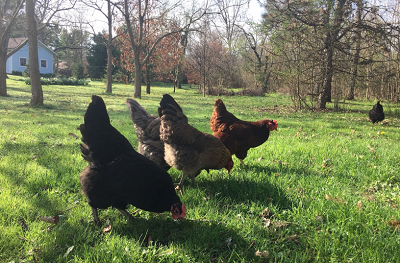
Some of you may know that my husband and I keep chickens. They’ve been known to make a vocal appearance from time to time in the Fit Strong Women Over 50 podcast. They like to announce when they have just laid an egg – at least that is what I think they are saying!

I love the idea of farm fresh free range eggs.

What does that mean exactly? At our house, free range eggs means that the chicken run free, at least some of the time.

I will say, it is safer for chickens to stay in a pen. Ours are always penned in at night! When they are locked inside the pen, no hawks, owls, possums, raccoons, dogs and other predators are going to get them.

There isn’t a strong definition for free range. The idea is free range chickens eat bugs, worms and natural protein. I get a lot of questions about our chickens and will attempt to answer some of them here.

Some questions people like to ask me about the chickens:

  • Do they have different colored shells and do those taste different?
  • How many eggs to chickens lay?
  • What’s the difference in the eggs?
  • Do they only eat worms and bugs? what about when snow is all over the ground?
  • How much free counts as free range?
  • Why are store bought eggs better for hard boiled?
  • Do you have a rooster?

When they are free ranging, we keep the coop door open so they can come and go as they please. It helps in gathering the eggs. If the chickens have a place to lay so we aren’t doing an Easter egg hunt every time we gather eggs. free rabge eggs

They lay just about every day when there is lot of sunshine and warmer temperatures. It seems like they lay only about once a week when there is little sunshine. Considering the cost of chicken food and all the equipment, it is so so much more economical to buy eggs at the grocery store.

Fair Weather Fowl
In the winter with snow covering the ground, they stay penned in and eat only the pellets and corn we provide to them. They are not interested in going out when it gets cold, windy, snowy or rainy.

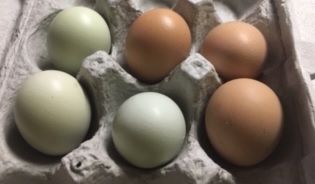
Do they have different colored shells and do those taste different? Yes different breeds have different colored shells. Rhode Island red chickens have a reddish brown color shell. Leghorns, white. Americanas, greenish blue. free range eggs in a carton

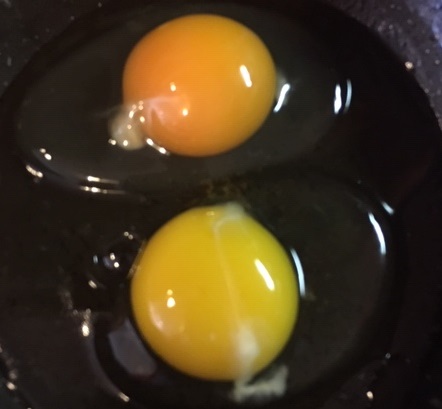
Although I’ve not noticed a difference in color or taste between the different breeds of chickens, I have noticed the color of the yoke is much richer on free range. And they taste much better too. I’ve noticed that store bought eggs have a yellow to light yellow color yoke, but our chickens lay rich deep orange color yokes.

Taste: the yokes of the free range chickens taste much more full and creamy.

While on a nice sunny day, our chickens get to run around outside their cage, free range chickens are not without their challenges. Chickens can fly. Some people trim their wings.

Our chickens haven’t learned where the property line is. We have a split rail fence in the front of the house with a 3 foot flower bed with forsythia bushes, azelias, PJMs, burning bushes and Japanese iris. This helps to keep the chickens from going near the road. However our back yard is mostly open on the one side which tends to have the chickens wander over the the neighbors in search of greener pastures. The neighbor two doors away owns two mastiff dogs. Not aggressive dogs by any means, but obviously having chickens pecking around in their sight line but just over their invisible fence is not optimal by any means.

Our two dogs have been trained not to chase the chickens. The cats don’t seem very interested in them.

None the less, we try to keep the chickens interested in the land on our property by turning over the gardens on the close side of the house. They love taking dust baths in a dusty part under the overhang of our bay window.

Pecking Order
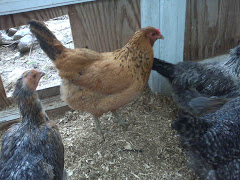
Sometimes the hens are feeling peckish, especially when they are bored. How much outside time do free range chickens need outside? Well, that is debatable. When they are penned up too much, they tend to resort to the Pecking Order. This means one poor hen is the bottom of the list. And usually the Queen Bee hen leads the picking and pecking on her. Nasty. They peck until it bleeds. Something about the color red makes them gang up on the lowest chicken. We had to send one of our Buff Orpington hens to another flock because she was so picked on. Now the other Buff Orpington is getting pecked, but not near as bad as her sister.

Sometimes free range is somewhat contained in a rolling or movable coop or fence. That doesn’t solve the pecking problem, but does give them some change in scenery and food.

Another difference that I’ve noticed between commercial eggs and our chicken’s eggs. There are much thinner shells on our chickens. Our chickens are about a year older than any commercial chicken. I’m sure that commercial eggs come from chickens that have been given something to increase the thickness of the shells. I’m sure this helps with travel. Especially since I’ve broken egg shells just walking the 150 feet up to the house from the coop. Pretty messy! I think you can feed them calcium to make their shells harder, but that’s just one more thing we’re buying and feeding to them.

I’ve heard you can crush the old eggshells to feed it back to the chickens to help their shells harden.  We don’t want to get them used to the taste of egg shells as we’ve had problems with some of our chickens in the first flock pecking and eating their eggs.

No roosters.
In our first batch of chickens, the flock had two roosters. Crowing when it is still dark in the morning was annoying. Roosters attacking when I was trying to gather eggs was dangerous. They ate a lot and obviously did not provide any eggs.  For the last two flocks we’ve had, we made sure to not get any roosters. When you buy chicks there are no guarantees of sex, but if you pay more the flock may have an 80-90% chance of hens. Not sure how they can tell the difference until the chickens are older. We bought ours three years ago as peeps when they were just 2 days hatched.

While I usually enjoy the chickens, it is work. You’ve got to live somewhere that allows chickens. Don’t try to figure the cost per dozen eggs or you’ll be sad.

If you want farm fresh, free range eggs, be willing to spend about $3 or $3.50 a dozen from a farmer’s market. You’ll still be getting a bargain!

Hormone Health for Women Over 50 with Jeannie Beaudin

Fit Strong Women Over 50 Podcast Episode #29

Download | Play in New Window
Please SubscribeApple Podcasts  (iTunes) Google Podcasts | Android-Google Play | Stitcher | Player FM Castbox | Tunein | Spotify | RSS

In Episode #29 of Fit Strong Women Over 50, Jill and Chris interview Jeannie Beaudin, a recently retired pharmacist who specialized in balancing women’s hormones for over 10 years, while she owned her own pharmacy.

Her clients appreciated her broad knowledge of non-drug, natural and standard treatment options.

As a compounding pharmacist specializing in balancing women’s hormones, Jeannie would take time to thoroughly review the hormone-related symptoms, explain available choices and discuss the woman’s preferences for treatment.

In today’s podcast, Jeannie explains how she became known as “The Hormone Lady”. The podcast explains how women can work together with a compounding pharmacist and the doctor to improve hormone health. Four levels of treatment are outlined.

She describes how she and her husband eat following a health scare 14 years ago. “No white flour and I make my own bread.” She mentioned Michael Pollan’s rules for eating: “Eat real food. Mostly plants. Not too much.”

Also in this episode:
Chris and Jill talk about their winter training and look to the spring.

Veggie Challenge – how did you prepare your vegetable of the week?

Links:

Eggplant Veggie Challenge with Baked Rounds

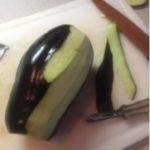
Today’s eggplant veggie challenge uses purple eggplants but they do come in other colors too. eggplant veggie challenge

Eggplant is considered a nightshade vegetable, similar to peppers, tomatoes and tomatillos. You can tell it is a nightshade because it has an elf cap on it’s stem. Buying eggplant was intentional for me. It is not the type of vegetable that I routinely pop into my cart during the weekly grocery shopping (unlike carrots, celery, peppers and cauliflower.)

I was surprised to find out that botanically speaking, eggplant is actually a fruit. I guess that makes sense because although I’m calling them a vegetable for the Veggie Challenge, they have seeds on the inside and are the “fruit” of the plant. As a fruit, they are the part of the plant that bears fruit and has seeds in the middle. So I guess other nightshades. as well as cucumbers, peas and pumpkins are fruit too, although, I would classify them as a vegetable. I think cooks and most people consider them a vegetable.

The legal definition of a vegetable tends to lead to what cooks consider the fruit. For example, tomatoes are taxed as a vegetable even through they are technically a fruit.

Vegetables are technically the roots, stems and leaves of a plant.

Eggplant can be a great low carb swap for noodles in lasagna or other recipes. A nutrient dense food, one cup of eggplant, cubed and cooked, has only 35 calories and has good fiber, copper, potassium and manganese.

This eggplant veggie challenge is easy to make:

  • Peel the eggplant
  • Slice it into half inch thick rounds
  • Dip both sides into scrambled egg batter
  • Bread each side with bread crumbs
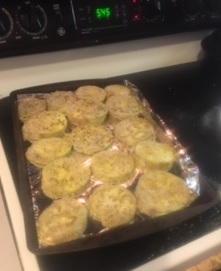
  • Bake in a 350 oven for 5-6 minutes each side

Of course if I skipped the bread crumbs, they would be lower in carbohydrates.

eggplant veggie challenge

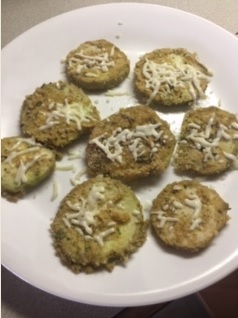
Later, I pulled this eggplant veggie challenge out of refrigerator, sprinkled them with a little parmigiana cheese and shredded mozzarella cheese. Then I microwaved them 30 seconds to take the chill off and to melt the cheese. I added salt and pepper to taste.

Do you have a recipe you enjoy for eggplant? Bake? Saute? How do you prepare it?

A Walk in the Woods Around the Lake on a Wintery Day

I love the outdoors and a winter walk in the woods, but it’s difficult to get out and walk during bad weather. I’ve managed to find a window of opportunity just a few times this winter. Last weekend was one of those.

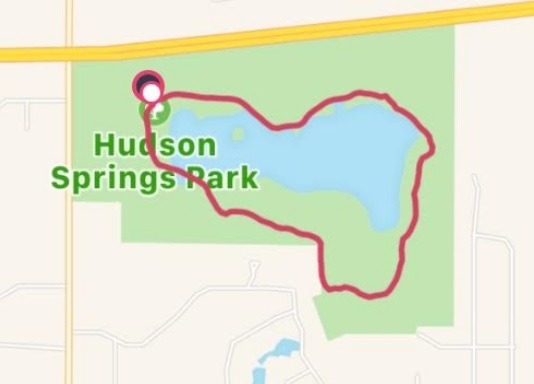
While snow was in the forecast, the sun had peeked out for a few minutes and I just couldn’t help myself. Gathering the dog leash and my 8 year old dog, Lady, off we went to walk the loop around the lake.

Checklist:

  • Dog leash
  • Dog
  • Gentle leader (this is a special collar so she doesn’t pull)
  • Dog poop bags
  • Fanny Pack
  • Bee sting kit (not likely, but I don’t leave home without it!)
  • Phone
  • Spread the tarp-like cover over the back seat to protect from sandy paws
  • Hat/gloves/two heavy sweatshirts
  • Running shoes

The start of the walk felt so familiar. In the 27 years since we moved back to Ohio, I’ve probably hiked this route hundreds of times. The parking lot was practically empty with only one child and their attentive dad on the playground and a bundled-up dog owner bringing their labradoodle pooch back from walking the loop.

Nonetheless, I set out and the pea gravel crunched under my shoes. Canada Geese walked on the ice covered water. I half expected them to be swimming in places, but there was more ice than water. A couple walked past me saying “Good morning,” but then corrected themselves – “I mean good afternoon!” Funny, with the grey skies encompassing us, it sure felt more like morning. What had happened to the sun?

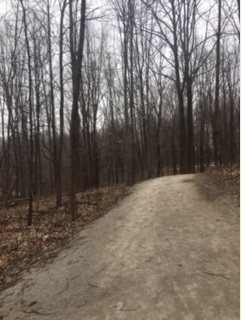
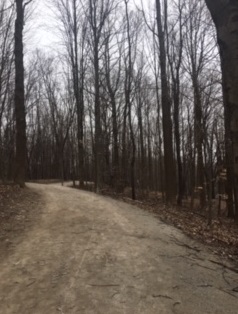
Entering the wooded part of the trail, I saw a lot of sawdust. The windstorm a week or so ago had caused several big trees to fall, but the clean up was complete. The trail was wide. In fact, much wider than I remembered. Maybe it just felt that way due to the lack of other people. It was definitely wide enough to drive a service truck along the entire path.
winter walk in the woods around the lake
Walking up the grade, I could feel my Achilles heel start to twinge. Geeze! I have hardly pushed it at all this past fall and winter. Not any tough work outs at all, just a lot of strengthening PT type exercises. How could it start acting up already!?!?

As the trail leveled off, my thoughts left my ankle and returned to enjoying the nature walk. No leaves meant that I could see through the woods to catch glimpses of the Interstate or look directly into people’s back yards. I wonder how those families feel about looking out from their dining room table and seeing the hikers walking on the trail?

Ugh Oh!! Did I see a snow flake? And another? Must have been my imagination. I passed the halfway point. Walking down the the hill, I passed a solitary figure walking with hands in his pockets. Must have forgotten his gloves.

I noticed the trail’s shortcuts into the neighborhoods have been cleared of snow and the pea gravel is packed down. I stay on the main trail with Lady. More flurries fell.

A white tail deer was right in front of us. Startled, she lifted her little white tail and bounded off toward the houses. I think Lady was startled too. She didn’t bark or pull on the leash, but her ears and tail lifted and I felt that she was as surprised as I was by how big and close that deer was!

Heading up the hill from the creek bed, squirrels rustled in the leaves. Lady began panting and I realized that I need to bring her out on this trail more often. She hasn’t been keeping up on her cardio! She’s only 40 in dog years and somehow I feel superior because I’m not huffing and puffing. I’m thankful for my indoor cycle spinning class at the gym!

Big flakes of snow started coming down. Where did this come from? I thought we had another hour or two before this weather was due to blow in! “No worries,” I said to myself, “Only three-quarters of a mile before we’re back in the car.”

As we finish the loop, we pass the same walker with his hands in pockets again. I say “Another loop?” and he replies “Why not!?” I’m already wanting to go around again. For a second I briefly consider it, but my Achilles told me that one loop would be enough. Although the cardio was ready and the muscles were ready, my tendon still needed more work.

I feel like this walk was my kickstart for spring!

I saw the smile on Lady’s face through her panting. Yep, that smile was how I was feeling too!

Daylight savings time starts this weekend. Spring is on it’s way!!! Just a few weeks and I’ll be able to do that trail without double sweatshirts and gloves!

winter walk in the woods

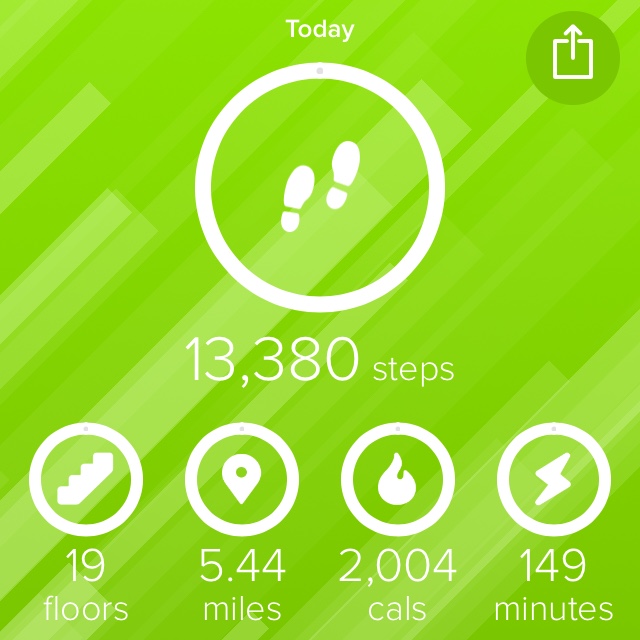
Although this trail was just under 2 miles, getting outside and walking the loop helped me hit my fitness goals for the day. Walking the loop also lifted my spirit and I know Lady loved it too.
What fitness activities help you to transition from winter doldrums into spring?

Shredded Zucchini – Veggie Recipe of the Week

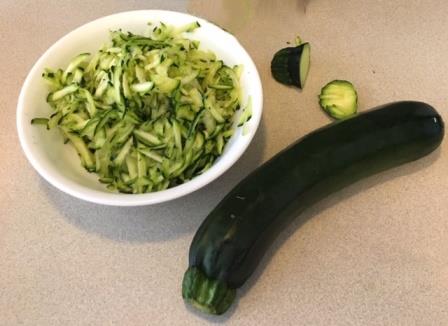
I love zucchini and usually slice it into rounds. Today I used a grater and shredded it into bits. I added it into my salad to bulk it up with more vegetables.

Besides adding it to a salad, zucchini is also good to add to a stew or a soup.

Other people like make it into a side dish. It is easy, just saute the shredded zucchini in olive oil, scramble an egg into it and stir in some freshly ground Parmesan cheese.shredded zucchini with a grater

I may try shredding some apples and combining the shredded zucchini with a tart dressing for an apple-zucchini slaw.

This week’s veggie challenge brings ways to use the zucchini with several ideas for shredded zucchinis including salads, stews, soups and with eggs.

Improving Flexibility in Tendons and Ligaments with Yin Yoga

I used to only focus on muscles and strength, but as I get older I am finding that being strong and improving flexible in tendons and ligaments has become more important to me.

One way I am working on improving my tendons and ligaments with through yoga. I am very much a beginner and am still have so much to learn. Perhaps you’ve been in a yoga practice for a long time. If so, please let me know what works best for you.

I used to really enjoy the constant moving workout type of yoga that burns a lot of calories and works the muscles, but as I have gotten older, I’m finding that flexibility and releasing tension to be more of my goal with my yoga practice.

Only recently I have discovered yin yoga.

Yin yoga is a slow hold yoga that allows the connective tissues, ligaments and tendons to slowly release. It helps with stiffness. As we age, our bodies get stiffer and less supple. I guess that is obvious. If you think of a little baby and how flexible they are, with joints, muscles and even skin, that’s the other extreme.

Yin yoga helps to release tension in the body that comes from bracing and clenching. Dealing with difficult people, situations and problems will cause the body to stiffen and hold tension. It holds tension not just in the muscles, but also in the ligaments, tendons and joints that get very stiff.

I know that the hours of sitting still in front of the computer, working my “day job”, have made my neck, shoulders and parts of my spine become tight. Too often I end up hunched over the computer all day. It’s a bad position for the body! Of course the hip flexor tendon, the ones that connect my front thighs to my abdomen, get shortened and the rear tendons tend to get stretched. (I believe its the part that attaches the psoas and iliacus muscles to the upper thigh and the lower spine and pelvis.)

Whatever you call it, I know I can feel it! It’s especially noticeable when I stand up from sitting too long – either a 2-hour car ride or a 2-hour intense computer session! I feel the stiffness that has tightened in my body. Even when getting out of bed in the morning, I definitely move slower in order to let my whole body wake up.

Doing repetitive motion workouts like cycling and running also effects my body. I want to make sure that my ligaments and tendons don’t get over worked, stretched or too weak from not working out.

Yin yoga has helped. I enjoy holding the poses while I feel the benefits. This type of yoga has improved my posture, flexibility and strength. Although I have not measured myself lately, I feel like I have grown half an inch with a longer spine.

I do it slowly and progressively over the days, weeks, and months. It’s not the type of thing you force your way into, but rather relax your way into it. It’s not about stretching but rather about relaxing… if that makes sense.

Improving Flexibility in Tendons and Ligaments
It takes a while to warm up and get comfortable in these positions. I recommend taking a class with a certified yoga instructor or view a trusted site for a yoga class.

You’ve got to make sure your body is warmed up before going into these poses. I’ve been focusing on one or two classes a week at my gym and supplementing with online videos. The classes at the gym have been gentle Hatha yoga and restorative yoga. Both those classes employ yin yoga moves that I am finding very beneficial to adding to my work outs of cycling and run/walking.

Yin Yoga is not about doing the flowing type of yoga that people often think about. It is more about getting into a position and holding it for tension release. Holding for 45 seconds or two minutes allows other parts of your body to release. It’s difficult to relax enough to get your tendons and ligaments to let go. In some positions, being supported with a block, bolster or foam roller allows me to more easily relax for up to 5 minutes in a pose.

Here are 3 positions I find particularly beneficial to me for improving flexibility with tendons and ligaments.

  • Butterfly pose where you sit on your yoga mat with the bottoms of the feet touching each other. Right now I’m working on zippering my toes together. It’s difficult for me and I seem to only get a couple toes to cooperate. I’m in the very beginning stage of this! The tendons and ligaments in my toes are very tight.
  • Cobra pose with your feet, legs and hips on the matte with the arms supporting your front. Keep elbows bent and support the spine. It is difficult to relax my tendons that attach the hips to the abdomen but I can feel lengthening the front. This is a back bend pose. I am still working on sphinx and baby cobra but eventually will work on cobra and eventually upward facing dog where the legs, knees are off the matte and the elbows are straight.
  • Bridge pose where you lay on your back with your knees bent. Raise your hips. This pose off sets some of my sitting. This seems easy for the first 30 seconds but if I am holding longer, I like to use a prop to allow my body to relax to get the full benefit. It feels like the opposite of the spinx, baby cobra and cobra up dog poses.

Perhaps you know all about yin yoga, but maybe this is the first time you’ve heard of it. If you enjoy yoga, what type do you use? Are you working on flexibility and balance? Which are your favorite yin yoga poses for keeping your tendons and ligaments flexible and strong?

Fried Riced Cauliflower – Veggie of the Week

I prepared my cauliflower in a way I never tried before. I know I tried riced cauliflower last week, but I it was from a package rice and I tried it with a warm riced cauliflower salad. Pretty good!

However this week is special because I riced it myself to make “fried rice” which is actually “fried riced cauliflower.” All I can say is WOW, this is a WINNER!

Start with a beautiful head of cauliflower. It’s still messy to rice cauliflower using a grater, but that’s okay, it’s easy enough to clean up and worth it for the delicious taste.

I even grate the core of the cauliflower to use the whole thing. Usually I throw that part away, but since it is riced so small, it doesn’t need to be discarded.

Chop up other veggies into a small size too. Use what is in your refrigerator, but make the cauliflower the star. By that I mean, don’t use a whole stalk of celery or a whole onion.

Ingredients:

  • Olive oil
  • Onions
  • Green pepper
  • Red pepper
  • Celery
  • Carrots
  • Riced Cauliflower
  • Salt & Pepper
  • Soy Sauce (if desired)

Heat a little olive oil in a large skillet. Add onions. After they get a little translucent, add the other veggies. Toss or flip with spatula. Add the rice, cover for a minute and flip again.

Wisk one egg to scramble it. Drizzle over the mixture. Stir, turn and blend into the veggie mixture while it cooks. The cauliflower cooks pretty quickly since it is riced so small.


Add soy sauce if you need to, but I like it plain.

Serve with stir fry chicken or inside out egg rolls.

« Older posts Newer posts »

© 2026 Becoming Elli

Theme by Anders NorenUp ↑