Becoming Elli

Fit Strong Women Over 50.

Page 50 of 65

Pea Shoots — Weekly New Vegetable Challenge

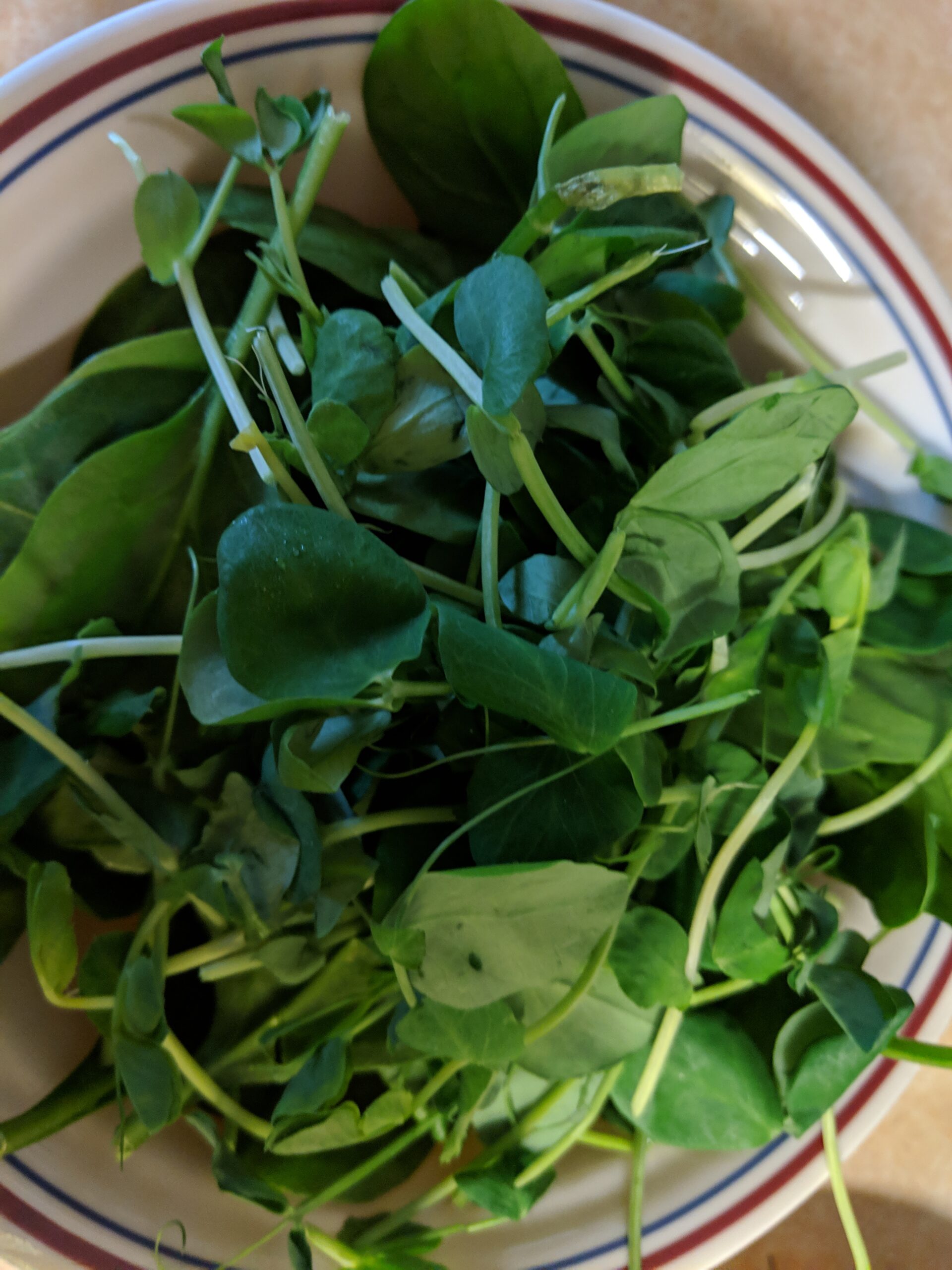
Pea shoots made it into my shopping basket this week for the Becoming Elli new vegetable challenge. Aren’t they gorgeous?

I bought these at Kriegers, a locally owned health food/produce store.

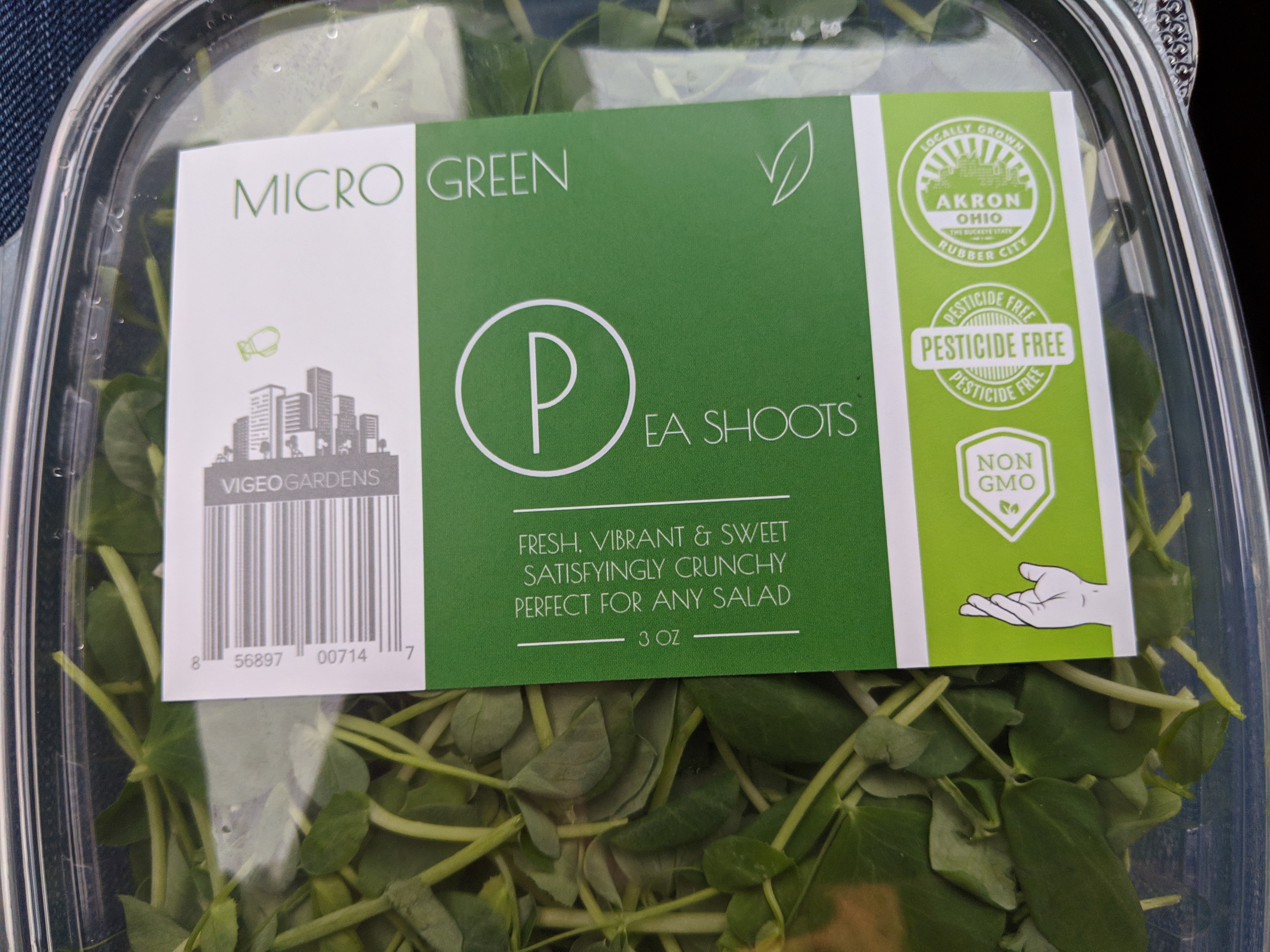
These microgreens are grown by Vigeo Gardens, an Akron, Ohio-based modern farm.

pea shoots

What is a microgreen? It’s a young vegetable, typically between one to three inches. They fall somewhere between a sprout and baby greens.

I did exactly as the label advised and threw them on top of my salad. They were delicious. I think I preferred them to the broccoli sprouts I tried a couple weeks ago. They’re crunchy and have a delicate flavor.

How to Crave Healthy Foods & Stop Dieting – Melanie Jatsek

Fit Strong Women Over 50 Podcast Episode #27

Download | Play in New Window
Please SubscribeApple Podcasts  (iTunes) Google Podcasts | Android-Google Play | Stitcher | Player FM Castbox | Tunein | Spotify | RSS

In Podcast # 27, Jill McCauslin and Chris Brown interview Melanie Jatsek, a registered dietitian nutritionist who broke free from the dieting trap.

Melanie holds a Bachelor’s of Science in Dietetics from the University of Akron and is the author of three books, including Missing Peace – Eleven Secrets to Restore Inner Harmony with Your Food, Body, and Health. She also created the Healthy YOU program. Melanie is passionate about helping people transform their relationship with food.

During this podcast we discuss:

  • How she was able to break free from dieting after years to stop struggling with food.
  • Why many women struggle with diets and their relationship to food
  • Dealing with emotional eating and how she overcame three years of struggling with a binge eating disorder
  • How the food pyramid guidelines (with grains on the bottom and fat on the top) did a disservice to women over 50 with misinformation. “We know better now.”
  • Why counting calories is not the way to go
  • Why she switched from her 20 year vegetarian-based diet to more of a Mediterranean-based diet

Melanie reveals some secrets for helping your body to crave healthy foods like:

• “Your body gets full off of nutrients, not calories.”
• “The body craves what you’re feeding it the most.”
• “The bacteria in your gut is what is craving food.” Bad bacteria crave sweets and highly processed foods. Good bacteria crave whole foods.
• “Low Fat and Fat Free – when we restrict fat we are always hungry.”
• “Good dietary fat actually helps you to burn fat.”

During this podcast you will learn why she roasts her veggies with avocado oil instead of olive oil, how she trained her body to crave raw vegetables, and how she avoids hidden sugars in food like peanut butter and chocolate.

She helps people develop a healthy relationship with food and talks about:

• The balance of good-for-you foods with a sprinkle of fun foods (ie. chocolate.)
• The outdated guidelines of 12 servings of grains and pasta a day.
• The effect of heavy servings of carbohydrates makes on your body (easier to produce insulin, gain weight and store fat.)

Melanie feels that no food is forbidden and believes that you will crave what you feed your body.

To connect with Melanie, visit her website: www.melaniejatsek.com or her Facebook Page: Healthy You.

Jicama for Lunch – Veggie Challenge

How to Peel and Prepare a Jicama
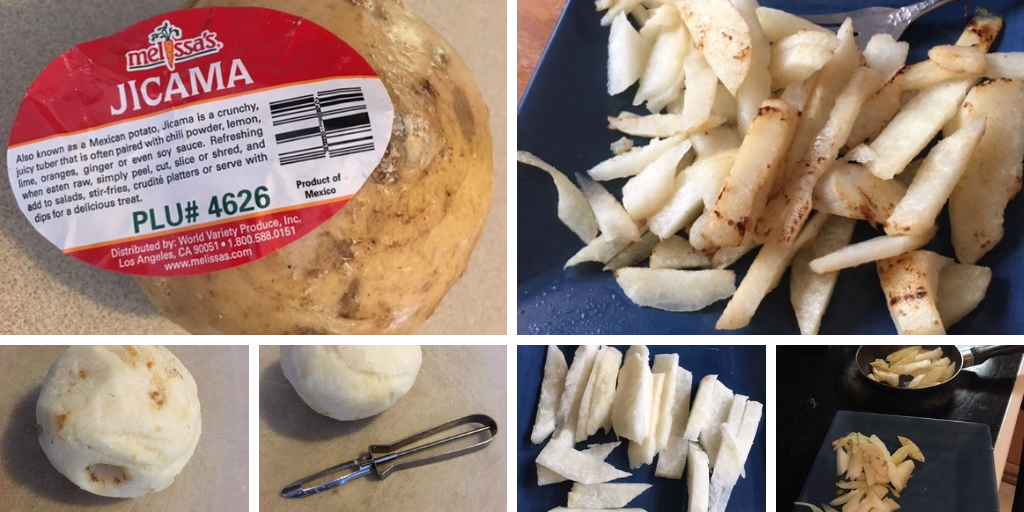
Jicama is pronounced “Hick – ah – mah” and has the texture of a sweet (not spicy) radish or a potato. Raw, it tastes almost like an apple. Its crunchy texture makes it perfect for slicing into strips to dip into hummus or guacamole.

Most recipes for jicama call for you to “julienne” slice it, which is cutting it into tiny slivers like matchsticks. You cut it half, then half again, slicing it into 2″ long and thin (about 1/4 to 1/8th”) strips.

The skin had to be taken off with a vegetable peeler, which was a bit awkward for me. It’s a tough skin but not too difficult to remove. Underneath it looks like a potato, but it has about half of the calories and also fewer carbohydrates. One cup of jicama has 49 calories and 11 grams of carbohydrates. One cup of potato has 116 calories and 26 grams of carbohydrate. I would dub the jicama a healthy vegetable.

I ate some of the jicama raw — like you would munch on slices of carrots or celery. I liked it a lot, especially the texture and slight sweet flavor. Most of the recipes I saw online talked about substituting jicama for potato to make fries. Then I prepared the rest of it by sauteing the jicama on medium heat on the stove in a little olive oil and lightly salted it. Delicious! I would give this one 5 stars. Low in calories. High in Flavor.

Before serving to guests, I need to perfect my julienne knife skills. My julienne slices are more like finger widths, not matchsticks. I should have sliced all of these again to get the slim stick-like size.

how to peel and prepare jicama

This one was grown in Mexico. It is in season during the fall, winter and spring. I bought it at Giant Eagle (which is a Pittsburgh-based large chain grocery store.) It’s a root vegetable, so no wonder I find it similar to a radish or a potato texture.

Next time I cut it, I’m going to cube it and mix with red, yellow, green peppers, along with carrots and celery to make a salad. A little lime juice and cayenne pepper sound like the perfect dressing!

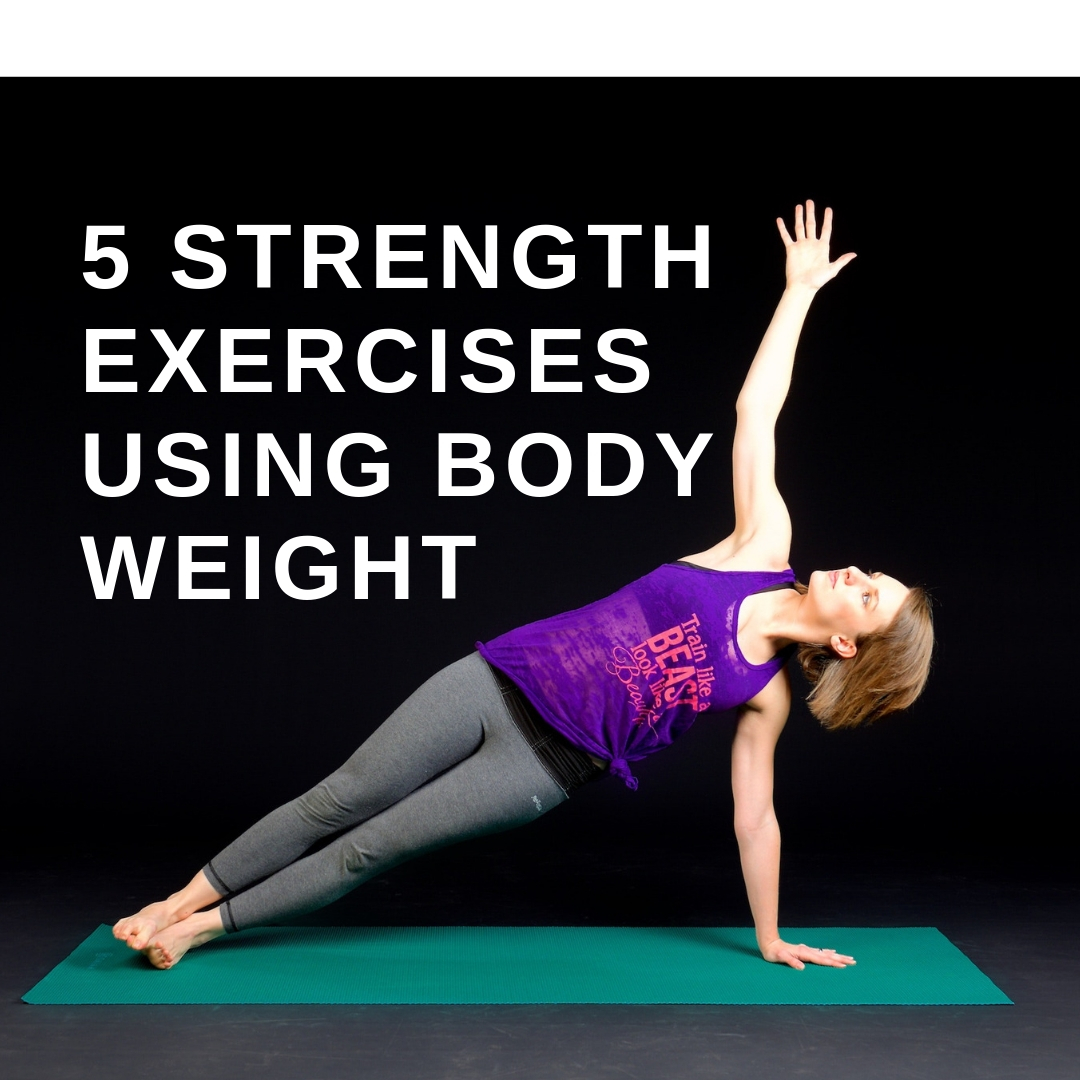
Five Strength Building Body Weight Exercises for Women Over 50

I have been trying to focus on building a strength exercises in my workout routine.

We know that as we get older, the body naturally loses muscle tone, so my strength routine is an attempt to keep my muscles toned and functioning correctly. For whatever reason, I find it much easier to go to walking, running and cycling which are more cardio based.

I like strength exercises that use weights, but sometimes just using body weight is enough of a challenge. Because I am looking for more endurance and resiliency, I tend to really love strength work outs.

Keep Good Form with Bodyweight Exercise
As with all exercises, form is critical to making it work your body and not to injure yourself. When learning these, it’s good to use a mirror to check and make sure form is good. (Always check with your doctor if you are new to exercise or aren’t sure these are good for your body’s situation, like if you’ve had a previous injury.)

Sometimes I like to do variations to mix it up. It helps me from feeling bored. But other times I prefer to time myself to hold the position for a longer time before moving on to the next exercise. If some of these seem too easy to you, try a different one. If you find you can only do them for just a few seconds, over time, as your strength builds up, you will find you can hold the position for a longer time.

Here are five exercises that seem simple because they are holding your body weight. Each one has modifications to make it less or more challenging.

  1. Bridge – One Leg Bridge – Marching Bridge
  2. Plank – Elbow Plank – Straight Arm Plank – Up Down Plank – Side Plank – Toe Touch Side Plank
  3. Cat/Cow – Bird Dog on Knees – Bird Dog on Toes – Bird Dog with Elbow Crunch
  4. Wall Sit – One Leg Wall Sit
  5. Calf Raise – Single Leg Calf Raise – Calf Raise and Hold – Single Leg Calf Raise and Hold

Most of these body weight strength exercises listed above are isometric, meaning you hold your body in a position.

Advantages of Isometric Strength Exercises
Isometric strength exercise helps build stamina. Another advantage is that these types of exercises are easier if you have arthritis or ligament injury. And you don’t need any equipment. You can do them almost anywhere when you have a few minutes.

Although these exercises won’t help you build speed, they really do help with strength and endurance. It is so important to add strength to an exercise routine for women over 50 to keep fit and active.

Do you have a routine of body weight exercises that you do regularly? Which one are your favorites? Which exercises would you rather skip? Let us know by leaving a comment below.

Twelve Ways to Eat More Vegetables

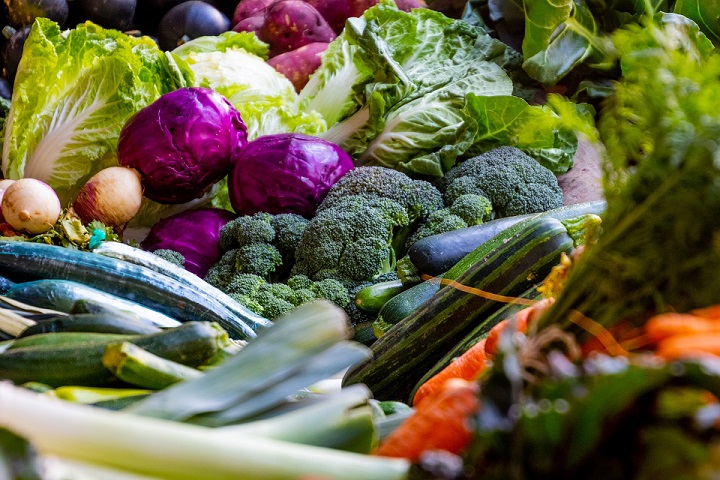
One thing that stands out in the podcast episodes we’ve had with food and nutrition experts is that everyone, regardless of what else they recommend, seem to recommend eating more vegetables. The nutrients and fiber that vegetables provide to our bodies are invaluable. The different colors of vegetables provide different nutrients which is why we’re often instructed to “eat the rainbow.” Chris and I often share vegetable recipes. If you check out our ebook, Fitness Food, you’ll see most of the recipes include vegetables.

Plus, we’re having the One New Vegetable a Week Challenge in the Becoming Elli community. You can either try a new vegetable or prepare one in a new way.

Not to continue to harp on vegetables, but let me share one more post about them. It’s one thing to talk about trying new vegetables or cooking them a new way, but we also need to eat a lot of them. And most of us get tired of doing the same old thing so here’s some ideas on how to work more vegetables into your meals easily and without additional fuss.

Twelve Ways to Eat More Vegetables

  1. Make vegetable soups. There are lots of great recipes for soup that use lots of vegetables. You can make traditional vegetable soup. Chris provided such a recipe recently. You can also vary things. For example, you can blend vegetables in the broth to thicken the soup and eliminate the need for cream.
  2. Join the cauliflower bandwagon. You can buy cauliflower “rice” and pizza crust. Of course, you can make your own but sometimes buying the prepared versions is easier. Replace your regular rice with cauliflower. Replace your pizza crust with the cauliflower crust.
  3. Add veggies to your smoothies. If you like to start the day with a smoothie, be sure to add lots of veggies to the blender. I usually add whatever I have on hand but a typical smoothie for me includes a carrot, greens such as spinach or kale, and maybe some beets or cucumber. I think veggies like broccoli and cauliflower have a pretty strong flavor for smoothies so I tend to avoid them here.
  4. Roast whatever you have on hand. I love roasted vegetables and they’re so easy to make. I cut up any of the following:
  • Brussels sprouts
  • Onions
  • bell peppers
  • sweet potatoes
  • red potatoes
  • Sugar snap peas
  • Kale
  • Cauliflower
  • Broccoli

Once chopped, I coat with oil (olive oil, coconut oil, avocado oil, whatever you prefer), salt and pepper them, add any other spices I want and then roast in the oven at 425 or 450, stirring every ten minutes or so and cooking until the vegetables are crisp on the outside.

  1. Include vegetables in your breakfast. You can do this by making vegetable omelets or frittatas. You can also just add vegetables to scrambled eggs. Sometimes I heat up leftover roasted vegetables and serve with a fried egg on top. If you’re more of an oatmeal person, try making a savory oatmeal and include vegetables in it.
  2. Replace pasta with veggie noodles. You can make your own with a spiralizer or many stores now sell veggie noodles. Experiment with the different kinds and see what you like. I enjoyed making spaghetti with zucchini noodles last summer. It was tasty.
  3. Add vegetables to your meatloaf or hamburgers. Be creative and add as many different kinds as you can. You can cram a lot of vegetables in with that ground meat.
  4. Add an extra vegetable to your dinner. Many of us were raised on the “meat, starch, and vegetable” dinner plate. Consider changing that to “meat, vegetable, and vegetable” or “starch, vegetable, vegetable.” I find adding an extra vegetable to dinner to be a great way to get in another serving of vegetables.
  5. Add whatever vegetables you have to your salad. Be creative! Also, remember that it’s perfectly ok to eat salad more than once a day.
  6. If you’re making chicken, tuna or egg salad or even potato or pasta salad, add more vegetables to it. Chop up onion and bell peppers and add. Celery and carrots also work well and add some lovely crunch.
  7. Making a sandwich? Replace the bread with greens. Once you’ve made the tuna or chicken salad mentioned above, wrap it up in a leaf of romaine lettuce or some other kind of green. It’s a great way to serve a sandwich.
  8. Make snacks out of vegetables. Chop them up and make oven-roasted fries or chips. These can be a great way to have a snack and get in an extra serving of vegetables.

There you have it. Twelve ways to eat more vegetables. I know there’s lots more so I hope you’ll share some of your ideas.

Three Ways to Get Motivation in Winter

The first weekend in February in Ohio is about halfway through the winter. This is the time of year have to I look for ways to find more motivation to stay with my intentions of being fit, strong and healthy throughout the winter.

I guess I blame the weather.

Winter in Northeast Ohio usually means grey, overcast skies that blend into white and grey half melted snow. Most of the winter, my instincts are to get cozy on the couch with a good book/movie, a warm blanket and eat something with high calories, lots of rich food. When I fight that “instinct” and get out in the fresh air, get some exercise and engage some endorphins, I always feel tons better.

If there are warm air and sunny, blue skies, I just feel like getting up and moving. Motivation is not a problem, but I know I can’t wait for blue skies to take care of myself! For most of the winter, I look for ways to psych myself out and get myself motivated.

Here are three ways I am motivating myself this winter to exercise and eat healthy:

1) Exercise Buddy – If I try to go it alone, it’s easy to skip a workout. Finding a partner to work out with gives me accountability. Even if my friend isn’t working out with me, we send emails and texts back and forth for work out motivation. Having a friend in person, either at the gym or going for a walk really helps. Setting an appointment with a personal trainer definitely helps. My gym has a buddy program that started a couple of weeks ago and I am getting to know someone new at my gym while making a point to show up. The last few weeks have really upped my exercise totals for the week and I attribute this to having a buddy.

2) Food Challenge – I’m finding ways to eat more food that is nutrient dense (not calorie dense.) Luckily, I’m in the early stages of a weekly vegetable challenges. Maybe you are too? If not, it’s not to late to join in the fun! The Becoming Elli community veggie challenge is to find one new vegetable a week — or at least prepare a vegetable in a new way — and it challenges me to look more closely at the produce. I had several eggplants in my hands this past week, but didn’t buy one. Here is my “new” way of cooking cabbage with turmeric and thyme.

Turmeric, Thyme, Salt and Pepper. Cabbage cut into slices. Underneath: Mushrooms slices. baby Carrots, coarse chopped Celery, sliced Green Peppers. Cup of water. Pork roast – outside seared before going into the crockpot.

I forgot to take a photo of the final product. Basically it was a mushy stew kind of meal and not especially photogenic, if you know what I mean.

3) Helping others – My personality type is more motivated to help someone else, than to help myself by exercising. I don’t know why. Getting involved in the MS bike ride each summer has really helped to get and keep me in shape. Now I have found another way to contribute called “Charity Miles” which is an app you can download. It tracks your mileage for walking, running or biking (you need your phone with you when you do the activity.) Various corporate donors have pledged to contribute money to the charity of my choice (in this case the MS Society) based on the number of miles I complete. charity miles helps me get motivation in winterI’m not exactly sure how much they donate for each mile because Charity Miles divides the money between all the charities at the end of every term. I think the corporations are counting on people sharing the images via social media. But my motivation is to help others and I find that doing this helps me to do more miles than I would have otherwise. So its a win/win/win.

How do you motivate yourself? Do you have ways that you struggle with winter workouts? What tricks to you use when you don’t feel like eating right?

Flourless Chocolate Cake

Flourless chocolate cake? Really?

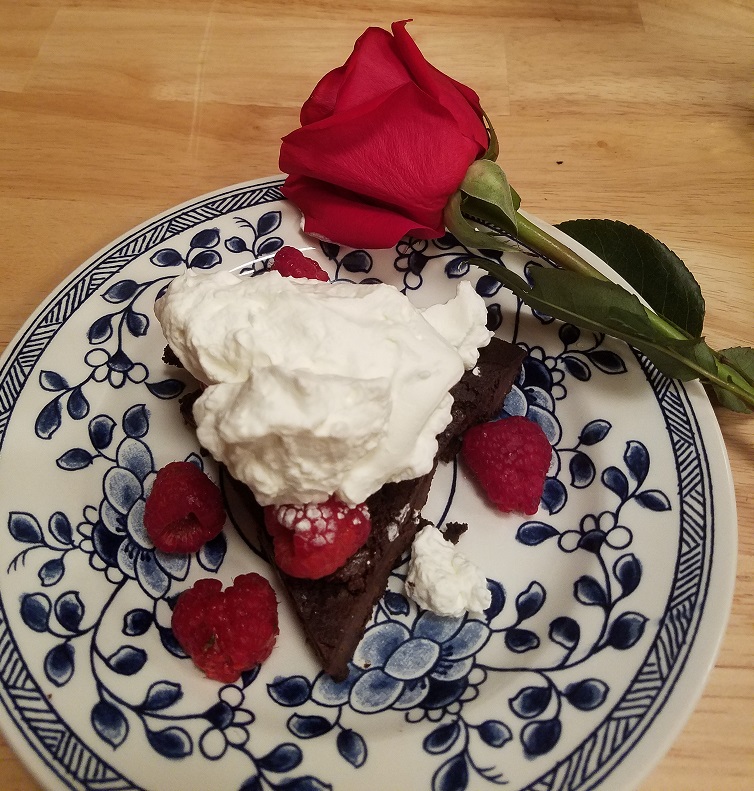
There are times when you need a dessert or to be more specific, there are times when you need chocolate cake. January is a big birthday month in  my family (my brother and I are two days apart, birthday wise) and of course February brings Valentine’s Day. This is a good cake for a sweetie who is trying to avoid flour and added sugar.  I don’t think this falls completely into the healthy eating camp but it’s a good try.

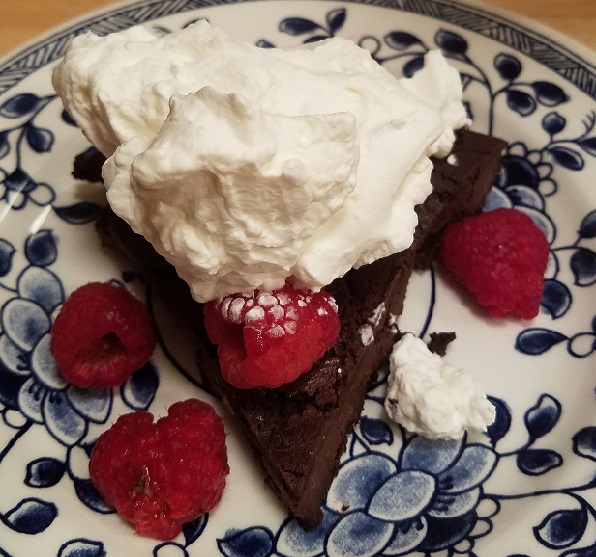
I try to avoid sugar and often I avoid wheat. So trying to find a cake recipe can be tough. Here’s something I make when I need something that feels a bit celebratory. It’s easy and tasty and looks great.  The berries and whipped cream on top of the dark chocolate is lovely.

Flourless Chocolate Cake

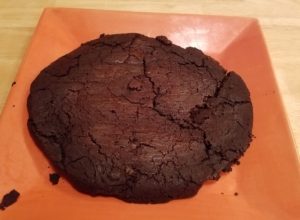
Because this is flourless, it’s a very moist cake. It’s almost brownie like. Also, because there’s no added sugar, it’s not particularly sweet. You can certainly add a bit of sugar to sweeten it up. If the important thing to you is that it’s flourless, maybe you don’t mind sneaking in a bit of sugar.

This cake has no rising agents (baking soda, baking powder, etc.) so it doesn’t really rise. If you use too large a pan, you’ll have a very flat cake.

Flourless Chocolate Cake

This recipe is based on a recipe I found on detoxinista.com.

Ingredients

6 oz. dark chocolate bar (70 to 85% dark chocolate, depending on what you have on hand. I often use the big block of dark chocolate from Trader Joe’s.)

3 whole eggs and 1 or 2 egg whites (you can just add in one more whole egg if you prefer and omit the egg whites)

½ cup grass-fed butter

1/3 cup cocoa powder

1 tsp pure vanilla extract

Heavy whipping cream

Berries

Directions

  1. Preheat the oven to 350. Line a springform pan or a cake pan with parchment paper. If you don’t have any, grease the pan thoroughly with coconut oil or butter.
  2. Melt the chocolate and butter together. You can use the microwave or a double boiler for this. I just throw it in an oven proof bowl and melt in the oven as it’s pre-heating.
  3. Mix the melted chocolate with the eggs and cocoa. Stir well. Add in the vanilla extract.
  4. Pour the batter into the prepared pan.
  5. Bake for 20 to 25 minutes or until the center looks cooked. You can check for doneness with a toothpick.
  6. Remove from oven and let cook for about 15 minutes. Remove from pan and let cool completely. If you used a spring-form pan, removing the cake is easy. When using a cake pan, you can lift the cake from the pan using the parchment paper. If you greased the cake pan, remove the cake by flipping it or let it cool in the pan and then serve it from there.
    F;ourless Chocolate Cake
  7. When ready to serve the cake, beat the heavy whipping cream until firm peaks form.
  8. Wash and prepare the berries (if you’re using strawberries, slice them)
  9. Put a slice of cake on a plate and top it with some berries and whipped cream.


Recipe Note

If this cake is not sweet enough for you, add some sweetener to it. You could use honey, sugar, or whatever sugar alternative you prefer.

You can also add a small amount of sugar or sweetener of choice to the whipping cream.

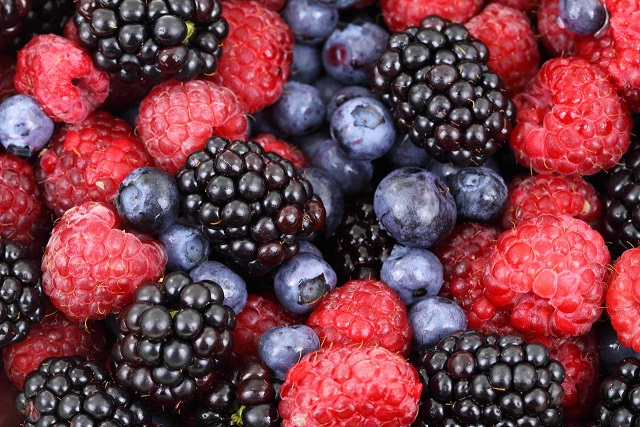
For the berries, I prefer strawberries or raspberries with the chocolate but you can use what you want. I’ve used a mixture of berries as well. You can use fresh or frozen berries but be sure to defrost the frozen ones!

If you don’t want the fat of the whipping cream, substitute your favorite topping.

I hope you enjoy your flourless chocolate cake. Let us know how it turns out if you make it.

Flourless chocolate cake

Don’t forget to check out our other recipes on the Becoming Elli website and that our ebook Fitness Food is available.

Embracing Vegetables with a Delicious Vegetable Soup

Vegetables are primarily carbohydrates (not a lot of fat or protein), but the fiber, flavor and undeniable vitamins in vegetables make them a “go-to” food choice for most people wanting a healthy diet.

In 2019, we kicked off the Vegetable Challenge at the Becoming Elli Community with Jill’s blog post and also talked about it in this week’s podcast. We realize that trying one new vegetable a week – 52 new vegetables in 2019 – may be difficult for those who have been working on increasing vegetables intake for years, so we modified it a bit.

Jill has found some vegetables that she has never tried before with purple Brussel sprouts. That is saying something, because she’s adventuresome when it comes to trying new things!

I’m planning on trying to cook my vegetables in a new way. So far I’ve been falling back to my favorite ways of eating vegetables – chopping them up into a salad with olive oil, cider vinegar and lemon juice… or tossing them in olive oil and roasting in the oven. These two ways are very ingrained in meal prep for me now.

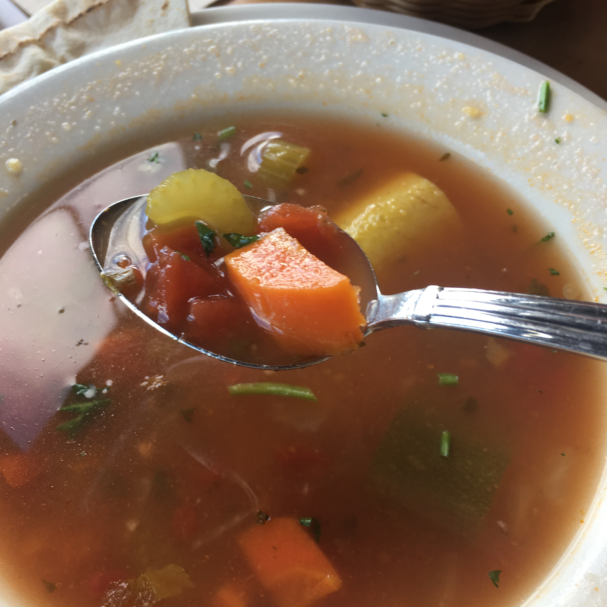
I was thinking about my vegetables when when I had the V9 soup for lunch at my favorite Mediterranean restaurant. It has nine vegetables in it. Although the menu suggests adding feta, I just stayed with the soup.

Each time I try to recreate it at home, I usually end up using different vegetables.

While I was I was counting points (or points plus) with the WW program during my 2007-2012 Weight Watchers phase, I would make something I called Zero Point Soup. It was filled with vegetables and I’d enjoy a large bowl of it before dinner.

It has a tomato broth and is chock full of vegetables with parsley on top.

Here’s a similar version of the V9 soup recipe from the Wine and Anarchy< website. They also love this soup.

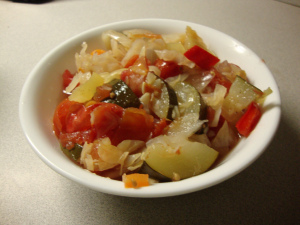
Here is my version of this Delicious Vegetable Soup

  • 4 tablespoons olive oil
  • 2 cups chopped onions
  • 2 cups celery, peeled and chopped (approximately 2 medium)
    — saute and then add to a large soup pot
  • 2 quarts water
  • 2 cups cabbage (green or red)
  • 1/2 cup broccoli (I feel it takes over the soup if there is too much broccoli)
  • 2 cups carrots, peeled and chopped into rounds (approximately 2 medium)
  • 2 cups zucchini, chopped (approximately 2 medium)
  • 2 cups summer squash (approximately 2 medium)
  • 1 cup peeled and diced sweet potatoes
  • 2 cups chopped fresh green beans
  • 2 large cans diced tomatoes
  • 1 cup frozen corn or one can corn

Optional – serve with chopped fresh parsley leaves

My version is very heavy on the vegetables and looks more like a stew! Sometimes I when I make this I will add quinoa to put some protein into the soup without adding meat.
With the incredibly low temperatures expected next week, I think this weekend is a great time to make a big pot of soup! I just hope that next August/September I think about making a lot of this soup and canning it. It would be great to buy vegetables when they are in season!!

If this post inspires you to make some vegetable soup, consider posting a photo with your recipe on our Facebook page: https://www.facebook.com/BecomingElli/

How to Work with Your Personal Trainer

I want to discuss how to work with your personal trainer. There’s a lot of information on how to find a trainer. We discussed that with Brenda O’Hara in our interview with her on the Fit, Strong Women Over 50 podcast. But what do you do once you’ve found one?

How to Work with Your Personal Trainer

Once you’ve hired your trainer, you have to go to that first session.  It can be a bit intimidating so that’s where some planning in advance helps.

Be honest

Be honest with your trainer. If you have injuries, be sure to tell him or her. There’s no point in doing something that is going to hurt you. A good trainer should be able to work around any injuries and, in fact, can help you build the strength to prevent injuries. Some of us are embarrassed or at least reluctant to mention our weaknesses. It’s far better for your trainer to know your weaknesses. That’s sort of the point.

Here’s the thing about being a woman over 50. If you’ve been working out for a while, you may well be stronger than many women your age. Make sure your trainer knows that.

Be patient

Just like a new co-worker or a new boss, it takes some time to get used to working together with a trainer. Don’t expect this to automatically be the best thing going. Your trainer needs to get to know you and you need to get to know your trainer. As your familiarity with each other grows, you’ll begin to be able to ask for more (or less!) of something and your trainer can begin to recognize your strengths and weaknesses. Once you’re comfortable working together, it’s easier to really start working towards your goals.

And just as I said to make sure your trainer knows that you’re stronger than many women your age, be sure to demonstrate that because your trainer may not really be sure of what you can or can’t do.

Have a goal

I find it better to discuss specific goals with my trainer after we’ve gotten to know each other. I do think it’s important to set goals. Many people hire a trainer and just go each week and do the exercise. I think if you’re paying someone, you should have some way to measure performance. And by performance, I mean both yours and the trainer’s. Discuss this with your trainer. Pick something measurable so you know when you’ve met the goal and make sure it’s something you want to be able to do.

The best goal I ever had was when I said I wanted to be able to do one pull up. My trainer put together a plan and we worked and worked on it. Finally, I did it. I saw that trainer recently and he said he still thinks about that day that I did the pull up.

I’ve also had more vague goals and they’re just not as good.

You can choose a goal like “I want to be able to deadlift a certain number of pounds” or “I want to be able to bench press some weight.” If you’re more interested in running, biking or swimming, you can set a goal of distance or time. For example, you can say, “I want to run a 5K in under 30 minutes.” A good trainer will help you figure out how to improve your speed or endurance even if he or she doesn’t actually run or bike with you.

Listen to Your Trainer

You’re paying this trainer to help you improve your fitness so listen to his or her advice. Obviously if something hurts, tell the trainer (see the be honest tip above!) but otherwise, your trainer is paying attention to what you’re doing and should be able to provide guidance to you. If your trainer says you can probably do something, try it. Don’t say, “I can’t.”

This also extends to the times that you’re not working with the trainer. If you’re trying to lose weight or build strength, you’re going to need to do more than just see your trainer one or two times a week. Ask your trainer for advice on what else you should be doing during the week. Perhaps the suggestion will be, add more cardio to your routine or go to a class each week.

The thing is, you’ve hired a trainer to help you reach your goals, not to do that work for you. So, get the advice and then figure out how you’re going to do what you need to do.

Be Professional

Many of us spend a lot of our training time talking with our trainers. Remember that you’re paying this person for his or her expertise, not to be your friend. There’s nothing wrong with developing a friendship with a trainer but the point is to work out, not to just chat.

I have a friend who says, “if you can talk through the entire set, you need to be lifting more weight.”

I watch a lot of people try to have flirtatious relationships with their trainers. Don’t put your trainer in the position of having to be polite while you flirt with him or her.

Also, don’t confuse your trainer with a therapist. Your trainer wants to help you be fit and healthy but can’t fix your marriage.

Be Willing to Change

Things change. We move, change jobs, have family changes. Sometimes our trainers leave for greener pastures. And sometimes we decide we’ve learned all we can from this trainer. There’s nothing wrong with making changes. If you’ve accomplished your goal, maybe it’s time to set a new goal and that might mean a new trainer.

If you want to switch sports, maybe you need a new type of trainer. That’s fine. Find a swimming coach or a Pilates trainer or whatever works for you.

Be open to changing trainers when it’s time. It can be frustrating because you have to get to know a new trainer and the new trainer needs to know what you’re capable of.

There is also nothing wrong with taking a break from using a trainer and going it alone with what you’ve learned. Sometimes it’s best to take a month or two off and then resume training.

The point is that you’re using a trainer to meet your goals to be fit and strong and you need to make the choices that are best for you.  Once you’ve identified who your trainer is going to be, make sure you know the best ways on how to work with your personal trainer.

Group Exercise Instructor Diane Reuther

Download | Play in New Window
Please SubscribeApple Podcasts  (iTunes) Google Podcasts | Android-Google Play | Stitcher | Player FM Castbox | Tunein | Spotify | RSS

Group Exercise Instructor Diane Reuther talks with Jill McCauslin and Chris Brown about being fit as a woman over 50 in episode 26 of the Fit, Strong Women Over 50 podcast.

Diane is a group exercise instructor and has been one since 1986. She’s seen a lot of changes in the fitness industry and how instructors are trained and credentialed. Today, Diane teaches:

We discuss why some of us like step class and why others don’t.  Diane explains that step a visual class, walk through the steps repeating the motions so that the class feels like a dance class.

Some of the questions that we ask Diane is how she defines fit and if we had only 15 minutes in a day to work out, what should we do. Diane says anything we do for fitness should be fun and safe. Also, she reminds us that the pool is our friend.

Hiking

Diane is an avid hiker. She and her husband hike a lot of trails close to home and Diane tells us about the wonderful sounding hiking vacation the two of them took. Chris said it sounded a lot like Janet Palcko’s hike on the Camino de Santiago. Jill is wondering if she should train for a hiking vacation.

Recovery

Last summer Diane had a hysterectomy and discussed her recovery with us. Before the surgery, she was very active and in good physical shape, but she followed her doctor’s advice and took baby steps to recover. She had laparoscopy with four small incisions of thumbnail size. Her recovery was limited to what she could do without pain. Diane started walking two days after surgery. At first, she walked the length of her driveway because she was anxious to get moving outside. So, at first, she walked five minutes. The next day she walked for seven minutes and the next day nine minutes. She made sure her husband accompanied her on these walks.

Disclaimer: Neither Diane nor us at Becoming Elli are doctors or physical therapists. We are not providing you with any kind of medical advice.

Our discussion with Diane was informative and enjoyable. She has some good advice for women over 50 who are trying to improve their fitness and health.

Jill and Chris also talk a bit about healthy eating and finding new vegetables to try.

Feel free to share your thoughts on this episode by calling our voice mail at 330-970-6662 or leaving a message at the Becoming Elli website.

« Older posts Newer posts »

© 2026 Becoming Elli

Theme by Anders NorenUp ↑