Becoming Elli

Fit Strong Women Over 50.

Page 51 of 65

Avoiding Foot Problems: Shoes, Sneakers and Boots

Who knew that the shoes you wore as a teen or in your early adult life would have such a long lasting effect in the last half of your life? I sure didn’t.

Maybe your feet have not reacted to your choice of footwear as much as mine have over the years, but if your toes tend to curl inward, then you may know what I’m talking about.

Years gone by I wore shoes that I wouldn’t consider now:

  • Flip flops on a summer day
  • Espadrilles to work in my flower gardens
  • Three inch heels on pumps every day for work
  • Cute boots (never mind the treads) for winter
  • As a teen in the 70’s, I would balance on top of crazy high wedges hiding underneath my bell bottom blue jeans.
  • In college earth shoes with a negative heel

I remember the day I was standing at the copy machine, feeling shooting pain in my calves and it occurred to me, why am I doing this to my body? I was 38 years old. It took almost 20 years of working in an office wearing heels that forced my toes into a point and strained my calves before I started valuing “sensible” shoes over “looking-good” shoes.

As a child I memorized a poem about shoes called “Choosing Shoes.” Judith Baxter wrote about the shoe poem on her blog “Growing Younger Each Day.”

I fear I have crossed over into the “THEY” that is talked about in the poem. Now when I select a shoe, my criteria is all about fit, function and support. Dress shoes are never higher than a two inch pump. My sneakers are all running shoes with insoles. I want them to have a similar heel height for running. And I make sure that my boots have arch support and a good non-slip tread.

Foot Problems
I hope you don’t share my foot problems.

  • Toes – My big toes curl toward the center and my baby toes curl under. This is from too many years in those tight, pretty office shoes with a heel.
  • Ankles – An old ligament injury from falling while giving my sister a piggy back ride has affected the resilency of my right ankle in my long term.
  • Achilles – Walking all weekend in flat mud boots back in April 2006 started Achilles tendonitis problems in both legs. It was 24 visits to physical therapy to repair that weekend injury. I still have issues with the right one, particularly if I over do the running without enough recovery time or build up time. Now I do a variety of exercises and recovery routines to keep strong and limber in those tendons.
  • Arch – I have high arches, but rolling a golf ball, medium lightly, under my arch, helps to keep the fascia pliable and helps to stop planter fascitis.
  • Corns – I used to have corns. The corns would form on my little toe where it rubbed all day on those office pumps with the high heels. When I wore heels, my foot was forced down so my little toes had no where to go but to curl under my other toes into weird positions. Now, after not wearing high heels for twenty-plus years, I don’t have any corns.
  • Bunions – Luckily I quit wearing those shoes before a full bunion formed on my right foot. There is a bit of a bone bump, but not too bad. My Mother-in-Law had painful bunion surgery. She had a very high threshold for pain and told me “If I knew how bad this would hurt, I would have done something differently.” I decided that was one problem I was going to avoid making worse on my foot, if possible. No more pointy toe shoes for me!

Tips for Avoiding Foot Problems:
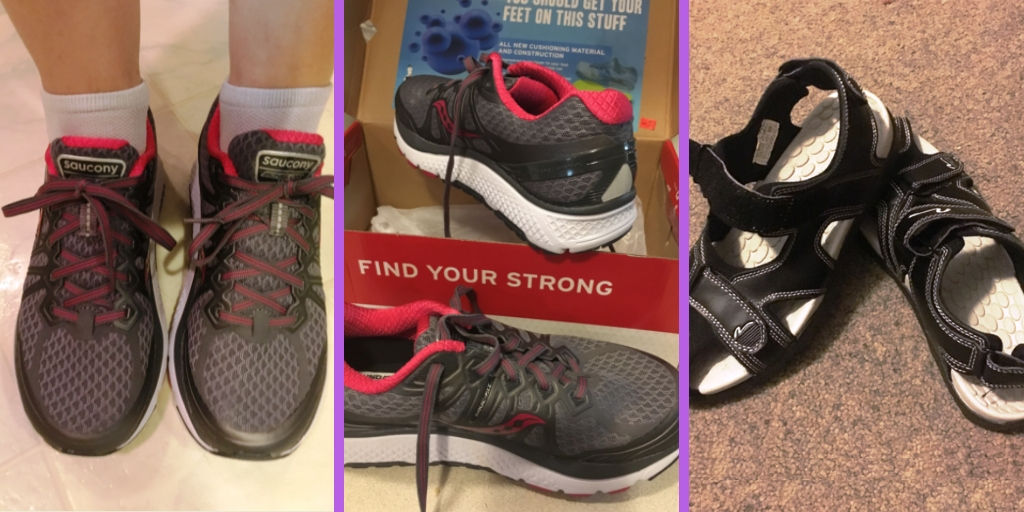
I am definitely focused on sensible shoes now. My work shoes are either Clarks or Aravon. My running shoes are  Asics, Brooks or Saucony (with a similar drop.)

“Drop” is a term that describes the thickness of the heel to the forefoot.  High heel shoes have a huge drop. I have become more acquainted with this word as it relates to the foam and gel in my running shoes. They say you shouldn’t change the drop abruptly. Drop refers to the heel height of the shoe. My freshman year of college I had a pair of “earth shoes” that gave me crazy pain when I decided to wear them all over campus. This was as a result of abruptly and exclusively switching the drop to a negative heel.

Zero drop means the heel and toe are the same distance from the ground. This is known as minimalist and mimics going barefoot.

I found out that easing into a new drop is important. Switching different shoes around helps your feet muscles to be more adjustable to different heights. For instance, I know when I wear dress shoes that I haven’t worn for a while – let’s say to a wedding where I do a lot of dancing – I sure can tell later in the night and next day. My feet tend to cramp up and I can feel the plantar fascia start to act up.

The amount of cushion you have on your shoe is a personal thing. Some people are very adamant about the right amount. I just know that switching the drop abruptly can cause foot problems for me!

In the last few years as I have started to run longer distances, I notice that it has become even more important that the shoes I select really have to fit well. I may try on 10 to 15 pairs of shoes before selecting the next running pair. Sometimes I go to four different running stores – not just to check prices – I want to hear the opinions of the different people who fit the shoes. I check out the online reviews of the different models, the brands and compare how they fit my feet.

Too tight around the toe area – the box – and my “dogs will be barking.” I don’t believe I have wide feet, but after running a few miles, my feet swell slightly. I try to remember that so I don’t tie the laces too tight at the beginning of a long run.

I’ve learned to do different lacing styles to hold my narrow heel into the back of the shoe. I use the last hole which helps to move my foot back in the shoe just slightly. I don’t want my heel to raise out of the back when I run forward. It would result at best in a callus and at worst a big blister.

Recently at the electronics show in Las Vegas, a shoe company launched a new self-lacing shoe that allows you to use your phone to adjust the fit to your foot. They cost around $300 and seem ridiculous! Maybe if I was a professional athlete, I wouldn’t think the price was so crazy or that changing the tightness of your shoe from your phone would be so silly.

I think back to the first time I ever did a run. I was in my red Keds. I went out for the track team when there was a new law (Title 9) and our school was forming a girls’ track team for the first time. I ran 5 miles the first day and ended up with shin splints. So much for my school athletics!

When I think of those shoes, I never would have dreamed that I would consider shoes that cost $120 a necessity. I like to comb eBay and various specialty running stores for a special on last year’s model that I know fits my feet like a glove (or maybe I should say like a sock?)

Special Functions
Just like when you are creating something, having the right tool for the job makes all the difference.

Finding the right shoe for exercise or just for walking can be a challenge as I have found out over the past few years. I often like to use my running shoes for walking and even some cross training. I know many runners that use their running shoes for running only.

When my current running shoes start getting older (around 300 miles on them), they get moved in the hierarchy of my closet.

Best pair – running. Second best – walking. Third best – gardening, yard work and mud.

My third best often get new insoles. I can end up doing a lot of steps in the yard without realizing it and having older shoes where the cushion is starting to get worn can create a bigger problem.

Many shoe models get revised slightly each year, so what fit perfectly last year, may not be what you want this year. Different drops, shoe boxes and even where the stitching runs over the top of the foot makes a difference.

Bike Shoes
I have found my favorite bike shoes and they are actually sandals. They have cleats on the bottom that clip into the bike pedals. The reason I like them so much is that they have three points of velcro adjustments. So fit is great. Also, because they have lots of room to breathe, my feet don’t get too hot when I’m riding in the summer.

The only weird part is that the bumps on the base, that are designed to massage the base of your foot I think, are too intense for my feet. I always wear socks. I know that this is a fashion faux pas, but like I mentioned, I’m more interested in fit, function and support than how they look.

This is my second pair of sandals. I wore the first pair until they were ready to fall apart! Most of the wear was on the right foot because that is the foot I tend to put down first.

How about Your Experiences with Shoes?
What shoes do you use for exercise? Have you changed the shoes you wear at work or play for comfort? Do you have any foot problems that you take into consideration? What about boots for hiking or in the snow? Let me know your thoughts. You can leave a message below or contact me by leaving a voicemail 330-970-6662 or sending an email to chris@becomingelli.com.

Disclaimer: I am not a doctor or a physical therapist or even an expert on shoes. I am just sharing my experiences with treating and avoiding foot problems. Consult your doctor or a podiatrist or a physical therapist if you have foot issues.

Reading to Reduce Stress and How to Find a Good Book

I think reading to reduce stress is a great idea. Shortly after my husband died, I met frequently with a bereavement counselor that the hospice service provided to me. She was helpful to me and made a difficult time a bit better. Being a person who loves to research things, I asked her if there were any books she thought I should read. She thought about it and suggested The Year of Magical Thinking, Joan Didion’s book about the death of her husband.

I had already read that and so the counselor thought about it and said, “well, just read a mystery book.” That made me laugh and I said I can do that.

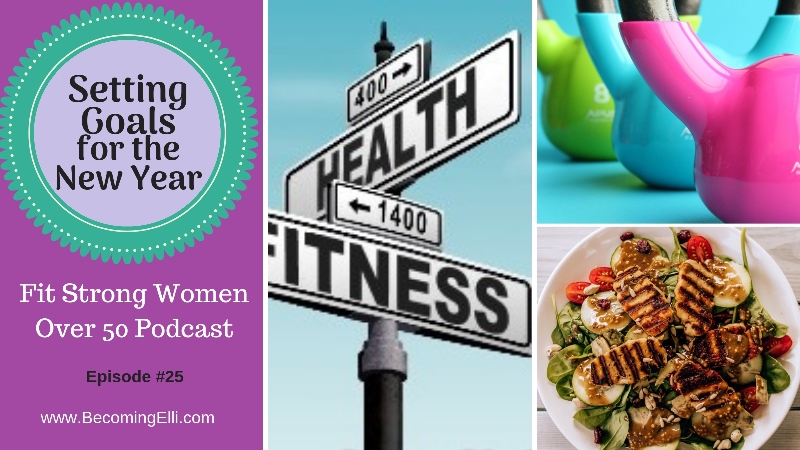
We’re always talking about ways to improve our health and our fitness. Of course, that’s important. In our podcast episode 25, Setting Goals for the New Year, Chris said she wants to work on the mental aspect of health. We talked about focus and meditation and ways to quiet the mind.

Thinking about ways to improve our mental health made me remember that conversation with the bereavement counsellor. Reading a mystery or any other book for entertainment can be a great way to reduce stress, relieve anger or boredom, and improve your mood.

I’ve always been a big mystery reader so I loved that counselor’s advice. As I’ve gotten older, though, I must watch that I don’t choose a book that’s too disturbing. I really don’t want to get stressed out over gory details.

Finding a Good Book

If you’re not a big reader, you might wonder how to find a good stress-relieving book. I have some ideas on that.

Get Recommendations

  • Look at what book clubs are reading. My local bookstore has an area where all the book clubs have their books shelved for their members. I like to go browse that area to see what’s hot on the book club circuit.
  • Check out book reviews and also look at Amazon’s “If you liked this, you’ll probably like that” feature. I like to see what my friends on Goodreads are reading.
  • Ask your friends. Ask here on the Becoming Elli page or join our Facebook group and ask there. People love to share their ideas on books. If you visit your local library, check out what’s on the “hot sellers” area or ask the librarian for advice.

Reread a Favorite

  • Go and find the books you enjoyed as a child or teen. Rereading them can be a real treat. Of course, they can also make you wonder what you were thinking at that age. Over the past few years, I’ve reread the Chronicles of Narnia. I loved those books when I was probably about 11. They hold up though the religious themes were stronger than I remembered. I also reread Little Women. That was enjoyable but a very different read than when I was a girl.
  • Read a classic you’ve always regretted missing or reread one that you love. Every 5 to 7 years, I decide to read Jane Eyre again. I also love to reread  Jane Austen. A year or two ago, I picked up Charles Dickens A Tale of Two Cities and was pleased that I enjoyed it.
  • Choose a favorite author. Perhaps you loved a book by a particular author. If so, go see what else he or she wrote.

Borrow from Movies or Different Genres

  • Read the book of a movie that’s coming out that you know you want to see. Or, if you’ve already seen a movie that you enjoyed, pick up the book that it’s based on.
  • Check out some of the current young adult series. They’re often enjoyable and usually pretty straight-forward. There was that whole period of dystopia series (The Hunger Games, Divergent, etc.) but I think you can find other genres now in the young adult area. I find these books to be great selections for audio books.
  • If you normally read romances, maybe try a mystery. If you normally read mysteries, maybe try some science fiction.

Reading to Reduce Stress

These are some of the ideas of where to find a book for reading to reduce stress. Remember, there are times to read books that might disturb you or upset you but we’re talking about reading to reduce stress. Therefore, try to select books that you will enjoy. If you’re having to force yourself to read it, put the book aside and try a different one.

Reading to Reduce Stress

Developing Core Strength

Winter is strength building time and to me, that means working on core strength. This is particularly important to women over 50 who want to improve balance, reduce injuries and build a base.

I became more familiar with this concept a few years ago when I had an angry piriformis muscle. Until that happened I had never heard of that little muscle that runs overtop of the sciatic nerve in the glutes. The piriformis muscle helps to make your foot rotate out to the side.

If you overwork that little piriformis muscle by having it do the work that your three glutes should be doing, it may become inflamed. Weak hips or weak glutes mucles were responsible for my problem. These muscles are the gluteus maximus, gluteus medius and gluteus minimus — more commonly known as the butt muscles.

Piriformis pain is more commonly known as a pain in the a$$.

It happened a few years back I was working on a big project for a client and put way too many hours in front of the computer (without getting up each hour to stretch, walk around and reactivate my glutes.) I also got a bad cold/flu and was on the couch for several days in a row which nailed it.

I was also working out, but too much intensity and not enough consistency, which is a recipe for injury. Because the piriformis lies right on the sciatica nerve, the pain radiated all the way down to my ankle and it hurt to sit, walk, even reach into the cupboard for a coffee cup. Nasty!

As with many injuries, the first step fpr recovery was RICE. (Rest. Ice. Compression. Elevate.) I had to take time off from working out to let the irritated muscle heal before even starting to exercise again. I worked with a massage therapist, a personal trainer, and a chiropractor to get my glutes back into working order again. (Disclaimer: *If you have pain, consult a professional! I am sharing my story but am not a physical therapist or doctor. Pain indicates a problem!)

They told me, I had to train my glutes to “fire” instead of the piriformis.

Anyway, after my pain died down, I began each morning with a cup of coffee and pulling out my foam roller. I roll my glutes on my foam roller, loosing up the fascia so that it helps the right muscles fire when needed. I learned about how important it is to have a strong core when you are a woman over 50.

I used to think of strengthening my core with crunches or sit ups, but after my piriformis problem, I found that hips, glutes, abdomen, chest, back and basically the whole torso plays into the core.

Here is the list of glute strengthening exercises that I am currently doing to strengthen my core:

  • Single leg squat (I hold something to the side to help with balance.)
  • Single leg dead lift (not all the way to the floor, I do this one slowly and touch something for balance as needed)
  • 3-way thigh band (standing on one leg, lifting the other leg to the front, then side, then back)
  • Lunge (This helps to stretch the psoas muscle deep inside the core, which tends to shrink up when I sit too long working in my computer chair)
  • Side raise (down on a yoga mat. Side plank after I get stronger)
  • Hip hike (seems so easy until you do a few! You need a step for the stationary foot)

Runners World had this routine for hip strengtheners and I found this routine while reading the book “Injury Prevention and Recovery” (*affiliate link) while working to improve my right ankle Achilles problem. I particularly like this online version because it links to online videos so you can watch the exercise being demonstrated. The book has lots of recovery exercises and advice for many common runner injuries. (Only 11% of all running injuries are Achilles Tendinitis.)

(The Achilles gets pulled because the calf is too tight, the calf is too tight because it’s doing too much of the hips’ work – as evidenced by hip drop while running and my piriformis pain.)

Hopefully as you begin your 2019 new years goals and action plan, you don’t overdo it and end up working on recovery and PT exercises. Let me know what you think of this core routine!

2019 Resolutions: One New Vegetable a Week

Now that it’s the new year, we’re all talking about goals and resolutions. I’m looking for easy to make changes. In our podcast episode, Setting Goals for the New Year (episode 25), we discuss some simple changes we can make to our lives, such as add another vegetable to each meal or drink more water. I always need to drink more water so that’s a good one for me to do. I could probably add more vegetables to my diet so that might be a good one for me to work on too. One way I can do that is to take the “one new vegetable a week” challenge.

One New Vegetable a Week Challenge

Now that goals are on our minds, Chris and I decided it might be fun to do a one new vegetable a week challenge. We’re going to try to eat a new vegetable a week (new to us, that is).  It doesn’t have to be a completely new vegetable but can be a variation on one. For example, I’ve eaten red beets but I know that golden beets are very popular. If I buy, cook, and eat a golden beet, I’ll include that in the challenge.

This is similar to the benefits of buying a Community Supported Agriculture (CSA) package. That’s where you buy a weekly or monthly subscription to a local farm and get a bag or basket of whatever they’re harvesting at that time. People often say they must learn how to cook a particular vegetable because they’ve either gotten a lot of it or have never had it before.

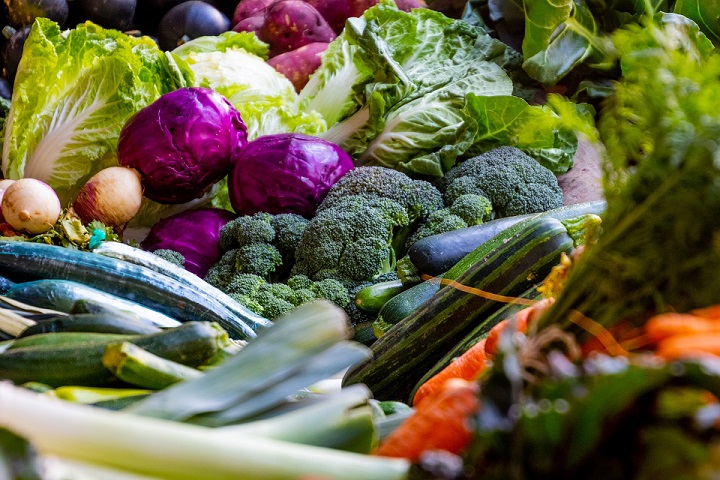
Regardless of how you’re eating, you probably are supposed to be eating vegetables. Eating a great variety of vegetables provides you with a greater variety of nutrients. Remember the thought of eating the rainbow. (I don’t know who started that saying but it’s all over the internet, so I can’t attribute this to its creator.)  The theory is to eat vegetables of all different colors because they provide a wide range of nutrients. In other words, the greater the variety of vegetables you’re eating, the great the variety of nutrients you’re getting.

Feel free to join us in our “one new vegetable a week” challenge! I think in our Facebook Private Group, we’ll be sharing our new veggie ideas with each other. Feel free to join us there. Or just post your new vegetable in the comments here or on the Facebook Becoming Elli page.

Setting Goals for the New Year Podcast

Download | Play in New Window
Please SubscribeApple Podcasts  (iTunes) Google Podcasts | Android-Google Play | Stitcher | Player FM Castbox | Tunein | Spotify | RSS

In podcast episode #25, Jill McCauslin and Chris Brown discuss their intentions for 2019 for exercise, healthy eating and mental focus.

During episode 25 of the Fit, Strong Women Over 50 Podcast they discuss setting goals:

  • Heart Rate Training Techniques: MAF Technique Go slow to gain speed and heart rate zone charts. Fitbit, Polar, Wahoo wearable trackers.
  • Signing up for races:
  • Strength training and group exercise – Consistency over Intensity.
  • Challenge yourself with increasing distance or increasing frequency.
  • Vegetables -V8 or V9, avoiding prepared foods, food prep, inflammatory foods, eating without TV, computer, phone or other distractions
  • My Fitness Pal tracking
  • Spark People
  • Restorative Yoga
  • Meditation
  • Sleep

Let us know your challenges and goals for 2019 by calling our voice mail at 330-970-6662 or leave a message at the Becoming Elli website.


Challenges

Fit Strong Women Over 50 Most Popular Podcast Episodes in 2018

Our Becoming Elli community celebrated a our one-year milestone anniversary at end of 2018 and the beginning of January 2019! In the past year there have been many great episodes of our podcast but the Fit Strong Women Over 50 most popular podcast episodes continue to attract new listeners day after day!

Before announcing our top episode downloads, it is only fitting to let you know this hasn’t happened overnight!

During the past year Jill and I have released 24 podcasts – one podcast twice a month on the second and fourth Tuesday. To create a podcast means figuring out the content, some writing, phone calls, emails, figuring out recording software, actually interviewing, editing it together so that it makes sense, adding music and then distributing out so you all can listen. We absolutely LOVE it when we get reviews and feedback.

Some of our podcast episodes focus on exercise, others on healthy eating and nutrition and still other episodes are about positive mental health. We’ve interviewed a variety of experts. We’ve talked with women over 50 who are doing amazing things like hiking 500 miles, walking marathons, trying new ways of eating like intermitten fasting or keto/NGNS or maintaining a weight loss for years. We’ve talked with many personal trainers, health coaches and a several nutritionists.

We are still working to figure out what YOU our listeners want to hear from a podcast that focuses on women over 50 who are striving to be fit and strong.

Please leave more feedback (emailing is easy: chris@becomingelli.com) or if you’re brave and want to share with other women, leave public feedback on our itunes or on our Facebook page. Or call our voicemail box and leave a message.

Both Jill and I lost a significant amount of weight several years ago and our Fit Strong Women Over 50 podcast was started for the Becoming Elli community as a way to help us to stay inspired and motivated (or at least me, I shouldn’t speak for Jill!) while at the same time we strive to provide valuable information to other women over 50.

For us, 2018 has been an exciting year. Launching the Becoming Elli Community and the Fit Strong Women Over 50 podcast has allowed us to ask experts their opinions on things we’ve wondered about and to really get to know women all over the country (and some outside of the USA as well.) It’s been a learning adventure as in 2018 we’ve created this website, posted over 150 blog posts recorded and launched 24 podcasts and also ran the Akron Half Marathon and Cleveland Half Marathon.

Drum Roll for the Most Fit Strong Women Over 50 Most Popular Podcast Episodes of 2018:

Our top three downloaded podcasts during 2018 were:
Interview with Personal Trainer Maria Stadelman (January)
Diane’s Workout Secrets: An Everyday Woman Shares What She Has Learned (April)
Healthy Eating for Women Over 50 with Nutrition Expert Becca DeVenzio (August)
As Jill and I prepare our list of experts, topics and ideas for our podcast in 2019, please give us a call on our dedicated Becoming Elli Voicemail 330-970-6662 and let us know your thoughts! We love hearing from our readers and our listeners!

Or send an email to me at Chris@becomingelli.com and I’ll get back with you! Looking forward to a great 2019!!

Staying Present while Looking Back and Looking Ahead

Paying attention to what is happening right now is so important. I sometimes find it difficult to stay with it. Mindfulness. Being present. Living in the moment. Focus on today. Focus on this minute. “Today is Yesterday’s Tomorrow.” One Day at a Time.

However you choose to describe it, sometimes (often) “staying present” can be difficult. Something about the end/beginning of the year has me thinking back and forward at the same time.

Yesterday is History.
Tomorrow is a Mystery.
Today is a Gift.
That’s why we call it the Present.

– attributed to Alice Morse Earle, Sun Dials and Roses of Yesterday: Garden Delights, 1902

Many new exercise programs will start in the new year. New Year, New You! (Or maybe Jan 2nd after the celebrating has finished and decorations are stored away.)

Staying consistent is more my speed. Something about jumping in both feet, too enthusiastically, has not ever served me well. I know some people have to go “cold turkey” and just “rip the band-aid off” to make a desired change.

I find it more long lasting if I slowly correct course, a bit like a giant ship at sea, one degree at a time, over and over. Last year my goal was consistency over intensity and “Resiliance!”

Looking back at 2018, I’m pleased with my fitness level, my eating habits, and the amount of exercise I did. I think I’m going to keep my motto and word for the year because of the success I had.

During 2018, my starting weight and ending weight were within two pounds. I know I ate better than I did in 2017 and payed more attention.

According to my FitBit, I averaged 80 active minutes per day and in all but two months, I exceeded over my 60 active minute goal. Some of the active days were doing races and rides, but most of these are merely taking the stairs more often, taking the parking spot farthest from the door and doing the outside loop in the grocery store. For 2018, I thought I’d have it worked out, I am still working on creating a standing desk. I know that will make a difference for some of my most sedentary days!

Best of all, exercise has become fun for me and I feel better afterwards. Some of the most enjoyable activities were:

  • the many, many walks at the dog park from May to September with our 2 dogs and my adult daughter.
  • the many bike rides followed by potlucks with my friends
  • the runs and races with my dear friend Jill.

As we end 2018 and begin 2019, I also wanted to say “thank you” to our podcast guests, podcast listeners, social media followers and blog readers. You all provide inspiration, motivation and accountability to me as well! Happy New Year!

Reflections on 2018: Year-End Wrap-Up Podcast

Episode #24 of Fit Strong Women Over 50 Podcast for the Becoming Elli Community

Download | Play in New Window
Please SubscribeApple Podcasts  (iTunes) Google Podcasts | Android-Google Play | Stitcher | Player FM Castbox | Tunein | Spotify | RSS

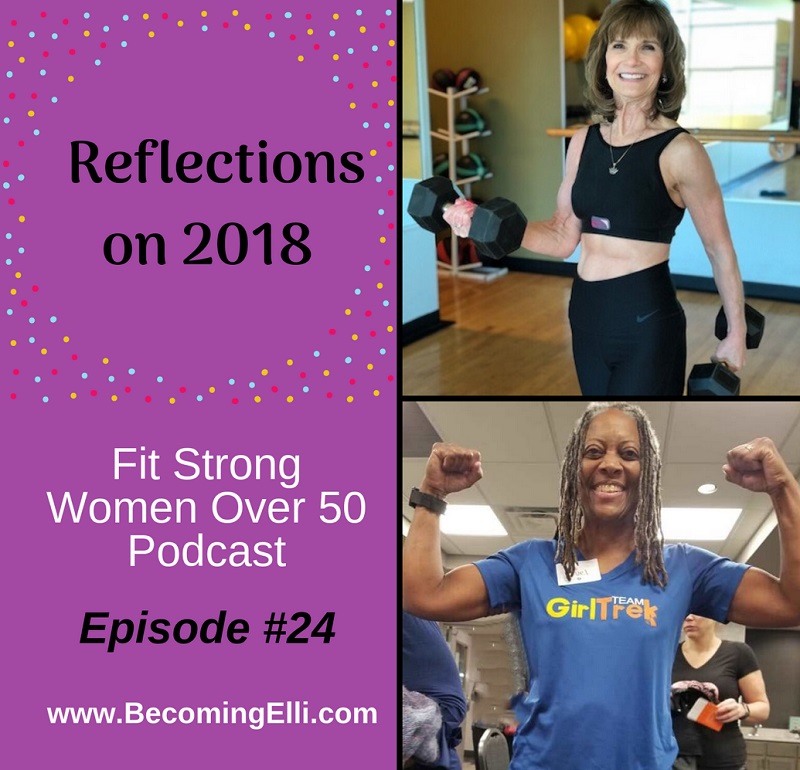
In podcast episode #24, Jill and Chris reflect on 2018. They talk with amazing women from episode 7 Diane Berkley and episode 8 Juel Fitzgerald to find out how their 2018 went  and to talk about plans and goals for 2019.

Diane Berkley talked about:

  • Thyroid issues and how that affected her workout
  • How she got her running speed back
  • Participating in the Ultimate Fitness Challenge at her gym with thrusters, the assault bike and push-ups
  • How her trainer Mike helps her measure her fitness levels
  • Which measurements she tracks
  • Different types of dead lifts
  • What cardio she is does at the gym along with her two days a week strength training
  • How she maintains her eating plan
  • Possible new challenges for 2019: swimming and her first time race

We talked with Juel Fitzgerald about her reflections on 2018 and plans for 2019:

  • How she encouraged 7 other women to accompany her to Las Vegas to walk the Rock N Roll half marathon
  • How she plans to do the St Jude Seattle Rock n Roll half marathon to add bling to her Rock n Roll Race Series collection.
  • Her work with GirlTrek and the difference it is making in women’s health
  • Differences between the Garmin and the FitBit
  • Seeing Chris and Jill on Abbey Road during the Cleveland Marathon. Did Juel do the half, the 8K, or the 10K this year?  She couldn’t remember, but she did the HALF and the 8K in 2018.
  • Her challenge in 2019: She wants to find women who want to train and walk a 26.2 mile marathon. She will help coach them through it with her! Are you up for it?

Links mentioned during Diane’s and Juel’s interview:

Jill and Chris reviewed their 2018 year. We are particularly proud of our completing 24 podcasts and the ongoing growth of the Becoming Elli community. Thank you to everyone who listens to our podcast, reads our articles, belongs to our facebook group and supports our community!

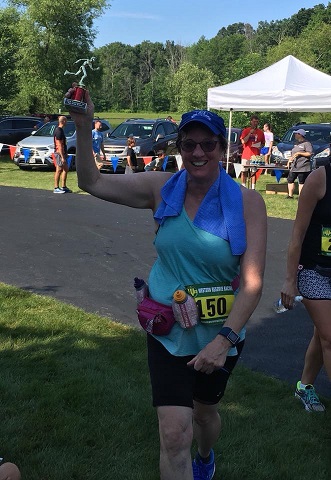
We also talked about our races, the ultimate fitness challenge, and the MS150 Buckey Breakaway bike ride. We discussed Jill winning the age group award for the Firecracker5K race. She had completely forgot and still wasn’t sure until Chris texted her this photo as a reminder.

Firecracker Race


(Side note from Chris: With Juel forgetting if she did the Half or the 8K at the Cleveland marathon (she did both) and Jill forgetting that she won her age category for the Firecracker Run, I think it is safe to say that most of the races we are doing are not about winning, losing, placing! it really doesn’t matter! What matters is getting out there, being with like minded women and simply just participating – that’s the key to having fun at a race! Merry Christmas and Happy Holidays!)

Hydrating with Water – Important Vitamins and Minerals

During a bike ride in the August summer heat, a friend of mine mentioned that distilled water doesn’t have the electrolytes needed in the water. It was a quick remark made at one of the water stops we did on a long bike ride.

At the time I didn’t think much about it, but I wanted to revisit it. Hydration that is. Or most specifically just water.

What I didn’t realize is that there is so much to know about water. It seemed like a simple topic until I started to research it. I got a bit overwhelmed and probably have too much information in here for what started out as a simple topic with an “easy” question.

Water is a thing! Just a glance down the water aisle at most any grocery store.

First off, there are so many KINDS of water:

  • tap water
  • well water
  • softened water
  • city water
  • purified water
  • distilled water
  • bottled water (and all the associated issues with plastic containers!) Or water in cans.
  • spring water
  • sparkling water
  • water with added electrolytes
  • artificially sweetened water with flavors
  • filtered water (Bria)
  • and sooooo many brands of water Hydrating with WaterLa Croix, Dasani, Aquafina, Poland Spring, Evian, Fiji, Nestle Waters, Perrier, Ozarka, Glaceau Smartwater, Voss, PureLife, Mountain Valley, and Deer Park- just to name a few.

I guess what I’m really interested in is drinking water and specifically, what vitamins and minerals are in it and how much of these your body gets from water and how much it needs for the day.

Is well water better than bottled water? Is “city” water with its chemical taste, have the missing vitamins? Do communities still have fluoride added to water to help children’s teeth develop? (I remember hearing that as a kid to drink the water at school because its city water, not country water and has fluoride so we’d get fewer cavities.)

Hydrating with Water

During the research process, I found a good homemade recipe for water with electrolytes that I’m planning to make to carry with me during the longer exercise and on hot days. Here’s a variation of this water recipe:

You can buy powdered magnesium and calcium (affiliate link) for stirring in on Amazon if you  think your water doesn’t have the minerals in it you need.

Regular water to me means tap water from our house. I have well water at my home from our 90-foot deep well. I know it has lots of minerals in it – (lime, but not the fruit kind!) – because I can see it on my shower door if I don’t clean it right away after a shower. We don’t have a water softener. Does it have the magnesium and calcium I need for electrolytes… I don’t know honestly. Maybe.

On the bottle of PurAqua from Aldi the water is purified water with calcium chloride and sodium biocarbonate added back in. It doesn’t say anything about magnesium or potassium.

Purified water takes out the “impurities”, but that can also mean that they took out some other things, even important things – like salt, calcium, magnesium and potassium – those electrolytes that help your brain work.

Distilled water is recommended for household use because it comes from water being boiled to remove any contaminates. The steam is captured, cooled, and turned back into water. Household uses for distilled water: steam irons, because it keeps the minerals out of the iron. That doesn’t necessarily mean drinking water.

Here’s a few other links to some of the websites I looked at for this post:


The Challenge of Choices: December’s Eating and Work Out Plan

The Challenge of ChoicesI got all thrown off my eating plan the last few days. It was a combination of December gifts, a baby shower and going out to eat twice in one day. My work-outs have been light too.

In the 11 years since I’ve been working on getting more healthy and fit, I find this is a very normal occurrence in December. The trick is to get back on the plan and not say “Oh just forget it!! I’ll just start again in January.”

That’s the thought that used to get me in trouble. What does work for me is jumping back into my December plan. I’ve found that if I can restart again several times in December, my work in January is more like maintenance, not like starting over.

Here’s what happened:

On Friday, I had lunch with a friend and I made a reasonably healthy choice with a tabouli and hummus grilled pita wrap. After several hours of sitting in a work meeting, she and I walked around the town. It felt good to stretch my legs and it was good for the soul to enjoy the holiday decorations and festive lights. Special booths were set up where vendors displayed beautiful home made gifts. I indulged in some delicious gingerbread cookies with thick icing. German cookies, I forget their name (maybe Lebkuchen?)  but the taste was very intense. I’m sure pretty sure the recipe had molasses in it. I know it had brown sugar for sure and powdered sugar in the icing. I’ll pretend they were 200 calories each, but they tasted incredible.

Later that evening, after walking the track at the gym before dinner, I enjoyed a beer and split a Ruben sandwich with my husband for a Friday night date. Between the cookies, beer and grilled sandwich with corned beef/sourkraut, I was not surprised when I woke up Saturday morning with my finger joints feeling very swollen and very stiff.

On Saturday, my sister held a luncheon baby shower for my niece at her house. I brought the salad (spinach, feta and a variety of chopped veggies) to go with all the goodies she offered (pizza, jo-jo’s and beautifully decorated cupcakes!) Bonus – I loved that she had a huge tray of beautiful fruit for dessert as well as her lovely cupcakes.

When it was time to eat, I remembered some of the holiday party tips that Jill and I shared on the most recent podcast “Live Well to Eat Well” and navigated the tempting foods without guilt. Seconds on salad and fruit helped, but I enjoyed the pizza and jo-jo’s as well. There are definitely some challenges of choices, especially when there is fun and family involved.

A few hours later, I was back in the car for the hour ride back home. Between all the driving and party, I did a lot of sitting, but managed to get 13 flights of stairs in during the shower by offering to take the coats up to the bedroom. Without my FitBit I wouldn’t have realized that I did manage to add that to my exercise for the day.

Getting back to my plan:

After two days of indulging in foods that I usually don’t eat, I got back on track for my regular eating plan on Sunday and was happy to get a workout day in as well.

My workout was twenty minutes of strength training with weights with some other exercises, followed by an hour and fifteen minutes of gentle yoga, and several laps of walking the track.

The 20-minute workout looked like this:

  • 20 kettle bell swings
  • 20 KB squats
  • 20 KB push press
  • 20 KB dead lifts
  • wall sits
  • leg lift machine

Between each exercise, I rested about 20-30 seconds to get my heart rate down. It wasn’t a “huge, go-for-it” work out but a “get the muscles moving” work out. I find these are better to keep me coming back for more and not ending up with too sore or pulled muscles.

Sunday afternoon I prepared my food prep for the coming week: crock pot chicken cooked in olive oil and steamed/sauted vegetables (cabbage, carrots, celery, and onions) in chicken stock. I have plenty of go-to lunch or dinner starters by preparing this. Sticking to the plan during the next three or four days should be easier and that will help set me up for next week.

Next week will be an off plan week, since the gym will be closed for some of the days and there will be lots of family food, meeting friends out at restaurants and celebrations during Christmas week. I’m already thinking of ways to get more water, walking and work outs tucked into the week so I can start the new year in good shape.

How about you? What choices have you made this month? Do you modify your eating plan and workout plan for December?

« Older posts Newer posts »

© 2026 Becoming Elli

Theme by Anders NorenUp ↑