Fit Strong Women Over 50.

Author: Chris Brown (Page 40 of 41)

Insulated Handheld Water Bottle Review

Long story short…I love my Nathan insulated handheld water bottle.

**Disclosure: I am testing my participation in an Amazon affiliate program. Some of the links on this page are part of their affiliate program, where a portion of a purchase might help offset the expenses associated with the podcast and website.

As spring has arrived, my mind is already into summer and enjoying hot weather! One of the challenges I have is keeping cool enough during hot runs. That’s why I bought the 18 oz Nathan SpeedDraw Plus insulated running water bottle right before the Akron Marathon last September.

During training, I had struggled trying to find something to run with or hiding water bottles on the trail. This water bottle had four features that sold me:

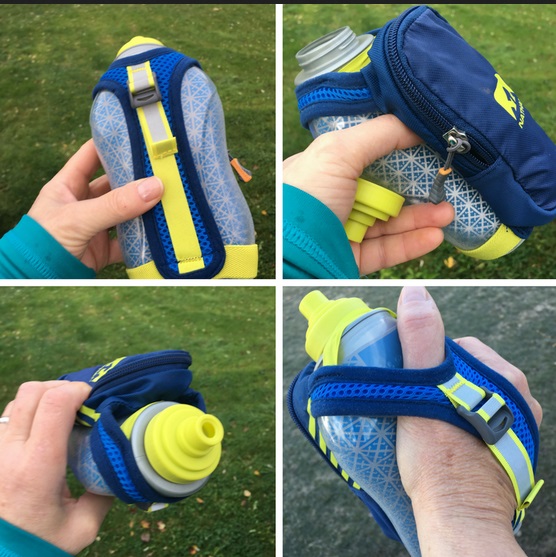
  • Insulated means you can fill it and freeze it overnight so you have cold water during the hot day of the race,
  • Internal flap holds water in until you squeeze it or suck on it. No cap to worry about.
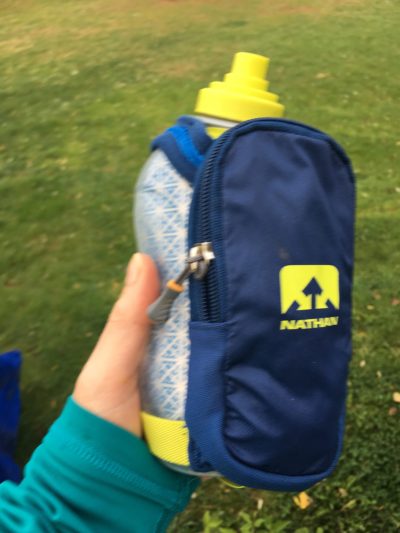
  • Pouch for keys, phone or snacks.
  • Adjustable strap to fit around your hand for easy carrying without clenching.

This Nathan SpeedDraw Plus Insulated Flask is an 18 ounce water bottle that is great for providing liquid when you need some while running on a super hot day.

I bought it at the Akron Marathon Expo the day before I ran the half marathon. Temperatures were predicted to hit into the 80’s and the day didn’t disappoint. There were lots of heat warnings. So I broke the rule of “NOTHING new on race day.” And I’m so glad I did!

You can fill it with water the night before and put it in the freezer, because it is insulated. Hint – don’t overfill it. (Like I did!) You need to leave room for it to expand when it freezes. In the morning, you are basically running with an insulated ice cube for the first few miles. Not a problem, because it is insulated, your hand doesn’t get cold. It was so much easier to run with than my regular water bottle and easy enough to switch hands when needed.

When I left the house at the wee hours of the morning, it was frozen solid, but as the race progressed, the block of ice melted and it was awesome to be able to sip ice water! The ice had started to melt and water was drinkable from mile 5 on. I still drank water and Gatorade (or power aid) at each water station, but the ice water gave me a nice extra cool down. I even squeezed a little bit on my head under the hat.

This water bottle would have been perfect for the June 17th 5K that Jill and I ran in 90+ heat up in Cleveland last summer!

Key features of the Nathan SpeedDraw Plus insulated handheld water bottle:

  • Size – I  have large to medium woman’s hands… not small, so I felt that the bottle curves fit my hand pretty well. I think the designers made it more for a man’s hand than a woman’s hand but with the adjustable strap on the outside, I could snug it up. Because of the case, I never felt like I was clutching the bottle and my hand didn’t clench.
  • Pouch – My iPhone 6S is very tight in the pouch. I didn’t want to put the phone in the pouch just in case the lid to water bottle leaked possibly getting the phone wet. It didn’t leak, but I didn’t want to chance it. I tend to fill up the space available with stuff, but I felt that the zipped size of the pouch is just right. Any bigger and I’d be stuffing too much into it. Since I always run with my EpiPen, I put my phone in my waist pack. This saved the space in my Nathan pouch for the Clif BLOKS energy chews.
  • Price: The water bottle was listed at $35, but I save a few bucks by getting it at on sale at the Expo. I’m glad I got the insulated, even though it jacks up the price about $10. Amazon has it in many colors – with the Nathan SpeedDraw Plus in my color at $31.99.

I guess the straps are reflective for running at night, but that’s not something I do, so the feature isn’t necessary for me. (Maybe someday, right?) They also make a different version of the Nathan handheld flask that has a place for your phone as well that could be very handy. I have never tried that one. My phone fits inside the little pouch because it is small enough, but I have to unzip the pocket to see the phone, which is a pain.

Do you have a water bottle that you love? Which one and what do you love about it? Leave a message below or send me an email!


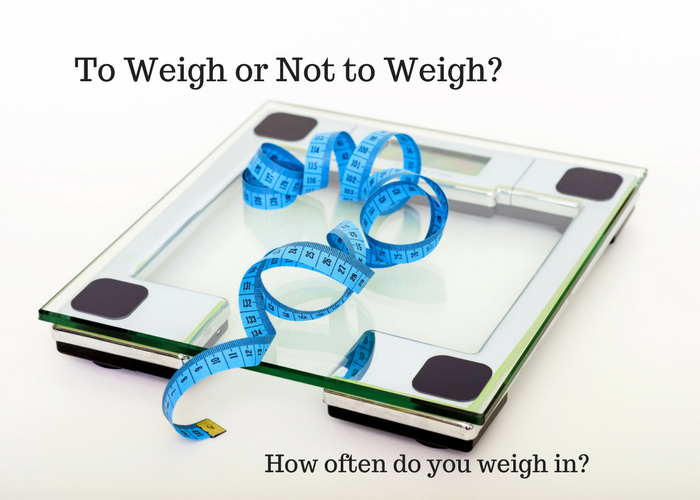
To Weigh or Not to Weigh?

After losing weight several years ago, I’m still weighing in everyday. I know that there is some discussion online if it is a good idea to weigh or not to weigh everyday. For me, the choice is to weigh.

I was reminded of this when something popped up on my Facebook feed in the memories section. It was about weighing in and BMI.

5 years ago on Facebook – March 2013 –
Had a great day the gym yesterday… I’ve been doing those weight management workouts twice a week and yesterday was the end of the first session. I lost 8.5 pounds and gained one pound of muscle over 8 weeks. My trainer said that I actually lost a whole other pound of fat to replace it with muscle, which he says burns about 40 more calories a day… I’m excited because my BMI numbers take me from overweight to normal. I even “ran” the track for 12 minutes. (Okay… my arms were running, but my feet still looked like a fast walk.) Best of all, I feel a lot stronger. I signed up for the second session that starts Monday. This has been my “solution to reach a new years resolution.”

To Weigh or Not to Weigh

Do you weigh yourself? Some people weigh everyday. I know that it helps me.

Some people just get on the scale once a week, usually at an organized weigh in. When I did the weekly weigh ins I would already know what I weigh from weighing in a home. I used to obsess about it.

Long ago, when I really did need to get fit, I rarely weighed myself. In fact, the only time I used to weigh in was at a doctor’s office.

I remember the first time a doctor talked to me about my weight: “You really need to get a treadmill. The Ohio weather just isn’t nice enough to exercise outside reliably.”

It wasn’t the lack of treadmill that was my problem! It was primarily food choices and food portions. I’ve since heard things like “It’s 80% the kitchen and only 20% the gym.”

After I decided to adopt a healthy lifestyle, I changed my relationship with the scale and have been weighing myself every morning when I wake up. It probably is a bit obsessive. I do find it helps me to keep things in check. I have a “scream weight” which I refuse to go over. But it is the strength and muscle mass I’d really like to stay focused on now — that and maintaining my weight loss.

Body Fat Percentage

Some scales measure a whole lot more than just weight. They will keep track of your body fat percentage and the muscle mass numbers as well as the overall weight.

Many of the new scales have the numbers for water percentage too. My water number changes all the time (obviously) based on how much I am drinking or if I am slightly dehydrated.

Not sure I can always believe the fat percentage, but that’s the number that I’d really like to change. Move some of my overall weight from the fat side to the muscle side.

I think I need to lift more – and run less. Well, maybe not run less. (I get more hungry when I run!!) I do like the effects of cardio exercise. The endorphin feeling is great and there is something satisfying about seeing the mileage add up.

I know some people are working on changing their BMI (Body Mass Index.) BMI is a quick way to measure the weight to height ratio. For a some people, for instance those who weight lift, it is way out of whack, but in general, it is a guide. A quick google search will provide lots of BMI calculators, if you want to check your BMI bynber,

General guidelines want your weight to be a at a BMI number 18 and 25. If I get to 25, it’s only for a little while, but I’m generally 26 or 27, which is just into the overweight category. While I like to think it is all my muscle mass, I’d be fooling myself! I’m not there yet!

I think better yet would be a BMI scale that measures fat percentage and muscle mass. There probably is those calculators too.

Being heavier really bothers me for running particularly, because it slows me down. Think of running around holding two 8 pound weights all day. I know I’d be faster if I could drop those weights.

So, while I weigh in everyday and know my BMI number, it isn’t what I want to measure! It’s muscle mass. Gaining muscle! But I still insist on stepping on the scale every morning.

How about you. Do you weigh every day? Why or why not? Do you know your percentage of muscle mass? Please leave a message below or send me an email at chris@becomingelli.com.

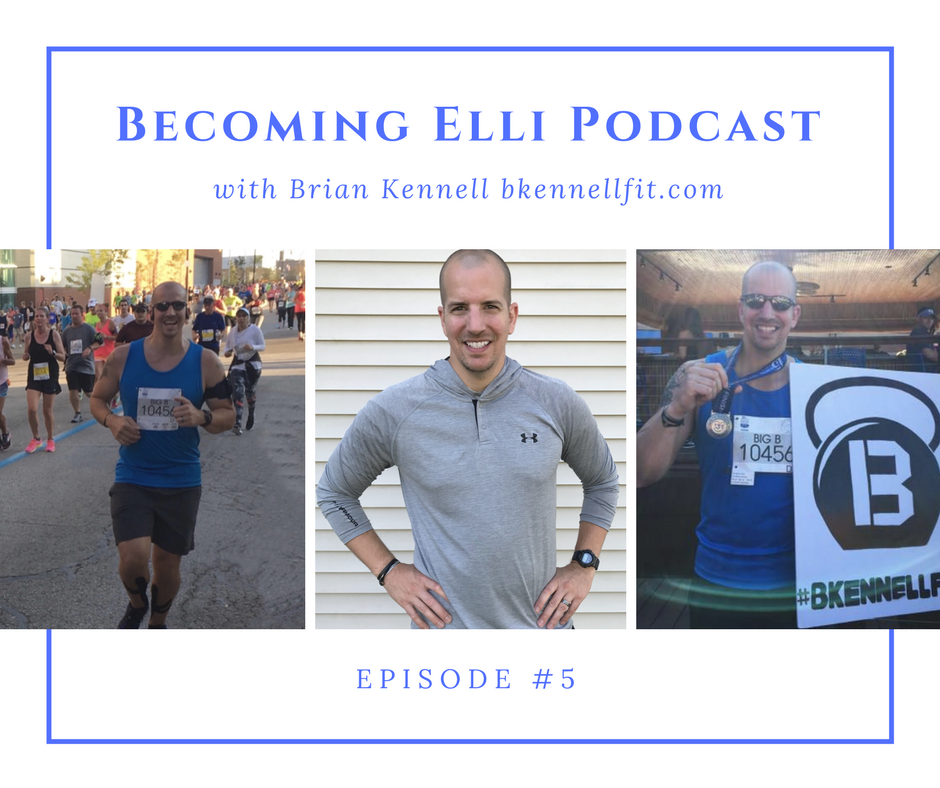
Interview with Brian Kennell – Healthy, Fit and Active – Episode #5 of Becoming Elli Podcast

Podcast: Play in new window | Direct Download
Subscribe: Apple (iTunes) PodcastsAndroid-Google Play | Stitcher | Tunein | Spotify | RSS

In episode #5 of the Becoming Elli Podcast, Jill and Chris talked with Brian Kennell, personal trainer & business owner, about:

  • Muscle Mass
  • Interval Training
  • Strength Building
  • Cardio Training

He said that he used to get questions from his clients about how to lose weight, but in recent years the questions have changed.

“Instead of focusing on losing weight to be healthier — yes, that is part of it, but there is more to it than that… 

The things my female clients over 50 are asking me are more performance based, more health based, more fitness based instead of just ‘Can you help me lose weight?”

‘I want to be able to run a 5K with my kids, and not be in pain during or after.’ or ‘I want to go skiing with my husband this winter. Can you get me in shape for that?’ It’s what your podcast is all about.

If you want to lose weight, it’s a different formula. If you want to be healthy, if you want to be fit, if you want to be active, it’s a different formula than weight loss.”

He shared some “don’t miss” exercises that all women over 50 should be doing and ways to stay fit when you only have 15 minutes to work out.

You may be surprised to hear that he also mentioned some exercises that probably are not appropriate for women over 50. (Bet you can’t guess which ones!)

http://becomingelli.libsyn.com/brian-kennell-personal-trainer-and-business-owner-of-bkennel-fit

Background:
With more than 15 years working in the fitness industry, Brian Kennell has worked at sports performance facilities and a medically based fitness facility – as both a trainer and manager. He now has his own personal training business, BKennellFit, where he will travel and meet people to train on location – at a park, on the trails or their home.

Brian has a Bachelor’s degree in Exercise Science and a Master’s Degree in Exercise Physiology/Adult Fitness, both from The University of Akron.

He wrote his Master’s thesis on a popular supplement ingredient and also had a poster presentation at ACSM National Conference.

Certifications:
ACSM Certified Personal Trainer
TRX Certified

Background:
While he was not very athletic as a kid, he loved sports but felt that he didn’t really excel at anything. After he began lifting weights in college, it all came together. Since then, he has competed in natural bodybuilding competition, started training for powerlifting, ran a half marathon, and is training for a full marathon.

How to contact Brian Kennell:
website: https://www.bkennellfit.com/
Facebook: https://www.facebook.com/pg/B-Kennell-Fitness


Stay in touch with us! We love to hear from you. Either leave a comment below or send an email to Chris chris@becomingelli.com or Jill jill@becomingelli.com.
Quick Links: Website  | Twitter | Facebook  | Podcast Feed

Keeping Momentum During Difficult Times

I don’t know about you, but I find it hard to maintain motivation, especially keeping momentum during difficult times.

Maybe it’s dealing with an immediate situation when a family member needs help. Or when a car decides to act up. Maybe it’s a work-related “crisis” of one kind or another. Or it could be an internal problem – the flu, a cold, a sore muscle or a sleepless night.

It doesn’t really matter the cause. There are roadblocks to keeping momentum of healthy eating, working out regularly and making consistently good choices, right? In my heart, I know keeping momentum is the key to me being strong and fit.

Here are six ways of keeping the momentum during difficult times:

  1. Gratitude List – What am I grateful for? Who am I grateful for? What simple pleasure or beauty am I ignoring because I’m in a difficult time? I like to go though and make a mental list – or actually write down – all the reasons I have for being grateful. Some people call it counting their blessings.
  2. Maintaining Accountability – I like to write down what I accomplished and make note of what I missed. That way, it is pretty clear how things stack up for the week. I look at my Fitbit numbers, report into my coach/trainer and post in my accountability Facebook Group. (Jill and I will be writing more on Becoming Elli’s Closed Facebook Group Community — coming soon!!) Having a community to check in with and get support is a major motivator for me. Some people call it their tribe.
  3. Staying in the Now – Mindfulness is a big buzz word these days. For me, mindfulness means not worrying about tomorrow or next week and not rehashing my mistakes of the past week. It is remembering to stay present and stop worrying. Worry doesn’t change anything, does it? It just subtracts momentum.
  4. That One Little Thing – I try to find that one little thing to increase my motion and activity for the day. It could be taking the stairs. Parking farther away from the building in a parking lot. Doing a little jog into the building. Wearing my running shoes whenever I can so I’m “always ready.” Sometimes it might be as simple as just going downstairs to the laundry room and running a load of wash thru the cycle before getting ready for bed.
  5. Meditation – When I am overly stressed, I try to close my mouth. Bite my tongue, if needed. (Not too hard!) While I try to avoid making those regrettable snap replies, I am not always successful. I need to remind myself to take a deep breath through my nose and out my nose. Close my eyes. Count a few seconds and do it again. Then say something nice – not mean.
  6. Song – When I know it’s going to be a tough day, I’ll pick a theme song for the day. I repeat it in my head over and over during the day. During some difficult days, I can’t even be bothered thinking of a song. “Don’t Stop Believing” by Journey is my fallback. It’s one from my playlist. (This past week Jill wrote about her running playlist. I bet she has some good motivational songs on it that I need to add to my theme song list!)

How about you?

What are your strategies for keeping momentum during difficult times? I’d love to add a few more tools in my bag of tricks!! Please leave a message with your comments and suggestions below or send an email to Chris@BecomingElli.com.

Wishing you the best of luck to you in keeping your motivation – no matter what life throws at you!

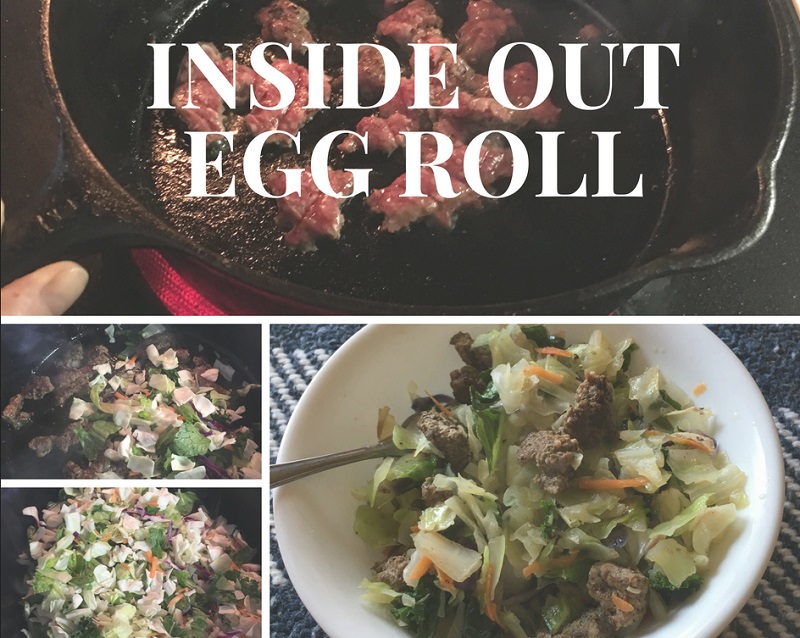
Inside Out Egg Rolls – Healthy and Delicious

I’m always on the look out for delicious recipes that are healthy and easy to make. Inside Out Egg Rolls certainly fill the bill. Finding something that adds important vegetables into my diet while satisfying the “yummy meter” is a win-win.

One of my friends from the gym – Angie – posted a recipe that was similar to this. It inspired my version of the Inside Out Egg Rolls and I’ve made it for the past three weeks in a row. It has become a staple in my household. Each time I’ve made it a little differently. You can certainly modify this to make it your own!

The way I classify this as an Inside Out Egg Roll recipe is the consistency of the finished veggies. While you can add whichever vegetables you feel satisfy the requirements of an egg roll, the ones I especially like are shredded cabbage, shredded carrots, and some tiny broccoli pieces. This recipe also can make good use of large broccoli stems that can be shredded and saved for adding to your own unique egg roll.

To make it even easier, you can buy a bag of shredded veggies to dump into this one-pan meal.

Ingredients:

  • Olive oil (if desired)
  • 1/4 pound of ground beef (per person)
  • Chicken stock or veggie stock
  • Cup of water
  • White and/or red cabbage – shredded
  • Carrots – shredded
  • Broccoli – shredded
  • Romaine lettuce – chopped
  • Kale leaves – chopped
  • Medium onion – diced
  • Celery – sliced
  • Spices – soy sauce or salt/pepper to taste

Instructions for Inside Out Egg Rolls:

Brown the burger beef. Drain any fat (if desired.)
Add a little olive oil if you feel it is too dry.
Add chicken stock (or veggie stock) with water.
Warm stock and water.
Put veggies into same pan.
Stir to saute veggies.
Add some soy sauce to taste.
Add pepper to taste.

I was amazed how yummy this was. I like using a little bit of chicken stock and no soy sauce, but that is just me.

It is very fast cooking – especially if you have prepped the veggies on a Sunday evening to make this a wonderful quick mid-week dinner. A fast, delicious and healthy meal makes it a really favorite with me for when I’m tight on time and want something that is good tasting and good for me. I also like that this provides another way to get some of those healthy cruciferous crunch collection vegetables into your meal.

What do you think? Are you going to try making some Inside Out Egg Rolls? Let me know how you modify this recipe by leaving a comment below.

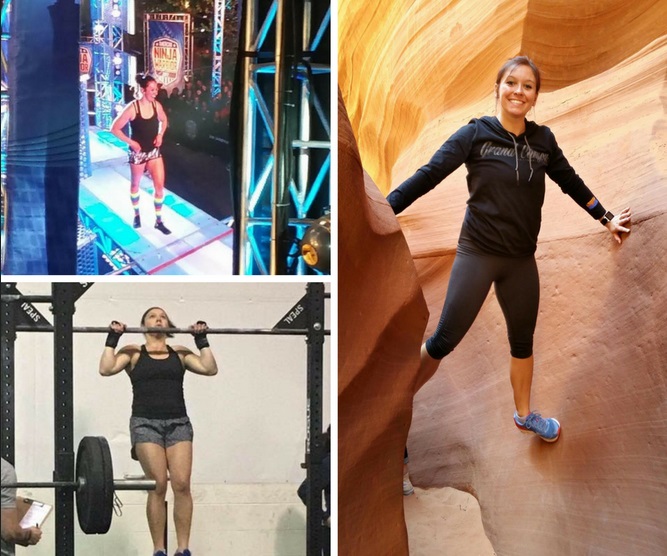
Personal Trainer and Gym Owner – Brenda O’Hara – Becoming Elli Podcast #4

Podcast: Play in new window | Direct Download
Subscribe: Apple (iTunes) PodcastsAndroid-Google Play | Stitcher | Tunein | Spotify | RSS

Brenda started gymnastics when she was five years old and competed at a high level for 15 years. She decided to go into exercise as a profession when she was a junior in High School. With a major in exercise science, Brenda earned a Bachelors of Science degree from Kent State University.

Brenda holds the following certifications:

  • NASM (National Academy of Sports Medicine) Certified Personal Trainer
  • NASM Fitness Nutrition Specialist

She owns and operates Iron-Oak Fitness in Solon Ohio. Iron-Oak Fitness is a gym with daily challenging workouts.

Gym Owner – Brenda O’Hara In this podcast, Brenda explains the following to us:

1) Olympic LIfts (one rep max of a thruster, dead lift, power clean)
2) Endurance
3) Metabolic conditioning (cardio)
4) AMRAP (As Many Reps As Possible)

Most trainers will offer a free session. Brenda suggests that we ask them: why is this good for me? What muscle is working? Trainers should be able to answer your questions. Also, they should ask you if you have any past injuries so that they can develop a program to work around your injuries. They should follow up with you.

After a work our you should be sore (DOMS – delayed onset muscle soreness) where your muscles ache 24 hours after the workout, increasing around 48 hours but goes away after 72 hours.

If you have pain in your joints or only on one side or a sharp pain, that may be an injury, not muscle soreness.

Strength or Cardio? A combination is best with 2-3 days of full body strength conditioning and cardio workouts for 30-60 minutes on the days you are not strength training, with one rest day a week.

Brenda stresses being consistent. If you fall off your workout routine, just get back into it. If you only have 20 minutes, walk around the block.

Brenda suggests that you track your food in My Fitness Pal (a free app) for 2 weeks before making any changes. She suggests that her clients try to aim for 40% Protein, 30% Carbohydrates and 30% Fats as a starting point. Try this before adjusting. My Fitness Pal can easily show you the percentages when you track your food.

What should people do more of: “Take my advice.”


What should clients do less of: “Complain. I would never suggest to a client that they try something that they aren’t ready for.”

Brenda has also had experience competing in triathlons and Crossfit competitions and tried out for American Ninja Warrior. She decided to do an Ironman-length triathlon after reading Becoming an Ironman while pregnant with her second child.

To reach Gym Owner – Brenda O’Hara, visit Iron-Oak Fitness in Solon, Ohio.
Web: www.iron-oakfitness.com
Email: Brenda@Iron-OakFitness.com
www.facebook.com/Iron.Oak.Fit
www.instragram.com/ironoak.fitness
www.twitter.com/iron_oak_fit
www.pinterest.com/ironoakfitness
ironoakfit.tumblr.com/

Brenda O’Hara – Background

Education: BS Exercise Science, Kent State University
NASM Certified Personal Trainer
NASM Fitness Nutrition Specialist

Experience: 15 years competitive gymnastics.
10 years as a personal trainer including experience in a medically based facility and position as a metabolic specialist working with a variety of clients, metabolisms, different injuries, limitations, and goals

Vision: To help as many individuals as possible regardless of age, gender, goals and limitations. To help people have the best quality of living they’re capable of achieving.

We All Know a Stronger Core is Important for a Woman Over 50

Yeah, I know… And I’m pretty sure you know too. A stronger core is important. And it is especially important for a woman over 50!

When I first started working out, some instructors would talk about working abs, but others talked about the core. I thought it was the same thing for a long time.

Six pack abs is not something that I really had much of an interest in. However I suspected some of my back aches had something to do with weak stomach muscles. Actually stomach isn’t the right word, it’s not the right place. What I mean is the lower abdomen area, where I still had what I refer to as my “baby fat” (although those kids were well into college at that point!)

What exactly is the core?
Core actually refers to a large part of the body – not the legs and arms, but the glutes (butt), the pelvis, the abdomen, the lower back. I wouldn’t be surprised if it is nicknamed the “core” because is the main part of the body that everything else is attached to. When I think of an apple core, it’s the toughest part of the apple. Core is a foundation.

When I think about lifting a dumbbell weight, I realize that it is intended to work my arm, but I also have to be stabilized in the core to work those muscles. Skiing and biking works the legs, but having a strong core helps form and posture. This also helps with balance, to stay stable while skiing down the mountain or pedalling up a hill. Runners are often reminded to do cross training to strengthen their core muscles. There is no question that having strong glute muscles helps provide power when taking on a hill.

Why is toning the core so important?
Having a strong core isn’t just important for enjoying hiking, skiing, biking, running and a fun active lifestyle.

A stronger core means a stronger body and a better range of motion. It makes it possible to strengthen the rest of the body. Obviously, everything is connected. A stronger core means better balance, less likely to fall. A stronger core makes everyday tasks simpler. Just getting up from a chair, bringing in groceries, navigating an icy sidewalk all require balance and that means a stronger core.

Avoiding falls is top on everyone’s list. An unexpected fall can break bones, cause cuts and jar tendons, joints, ligaments and do unintended damage to a body! Do you know someone who suffered a fall recently? Maybe it was a slip on the ice, or missed a step? Tripped over a pet? Having a strong core gives you a better chance of not landing on the ground, staying stable, and keeping your balance when you’re knocked off kilter. We’ve all had a close call. A stronger core keeps us safe.

How can a strong core help reduce pain? I swear most of my back pain in my 40’s was from a weak core. Working your core helps to stretch and strengthen the lower back. One of the best ways to avoid back pain is to develop a strong core. (There are lots of causes and types of back pain, so consult a doctor and get the okay before you start any exercise program.)

Improving the muscles in your glutes and lower back helps to head off pain that comes from a strained back muscle when you tried to carry something too heavy.

Having a stronger core means having the strength when you need it. It gives you the strength to help move your body, but also basic things, like some boxes in the basement, furniture or groceries from the car into the house. We all know someone who tried to move something that seemed like an easy job, maybe something they had done when they were younger, but ended up straining a muscle or pulling something.

How to Start Strengthen the Core
You know your abilities. Don’t overdo it to try to get fit all in one day. Take it slow and begin with several exercises that you can master but also challenges you. If its been a while since you worked out*, you may want to start with some gentle yoga moves or seated exercises. If you’ve been working out and are ready to step things up for more challenge, progress slowly. Consistency over intensity!
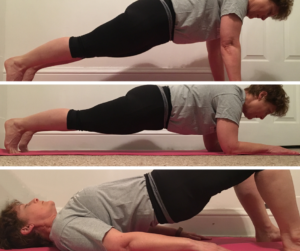
We’re working with a personal trainer to pull together an exercise program to focus on developing a strong core and will make that available here at Becoming Elli in the future. But meanwhile, here are three basic exercises to get started.
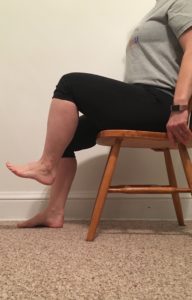
1) leg lifts – chair
2) planks – high and low
3) bridge

Important to remember:
Start easy and build up. Plan to repeat over time, after you get strength increase intensity, but build up the time and repetitions over days and weeks. Don’t try to get strong all at once.

If it’s been ages since you worked out, start with chair leg lifts, then move on to more advanced core exercises. Check with your doctor.

Use good form. Trying to condition and strengthen your body while using bad form or the wrong form won’t achieve the results you want… and worse, bad form could lead to injury. Don’t try to hold a pose so long that you sacrifice good form. It’s better to do few reps and less time than it is to use bad form.

Consider taking a gentle yoga class.

Be careful not to have loose abs and glutes when you do these exercises. You need to tighten the belly and lower abs. Think “squeeze” to tighten those butt muscles.

Proper form is really important You don’t want to have your butt in the air during a plank. You need to tighten your glutes (butt) and your abs during the plank. Start with the easiest plank on your hands, then move to elbows. Make sure your body is straight. Engage your glutes and abs (tighten your butt and lower belly) hold it for 30 seconds. Relax. build up to 45 seconds, one minute, two minutes.

Get a picture of yourself doing a plank. I know I found it eye opening!

What’s your favorite exercise to strengthen your core? Do you have a story about how your stronger core saved the day with a close call? Share it below in the comments or send me an email!

*even if it hasn’t been a while since you worked out, check in with a professional before starting an exercise routine.


Less than 100 Days to Go – Weekly Wrap Up

This week I got more serious about my training program for preparing to run the Cleveland half marathon on May 20th. Something about seeing less than 100 days on the count down clock makes me realize I better get on the bus, my rear in gear and work the plan!

My week, of course, did not exactly follow the plan, but I managed to get in some strength, conditioning, stretching and running in this week.

Monday – got a good hour of spinning for cross training. Great music and heavy hills (resistance on the knob.)

Tuesday – too much desk time. This resulted in a very satisfying yoga workout (via youtube videos) as well as important balance work. I specifically work on my ankles and calves to help with my reoccurring Achilles tendonitis.

Wednesday – up early (4:30 am.) Busy circumstances required that I only got 10 or 15 minutes cardio at a time. Taking the stairs is my “go to” on a day like this and it always gets the heart pounding – 7 flights, three separate times, plus a fast 500 steps to the parking deck twice. Glad I wore my Brooks Ghost shoes.

Thursday – Rest day with only 38 active minutes and almost 8,000 steps spread out pretty evenly during the day. I think the 8 floors of stairs were a just a result of catching up on laundry.

Friday – 30 minutes of spinning and 30 minutes of body weight workout (burpees, side planks, side lunge, squats, hold the squat, v-ups, triceps)

Saturday – walk/run the indoor track for 30 minutes, then 10 minutes on the treadmill and 45 minutes of full body (core, arms and legs) sitting, bouncing and “dancing” on an inflatable exercise ball to peppy music. I know that going to the grocery store when you’re starving is never a good idea, so I was glad I brought some protein powder with me to mix in my water to hold off the hunger pangs.

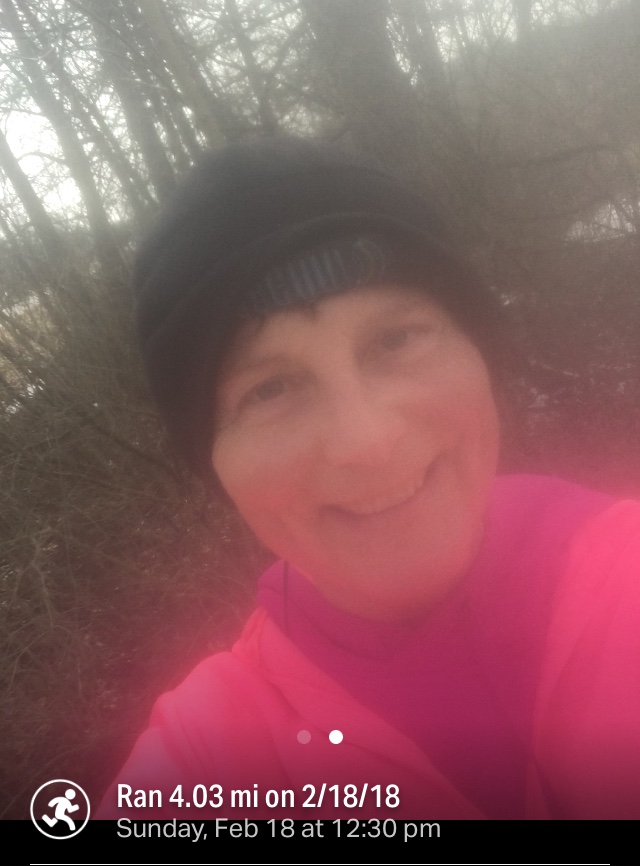
Sunday – Beautiful spring like weather in Ohio means outside I go! That’s what I’m talking about!! I got in 4 miles with an easy, steady pace. It was a great run and I felt I could have done double the distance, but I know I’ve got to build the distance over several weeks! The photo looked a bit wet, because my phone got fogged up from me sweating – I sweat no matter what the temperature!

– BONUS: Sunday night Jill and I recorded an awesome podcast with a powerful woman who is a personal trainer and gym owner. Check back later for the release in Becoming Elli – fit, strong women over 50 – podcast #4.

Are you training for a goal in less than 100 days? Let us know how you’re doing on your quest to become more like Elli – fit and strong. Leave a message in the comments.

Reducing Painful Achilles Tendonitis Episodes

Ankle strengthening helps avoid my Achilles TendonitisI have to be careful about Achilles Tendonitis. Some people call it Achilles Heel.

In 2006 I walked around the local Girl Scout camp all weekend in mud boots. Without a support lining! High arches and too much weight turned a bonding experience with my daughter and her troop into a long painful education about a tendon called Achilles. What is Achilles Tendonitis? If you’ve never heard of it, you probably haven’t had a problem with it. The Achilles Tendon connects the calf muscles to the bone on the heel. The “itis” part means chronically inflamed. It can be painful, at least that has been my experience.

During that year, it got pretty bad, to the point I didn’t want to stand up and walk across the room. When I would first wake up, it hurt. During the night, it would stiffen. Even now during sleep my toes tend to relax and point out, so when I step out of bed, my heel lands on the floor, stretching the tendon and pulling it. I gained a lot of weight that year and ended up going to a sports doctor, who sent me to physical therapy. That helped quite a bit. Twelve sessions of various exercises and treatments got me moving again.

Then, about a year later when I was consulting my family doctor for a sinus infection, he noticed I was limping. So, he sent me to another round of therapy, which greatly improved it. Five years later, Achilles Tendonitis started coming back again. I got myself to a Sport Chiropractic doctor who treated it before things got bad and gave me a series of exercises to do consistently at home, which has really helped.

What causes Achilles Tendonitis?

For me, it’s a combination of things. Some things I can do to improve the situation. Other things I’m stuck with.

    • Too much weight – Having to carry around extra pounds makes it hard on all my joints, tendons and ligaments. I guess that is no surprise to anyone.
    • High arches – Can’t change genetics.
    • Tight calves – Bouncing on my toes tends to tighten my calf muscle. It’s like I can almost feel it tighten with each up and down. My calf muscle gets tight which in turn pulls too hard on my tendon. I avoid the bouncing step moves in Zumba and don’t do a regular jump rope jumping where you take off from your toes and land again on toes. I tend to take off and land on one foot at a time instead of both toes each time.

I prefer prevention to treatment. Strengthening my ankles in particular, really seems to help. Conditioning helps the little muscles in my feet.

What works for me to combat my Achilles Tendonitis?

I do a variety of things to keep it at bay. I do other things when I have a flair up. This is what works for me:

    • Balance exercise – I start by standing on one foot on the floor. Then swing my leg. Progress to a pillow. Without my shoe. Then a stability cushion. And a bosu ball. I stand next to a chair or wall to catch myself. Building strength in those little muscles in my feet has made a huge difference. It also has helped me not to take a spill on the ice during the winter and helps me catch myself when one of our cats affectionately tries its very best to trip me in the morning!
    • Massage – a good sports massage helps to attack that one calf muscle that still tends to get too tight. I also do a self massage with a tennis ball or lacrosse ball and a roller on the calf muscle which helps to release the tightness and not lead to that constant pull on my Achilles.
    • Stretching – After a workout when my body is limber, I slowly lower my heels while standing on a step, and then raise back up to lower again (only when my Achilles tendon is healthy, not when it is sore and swollen.) There is an old Swedish study which followed two groups. The group that did this exercise improved. The other group not so much.
    • Physical Therapy – when it gets bad, I’ll go to my doctor and have had a series of things: ultrasound, Graston technique (painful but works) and an inflatable massaging boot. Plus exercises to do at home.
    • Strengthening – I’ve found that consistent strength and conditioning – my ankles, my glutes and my core – really seems to improve my luck with my Achilles tendon. I like to use the stability cushion; it helps to strengthen my ankles.
    • Shoes – I use inserts in most of my shoes, especially the mud boots. I have a pair of expensive insoles designed for ski boots always in my mud boots. I use SuperFeet insoles in my running shoes. I do NOT wear flip flops because there is zero support and the chance of tripping and pulling tendon/muscle/ligament etc. is huge with flip flops and me. I buy good supporting shoes over cute shoes. And I am very picky about sandals.
    • Warm Up – before doing anything, especially running, walking, hiking, working out in general, I try to do a dynamic warm up of mild stretching to get some blood flowing to the calves and massage my tendons.
    • Ice/heat – after a long run, I put a bag of frozen peas under my tendon and prop my leg up. Just for a short time. Then I move my ankle around, and alternate ice with a warm rice bag. The idea of the ice is to reduce swelling. The warm rice bag helps with blood flow.
    • Tape – (update) I’ve had some success with using kinesiology tape and have tried different patterns around my ankle.

I use a variety of tools including the foam roller, pillow, stability cushion, bosu ball, lacrosse ball/tennis ball and stair steps with a railing. These tools are all part of my on-going effort to strengthen the tendons and ligaments.

How about you? Do you deal with Achilles issues? Have a suggestion on how to strengthen, stretch or otherwise manage this tendon? Please let me know by leaving a message below in the comments!


Disclaimer: I am not a doctor or an expert on Achilles Tendonitis. I am just sharing my experiences with treating it and avoiding it. Consult your doctor or physical therapist.


Turning 50 and Getting Fit – Becoming Elli Podcast Episode 3

Turning 50 and getting fit

Podcast: Play in new window
Subscribe: Apple (iTunes) PodcastsAndroid – Google Play | Stitcher | Tunein | Spotify | RSS


In episode 3 of the Becoming Elli Podcast, Jill and Chris discuss how they lost weight, got into working out and what they did when they started. They explore a variety of topics about getting stronger and fit as well as what worked for them and what they learned to avoid.

Turning 50 and Getting Fit – Discussion topics:

  • Starting regular exercise after losing weight
  • Using weights
  • Using personal trainers
  • Staying motivated
  • Class exercises
  • Bike riding outside
  • Achilles heel injury
  • How work out plans are like a recipe
  • Weight and losing it
  • Weight Watchers
  • Community
  • Avoiding cookies and trigger foods
  • Regular food
  • Weight maintenance

Helpful Tips:
How to maintain healthy food diet while having fun with friends.

Please leave a comment below about the podcast to let us know your thoughts. Is there one of the topics we mentioned that you’d like to explore further? Do you agree (or disagree) with the thoughts we shared? Let us know!

« Older posts Newer posts »

© 2026 Becoming Elli

Theme by Anders NorenUp ↑