Author: Chris Brown (Page 41 of 42)

Inside Out Egg Rolls – Healthy and Delicious

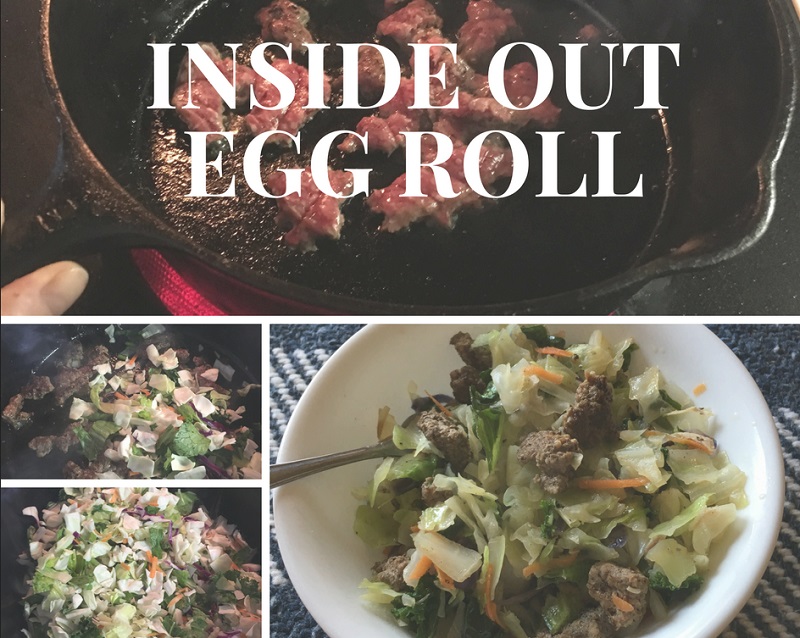
I’m always on the look out for delicious recipes that are healthy and easy to make. Inside Out Egg Rolls certainly fill the bill. Finding something that adds important vegetables into my diet while satisfying the “yummy meter” is a win-win.

One of my friends from the gym – Angie – posted a recipe that was similar to this. It inspired my version of the Inside Out Egg Rolls and I’ve made it for the past three weeks in a row. It has become a staple in my household. Each time I’ve made it a little differently. You can certainly modify this to make it your own!

The way I classify this as an Inside Out Egg Roll recipe is the consistency of the finished veggies. While you can add whichever vegetables you feel satisfy the requirements of an egg roll, the ones I especially like are shredded cabbage, shredded carrots, and some tiny broccoli pieces. This recipe also can make good use of large broccoli stems that can be shredded and saved for adding to your own unique egg roll.

To make it even easier, you can buy a bag of shredded veggies to dump into this one-pan meal.

Ingredients:

  • Olive oil (if desired)
  • 1/4 pound of ground beef (per person)
  • Chicken stock or veggie stock
  • Cup of water
  • White and/or red cabbage – shredded
  • Carrots – shredded
  • Broccoli – shredded
  • Romaine lettuce – chopped
  • Kale leaves – chopped
  • Medium onion – diced
  • Celery – sliced
  • Spices – soy sauce or salt/pepper to taste

Instructions for Inside Out Egg Rolls:

Brown the burger beef. Drain any fat (if desired.)
Add a little olive oil if you feel it is too dry.
Add chicken stock (or veggie stock) with water.
Warm stock and water.
Put veggies into same pan.
Stir to saute veggies.
Add some soy sauce to taste.
Add pepper to taste.

I was amazed how yummy this was. I like using a little bit of chicken stock and no soy sauce, but that is just me.

It is very fast cooking – especially if you have prepped the veggies on a Sunday evening to make this a wonderful quick mid-week dinner. A fast, delicious and healthy meal makes it a really favorite with me for when I’m tight on time and want something that is good tasting and good for me. I also like that this provides another way to get some of those healthy cruciferous crunch collection vegetables into your meal.

What do you think? Are you going to try making some Inside Out Egg Rolls? Let me know how you modify this recipe by leaving a comment below.

Personal Trainer and Gym Owner – Brenda O’Hara – Becoming Elli Podcast #4

Podcast: Play in new window | Direct Download
Subscribe: Apple (iTunes) Podcasts |  Android-Google Play | Stitcher | Tunein | Spotify | RSS

Brenda started gymnastics when she was five years old and competed at a high level for 15 years. She decided to go into exercise as a profession when she was a junior in High School. With a major in exercise science, Brenda earned a Bachelors of Science degree from Kent State University.

Brenda holds the following certifications:

  • NASM (National Academy of Sports Medicine) Certified Personal Trainer
  • NASM Fitness Nutrition Specialist

She owns and operates Iron-Oak Fitness in Solon Ohio. Iron-Oak Fitness is a gym with daily challenging workouts.

Gym Owner – Brenda O’Hara In this podcast, Brenda explains the following to us:

1) Olympic LIfts (one rep max of a thruster, dead lift, power clean)
2) Endurance
3) Metabolic conditioning (cardio)
4) AMRAP (As Many Reps As Possible)

Most trainers will offer a free session. Brenda suggests that we ask them: why is this good for me? What muscle is working? Trainers should be able to answer your questions. Also, they should ask you if you have any past injuries so that they can develop a program to work around your injuries. They should follow up with you.

After a work our you should be sore (DOMS – delayed onset muscle soreness) where your muscles ache 24 hours after the workout, increasing around 48 hours but goes away after 72 hours.

If you have pain in your joints or only on one side or a sharp pain, that may be an injury, not muscle soreness.

Strength or Cardio? A combination is best with 2-3 days of full body strength conditioning and cardio workouts for 30-60 minutes on the days you are not strength training, with one rest day a week.

Brenda stresses being consistent. If you fall off your workout routine, just get back into it. If you only have 20 minutes, walk around the block.

Brenda suggests that you track your food in My Fitness Pal (a free app) for 2 weeks before making any changes. She suggests that her clients try to aim for 40% Protein, 30% Carbohydrates and 30% Fats as a starting point. Try this before adjusting. My Fitness Pal can easily show you the percentages when you track your food.

What should people do more of: “Take my advice.”


What should clients do less of: “Complain. I would never suggest to a client that they try something that they aren’t ready for.”

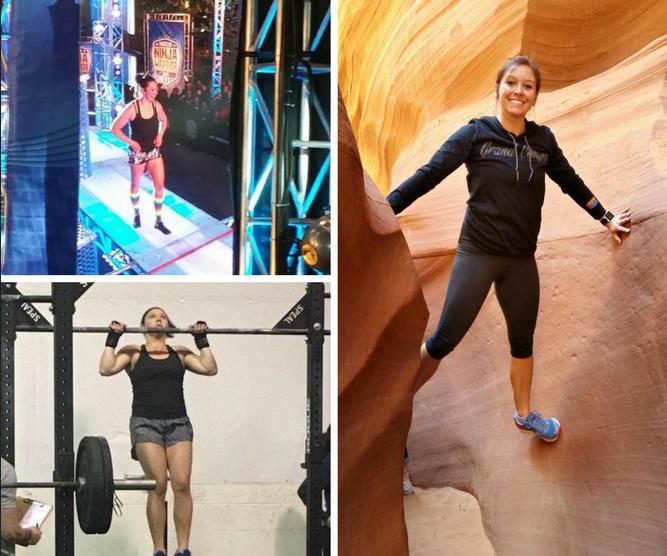
Brenda has also had experience competing in triathlons and Crossfit competitions and tried out for American Ninja Warrior. She decided to do an Ironman-length triathlon after reading Becoming an Ironman while pregnant with her second child.

To reach Gym Owner – Brenda O’Hara, visit Iron-Oak Fitness in Solon, Ohio.
Web: www.iron-oakfitness.com
Email: Brenda@Iron-OakFitness.com
www.facebook.com/Iron.Oak.Fit
www.instragram.com/ironoak.fitness
www.twitter.com/iron_oak_fit
www.pinterest.com/ironoakfitness
ironoakfit.tumblr.com/

Brenda O’Hara – Background

Education: BS Exercise Science, Kent State University
NASM Certified Personal Trainer
NASM Fitness Nutrition Specialist

Experience: 15 years competitive gymnastics.
10 years as a personal trainer including experience in a medically based facility and position as a metabolic specialist working with a variety of clients, metabolisms, different injuries, limitations, and goals

Vision: To help as many individuals as possible regardless of age, gender, goals and limitations. To help people have the best quality of living they’re capable of achieving.

We All Know a Stronger Core is Important for a Woman Over 50

Yeah, I know… And I’m pretty sure you know too. A stronger core is important. And it is especially important for a woman over 50!

When I first started working out, some instructors would talk about working abs, but others talked about the core. I thought it was the same thing for a long time.

Six pack abs is not something that I really had much of an interest in. However I suspected some of my back aches had something to do with weak stomach muscles. Actually stomach isn’t the right word, it’s not the right place. What I mean is the lower abdomen area, where I still had what I refer to as my “baby fat” (although those kids were well into college at that point!)

What exactly is the core?
Core actually refers to a large part of the body – not the legs and arms, but the glutes (butt), the pelvis, the abdomen, the lower back. I wouldn’t be surprised if it is nicknamed the “core” because is the main part of the body that everything else is attached to. When I think of an apple core, it’s the toughest part of the apple. Core is a foundation.

When I think about lifting a dumbbell weight, I realize that it is intended to work my arm, but I also have to be stabilized in the core to work those muscles. Skiing and biking works the legs, but having a strong core helps form and posture. This also helps with balance, to stay stable while skiing down the mountain or pedalling up a hill. Runners are often reminded to do cross training to strengthen their core muscles. There is no question that having strong glute muscles helps provide power when taking on a hill.

Why is toning the core so important?
Having a strong core isn’t just important for enjoying hiking, skiing, biking, running and a fun active lifestyle.

A stronger core means a stronger body and a better range of motion. It makes it possible to strengthen the rest of the body. Obviously, everything is connected. A stronger core means better balance, less likely to fall. A stronger core makes everyday tasks simpler. Just getting up from a chair, bringing in groceries, navigating an icy sidewalk all require balance and that means a stronger core.

Avoiding falls is top on everyone’s list. An unexpected fall can break bones, cause cuts and jar tendons, joints, ligaments and do unintended damage to a body! Do you know someone who suffered a fall recently? Maybe it was a slip on the ice, or missed a step? Tripped over a pet? Having a strong core gives you a better chance of not landing on the ground, staying stable, and keeping your balance when you’re knocked off kilter. We’ve all had a close call. A stronger core keeps us safe.

How can a strong core help reduce pain? I swear most of my back pain in my 40’s was from a weak core. Working your core helps to stretch and strengthen the lower back. One of the best ways to avoid back pain is to develop a strong core. (There are lots of causes and types of back pain, so consult a doctor and get the okay before you start any exercise program.)

Improving the muscles in your glutes and lower back helps to head off pain that comes from a strained back muscle when you tried to carry something too heavy.

Having a stronger core means having the strength when you need it. It gives you the strength to help move your body, but also basic things, like some boxes in the basement, furniture or groceries from the car into the house. We all know someone who tried to move something that seemed like an easy job, maybe something they had done when they were younger, but ended up straining a muscle or pulling something.

How to Start Strengthen the Core
You know your abilities. Don’t overdo it to try to get fit all in one day. Take it slow and begin with several exercises that you can master but also challenges you. If its been a while since you worked out*, you may want to start with some gentle yoga moves or seated exercises. If you’ve been working out and are ready to step things up for more challenge, progress slowly. Consistency over intensity!
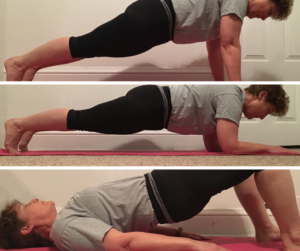
We’re working with a personal trainer to pull together an exercise program to focus on developing a strong core and will make that available here at Becoming Elli in the future. But meanwhile, here are three basic exercises to get started.
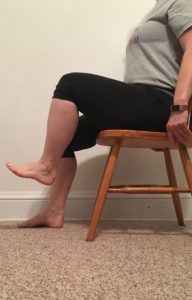
1) leg lifts – chair
2) planks – high and low
3) bridge

Important to remember:
Start easy and build up. Plan to repeat over time, after you get strength increase intensity, but build up the time and repetitions over days and weeks. Don’t try to get strong all at once.

If it’s been ages since you worked out, start with chair leg lifts, then move on to more advanced core exercises. Check with your doctor.

Use good form. Trying to condition and strengthen your body while using bad form or the wrong form won’t achieve the results you want… and worse, bad form could lead to injury. Don’t try to hold a pose so long that you sacrifice good form. It’s better to do few reps and less time than it is to use bad form.

Consider taking a gentle yoga class.

Be careful not to have loose abs and glutes when you do these exercises. You need to tighten the belly and lower abs. Think “squeeze” to tighten those butt muscles.

Proper form is really important You don’t want to have your butt in the air during a plank. You need to tighten your glutes (butt) and your abs during the plank. Start with the easiest plank on your hands, then move to elbows. Make sure your body is straight. Engage your glutes and abs (tighten your butt and lower belly) hold it for 30 seconds. Relax. build up to 45 seconds, one minute, two minutes.

Get a picture of yourself doing a plank. I know I found it eye opening!

What’s your favorite exercise to strengthen your core? Do you have a story about how your stronger core saved the day with a close call? Share it below in the comments or send me an email!

*even if it hasn’t been a while since you worked out, check in with a professional before starting an exercise routine.
Less than 100 Days to Go – Weekly Wrap Up

This week I got more serious about my training program for preparing to run the Cleveland half marathon on May 20th. Something about seeing less than 100 days on the count down clock makes me realize I better get on the bus, my rear in gear and work the plan!

My week, of course, did not exactly follow the plan, but I managed to get in some strength, conditioning, stretching and running in this week.

– Monday – got a good hour of spinning for cross training. Great music and heavy hills (resistance on the knob.)

– Tuesday – too much desk time. This resulted in a very satisfying yoga workout (via youtube videos) as well as important balance work. I specifically work on my ankles and calves to help with my reoccurring Achilles tendonitis.

– Wednesday – up early (4:30 am.) Busy circumstances required that I only got 10 or 15 minutes cardio at a time. Taking the stairs is my “go to” on a day like this and it always gets the heart pounding – 7 flights, three separate times, plus a fast 500 steps to the parking deck twice. Glad I wore my Brooks Ghost shoes.

– Thursday – Rest day with only 38 active minutes and almost 8,000 steps spread out pretty evenly during the day. I think the 8 floors of stairs were a just a result of catching up on laundry.

– Friday – 30 minutes of spinning and 30 minutes of body weight workout (burpees, side planks, side lunge, squats, hold the squat, v-ups, triceps)

– Saturday – walk/run the indoor track for 30 minutes, then 10 minutes on the treadmill and 45 minutes of full body (core, arms and legs) sitting, bouncing and “dancing” on an inflatable exercise ball to peppy music. I know that going to the grocery store when you’re starving is never a good idea, so I was glad I brought some protein powder with me to mix in my water to hold off the hunger pangs.

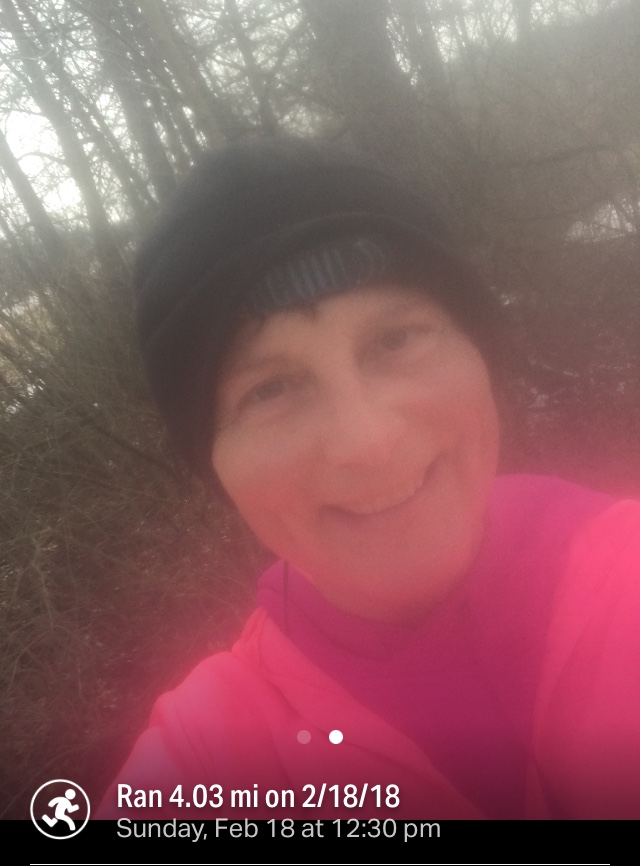
– Sunday – Beautiful spring like weather in Ohio means outside I go! That’s what I’m talking about!! I got in 4 miles with an easy, steady pace. It was a great run and I felt I could have done double the distance, but I know I’ve got to build the distance over several weeks! The photo looked a bit wet, because my phone got fogged up from me sweating – I sweat no matter what the temperature!

– BONUS: Sunday night Jill and I recorded an awesome podcast with a powerful woman who is a personal trainer and gym owner. Check back later for the release in Becoming Elli – fit, strong women over 50 – podcast #4.

Are you training for a goal in less than 100 days? Let us know how you’re doing on your quest to become more like Elli – fit and strong. Leave a message in the comments.

Reducing Painful Achilles Tendonitis Episodes

Ankle strengthening helps avoid my Achilles TendonitisI have to be careful about Achilles Tendonitis. Some people call it Achilles Heel.

In 2006 I walked around the local Girl Scout camp all weekend in mud boots. Without a support lining! High arches and too much weight turned a bonding experience with my daughter and her troop into a long painful education about a tendon called Achilles. What is Achilles Tendonitis? If you’ve never heard of it, you probably haven’t had a problem with it. The Achilles Tendon connects the calf muscles to the bone on the heel. The “itis” part means chronically inflamed. It can be painful, at least that has been my experience.

During that year, it got pretty bad, to the point I didn’t want to stand up and walk across the room. When I would first wake up, it hurt. During the night, it would stiffen. Even now during sleep my toes tend to relax and point out, so when I step out of bed, my heel lands on the floor, stretching the tendon and pulling it. I gained a lot of weight that year and ended up going to a sports doctor, who sent me to physical therapy. That helped quite a bit. Twelve sessions of various exercises and treatments got me moving again.

Then, about a year later when I was consulting my family doctor for a sinus infection, he noticed I was limping. So, he sent me to another round of therapy, which greatly improved it. Five years later, Achilles Tendonitis started coming back again. I got myself to a Sport Chiropractic doctor who treated it before things got bad and gave me a series of exercises to do consistently at home, which has really helped.

What causes Achilles Tendonitis?

For me, it’s a combination of things. Some things I can do to improve the situation. Other things I’m stuck with.

    • Too much weight – Having to carry around extra pounds makes it hard on all my joints, tendons and ligaments. I guess that is no surprise to anyone.
    • High arches – Can’t change genetics.
    • Tight calves – Bouncing on my toes tends to tighten my calf muscle. It’s like I can almost feel it tighten with each up and down. My calf muscle gets tight which in turn pulls too hard on my tendon. I avoid the bouncing step moves in Zumba and don’t do a regular jump rope jumping where you take off from your toes and land again on toes. I tend to take off and land on one foot at a time instead of both toes each time.

I prefer prevention to treatment. Strengthening my ankles in particular, really seems to help. Conditioning helps the little muscles in my feet.

What works for me to combat my Achilles Tendonitis?

I do a variety of things to keep it at bay. I do other things when I have a flair up. This is what works for me:

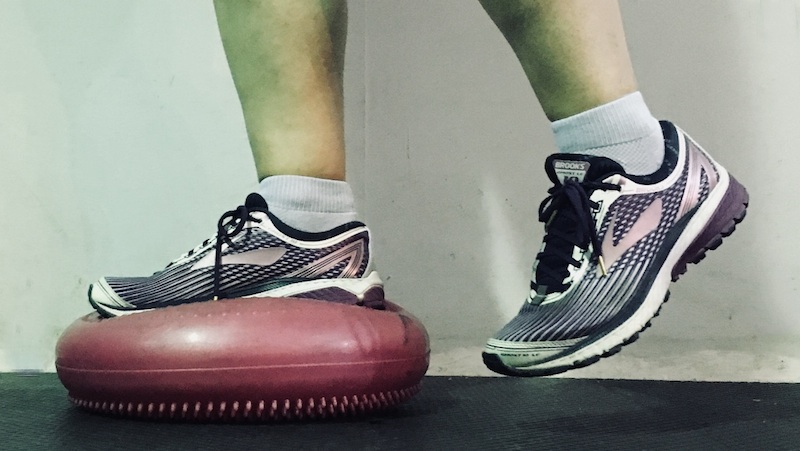
    • Balance exercise – I start by standing on one foot on the floor. Then swing my leg. Progress to a pillow. Without my shoe. Then a stability cushion. And a bosu ball. I stand next to a chair or wall to catch myself. Building strength in those little muscles in my feet has made a huge difference. It also has helped me not to take a spill on the ice during the winter and helps me catch myself when one of our cats affectionately tries its very best to trip me in the morning!
    • Massage – a good sports massage helps to attack that one calf muscle that still tends to get too tight. I also do a self massage with a tennis ball or lacrosse ball and a roller on the calf muscle which helps to release the tightness and not lead to that constant pull on my Achilles.
    • Stretching – After a workout when my body is limber, I slowly lower my heels while standing on a step, and then raise back up to lower again (only when my Achilles tendon is healthy, not when it is sore and swollen.) There is an old Swedish study which followed two groups. The group that did this exercise improved. The other group not so much.
    • Physical Therapy – when it gets bad, I’ll go to my doctor and have had a series of things: ultrasound, Graston technique (painful but works) and an inflatable massaging boot. Plus exercises to do at home.
    • Strengthening – I’ve found that consistent strength and conditioning – my ankles, my glutes and my core – really seems to improve my luck with my Achilles tendon. I like to use the stability cushion; it helps to strengthen my ankles.
    • Shoes – I use inserts in most of my shoes, especially the mud boots. I have a pair of expensive insoles designed for ski boots always in my mud boots. I use SuperFeet insoles in my running shoes. I do NOT wear flip flops because there is zero support and the chance of tripping and pulling tendon/muscle/ligament etc. is huge with flip flops and me. I buy good supporting shoes over cute shoes. And I am very picky about sandals.
    • Warm Up – before doing anything, especially running, walking, hiking, working out in general, I try to do a dynamic warm up of mild stretching to get some blood flowing to the calves and massage my tendons.
    • Ice/heat – after a long run, I put a bag of frozen peas under my tendon and prop my leg up. Just for a short time. Then I move my ankle around, and alternate ice with a warm rice bag. The idea of the ice is to reduce swelling. The warm rice bag helps with blood flow.
    • Tape – (update) I’ve had some success with using kinesiology tape and have tried different patterns around my ankle.

I use a variety of tools including the foam roller, pillow, stability cushion, bosu ball, lacrosse ball/tennis ball and stair steps with a railing. These tools are all part of my on-going effort to strengthen the tendons and ligaments.

How about you? Do you deal with Achilles issues? Have a suggestion on how to strengthen, stretch or otherwise manage this tendon? Please let me know by leaving a message below in the comments!


Disclaimer: I am not a doctor or an expert on Achilles Tendonitis. I am just sharing my experiences with treating it and avoiding it. Consult your doctor or physical therapist.


Turning 50 and Getting Fit – Becoming Elli Podcast Episode 3

Turning 50 and getting fit

Podcast: Play in new window
Subscribe: Apple (iTunes) Podcasts |  Android – Google Play | Stitcher | Tunein | Spotify | RSS


In episode 3 of the Becoming Elli Podcast, Jill and Chris discuss how they lost weight, got into working out and what they did when they started. They explore a variety of topics about getting stronger and fit as well as what worked for them and what they learned to avoid.

Turning 50 and Getting Fit – Discussion topics:

  • Starting regular exercise after losing weight
  • Using weights
  • Using personal trainers
  • Staying motivated
  • Class exercises
  • Bike riding outside
  • Achilles heel injury
  • How work out plans are like a recipe
  • Weight and losing it
  • Weight Watchers
  • Community
  • Avoiding cookies and trigger foods
  • Regular food
  • Weight maintenance

Helpful Tips:
How to maintain healthy food diet while having fun with friends.

Please leave a comment below about the podcast to let us know your thoughts. Is there one of the topics we mentioned that you’d like to explore further? Do you agree (or disagree) with the thoughts we shared? Let us know!

Maintaining Weight Loss – Consistency Over Intensity

During the winter months, it can be difficult to stay the course for maintaining weight loss. Long dark nights. Cold blustery weather.

We are almost six weeks into New Year’s Resolutions and I find that I need a reminder about what I promised myself.

Maintaining weight loss. Developing muscle strength. Cultivating good eating habits.

Already this year I’ve not been to the gym on a regular basis as much as I intended. Maybe two days a week instead of my usual four or five.

Generally I go skiing down the slopes at a nearby resort during the winter months. This year I haven’t been outside as much as I’ve wanted to, partly due to sub freezing weather the early part of January. Then I’ve also been dealing with an unexpected schedule, requiring me to be out of town and away from home. Consistent eating habits are more of a challenge when I’m away.

I am reminded that fitness is not a race. The ocean smooths large rocks into tiny grains of sand by consistently waves washing in and out.

My big goal this year is to stay consistent with exercise and healthy eating habits. I know that this will help me with maintaining my weight loss.

Consistency Over Intensity

For 2018, I’ve picked a phrase that I want to focus on: Consistency Over Intensity. It kinda follows that mantra of many marathon runners – just put one foot in front of the other.

I think about this when I push snow around on the driveway. Shoveling some snow has helped me get steps when I really hadn’t expected to get some. I talked about that in our recent podcast episode 2. When my son was in high school, it became his job to shovel the snow on the walks and the drive. When he went away to college I returned to snow removal duties. The result was one of the rude reminders of being out of shape. By consistently getting my steps, challenging myself and going to the gym to get exercise, I’m now able to easily spend 30 minutes clearing the snow, without any problem.

I was reminded of consistency over intensity when I read a post in Weighty Matters from a Canadian doctor who writes about the food industry. “And I tell people, day in and day out, that if they’re curious about how they’re doing, the answer to that question isn’t how much they weigh, how much they’ve lost, how their clothing fits, how they feel physically, or how they feel mentally. Rather I tell them that if they want to know how they’re doing, they have to reflect on what they’re actually doing…”

Going skiing is fun. It requires a lot of gear. Fitting into those same pair of ski pants is one indication that I’m maintaining my weight loss.

We all know it is so important to stay mobile, flexible, strong and fit. Lately I have been especially reminded of that when I’ve had recent unexpected challenges of caring for a relative. By keeping myself healthy, fit and strong, I’m able to be there to help others.

Having a “go-to” exercise routine helps replace that dragged out feeling of tiredness with the powerful feel good hormones that are released after exercising – dopamine and endorphins. This keeps me coming back for more.

Being more fit and strong just feels good. It allows me to do things that I find really difficult. I guess that’s called a feeling of self-confidence, but it’s not exactly that.

Consistent change = Positive Progress

I find that too much intensity leaves me feeling a bit overwhelmed. All or nothing dieting. Over the top exercise. Too many rules and changes. I simply won’t stick with it if the plan is too drastic. I need to stay the course. Keep on keeping on.

Sometimes consistency feels boring. I’m tempted to switch out with something “not so good.” Just this once. Special occasion. (Why does it sometimes seem that there is a special occasion more often than a regular day?) Birthdays, holidays, happy times, sad times. Friday night TGIF. Sunday Funday. Stressed-out-Monday. It’s easy to make exceptions, isn’t it?

I know in my heart that consistency is the key to maintaining a weight loss. Intensity comes and goes. Heck, I know that too much intensity can easily lead to injury. And if I’m not consistent with my recovery strategies I can end up having a problem.

Motivation wanes. Huge goals overwhelm, but I know when I have a good step-by-step plan, that I can do consistently, I can reach goals that I never thought possible. For instance, back 10 years ago, I never would have dreamed that I could have run a half marathon or bike 150 mile in a weekend.

I’ve come to realize that the way to make it work is to get a good plan and work it.

At one point I liked the phrase “when the going gets tough, the tough get going.” I helped me to dig in, knuckle down and do something I was struggling with. I’m not exactly sure when my brain started completing that saying with my own “yeah, right out the door!” Some how the cynical side of my self talk popped in. It probably when was I was digging too deep, white knuckling too hard and finding that my consistency was replaced with too much intensity.

I have several strategies (or maybe they are actually tactics) for maintaining weight loss that have worked pretty well for me in the six plus years that I’ve managed to keep the weight off. And since I’ve become an exercise lover (athlete?) I’ve found that recovery and pacing are part of my training too. I’m working on an article to share with you in the future. More about that at another time.

Now it’s your turn. Tell me:

  • What do you do consistently to help you to get fit and strong? Or stay fit and strong? Are you working on your New Years Resolution consistently?
  • What is your motivation for maintaining weight loss?
  • Remember that song “Keep on Keeping On”? What phrase or mantra is in your head that you repeat over to yourself?

Meet The Hosts of the Becoming Elli Podcast – Episode #2

Episode number 2 of the Becoming Elli podcast introduces Chris Brown and Jill McCauslin, the hosts and publishers of Becoming Elli – where women over 50 inspire each other to become fit and strong.

Podcast: Play in new window | Download
Subscribe: Apple (iTunes) Podcasts | Android | Google Play | Stitcher | Tunein | Spotify | RSS | More

This episode gives a short background on the hosts and provides an idea of what the Becoming Elli podcast, website and community will focus on. It also includes ideas on how to find workout friends.

In episode #2 Meet the Hosts of the Becoming Elli Podcast we discuss:
  • How we got inspired to create Becoming Elli
  • Why is it called Becoming Elli
  • Why becoming part of a fitness community makes such a big difference
  • Why we feel it’s important to develop a community of like-minded
  • How we are working toward becoming fit and strong
  • How we changed our attitudes towards food, exercise and being active
  • Tips Segment: How to meet other people to workout with

Links mentioned in this episode:

  • Strava.com – a website and an app for “athletes” who run and bike. Through an app on your phone you can become friends with other people and cheer them on with comments and “kudos”.
  • FitBit.com – a website and an app to track steps, calories used and work-outs. Uses wearable technology (zip or watch synced with your phone.)
  • MeetUp.com – a website that helps people in the same area with similar interests find each other (No, it’s not a dating app!)
  • Becoming Elli Facebook group – We are considering creating a closed Facebook group where the Becoming Elli community can meet to inspire each other and share info. Please email us with your thoughts or leave a comment below.Thanks for listening!

We’re participating in the Weekly Wrap to tie in with other fitness sites:

Linking up with the Weekly Wrap sponsored by Holly and Wendy.

Healthy Chili on a Chilly Day

I love a warm bowl of chili on a chilly day when the weather is beyond brisk and down right cold. Here’s my quick and easy go-to chili recipe that I find is both tasty and healthy. I like to use grass fed beef, it has little grease and tastes better to me. I love this on days when the temperature is below freezing outside!

Ingredients:

1 Tbsp olive oil
1 medium onion – diced (or chunked)
1 sweet red pepper – diced (or chunked)
1/4 pound of beef
1 (15 oz) can of kidney beans – drained & rinsed
1 can of water (I use the kidney bean can as the measuring can)
1 can of Ro*tel diced tomatoes with chopped green chilies
1 shake of cinnamon

Heat the olive oil on medium heat and add the onion. I like to use a deep frying pan so I can make the entire chili using only one pan. (Less to clean up later.) Stir the onions lightly until almost translucent. (I think that is called saute, right?) Add red pepper for another minute or two. Remove both and put in small bowl. Sometimes I make the onions and peppers small, but other times when I make it, I like chunks of veggies. So it ends up more like a chili stew.

Brown the ground beef. Separate it as you cook it on medium heat. Add the onions and peppers back into the pan. Drain and rinse the kidney beans and add to beef mixture. Add a can of water. Add diced tomatoes.

Simmer. Add a shake or two of cinnamon to taste. That’s my *secret* ingredient. Cook on medium heat for about 10 minutes to let the favors mix together. I like to have it with some shredded cheddar cheese on top or over a small bowl of whole grain spaghetti. (I use the same bowl that I put the onions and peppers in while the ground beef was browning.)

If you like it a little more spicy, you can add some chili powder. Some people like to saute some garlic before they brown the meat. If your meat has a lot of fat, you may want to drain before adding in the onions and peppers. Or you might want more or less water. Or add some tomato sauce.

Adding more vegetables makes it more bulky and more healthy in my opinion. Ive been known to microwave sliced carrots and celery to add. Or stir in some spinach for more nutrition.

Everyone I talk with about chili has their own favorite recipe or ingredient for making a delicious bowl of chili.  What’s yours?

Book Review: The Power of Habit

I recently read a book called The Power of Habit by Charles Duhigg. And I have been able to change some habits! The book explores how habits work. The author studied how businesses change the habits of their employees as well as how everyday people lose weight, keep it off and start consistently exercising.

My big “ah-ha” with this book was to learn to change the thing I do right before the action. I found this description of the book on Amazon:

At its core, The Power of Habit contains an exhilarating argument: The key to exercising regularly, losing weight, raising exceptional children, becoming more productive, building revolutionary companies and social movements, and achieving success is understanding how habits work.

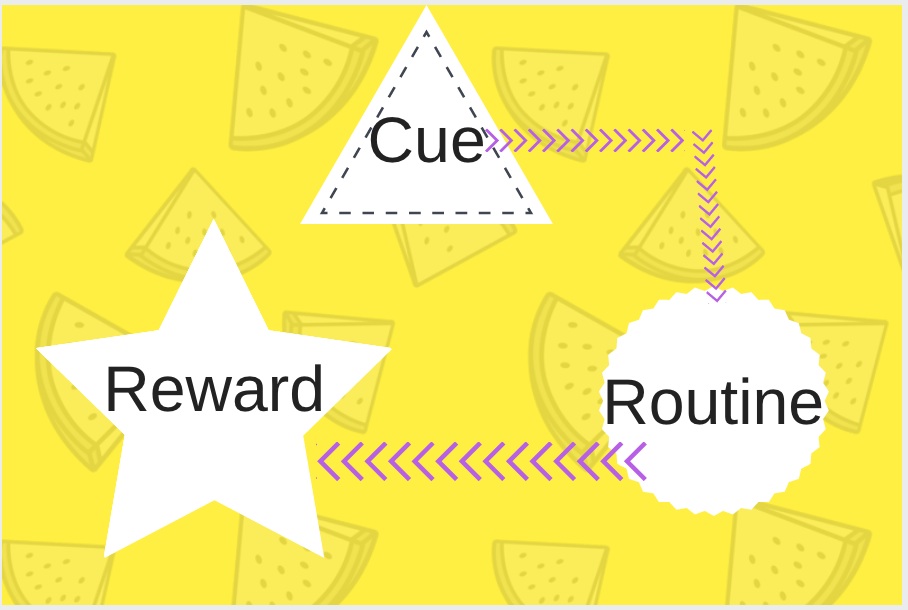
The book explains the 3 parts of the habit. Each habit has a cue, a routine and a reward.  The key is understanding the pattern before trying to adjust the outcomes. It starts with the cue. The cue might be the time of day or a situation.  The phone rings. Stuck in a traffic jam. An argument with a family member. The 3 pm slump.

Then, almost automatically the habit moves into the routine.  And finally there is the reward.

Here’s an example:

  1. I’m half-heartedly watching football on TV and a food commercial comes on (something like pizza or fast food.) That’s the cue.
  2. Suddenly I am “hungry.” Then next thing you know, the routine starts: I walk into the kitchen and look in the refrigerator for something yummy.
  3. What’s the reward? “Mmmm” the craving is satisfied with a momentary good taste on the tongue.  (And later followed by the “grrr, I did it again” feeling, but somehow that doesn’t link into the cue-routine-reward habit.)

If you think about it, we all do actions with a series of steps. Making coffee, driving a car, taking a shower, grocery shopping, reading Facebook.  I learned from this book, if you can breakdown and understand the cue, routine and reward of your habit, you have a chance at modifying any habit that you currently do.  Making my New Year’s resolution into a cue, routine, reward type activity that comes naturally and almost automatic, has helped me to redirect myself without too much thought or decision. In fact, I’ve found that there are a lot of good things that I can do, somewhat unconsciously.

Redirect the Habit

After examining some of my habits, here’s an example of one of them where I have been pretty successful at making the redirect:

Following the cue of a commercial with a yummy cheese-dripping pizza shown during a break in the action of a football game on TV, I will still go over to he fridge and peak in. But now I have placed a pile of fresh veggies (carrots, celery, tomatoes, mushrooms, spinach, broccoli, cauliflower, Brussel sprouts whatever is on sale/in season) front and center. Instead of grabbing something “yummy” to eat, I changed the routine. I pull out the vegetables and chop them up. Then, even if I don’t eat them right now, I’ve got stuff ready for salad toppings or a soup. And sometimes, just the act of looking in the fridge, pulling the veggies out and chopping them, satisfies my craving for that food I saw on TV that unconsciously sent me to the fridge to begin with.  I don’t know why it feels satisfying (the reward.) But it does. Usually halfway thru chopping, I have forgotten all about the dripping cheese from that pizza commercial because I’m focused on not chopping my fingers as I’m slicing the onion. And I’m thinking about what kind of salad or soup to make and should I add some protein.

Chopping veggies is very satisfying to me. I feel like I accomplished something, the movements are somewhat unconscious and the results are good.

Is there a habit that you are trying to change or redirect? What is your cue, routine and reward? Leave us a message below about your success or challenge with changing it.


« Older posts Newer posts »

© 2026

Theme by Anders Noren — Up ↑