Becoming Elli

Fit Strong Women Over 50.

Page 55 of 65

What I’ve Learned During Six Years of Yoga Practice

The thought of a “Yoga Practice” used to intimidate the heck out of me.

I had a lot of preconceived notions about yoga. For most of my life, I thought that yoga was made up of lot of impossible poses that looked very possibly painful. I pictured a session filled with an instructor calling out unusual animal names for poses and routines like dolphin, cow, alligator and up dog/downward dog… and me flopping around on a mat trying to get into odd positions. In my minds eye, all the others in the class would be tall, thin, limber people, who would immediately go into the routine without looking around trying to figure out what the heck we were doing. And there would be weird music. Weird incense smells. And maybe even some weird religious stuff.

In 2006, after I had hurt both ankles and was moving less and less (and gaining more & more weight), my marketing firm was asked to help develop a marketing program for a new local yoga studio that was moving into town. There were a couple women on the staff who were very excited to work on this, as they loved yoga.

Not me! Since I had never ever done yoga before, I would make that squinty-up-nose face with a slight shake of my head at the very thought of yoga. NO WAY will you ever drag me into a yoga class. I was more than happy to leave the whole yoga project to someone else!

It didn’t help that the owner was a thin, incredibly muscular woman who insisted that power yoga was not for sissies as it was “incredibly challenging.”  She confirmed for me that I didn’t want anything to do with the project and definitely didn’t want to think about developing a yoga practice of my own.

However, in 2012, when some of my good bike-riding friends mentioned that we should all take a yoga class together, I remember thinking “UGH-OH, I don’t know the first thing about yoga.” That was enough for me to explore what yoga is all about. I fully expected to hate it. But I didn’t want to look foolish in front of my friends. (Many of my friends never did go do yoga, but it got me going!)

So I started with a yoga “fusion” class that was part work-out with a little Pilates and a little yoga thrown into the moves. It was in a closed room with about four other women. The instructor was very friendly and not at all intimidating. The music was fun. That gave me the courage to try other classes. Vinyasa Flow. Restorative Yoga. Power Yoga.

Over the next six years, I’ve taken different types of yoga classes at different places/studios with different instructors.

And guess what? Some of the things I dreaded about it, I love now.

Things I have grown to love about my yoga practice:

  • music
  • breathing
  • learning how to relax
  • trying new things
  • building mental toughness

I have come to understand that EVERYONE is in a different phase of yoga. That is the practice part.

I also know that there area some instructors I really love and there are some that I just won’t take a class with. There seems to be as many different types of yoga experiences as there are different types of studios and people.

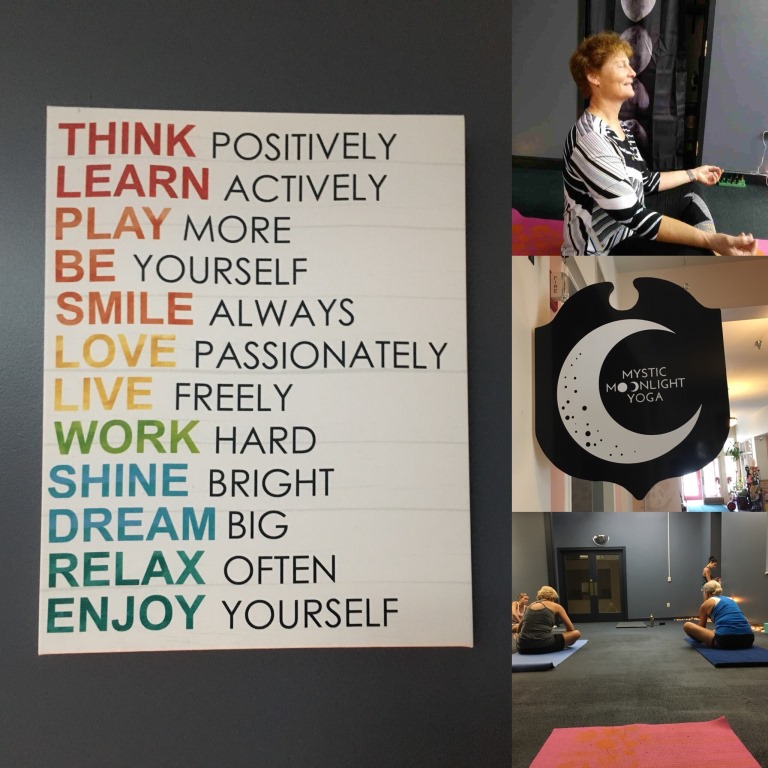
Some of the things I worried about are the things that I really enjoy now. Getting calm and centering my mind. Paying attention to my breathing. Adjusting where my body is in a pose to get a little deeper or straighter or stay a little longer with it.childs pose in yoga practice

I still don’t like instructors who try to intimidate you with their knowledge or attitude. (But that feeling is not limited to yoga!)

I’ve only encountered two of those. I’ve taken many classes now and over the last 6 years I have found about 15 instructors who are amazing, kind, thoughtful, and earnest in providing a wonderful experience.

I found out that you don’t have to be perfect to start. In fact, you shouldn’t expect yourself to be good at all to start. And learning to silence that constant negative voice in your head that is judging yourself is all part of learning yoga and improves with practice.

I also learned that it is called a practice because you’re on a continuum. Always learning. Always improving. (It’s kinda like BECOMING ELLI… we’re all on our way to becoming!)

I have also learned that it is a good opposite to running, Yoga has become part of my cross training for muscles, joints and ligaments that are over used and not stretched enough.

There are still plenty of hard parts:

  • Sitting cross-legged at the beginning of class (if you’re not familiar with it, go ahead and google lotus position for beginners) is still hard for me and I keep my ankles on the mat and don’t get my foot up on my thigh.
  • Although I love to relax in child’s pose, my big toes don’t exactly touch each other and my knees are still a bit tight, making it hard for me to get deep into the pose. But that is okay.
  • All the poses: I’m still learning. Balancing. Stretching. Adjusting.
  • And doing corpse pose at the end of class, where you just lay there, is still challenging because you-just-lay-there. But it also feels so good.

So, if you don’t do yoga, my challenge to you is to try a yoga class. Be open to it. To remember that EVERYONE who currently does yoga, also had their first day. Select a gentle yoga class to begin and arrive early to check out the instructor. Get the vibe to see how they may react to you.

If you are currently doing yoga, what are you working on right now? What do you like most about it? What still bothers you?

-Chris


Fermented Food for a Healthy Gut

If you do any online research on healthy eating, I’m sure you’ve run into numerous articles about the value of eating fermented food.

What is fermentation, anyway? Fermentation is a process that humans have used since ancient times to preserve food. Basically, it’s a process of using bacteria or yeast (microorganisms of some kind) to break down carbohydrates to alcohol or organic acids without exposing the food to air. You may be more familiar with the production of wine and beer than with the production of food. Fermentation changes the original food and extends its shelf life considerably

The reason why fermented food is so popular right now is that it’s thought they are good for our health. Fermented food contains natural probiotics which our bodies need.

Probiotics

Probiotics are microorganisms that our intestinal tract need. Our intestines are full of bacteria and other microorganisms; this is called the microbiome. Probiotics help boost the number of beneficial bacteria found in our gut.

Increasing the good bacteria is thought to provide a number of benefits to our body and health. These include, weight loss, improved digestive health, Improve allergy symptoms and skin issues, elevate our mood, and help with cholesterol levels. When you start reading, it seems that probiotics solve all of our problems, at least health-related ones.

So, if you eat fermented food, you’re getting naturally created probiotics. And because there are different kinds of fermented food, you get different types of bacteria and vitamins, depending on what you eat.

Fermented Food

I recently read a doctor’s advice in a forum on dementia and Alzheimer’s. He recommends eating fermented food with every meal. I guess if I expand the number of fermented food that I have available in my kitchen, I might be able to do that though it sounds challenging to me.

When you start to look around on the internet about fermented food, you’ll see lots of recipes about how to make your own. I haven’t tried this because I feel nervous about it. Some of the recipes sound pretty easy so I’m not sure why they make me nervous. I think I need to invite someone over to try making some of these things with me.

If you decide to ferment food at home, be sure to use glass or crockery. Don’t use plastic containers for the fermentation. The plastic doesn’t work well apparently, and food poisoning can become an issue.

What are some of the fermented foods we should be eating?  I gather just about anything can be fermented but here are some of the most popular. This is not an inclusive list by any means.

Sauerkraut:

This is a traditional fermented cabbage dish. It is especially associated with Germany though apparently sauerkraut is a popular dish in many countries.  If you’re going to buy sauerkraut for its probiotics, be aware that you want to make sure that the sauerkraut you buy has the probiotics.

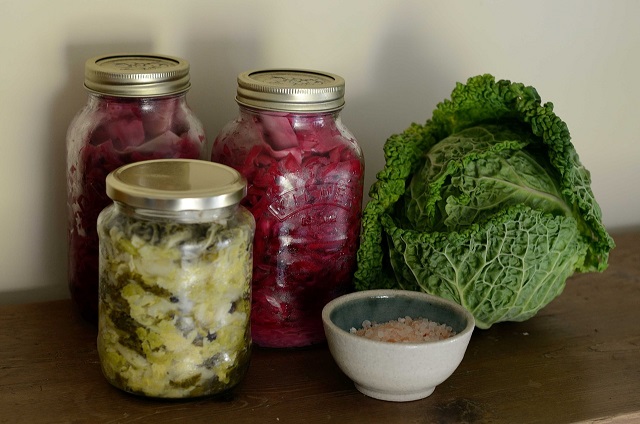
Don’t buy sauerkraut that has been pasteurized. A lot of the sauerkraut sold on the grocery store shelves is pasteurized which kills the beneficial bacteria. That, of course, is the point of pasteurization.  Refrigerated sauerkraut is usually a good bet but be sure to check the label. You can see the words “100% naturally fermented” on this picture.

Fermented Food

You probably also don’t want to buy sauerkraut that has had preservatives or extra sugar added to it.

Kimchi

Kimchi is a Korean side dish that, like sauerkraut, is made from fermented cabbage. It can be made from other vegetables, such as radishes, but napa cabbage is the traditional ingredient. Kimchi is made with a variety of spices that may include chili powder, red pepper, garlic, and ginger. All kimchi that I have tried has been spicy but I gather it can be mild too.

Fermented Food

Pickles and Fermented Vegetables

Most pickles that we buy in the grocery store are not fermented. They’re preserved in vinegar. If you want pickles that are actually fermented and so have the probiotics that we’re looking for, go to the refrigerator section and look there. The jar should say that it’s fermented or a source of probiotic or has live cultures.

We think of pickles as being cucumbers but you can get other vegetables as well. There’s a local company that makes fermented foods that sells fermented green beans, carrots, and a mixture of beets and apples.

I did see some recipes online for fermented apples and for fermented berries. I bet that would be good.

Miso

Miso is fermented soybeans. It’s a traditional ingredient in Japanese food. You can buy the miso paste at many grocery stores. Probably the most common way to eat miso is in soup. Miso soup is made by stirring the miso paste into broth. You can add other ingredients if you want.

Fermented Food

I have seen recipes for salad dressings, marinades for meat, and sauces for vegetables that include miso.

I have never seen a recipe for making your own miso so I think I can happily stick to buying it in the store.

Kombucha

Kombucha is a great fermented food. I hear that it’s easy to make but as I said earlier, I’ve never tried to make any of these foods. You can buy kombucha at many grocery stores even though it’s expensive that way. I suspect that this is like buying popcorn. It’s so much cheaper to pop your own at home. You can’t get it everywhere, though. One time I called my son in North Carolina and asked him to buy me some kombucha for my ride home from South Carolina because I couldn’t find any in the local stores.

I don’t drink soda pop any more and kombucha is about the closest I get to it these days. That’s why I wanted to have some in the car.

Kombucha is basically sugar and green or black tea that ferments. Usually, some kind of fruit or flavoring is added to it to make it a flavorful, bubbly drink. Be aware that kombucha is usually tart.

When kombucha is made, there is a clump that forms, similar to what you find in unpasteurized apple cider vinegar. This is call a SCOBY (symbiotic colony of bacteria and yeast) and can be used to start your  next back of kombucha.

Fermented Food

Kefir

Kefir is similar to yogurt but is drinkable. It’s basically fermented milk. Kefir grains, which are a combination of yeast and bacteria, are added to milk. The resulting beverage is thicker and tangier than milk.

Fermented Food

You can find kefir in most grocery stores now.  I buy the plain kefir to avoid the sugar and flavorings added to the fruit flavored kefir. I then throw it in my blender with some fruit and make my own, unsweetened kefir to drink.

Kefir can easily be added to smoothies as well.

There’s apparently some evidence that kefir helps strengthen bones.

If you avoid dairy, you’ll have to decide if kefir is for you or not. I’ve read some articles that say even if you’re avoiding dairy, kefir and yogurt are ok.

Yogurt

Go into any grocery store and look in the dairy section. There’s now so much yogurt and in so many varieties, it’s overwhelming. Because the selection of yogurt is so big, make sure that what you’re buying actually has live cultures. That’s the only way you’ll get the probiotics.

Like kefir, yogurt is made from fermented milk. You probably want to avoid the yogurts that have lots of sugar added to it. I tend to buy plain yogurt and add fruit and flavorings to it so that I have control of what’s in it.

There have been a few studies that suggest that yogurt helps you to lose weight. I don’t know if that’s true but it might be worth trying.

Fermented Food

Make Your Own

If you make your own fermented food, please let me know and maybe share some photos. I really need some moral support on this one.  I have the glass jars though I was tempted to buy a crock recently but then decided I should make something with the jars before I spend money on a crock.

If I become bold enough and decide to ferment something, I’ll be sure to take photos and I’ll post them for you to see.

Let me know which of these you eat or avoid and what fermented foods I overlooked.

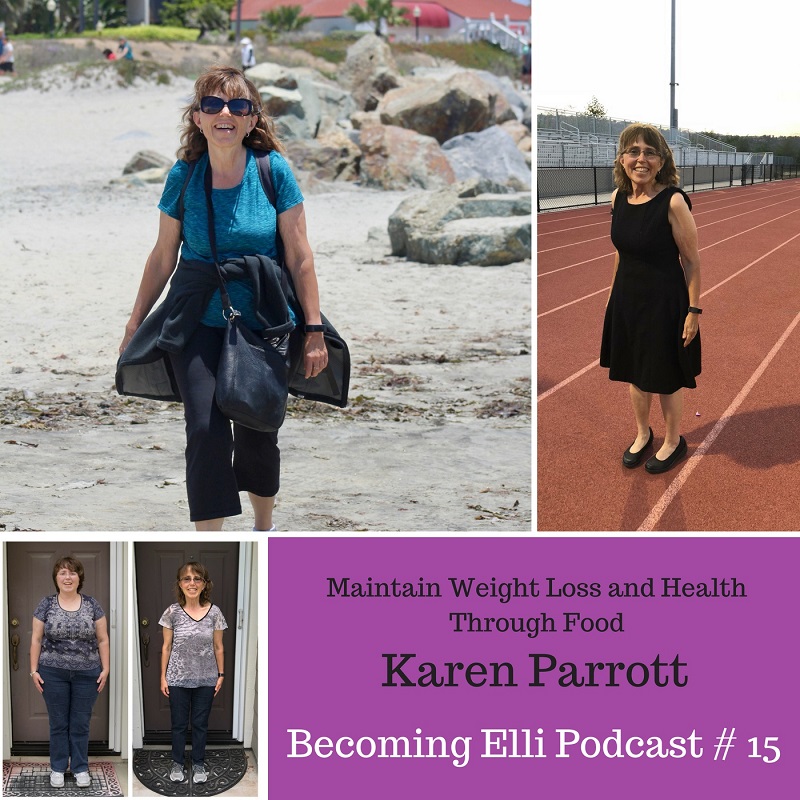
Maintain Weight Loss and Health Through Food with Karen Parrott

Episode #16 of Becoming Elli – Fit, Strong Women Over 50

Podcast: Download | Play in New Window
Subscribe: Apple Podcasts  (iTunes) Google Podcasts | Android-Google Play | Stitcher | Player FM Castbox | Tunein | Spotify | RSS

In today’s podcast, we talk with Karen Parrott, a popular blogger who writes about her weight loss journey and how to maintain weight loss. You can find her blog at Garden Girl, Weight Maintenance and Food Sobriety by abstaining from sugars, grains (NSNG) using a Paleo, LCHF, modified AIP, mild Ketogenic food template with a Primal Blueprint lifestyle. If you’re wondering what exactly all that means, we get Karen to define this and describe her way of eating in more detail.

How Karen Lost Weight

Karen Parrott is a 52 year old Licensed Medical Technologist living in Carlsbad, CA. She began gaining excess weight as a child and struggled with yo-yo dieting, obesity, morbid obesity, and binge eating until she was 46.

In 1997, Karen was diagnosed with Hashimoto’s disease and takes synthetic thyroid hormone replacement with great success. She also focuses on her diet to support her health.

In May of 2011, a month after a co-worker died suddenly, Karen decided to lose weight by using a packaged weight loss plan and a health coach. She lost 70 pounds in 40 weeks. She says, “the first thing I did at goal weight was to go into menopause! I transitioned onto Paleo (it fit well with my post-auto immune disease), then onto Low Carb.”

Finally, after an 8 to 10-pound unintentional weight regain, she tried a fasting protocol from The Salk Institute, from Dr. Satchin Panda’s lab. Switching to 16:8 fasting most days (16 hours of fasting with a 8-hour window for eating) helped Karen lose that regained weight slowly over half a year back to maintenance. It also produced the same low levels of ketosis that helped her lose the weight in 2011, without having to buy the packaged food.

Maintain Weight Loss

Karen uses about 20 different weight maintenance tools with abstaining from her binge triggers as the top tool.

She measures and records the following at various times:

  • glucose
  • ketones
  • weight
  • hemoglobin
  • A1C,
  • high-sensitivity C-reactive protein (hs-crp)
  • triglycerides,
  • bone density

She wears a Fitbit and tracks her weight and food on My Fitness Pal. www.myfitnesspal.com

For exercise Karen walks 5- 6 miles daily, stair runs 3-4 days a week for intervals, and she goes to the gym to do resistance training one or two times a week. Karen says she often does stretching, pushups and some flexibility movements.

In this episode, we talk with Karen about:

  • How she lost 70 pounds
  • How she has kept the 70 pounds off for more than 6 years
  • The food template she uses to select her daily meals
  • How she exercises

Chris “met” Karen online in 2012 when Chris hit her goal on Weight Watchers and was looking for resources on maintaining a weight loss. “I feel it is strange when one person knows someone from reading their blog, but they don’t know the other person,” Chris says. This is how we support each other these days. We meet and get to know each other from social media, forums, blogs, and podcasts.

Karen’s Tips

Karen follows a low carb eating plan. She identified foods that cause her problems by following an Autoimmune Protocol (AIP). She describes this in her food discussion with us. Based on the results of this protocol, Karen realized that besides avoiding grains and dairy, she also needed to quit eating nuts.

Karen says that we all need to do the research and figure out what works best for each of us. Some of us can eat a lot of carbs while others cannot. What works for Karen may not work for me and what works for me may not work for you.

Perhaps the best advice that Karen gives is not to be apologetic about what you eat or don’t eat. She suggests that we all need to be methodical about our eating. Nobody can tell us more about what makes us feel the best than ourselves. Don’t let others make you feel embarrassed about how you choose to eat.

Karen is a researcher by training and clearly loves to research the different ways we can support our health.  The following are links to the different books and sites that she refers to in our talk:

Links:

Refuse to Regain!: 12 Tough Rules to Maintain the Body You’ve Earned by Barbara Berkley MD Kindle or Softcover

The Paleo Solution  Robb Wolf

Paleo resource Sarah Fergoso

AltShift Diet, Jason Sieb

The Four Tendencies   Gretchen Rubin –

23andMe DNA Genetic Testing & Analysis – 23andMe is the first and only genetic service available directly to you that includes reports that meet FDA standards. Use your 23andme raw genetic data to learn the environmental and lifestyle contexts research suggests may be best suited to your genetic polymorphisms.

Found My Fitness – A website by Dr. Rhonda Patrick – a Ph.D in biomedical science/expert on nutritional health, brain & aging. The focus is on genetics with a database where you can run your 23andMe report.

Promethease is a computer program developed by the SNPedia team which allows users to compare personal genomics results against the SNPedia database, generating a report with information about a person’s attributes, such as propensity to diseases, based on the presence of specific single-nucleotide polymorphisms (SNPs)

Franziska Spritzler – Low carb dietitian

Cleveland Clinic Function Medicine

Dr. Mark Hyman

Satchin Panda, Ph.D.- Salk Institute

Rhonda Patrick and Satchin Panda, Ph.D. have worked together on the benefits of a Low Carb diet. Watch this interview to learn more.

Gut microbiome may have its own circadian rhythm. Check out My Circadian clock app

Dr. Jason Fung

Ruth E. Patterson – Fasting and Breast Cancer

Valter Longo, Ph.D.

The Salt Fix

AIP – Auto Immune Protocol (elimination diet)

Vinnie Tortorich   NSNG – No Sugars No Grains –

Anna Vocino – Eat Happy

Ultra runner NSNG Zack Bitter

Adele Hite Easy Vintage Meals 

Definitions:

Hashimoto’s Disease: Auto Immune disease

High sensitivity C reactive protein (CRP)

IRB approved study – Institutional Review Board of the US Food and Drug Administration

Intermittent fasting 12:12 or 18:6. Eating early in the day is referred to as Early Time Restricted Eating

Otto Warburg Effect

BRAF Gene Mutation

How to contact Karen Parrott:

Blog: Garden Girl

Instagram: Karenspaleolife

Twitter: @Gardengirl_kp

Facebook: Garden Girl KP – Weight Maintenance and more 

Pinterest: Gardengirlkp

A Workout Wrap up from Last Week’s Fitness

Most weeks I have a plan for working out but sometimes my week just rolls along. That’s how I felt about last week’s workouts.

Monday – rest day – restorative yoga

After lots of driving for sister weekend, Monday’s workout consisted of a restful day. I find that weekends are usually a busy time for me, so having a Monday yoga class at my gym fits well into the schedule. Restorative yoga is a workout for the brain where you help your body learn to relax. I am learning how to let go, focus on breathing and getting my body to relax.

Tuesday – slow jog

The goldenrod are just starting to open up in this field near my run/jog/walk.

The weather wasn’t cooperating very much on Tuesday, but I did manage to get a few miles in. Tricky with my Achilles Tendonitis acting up, so I keep the pace very slow and tried not to think about the 13.1 miles coming up the end of September.

Wednesday – 17 mile ride

This is my screen capture from Strava, an app on my phone that tracks miles, elevation and speed.

I had a nice ride with my bike riding group through Cuyahoga Valley. We started at Brandywine Falls and rode up to the lookout above Tinkers Creek. Two minutes into my ride, my Catseye mileage thing popped off my handlebars so I turned around to find it. Then I spent the next 5 miles really pedaling hard, trying to catch the front group. That got me breathing hard and it felt good. There’s one pretty big hill that also got my heart pumping hard, so by the end of the ride, I felt I had earned our potluck supper.

Thursday – missed a run

I had planned to run with a running group that I found through a woman at my gym, but ended up having to work late. Boo. 🙁

Friday – gardening

I didn’t get all my steps in, but managed to burn over 2000 calories anyway. Did a bit of gardening, but I feel can’t really call it a workout because I didn’t do a whole lot of heavy breathing. I did get some bending and stretching in.

Saturday – walk/slow jog

Little mini on the workout wrap up

I notice when I walk instead of run, I tend to see more things. How many times have I run past this little mini garden without noticing?

When I woke up my ankle was acting up again. Feeling stiff mostly.  So Saturday’s workout consisted of an hour of walking and slow jog. I listened to an upcoming podcast of Becoming Elli after doing some production work on it, so I was able to multi task to use the time to do an audio proofread of the podcast. I’m psyched about the one that is going to be published on Tuesday. I’m eager to hear your comments on it.

Meanwhile, I did some icing on my calf and ankle when I got back home, followed by heat from the rice bag.  It felt better.

Sunday – 51 mile ride
My big cardio workout of the week turned about to be a bike ride instead of a run, which was more fun and a better workout than I would have gotten on my sore ankle. Four of us took the Valley Parkway up to the marina near the lake, had lunch and rode back. There was a big steep hill at about mile 48, but I managed to ride it all the way up for the final push. Definitely a big effort and a great way to start this next week.

After I got home, my husband and I went to the gym to go swimming. Definitely loosened up my muscles! A great way to finish the weekend.

Workout Wrap Up

This link goes to other women fitness bloggers who do a weekly workout wrap up accountability link up. The Weekly Wrap is organized by the rope-climbing Wendy and Holly, who’s starting a new empty-nest normal. I’m also linking to Liz, a writer who runs in London actually in Birmingham, in the Midlands. – Chris

Rejuvenate with a Hike along the GAP

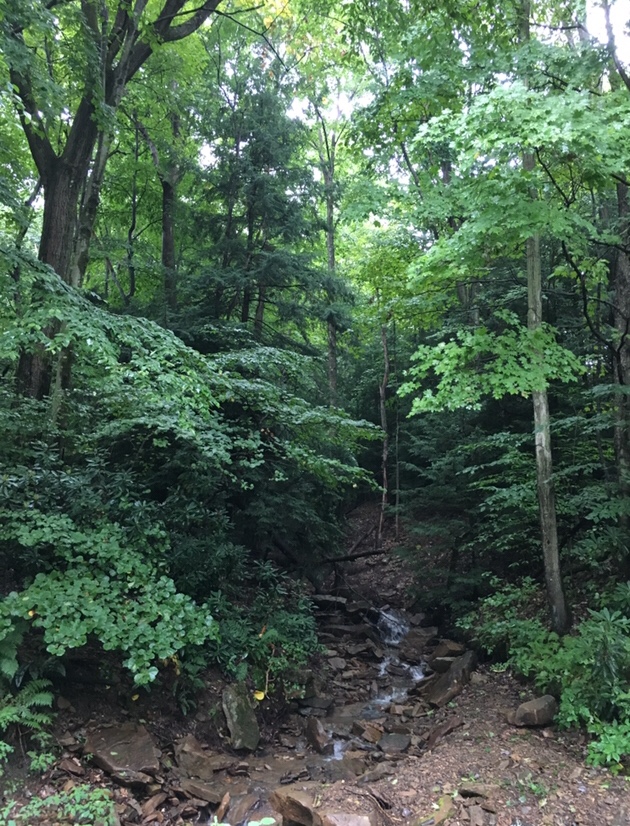
If you’re like me and your legs get stiff from driving too long, you might enjoy taking some time and rejuvenate with a hike. This little waterfall treasure is an oasis located in Rockwood, Pennsylvania, which is about 10 miles south of the Somerset exit #110 on the PA turnpike.

Why was I in the middle of Western PA taking a photo of this little waterfall? It was part of an annual tradition of Sisters Weekend. You see, I grew up with three sisters. We are close in age – my parents had four daughters within five years – and even now, we are still close to each other, although the miles separate us.

The four of us try to meet up once a year to reconnect. Usually we pick a place that is about halfway from our houses. This year only two of us could make it, so we skipped the regular routine of a Somerset hotel and instead experienced the fun of a vintage Bed and Breakfast.

The Gingerbread House has a beautiful wrap-around porch. Our B&B was a good place to stay for a hot shower, cozy bed and delicious breakfast in the morning.

The Gingerbread House B&B has little outdoor sitting area with a bike stand just behind the house.

The B&B we selected is just a few steps off the GAP – the Great Allegheny Passage – which is a bike trail that runs 150 miles all the way from Pittsburgh, PA to Cumberland, Maryland.

I think it is pretty neat that the GAP connects to the C&O Canal trail and you can ride all the way to Washington DC. The other B&B guests told us it is generally a 6-day bike riding trip to do the whole thing.

rejuvenate with a hike Although I didn’t bring my bike on this trip, my sister and I did get a chance to experience it, when we walked along the GAP.

Like many small towns, there wasn’t a lot of activity – just a couple of small restaurants, some small town shopping and a convenience store, but it had a bike shop right off the trail!

This bike shop is where the GAP crosses Rockdale Road in Rockwood, PA.

The hike was just what I needed. It felt so good to stretch my legs and do some walking and talking… especially after sitting in the car for hours to get there, followed by even more sitting at the restaurant for lunch.

The cool waterfalls send off a mist that felt so refreshing. I find there is something really soothing and relaxing about running water!

Hiking in Western Pennsylvania is especially enjoyable. For walking on the GAP, you only need some sneakers or walking shoes, not hiking boots. They do a great job of maintaining it. There are lots of little streams along the trail and the experience makes you feel like you are in the middle of the forest… but without the challenging terrain of rocks, roots and trees to dodge.we found time to rejuvenate with a hike on the GAP

Bike riders take this path because the surface is a crushed stone and asphalt, built on top of what used to be the path of the railroads.

Bikes and trains in one piece of art sculpture on the trail.

During our hike we actually saw a lot more walkers than bike riders, but I think it was because we walked during late afternoon.

It’s funny, after doing a lot of driving, I felt tired when I got there, but soon after going for a 3-mile walk with my sister, I got my energy back. Does that happen to you? – Chris

Do you find that using energy gives you back more energy? Have you had good experience staying at a B&B instead of a hotel chain? How do you work in some exercise during a weekend away from home? Who else has a family tradition to stay close to siblings? Leave a message below or more privately on Facebook group.

Salmon Veggie Patties with Avocado Lime Sauce

These salmon veggie patties are great. For one reason, they don’t have filler or, at least, no bread crumbs, no ground pork rinds, and no almond flour. Just do a search on salmon patties and you’ll see what I mean. Instead, these patties have vegetables as filler. I think you can make great salmon patties using vegetables in place of the crumbs.

As usual with my recipes, feel free to swap in what you have and leave out what you don’t have.

Salmon Veggie Patties Ingredients

1 can salmon

1 to 2 eggs, depending on consistency

½ cup diced onion

½ cup diced celery

½ cup diced bell pepper

Salt and pepper

Garlic Powder

Oil for frying

Avocado Lime Sauce Ingredients

½ to 1 Avocado

Lime Juice

2 Tablespoons Greek Yogurt or Mayonnaise

1 Clove garlic, crushed

1 Tbs. Parsley or Cilantro

Directions for Salmon Veggie Patties

Drain the salmon and break into chunks in a small mixing bowl.

Whisk the egg and add to the salmon.

Add the vegetables and mix well.

Make the patties and let them sit for a while. if you’re letting them sit more than 5 or 10 minutes, refrigerate them.

When it’s time, heat oil in frying pan.

Gently place patties in pan. After about 5 minutes or when the side is nicely browned, flip and cook the other side.

Directions for Avocado Lime Sauce

Blend the ingredients in a blender or food processor. Add more juice or yogurt/mayo to taste and to get the consistency you want.

Serving

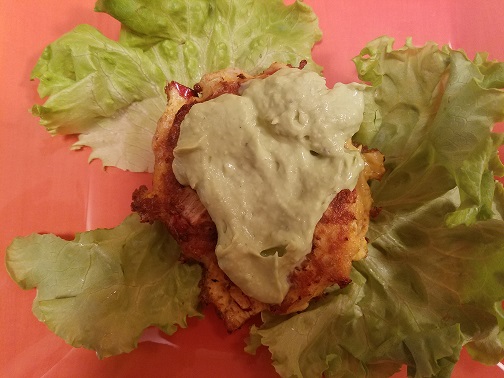
Serve the patties on top of some greens and spoon some of the avocado lime sauce on top.

Notes:

I’m using a 6 oz. can of Wild Alaskan Pink Salmon. If you use the larger can of red salmon, double the other ingredients.

I had red bell pepper on hand. Use green if that’s what’s in your fridge. I think you could easily add different vegetables to these. Just make sure they’re chopped into small enough pieces. I think spinach might be an excellent addition.

You can fry these in olive oil, butter, ghee, coconut oil or avocado oil. If you eat peanuts, peanut oil would also work. Use the oil you prefer.  I’m experimenting with avocado oil and it seems to have worked well,

Because there is no filler added to these, the patties will be sloppy. Don’t fret over it, just fry them up.

If you like spice, feel free to add more spice to the patties. Cumin and turmeric might be good choices.

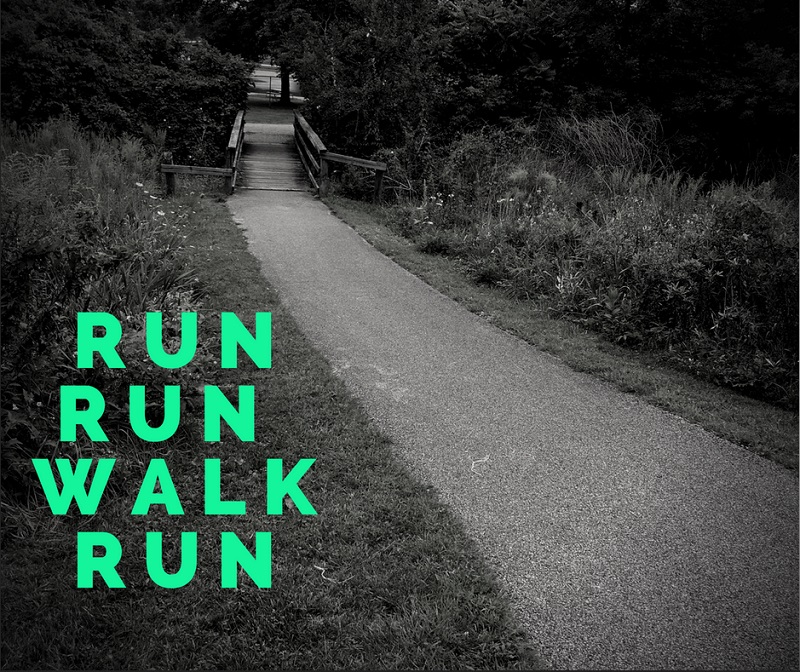
Mid-August: Run Run Walk Run

I’m back to training for the Akron half marathon at the end of September. The MS150 ride is a great cross training for running, but nothing really prepares you for a long run than… well… running.

from my mid-August run flowers along the trailDespite the humidity, I love a mid-August run:

  • It is still officially summer
  • Lots of flowers along the trails
  • Time to reflect during the run
  • Great feeling of accomplishment after a good run

When I started this training run, I remember feeling a bit out of breath and had to remind myself, “Start slow. Give your body a chance to warm up.”

It’s funny. All these times I’ve been running, there is something that makes me want to go too fast at first. My blood has to start pumping a little more. Heart beating a little harder. And then about 7 or 8 minutes into it, I’m not sure what it is, but my arteries feel like they are open and I really like running again.

I’m pretty sure it’s not just me. Does this happen to you too, when you start exercising? I feel the most like quitting during the first 8 minutes. And then it’s not too bad.

It really gets good about a 30 minutes into it. The endorphins start pumping and I get that “You are rocking this” feeling. I guess that’s the runner’s high they talk about. I think that’s one of the many reasons I love running.

Knowing that feeling is coming helps me keep going to get over that starting hump that I’ve got to break through to get to the good part!

For this run, I forgot to bring my head phones, so I just let my mind wander a bit:

  • Was it only a year ago, running on this same trail and running a little more than 7 miles — that I farther than I ever did in my life! What a feeling of accomplishment.
  • What is a good mantra for today? Click thru to get the Becoming Elli list of mantras. I wanted to pick a simple one to say to myself during the beginning of this run. I ended up just using a two syllable mantra that I chanted to myself: “Elli! Elli”  EL (left foot down.)  LI (Right foot down.) EL (left foot.)  LI (Right foot.). EL (left.) LI (right.)
  • I daydreamed about how in the heck did she beat Thor anyway? It must have been the training! Bet she was lifting weights and doing one legged squats.
  • Maybe doing more one legged squats would be good for me. Good for balance. Good for strength. Good for my Achilles. (I use straps, still working on “just” me.)

By this point I had captured my breath. Since the last few weeks have really been devoted to riding, not running, I didn’t want to over do it on my Achilles, so I adopted a run, run, walk, run pattern.

It was actually three minutes running, one minute walking, but I tacked the last run on after the walk, just because it helps me psych myself out by breaking up the run with a walk in between. I look at those four minutes as a set and then keep repeating it throughout the workout.

I tried not to think about the humidity. But I know my heart rate is faster and my pace is slower with the same amount of exertion, when the humidity is high.

Mid-August seems early for school to start, but it started around here this week. There were lots of kids standing at the end of their driveways, waiting for the bus.

Maybe that’s why I didn’t see very many people while I was out doing the run.

Over the 45 minute period, I saw one walker, one bike rider and one other runner. Ironically, I actually recognized two of the three people. They were from my gym. That makes me smile. Having the routine of regularly going to the gym keeps me staying fit, doing my exercise and expands my friendships. And I guess that works for other people that go to my gym too.

The more you do… the more you do. The more you can do.

All in all, I didn’t run extremely far. And I didn’t run extremely fast. But I was out there, putting one foot in front of the other.

I made my walking cool-down really fun by taking photos of some of the blooms I enjoyed during my mid-August run. Goldenrod. Queens Anne Lace. Joe Pye Weed. These flowers are fleeting and in another month, most will be gone. Just like the summer days!


How to Incorporate Fitness into Your Everyday Life

Let’s discuss how to incorporate fitness into your everyday life. We all know about those official moments of exercise: we go to the gym, we take a yoga class, we follow along on a Youtube exercise video, and we go running for our scheduled number of miles or minutes.

Sometimes that isn’t enough. For me, I have days where I get busy with work related activities, or family activities, or some other distracting thing.  So there are things we can all do that help us get a bit stronger and sure can’t hurt.

I think we all know by now that we’re supposed to park far away from the door of the store. It’s good to get those extra steps. But you can also try using a basket instead of a shopping cart because carrying the basket forces you to use your arm muscles a bit more. Granted, this won’t work if you’re buying a week’s worth of food but it’s great for those quick dashes into the store to buy a few things for dinner.

How to Incorporate Fitness into Your Everyday Life

If you’ve used the shopping cart, be sure to walk it back to a return spot. Again, those extra steps are good.

While waiting in line, try flexing your ab muscles. No one can tell that you’re doing it but it’s a nice little workout.

One more thing about grocery shopping. Use those bags to your advantage. Sometimes when I want to feel strong, I grab as many bags as I can and I carry them all at once into my kitchen. Other times, I take one or two bags at a time and I make many trips back and forth. It depends on what I want to emphasize that day.

Work on your balance by standing on one leg while brushing your teeth. Be sure to alternate legs.

I used to know a woman who did ten squats every time she went to the restroom. That always felt a bit strange to me but perhaps you like that idea.

We also know we’re supposed to take the stairs instead of the elevator but, if you’re doing that, perhaps you try skipping steps. I think that has to be good for your leg muscles.

If you’re shopping in a mall, don’t rest on the escalator. Either take the regular stairs or walk on the escalator. Same thing with the people movers in the airport. Just keep walking.

I used to carry hangers into my laundry room and hang clothing on them and then take all of the hangers to the rack in one go. Now I take one item out of the dryer, walk over to the rack, and hang u the clothing. I then walk back to the dryer and repeat.  It’s amazing how much more movement I get in doing laundry this way.

How to Incorporate Fitness into Your Everyday Life

I use my Bluetooth headphones and pace around my house when I talk to someone on the phone. Sometimes, if it’s a lengthy conversation, I get a couple thousand steps in without even realizing it. Since people can’t see you, you can also grab some dumb bells and do some biceps curls.

You can always do some inclined push ups against your kitchen counter while you’re waiting for a pot to boil just like you can do some squats or lunges during a commercial when you’re watching TV. If you’re binging on a Netflix series, use the time between episodes to move around.

I’m sure we could all answer the question of how to incorporate fitness into your everyday life in different ways. I’d love to hear some ideas from you.


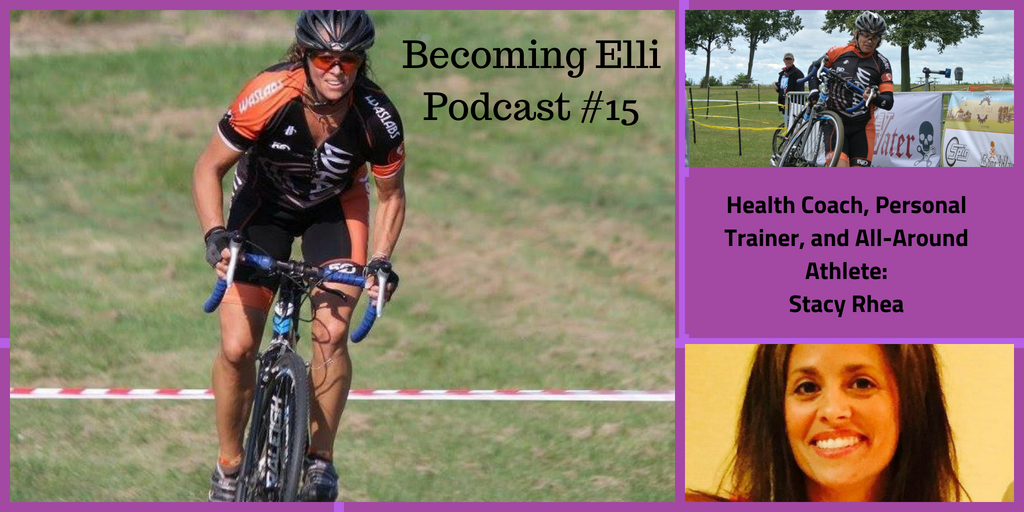
Health Coach, Personal Trainer, and All-Around Athlete Stacy Rhea

Episode #15 of Becoming Elli – Fit, Strong Women Over 50

Podcast: Download | Play in New Window
Subscribe: Apple Podcasts  (iTunes) Google Podcasts | Android-Google Play | Stitcher | Player FM Castbox | Tunein | Spotify | RSS

In this podcast, Chris and Jill discuss the 150-mile bike ride Chris rode this summer and their training efforts over the summer. They also talk with Stacy Rhea, a health coach and personal trainer, who participates in all kinds of sports.

In her 20’s, Stacy was like many of us. She drank, she ate whatever she wanted, and had no knowledge about healthy living or eating. She also smoked starting at the age of 13. When her father had to have quadruple bypass surgery, Stacy decided to make changes in her own life.

Stacy’s journey into health and fitness began with body building where she began to realize the power of nutrition to change our bodies.

Health Coach Stacy Rhea

Stacy is passionate about health. She has helped hundreds of people make healthy changes in their lives and coach them to success in their athletic endeavors. She helps her clients find what they love to do and she works with them on it, whether it’s running, hiking, or even rock climbing.

Stacy says, “It’s never too early to start working out and it’s never too late.”  She works with people of all ages, from teens to people in their 60s.  Most of her clients are women though she also works with men. Stacy’s philosophy is:

  • Education is king
  • Health and fitness start with the fork
  • A healthy, fit life takes consistency

As a personal trainer, Stacy works with clients one-on-one to help them improve their fitness. As a health coach, she may work with clients virtually and widens the focus of her services to include all aspects of healthy living.

In this episode, we discuss:

  • Getting Ohioans Healthy Again
  • Most important things for women over 50 to know and do
  • Importance of food in keeping us fit and healthy
  • Bicycle racing and velodromes
  • The difference between a health coach and a personal trainer

Links:

Cleveland Velodrome

Fitness Food

Stacy’s contact info

email: healthcoachrhea@gmail.com

Website: www.healthcoachrhea.com

FB: facebook.com/stacyrheacycles

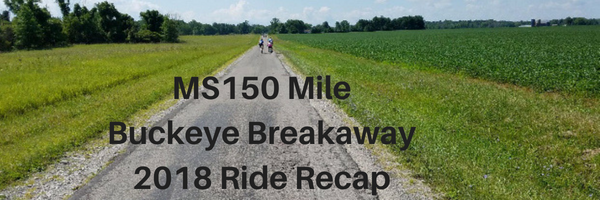
MS150 Bike Ride Recap

Last Saturday and Sunday I rode in the Buckeye Breakaway bike ride fundraiser. It supports the National MS Society and also the folks in Ohio who have MS. Multiple Sclerosis is not well understood. They don’t know what causes it. Sometimes it will go into remission and go away… only to return years later. And they don’t know how to cure it. My sister was diagnosed with it about 13 or 14 years ago, so I have a personal connection to this disease.

Saturday morning – sun just coming up. Preparing for the 2018 MS150 ride.

Perhaps you have someone who has had trouble with MS, cancer, heart disease, diabetes, Alzheimer’s, mental illness or any number of other diseases and have thought about doing a walk, run, ride or other physical fundraiser to help combat the disease.  Personally, I like these kinds of fundraisers much more than a fancy dinner or a silent auction.

The Skiers On Bikes team raised over $10,000 this year and over $120K to date to combat MS.

I think being involved in something that is challenging, something you have to train for, plan for, and raise money for gives it more meaning.

Here is my bike ride recap of the 2018 Buckeye Breakaway:

Organization: The MS150 ride is extremely organized. They have been doing this for years. I mean, they even brought extension plugs so there would be plenty of plugs to charge our phones in the gym.  It was easy to know where to go with all the signs and they outdid themselves once again with the Start and Finish blow up signs at the beginning and end of each day. When you create an account you can make your own personal page to explain your reason for fundraising. And our team website was updated instantly when someone made an online donation. Checks take them a lot longer to post. We had lots of emails from the organization with instructions to what to bring, what the schedule was and options for doing different routes. One person on my team did the extra 25 miles loop before lunch for a full 100 miles on Saturday. By the way, he is 76 years old and the strongest rider of our team. He says its all in the training. It was his third “century ride” this summer.

Price: It was $20 for me to register for this fundraiser, which is significantly less than many of the races. However, before you are allowed to ride, you have to agree to raise $300 for the fundraiser. There is one team that is sponsored by a brewing company that will pay the registration for you. Of course that was the largest team! While it may seem difficult to raise $300, it is amazing how many people are affected by MS and willing to give a donation.

The ride is 75 miles from Brunswick Ohio to Ashland Ohio with 5 rest stops and an lunch stop.

Location: We started early morning (arriving at 5:30 am) at a high school that is about 1 hour from my house. I was very glad everything was packed the night before. By the time we loaded our luggage on the truck, made a trip to the bathroom, and unloaded the bikes, it was time for a team photo.  We got off to an early start with the first riders at about 6:35am.

Course: The course was extremely well marked with white spray paint at the intersections before and after turns, as well as green signs.  Rest stops had large signs. The ride had lots of hills, however for the most part they were rolling. It would be really tough running, but most hills would allow you to get some speed up going down and on the flat before they went back up again. This is where I was thrilled to have what’s known as a “granny” gear… a third gear in the front of my sprocket. It allows me to pedal up a hill at 3 to 4 miles an hour. The trick is changing gears at the right moment so you don’t lose momentum, but it’s not too hard to pedal. There were potholes on the route – after all, this is Ohio! But most of them were well marked. The best thing about the course this year is that it was almost all back roads and neighborhoods – not 50-55 mph highways or  congested roads. While I was always on my guard, it felt much safer and I don’t think that there were any accidents.

Rest Stop Food: Throughout the day there are 5 rest stops with fresh fruit (bananas, oranges, peaches, grapes) and junk food (peanut butter crackers, potato chips, fritos, peanuts, candy) as well as huge coolers of water and Gaterade.  It was the ice that made me the happiest during the hot afternoons!

Lunch Food: The lunch stop was at a school and had more food than I can list. At least seven types of sandwiches, five types of salads, four choices of fruits, six types of beverages. It’s a bit of a blur.  Many people say, “This is the only 150 mile bike ride where you will gain weight!” And they are not kidding! Although throughout the year I make it a point to never eat potato chips, I did make an exception for this ride and had a bag each day for the salt.

I took this screen grab when we were relaxing under the tent at the after party on Saturday.

After Ride Food: After the first day, there is a beer tent and you’re given 3 beer tickets. I am not much of a beer drinker and only had about a half a beer. Actually I was much more interested in the salty snacks. We had an incredible all-you-want-to-eat dinner  at Ashland University’s award winning cafeteria which had a six food stations (main course, steamed vegetables, pasta bar, deli, grill and dessert) and a salad bar. Did I mention it was all you can eat?! By the time the day was over on Saturday, my FitBit said I burned 4,547 calories. Even still, I tried to make good choices. And I was feeling too tired to eat too much. Something about knowing I would be riding another 75 miles the next day made me feel very much like the food was fuel more so than just enjoying a meal.

Even with drinking one full water bottle between all five stops and at lunch, I still was feeling a bit dehydrated. I think also had parts of two water bottles with Gaterade in them. I make sure I have lots of liquid! I got some sun (my sunblock had sweated off) so I’m sure the sunburn contributed to my feeling dehydrated as well.

Massage: Several different massage therapists volunteer their time to provide massages to the riders. I always take advantage of this, especially after the first day. My shoulders tend to get tight from riding over bumpy roads and honestly, I don’t think about proper form often enough. (Shoulders down and relaxed while riding!) Most of the time I’m chatting with friends, not thinking about keeping my shoulders down. Anyway, a good 20 minute massage sure did feel good for getting my shoulders loosened up again!

Overnight accommodations: There are lots of choices. Some people take the bus home at the end of the first day to make it a one day experience. Others rent a hotel room and there are buses that shuttle the riders. On campus, there are three choices, camping, dorms or the rec center. I prefer to get a good nights sleep in air conditioning, so I selected the rec center. It’s almost brand new and has great showers. We set up in the gym and it was lights out at 9pm. Some folks were asleep already at 7:30, but I know I’d be awake at 3 am if I did that. I managed to keep my eyes open until 8:45!  The AC was so cold that even thought I had a sleeping bag, I added an extra shirt in the middle of the night because I was cold. (Maybe the sunburn played a part in that!)

Weather: Our weekend weather was beautiful! Early morning had dew on the grass but no fog, which was great. Mid morning was in the 70’s which is perfect riding temperatures. After lunch it got quite hot, especially on Sunday. I ended up wrapping ice in my neckerchief and allowing it to melt down my back during the bike ride. With the hot sun and temps reaching into the low 90’s, I know that the ice kept me from getting to that overheating point.

Riding with the SOBs on the MS 150 bike ride fundraiser

Loved riding with the SOBs in the back roads of Ohio. The weather was perfect!

Team: I believe I have the best team – we’re called Skiers On Bikes (SOB’s) and we have matching bike jerseys. It makes for good conversation as riders pass us or we pass others.  It’s easy to spot your friends in the crowd of other riders as well. There is a lot of good-natured teasing, silly selfies, posing along the route, and especially encouragement to keep mental spirits high. So much of this long ride is a mental game, much more than physical. I think my team members are experts at keeping it light with jokes and silly stories.

Swag – Each one of the riders received a 2018 medal and a participant T-shirt. Top fund raisers get special t-shirts and a bike jersey depending on level of funds raised.

Recovery: After I got home, it sure felt good to sleep. I had iced my Achilles and rolled my legs with the foam roller, but sleep was the real key to my recovery. Deep-beautiful-sleep in my own bed. Monday evening I took a restorative yoga class (the kind of yoga where you lay around in a position for about 10 minutes until your muscles fully relax, then move into another position.) I’ve been drinking lots and lots of water, eating my vitamins, vegetables and making sure I get enough protein. I have done some walking, but today I will get back into my “normal” routine. And I even have another bike ride planned tomorrow morning!

Funny thing, after the bike ride on Monday morning, I had gained 6 pounds over the weekend! But now, I’m not only down to my pre-ride weight a  week later, I’m down two whole pounds. I think it is the salt and water retention. And all the hard work my muscles do. I’m very blessed to be fit.

Lots of training throughout the year with spinning indoors and cycling outside when possible makes this a very satifying and fun experience.

This weekend is my hardest weekend of the year. I have that deep satisfaction of knowing I did something that a few years ago sounded impossible to me. At 61, I’m feeling really proud of myself.

If you’re interested in getting a team going for something like this, I would be glad to talk to you about it. It is deeply satisfying.


« Older posts Newer posts »

© 2026 Becoming Elli

Theme by Anders NorenUp ↑