Becoming Elli

Fit Strong Women Over 50.

Page 40 of 65

Adventure Travels with Denise Wakeman

Episode #45 of the Fit Strong Women Over 50 Podcast for the Becoming Elli Community
Download | Play in New Window
Please SubscribeApple Podcasts  (iTunes) Google Podcasts | Android-Google Play | Stitcher | Player FM Castbox | Tunein | Spotify | RSS

Adventure Travels with Denise Wakeman

In episode 45, Chris and Jill talk about adventure travels with Denise Wakeman. They discuss her travels, training for adventure, and how she began her business, Globetrotting Adventure Travel.

Denise Wakeman’s motto is “Just say yes!” After a life-changing trek in the Peruvian Andes, she embraced her inner Adventurer and ditched the black business suits for a knapsack and hiking boots. As long as there’s wifi, Denise is a happy camper.

Denise’s love of travel began when she traveled around the world as a child with her family. She has spent over 20 years as an online marketing business consultant. So, it made sense when, in 2018, Denise combined her love of online marketing and travel by starting a second business, Globetrotting Adventure Travel.

Getting Fit and Strong

Denise shares with us how She changed her lifestyle in 2007. Basically, she was a couch potato until her 40’s and then joined Weight Watchers and a gym. She then became a runner. Now she craves working out and makes sure she’s active on a regular basis. Denise combines her physical activity with her social life by meeting her friends regularly for a brisk hike, followed by breakfast.

Denise now organizes adventure trips for people looking to do more than standard vacation travel. She takes groups to various parts of the world where they experience great food, wine, and adventure of some kind.

Chris and Jill discuss with Denise:

  • Her love of the Peruvian Andes
  • Her various treks in mountains and other adventures
  • What prompted Denise to start a second business
  • How to train for adventure travel
  • Her advice for women traveling solo
  • Best ways to eat while hanging out in airports and flying
  • Best ways to eat while traveling in different parts of the world
  • How to avoid jet lag

Please share with us any of your adventures in travel. You can post here on the website or on the Becoming Elli Facebook page. Feel free to email us at Jill@BecomingElli.com or Chris@BecomingElli.com.

How to Contact Denise Wakeman:

Websites: Denise Wakeman and Globetrotting Adventure Travel

Facebook: Denise Wakeman

Instagram: Denise Wakeman

Twitter: @DeniseWakeman

Flu Shot Immunization for Seniors

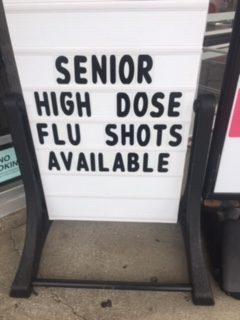
In Northeast Ohio, most of the pharmacy entrances are advertising the flu shot.

The other day when I was picking up some essentials at a local pharmacy, I had seen the sign for the high dose flu shot and asked the cashier, “How old is the senior for the senior flu shot dose?”

I figured it was an easy question, but with three cashiers at the front of the store, each one was guessing a different age: “Well, 55 is the age to live in a senior housing complex.” “But AARP starts at 50.” “I think 62 is the age you can get social security retirement.” “In Ohio, 60 is the age for a Golden Buckeye card.”

Funny, they had no idea. They finally agreed I should ask the pharmacist. That was actually my first thought, but I found it interesting to have this discussion with them, because they all appeared to be older than 60 years old and obviously, they come in contact with a lot of the public.

When I did go back to talk to the pharmacist, before I could finish with my question, they told me they are out of shots. Ha ha. Then why the sign out front?

“No, no,” I explained. “I just want to know how old is a senior?”

The pharmacist said a senior is 65 and older. That made me laugh, because I think they picked that number because it used to be the age you had to be to get full retirement from social security. Later I realized that the CDC picked that number. But maybe they started there because of the old social security law.

If you ask a young person how old a senior is, they will tell you 17 or 18 because they assume you mean a senior in high school. People don’t usually talk about seniors in college anymore because so many folks don’t finish in 4 years.

But enough about seniors. I should be glad they aren’t calling them elderly! Back to my original question.

Do you get a flu shot each year?

The purpose of getting a flu shot is to not get the flu… or to just get a milder version of the flu… and especially to not spread the flu.

My local grocery store pharmacy is willing to give me a $5 coupon for free groceries if I get one. When I took my parents to get the high dose senior flu shot, it cost $76 if you didn’t have your insurance card with you.

The other day I watched a Netflix show about pandemics on the “Explained” show. It outlined the black plague, the 1918 flu, the swine flu, the bird flu and I have to tell you, it was very convincing to get a flu shot. Even though the flu shot usually only covers four different flu strains, the Center for Disease Control predicts the most likely strains.

While the flu season is just starting in the USA for the 2019-2020 season, it is slowing down in Australia. News reports claim that Australia’s flu season was the worst in their history: more than 270,000 [cases], compared to almost 60,000 in 2018.

As a strong fit woman over 50, do you regularly get an annual flu shot? What about the other immunizations, like shingles vaccine?

Recap of Buckeye Half Marathon and 10K

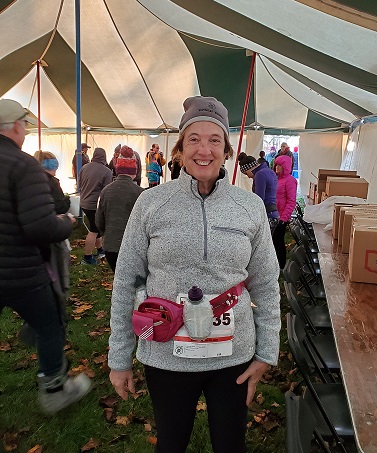
Last weekend I ran the 2019 Buckeye Half Marathon and 10K. Well, I ran the 10K part. Others ran the half marathon.

The 10K ended up being a bit longer than it was supposed to be because the course was set up for the half marathon and then they figured out the 10K. Instead of running 6.2 miles, I ran closer to 6.5 miles. I didn’t think that was all that unusual because races often seem to go long.

The last race I ran was in April. It was the 5K Hop for Hope. I went back and looked at my results from the spring race. My pace for the 10K was a bit slower than it was for the 5K but that makes sense since it was twice as long.

I’m happy with my results. I really just wanted to run the race without feeling injured or sore and I succeeded. Immediately after the race, my right hip was sore.

One of the things I noticed is that because we ran in one direction on the road, we never changed which side was higher on the crown of the road. My right leg was continually on the higher side and it was that hip that was sore. The good news is that by the next morning it was fine.

Early November in Ohio is likely to be cold and it certainly was this year. Temperatures were in the 30’s (Fahrenheit) but it was a beautiful sunny morning so really it was great running weather.

I wore my hat and gloves and several layers. I managed to be comfortable throughout the race. My hands were cold at the beginning but by the end, I’d taken off the gloves. Figures.

The course is a loop through the Cuyahoga Valley National Park. This year it was completely on roads. No trails. The 10K was one loop and the half marathon was two loops.  There were a few hills though much of the course was fairly flat.

Recap of Buckeye Half Marathon and 10K

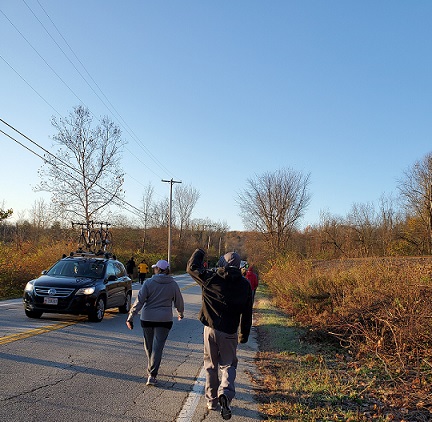
Heading to the Starting Line

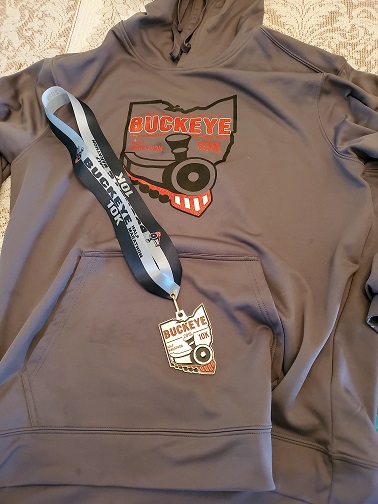
I heard the announcer say at the start of the race that there were about 600 runners. Later, I checked and saw that there were 229 runners in the 10K and 355 in the half marathon. I am a bit surprised that more people ran the half marathon than the 10K. All finishers received the same medal.

Swag also included a great performance sweatshirt, which I was happy to get. Check it out!

Recap of Buckeye Half Marathon and 10K

At the finish line, volunteers were handing out the medals. An announcer called out people’s names as they crossed. I love hearing my name announced as I cross the finish line.

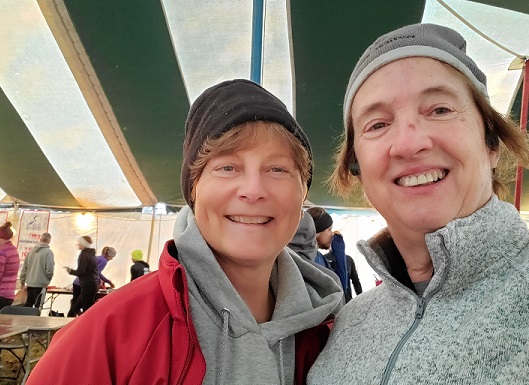
The food and water was in a large tent so that’s where I headed. Chris was there as a volunteer. She had the most important job in the tent. She was handing out Buckeye candies. If you don’t know what Buckeye candies are, they’re a creamy peanut butter candy dipped in chocolate. They look like actual buckeyes, which are nuts found in the Midwest part of the US. A delicious but decadent treat.

Recap of Buckeye Half Marathon and 10K

The Becoming Elli Crew: Chris and Jill

Running the Buckeye 10K made me realize that I do enjoy racing. I need to make sure that I am fit and strong for next summer’s racing season. I have work to do over the winter!

What races have you run recently? Or what motivates you to keep training over the winter months? Let me know by posting here or on the Becoming Elli Facebook page or email me at jill@becomingelli.com. 

Ten Tips for Being Healthy at a Desk Job

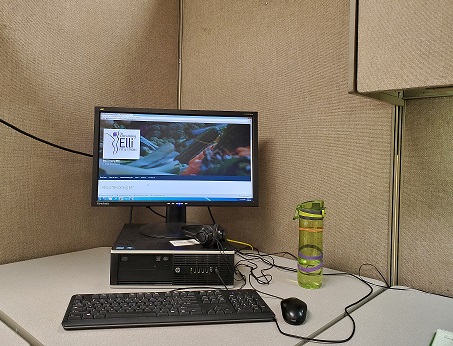
Here you go: ten tips for being healthy at a desk job. I’ve been working in a cubicle for the past few months and I’m finding it to be hard on my body. Plus, my commute right now is about an hour each way. You figure, eight hours at work and a two hour round trip commute and I’m sitting at least ten hours a day.

It’s amazing how tiring it is to sit all day. It’s draining.

Besides fatigue, sitting at a desk is hard on the body. My neck and shoulders are sore, my arms need a good stretch, and my hips ache. I try to move around but it’s not enough. I struggle with not getting in enough movement each day.

My Fitbit tells me that my total steps each day have dropped. That adds to my stress. Not that I have to have the actual steps but I really feel better when I’m moving.

What to do? I’m working on this so I can’t say I have the problem solved but here’s some ideas on what to do if you’re sitting at a desk all day.

Ten Tips for Being Healthy at a Desk Job

Ten Tips for Being Healthy at a Desk Job

  1. Fit in some activity at the beginning or end of your day. With such a long time devoted to working, this isn’t always possible but I find that if I can get to the gym early in the morning or in the evening, I feel better. A short run helps too. A walk around the block is better than nothing. Moving definitely helps with recovering from sitting all day.
  2. Get up and move at work. This can be as easy as taking the long way around to the restroom. If you have a staircase, try walking up and down the stairs periodically. Right now, I’m in a place without stairs and the restroom and lunchroom are about 200 steps from my desk. I struggle with getting in much movement during the day. I do, however, park as far from the building as I can. Surprisingly, I always thought everyone does this but I see that I’m wrong. Only one or two other people park by me. Everyone else parks as close to the building as possible.
  3. Take a walk at lunchtime. As long as the weather holds, I love to go outside to walk. Right now, I walk up and down the street where I’m working. It’s funny to see people from other buildings also out walking. If necessary, keep a pair of walking shoes in your car or at your desk.
  4. When you go outside or move around, try to shift your focus. We spend so much time looking at things up close, that our eyes become fatigued. When I walk outside, I try to focus on things far off in the distance. I don’t really know if this helps my eyes but I definitely notice a difference when I manage to have a longer gaze.
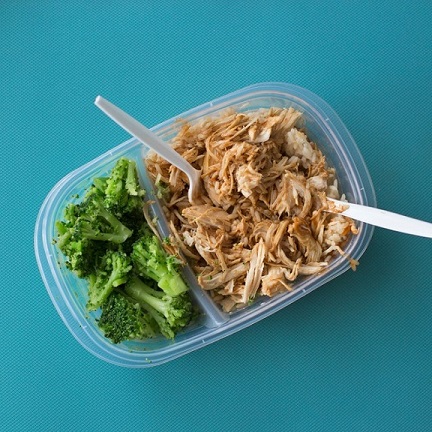
  5. Pack your lunch and snacks. It’s a lot easier to control what you eat if you bring your own food. You can pack leftovers from your dinner for your lunch or just make a large salad that includes some protein. I try to avoid my sardines at work because I know they have a strong fishy smell.
    Ten Tips for Being Healthy at a Desk Job
  6.  Pack extra snacks. Sometimes I’m just hungrier during the day and want a snack. I tend to bring more food than I might need so that if I’m starving on that long drive home, I can eat. I try to avoid walking in the house at the end of the day starving. That leads to nothing good happening.
  7. Avoid the snacks in the office. Don’t start the vending machine habit. I find it’s easier just to not use it than to start the habit and then have to fight with myself every day over buying a snack. It’s been a while since I’ve worked in an office every day and I’d forgotten how every social activity involves food. People don’t bring in healthy choices, either. It’s things like cupcakes and cookies. Avoid them. I noticed at the last event that several people passed on the cake and nobody questioned it. I think office workers are used to there being people who are dieting or following a different way of eating. Don’t let yourself feel peer-pressured into eating things you don’t want to eat.
  8. Drink lots of water. It’s easy to forget to drink water because you’re not working up a sweat while working at a desk. I bring my water bottle and try to refill it a couple of times during the day. For one thing, drinking more water and having to refill the bottle means I have to make an extra trip to the restroom and the lunchroom. That gets me moving just a bit more. (see step 2 above.)
  9. STRETCH! Try stretching your hands, wrists, and elbows. Stretch your legs and hips. I think I’ll have to write another post about desk yoga or desk stretches. Do what feels good.
  10. Maintain good posture. This means feet on the floor. Don’t cross your legs. Don’t sit on your foot. Try not to slouch. Try to keep your head upright. Make sure your monitor is high enough that you’re not bending your head forward.
  11. Here’s a bonus tip. Practice smiling at people.Work is stressful. People are under pressure. The more you smile, the better you’ll feel. and the better those around you will feel.

So, there’s my ten tips for being healthy at a desk job. OK, actually eleven.

What tips can you add? I really need all the help I can get so please share your ideas with me at jill@becomingelli.com. Or leave a voice mail message at the Becoming Elli phone number, 330-970-6662 or just leave a message below.

Butternut Squash – Veggie Challenge

There is something so delicious about butternut squash! I thought I’d share my simple way of preparing them.

Turn on the oven to 400 to preheat it.

Prepare the butternut squash:

I find that the skin peel is super hard on butternut squash. So the first thing I do is pierce the skin with three skewer holes and microwave for 2 minutes.

Put olive oil on a cookie sheet. Sometimes I put tinfoil down on the sheet first and then the olive oil. It’s up to you.

While this short microwave doesn’t really cook the squash, it softens up the thick skin enough that I can get a knife into them. I split them down the middle. Place face down on a lightly oiled cookie sheet to prevent sticking. I use olive oil.

Place the butternut squash face down. I usually leave the seeds in place for now. Set the timer for 40 minutes.

When the timer goes off, press a fork into them to see if they are super soft. Mine were just soft, so I cooked them for another 20 minutes, face down.

I flipped them over and removed the seeds. Now it is easy to peel the skin off of them.

Making something from the baked butternut squash:

If you’ve only cooked them until they are soft, it’s easier to cut pieces into chunks. Maybe remove some of the squash from the tray so they are just soft, not super soft, especially if you are using them in a recipe that is not soup.

By cooking the additional 20 minutes, these were fully roasted, very scoop-able and perfect for creating a soup.

I’m planning to make soup from the squash by putting it in my blender with some pumpkin spice seasoning, a little vanilla flavoring and some almond milk. But for now, I think I’ll have one just plain. Delicious.

This doesn’t really count for the #VeggieChallenge because I’ve made these many times since 2007. Up to that point I’d never buy these because I had no idea what to do with them. Now butternut squash is a food staple for me in the months of October and November.

How do you use butternut squash? Do you add it to salads, combine with other squashes or mash it like potatoes? Let me know by leaving a message below.

Happy Halloween and enjoy!

Road Trip Challenges – Healthy Eating and Exercise

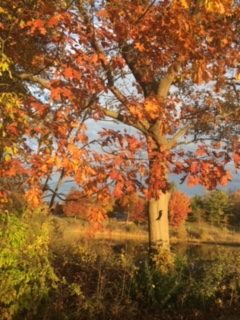
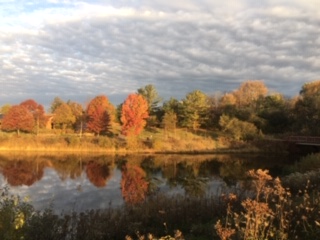
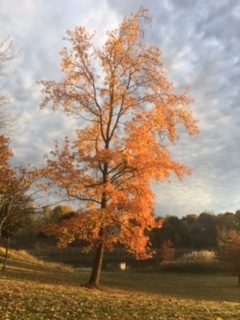
Last weekend I went on a getaway trip with my husband to enjoy the beautiful fall season in Ohio and Pennsylvania.

Viewing the red, yellow autumn leaves, spending time together while driving along the beautiful Pennsylvania countryside was refreshing for the spirit.

We both enjoy genealogy and tracing our family tree, so we spent quite a bit of time wandering around in small town and countryside cemeteries researching our ancestors and looking for clues.

Many of the stones in the cemeteries were from the 1800’s and were weather worn. It was difficult to read the inscriptions in some of the grave markers. I find that checking out the cemeteries is harder emotionally than just looking stuff up online in the census, birth and marriage records.

Sun shining on the leaves provided a cheerful alternative and gave balance to the seriousness of walking around in the graveyards.

The biggest challenge for me during the trip with car traveling is trying to eat healthy. Junk food abounds when you are riding on the turnpike. Here are some of my challenges and how I tried to overcome them.

Healthy Food
Car trips usually start out with the food we’ve packed. Fruit travels pretty well, but I always underestimate by bringing only a few items. Note to self – pack more good snacks in the little travel cooler next time.  After the hours and miles added up, it was time for a break.

Turnpike service plazas are very convenient for taking a short walking break, restroom stop and a quick snack. Convenience is the main thing. You don’t have to get off the turnpike and then drive all over the country side to find a gas station or something that will work. Plenty of well marked parking. The bathrooms are clean and plentiful.

The big challenge is finding healthy food!

So often those stops include many choices, but they are all questionable. Most everything is deep fried, or covered in cheese, filled with sugar or in a bag with a giant list of unpronounceable ingredients.

The food court: Starbucks, Popeyes, Burger King, Hershey’s, Famili Pizza. Each choice had the same thing in common – saturated fat, lots of sugar, no vegetables. Thinking back to my Weight Watcher days, I calculated some of the points as more than one day’s worth in a single serving. Getting my veggies was a super challenge here! A few mushrooms and some green pepper slices on a pizza was the closest thing to a vegetable… and that didn’t even contain enough to count as a full serving of one vegetable.

Three good choices:

  • We opted to go to the convenience store section of the plaza and buy almonds, apple, banana and orange. Fruit and protein snacks worked, but still, I was missing my vegetables.
  • I brought my own water bottles for the whole trip, because I knew it would be pricey and maybe not available when I needed it.
  • Near our hotel over the weekend we found a Panera where they had their fall food menu. I enjoyed the butternut squash soup and a warm grain bowl of veggies, brown rice and quinoa. I forgot how much I like their pumpkin spice soup.The grain bowls are new to me, but reminded me of a Cobb salad but substituting rice and quinoa instead of croutons and bacon. Also no iceberg lettuce either, just a little bit of arugula. I had the Mediterranean Warm Grain bowl.

Walking
Hours in the car helps you get to the places you want to see. The downside of many miles in the car is stiff knees, creaky back and that mind-numbing feeling of still moving when you are actually stopped. Getting out of the car for doing short hike or walk breaks made the trip fun and kept my joints happy. We reminisced about all the trips we did in our 20’s from Rhode Island to Ohio and back in a weekend.

Having my FitBit tracker reminded me that I never got my 10,000 steps on either day of the trip, but reaching three-quarters of my goal wasn’t bad, considering all the miles in the car. Each hour the FitBit reminded me with a little buzz on my wrist that I didn’t get enough steps while I was sitting in the car.

I can’t say that this was a weekend of exercise or of healthy eating, but I did enjoy spending time with my husband seeing the beautiful fall leaves and doing a shared hobby.

How do you exercise and eat healthy during a weekend road trip? Share your suggestions with me a Chris@becomingelli.com, on our Becoming Elli voice mail 330-970-6662 or leave a comment below.


Gatorade for Replenishing Electrolytes

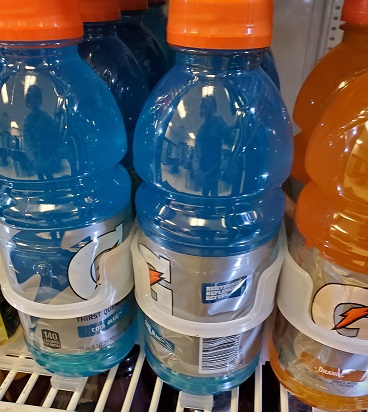
It’s hard to have a discussion about replacing electrolytes without mentioning Gatorade. I wrote about electrolytes recently and thought I’d talk about some of the different sports drinks on the market.  Gatorade created the market for sports drinks. It was created by a team of scientists to help the football coach at University of Florida. His athletes were training in the Florida heat and were struggling. Gatorade was created and the football players performed better.

Gatorade is now owned by Pepsi and is one of its best selling products.

Ingredients

According to the Gatorade website, the following ingredients are in the lemon lime flavored regular (original) Gatorade:

WATERSUGARDEXTROSECITRIC ACIDSALTSODIUM CITRATE,MONOPOTASSIUM PHOSPHATEGUM ARABICGLYCEROL ESTER OF ROSIN,NATURAL FLAVORYELLOW 5

Here are the nutritional facts for a 20 ounce (591 mL) bottle:

Nutrition Facts

Serving Size 1 Bottle (591 mL)

Amount Per Serving

Calories 140

Total Fat 0g

Sodium 270mg

Potassium 75mg

Total Carbohydrate 36g

Sugars 34g

Protein 0g

Benefits of Gatorade

Most of us don’t need to worry about replacing electrolytes until we’ve been exercising for an extended period of time or are pushing ourselves at a higher pace. Of course, there’s also heat to consider. Basically, when you’re doing some heavy sweating, you probably should consider a sports drink.

Also, the sugar in the drink provides a boost in energy. It’s a quick and easy way to get sugar back into your body.

Gatorade answers both of these functions: energy and replenishing electrolytes.

Downside to Gatorade

Some people dislike Gatorade due to its use of sugar and food dyes. If you’re trying to follow a whole foods diet, this is probably not the product for you. Food dyes can be problematic for people.

The amount of sugar is pretty close to a serving of cola. So, it may have more sugar than you need for your sports performance.

To be fair, you’re going to find sugar of some kind in almost every sports drink. That’s part of drinking something to boost your energy.

Gatorade does also make a non-sugar version. It replaces the sugar with an artificial sweetener.

I think the downside is really that people think this is a healthy drink so they drink it as a regular beverage or they overestimate their activity and think they need this when a glass of water would probably be sufficient.

Parents give Gatorade to their children, thinking it’s a healthier choice but it’s not really all that different than giving them a soda.

Conclusion

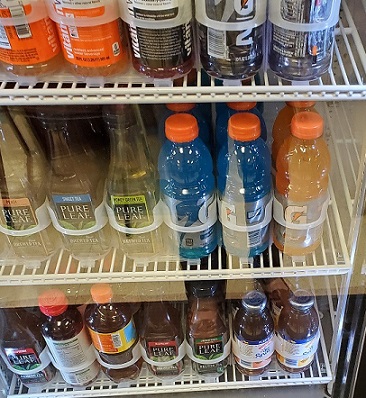
I just cruised through the lunchroom where I work and noted that there are four different kinds of Gatorade being sold in the cooler, next to cans of soda, juices, and coffee-based drinks. I can tell you that nobody here is working up that big of a sweat.

gatorade

If you need to replenish electrolytes, go ahead and have a Gatorade. It’s served at many races at the water stations. If you can be selective, there are other sports drinks or mixes that have fewer food dyes but Gatorade will certainly do what it’s intended for.

Chris wrote about using Gatorade when she’s biking or running in the heat. It works for her. What works for you? Do you have a favorite sports drink? Please let us know here on the website or on the Becoming Elli Facebook page. Feel free to email me at Jill@BecomingElli.com.

Performance Training for Master Women Athletes

Episode #44 of the Fit Strong Women Over 50 Podcast for the Becoming Elli Community
Download | Play in New Window
Please SubscribeApple Podcasts  (iTunes) Google Podcasts | Android-Google Play | Stitcher | Player FM Castbox | Tunein | Spotify | RSS

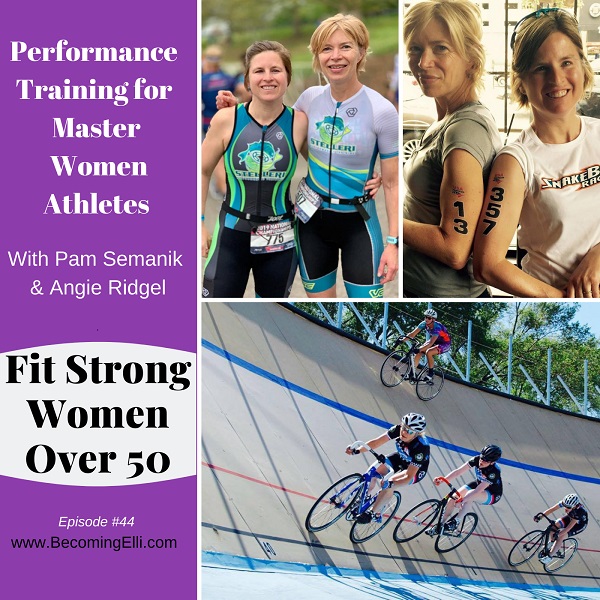
In episode #44, Chris and Jill interview Angie Ridgel and Pam Semanik, the owners and coaches at Stelleri Performance Training, about increasing performance for women over 50.

Their awards and honors are impressive and they each have earned many accolades. They started their company to work with masters athletes and their company specializes in working with athletes who have little experience with road cycling, time trials or cyclocross. They also work with multi-sport athletes who want to ride faster, more efficiently and smarter.

We discuss with them:

  • Different types of cycling: road, criterium, time trial, cyclocross, and gravel
  • What is considered a masters athlete in different sports
  • Motivating each other
  • How and why they started the Stelleri Speed School
  • Increasing speed and capabilities as we get older
  • Strength Training
  • Improving health and nutrition
  • Exercise Physiology and Angie’s work with bike riding and Parkinson’s disease as an Associate Professor at Kent State University
  • Dealing with a chronic illness and being fit

Their company website is: stelleritraining.com

On Sunday, November 17, 2019 at 7:00 PM (Eastern Standard time) they are hosting an informational webinar and live Q&A. More info at their website, if you are interested in hearing more.

You can follow them on Facebook.

Condescending Compliments or Am I Too Sensitive?

Did you ever get what you thought were condescending compliments? It sure seems to happen to me.

Boot Camp

Recently, I’m at boot camp and the very fit looking 30-something-year-old woman who is paired up with me looks less than pleased. But we proceed to work through the different stations and we speak pleasantly to each other. She asks me if I want her to put a lighter weight on a bar for me. I say no thank you. She asks me if I need help putting a harness on for pulling the prowler sled. I say no thank you. 

She periodically says, “oh, you’re doing so well.”

At the end of the class, she said she couldn’t believe how well I did with the prowler pull. I said thank you and did not roll my eyes even though I wanted to.

There was another woman at boot camp who used to do this to me all the time.  She would seek me out after class to say, “You did such a great job.” She didn’t go up to others to say that so I think it was a comment on my age. It really irritated me.  I finally changed my response from just “thank you” to “thanks, you did really well too.” That made me feel better because it felt as snarky coming from me as it did from her.

Condescending Compliments

Of course, I know it’s nice to be told you’re doing a good job and that it’s good to be encouraging to your fellow class members. I have no problems with the high fives and fist bumps I get from people in the class. And I have no problem when someone yells out, “you go, Jill!”

But why do I object to being told, usually by a young woman, that I’m doing such a good job? I feel like the subtext is “I can’t believe a crone like you can do this class.” 

I think what I find objectionable about it is that these feel like condescending compliments. Is it possible to be condescending at the same time as you’re giving a compliment?  The compliments would probably mean more if they weren’t paired with her trying to help me.  

Why would I be in a boot camp class if I need help changing a plate? That’s what I want to ask.

Am I the Problem?

But perhaps my discomfort says more about me than her. Do I dislike the compliments because I feel like I don’t really belong? I am struggling with this. 

There are a couple other women around my age who also attend boot camp. One of them out performs me on just about everything (that, of course, is Diane who we interviewed on our podcast) and the other is behind me in performance but is gaining strength quickly. It’s not like I’m the only woman there my age. The majority of people, though, are younger than I am, that’s for sure.

I have gotten compliments from people at the gym that felt genuine and those comments didn’t offend me at all. In fact, they made me feel great. 

What’s the solution? What’s the best response? 

Do you get condescending compliments? Do you think I’m being too sensitive? I’d love to hear your thoughts. Just leave a comment below or call our voice mail at 330-970-6662.


Becoming a Distance Runner – A Conversation with Ellen Wisbar

Download Play in New Window
Please SubscribeApple Podcasts  (iTunes) Google Podcasts | Android-Google Play | Stitcher | Player FM Castbox | Tunein | Spotify | RSS

In episode 43, Chris and Jill talk with Ellen Wisbar, a CPA who started building her running distance over the past year.

Ellen Wisbar grew up on the west side of Cleveland and has always been interested in sports. She played volleyball and was on the track team in high school. At Miami University she moved on to intramural sports and graduated in 1985 with a Bachelors degree in Accounting. After graduation, Ellen stayed active by sustaining a gym membership at various locations in Cleveland, running very casually, group exercise classes, skiing, biking, and participating in things like Corporate Challenge at work. Ellen is a CPA so by nature her job is pretty sedentary. At this point, she work in the legal department, which requires some travel but no tax season hours anymore.

distance runner Ellen Wisbar trains during the winter season

Ellen runs outside year round.

Last summer she completed a 5k in June for the first time ever without walking. After telling a friend at LifeCenter about it, she invited Ellen to join a running group called Moms Run This Town. The informal running group schedules coffee runs each week, which helped her start running more consistently. Soon she was working to become a distance runner.

She ran the 10K Great Pumpkin Run in Akron last October, the Cleveland Half Marathon this past May and then the Akron Half in September.

In this episode, they discuss:

  • How she got motivated
  • How she changed from a casual running into a distance runner
  • Why having multiple race goals is a good idea
  • How she got started running and built up her mileage to become a distance runner
  • What she brings to eat and fuel during the race
  • Hydration vest vs water stations
  • Comparing different races, what makes for a favorite race
  • Why she felt this half marathon was more fun than the first time she ran a half.
  • Her plans for the future

Ellen uses a hydration vest for carrying water during the half marathon.

Links to things mentioned in this podcast:

Stats for the 2019 Akron Children’s Hospital Marathon, Half Marathon and Relay

    • 100,000 spectators (estimated by the Akron Beacon Journal)
    • Runners (from the Akron Marathon website)
      • 963 marathon finishers: 352 women and 61 women over 50
      • 3223 half marathon finishers:1809 women and 305 women over 50
      • 895 Relay Marathon Teams (5 members, so 4536 runners, although some teams have people run 2 legs or run a leg while running the half/full) There were 154 Women Only teams and 19 Women Masters teams (over 40)

« Older posts Newer posts »

© 2026 Becoming Elli

Theme by Anders NorenUp ↑